

• Posted on 30 Mar 2021
  • 51-minute read

Workplace rights took centre stage in parliamentary debates over the last year. Firstly with freedom of association under the Ensuring Integrity Bill, then broader workplace rights in the Omnibus Bill. Meanwhile, debate continues on freedom of expression for university staff.

In this session Michele O’Neil, Alison Barnes, Hugh de Kretser and Verity Firth discuss how a human rights focus could ensure a safe, respectful and healthy workplace for all.
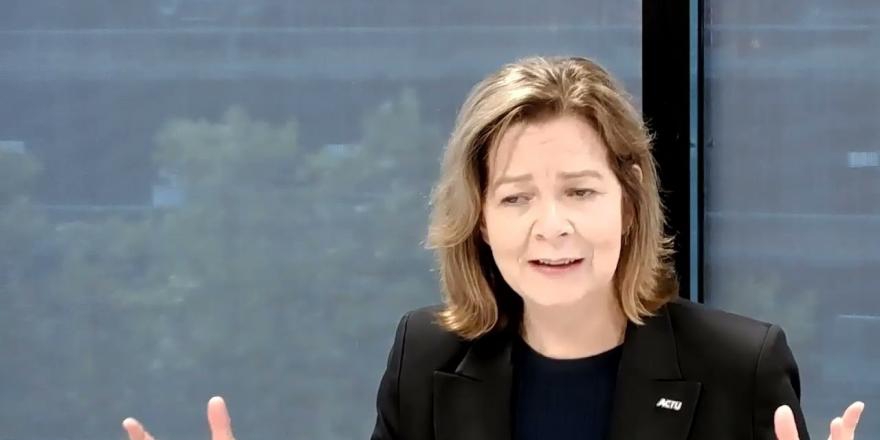
vi2yrBelvF0

Descriptive transcript

Thank you for joining us for today's event.

Before I begin, I want to acknowledge that wherever you are in Australia, we are all on the traditional lands of the First Nations peoples. This is land that was never ceded. Where I am, at UTS in Sydney, I'm on the land of the Gadigal people of the Eora Nation, and I want to pay respect to Elders past, present and emerging, and also honour the role the Gadigal played as traditional custodians of knowledge for the land upon which this university is built.

My name is Verity Firth. I'm the Executive Director of Social Justice here at UTS, and I also head up our Centre for Social Justice and Inclusion. It's my real pleasure today to be hosting today's event, which we're putting on in partnership with the Human Rights Law Centre. We'll be joined today by some very distinguished guests: Michele O'Neil, Dr Alison Barnes, and Hugh de Kretser. I'll introduce them properly in a minute or two.

But I am going to do a few bits of housekeeping. The first is that today's event is being live captioned. So if you want to view the captions, you need to click on the link that is in the chat, and you can find the chat in the bottom of your screen in the Zoom control panel. The captions will then open in a separate window.

Also, you do have an opportunity to ask questions of our panel. So if you do have any questions at all during today's event, type them into the Q&A box. Don't type them into the chat—we're not using the chat, we're using the Q&A box. The reason why we're using the Q&A box, which is also in the Zoom control panel at the bottom of your screens, is that it enables you to vote up other people's questions. It means that you can go in, and if you like a question, vote it up, and that question will have more likelihood to be asked. I tend to ask the questions with the most votes, to be honest, so it's worth getting your questions in there early. Do, however, please try to keep your questions actually relevant to the topic that we're talking about today.

Last week, after almost 10 months of work, the Federal Government was forced to abandon the majority of its own industrial relations Omnibus Bill in the face of challenges and lack of support in the Senate. In the end, only limited changes to casual employment were passed, with the Government deciding to remove the criminalisation of wage theft from the Bill. It comes off the back of other workplace and industrial relations issues that have taken centre stage in parliamentary debate, including freedom of association under the Ensuring Integrity Bill and freedom of expression, something that's been particularly talked about in relation to university staff.

In Australia, the right to work has theoretically been enshrined in the right to work safely, to be paid a secure wage and to have equal access to opportunity. But when industrial relations legislation is developed and debated, where do human rights fit into the picture? Are we placing workers' rights and human rights at the heart of considerations? That's essentially the topic for today, and I'm delighted to be joined by three leading minds on the forefront of these issues to imagine how a human rights focus could ensure that people really do have a safe and healthy workplace, somewhere where they are free to express their views and somewhere where they can join together with colleagues to advance their common interests.

Firstly, Michele O'Neil. Michele O'Neil is the President of the ACTU. I realised I've lost the little bios for you, but I know who she is. Luckily, she's the President of the Australian Council of Trade Unions. She began her life working as a waitress and went on to work in the community sector with homeless young people and then to work in the clothing industry. She was elected as ACTU President in 2018, having represented workers in the textile, clothing and footwear industry as an organiser and then Branch and National Secretary. And I'll leave it at that, but she's a great champion of working people.

Dr Alison Barnes is the National President of the NTEU. She was elected to the position in October 2018. Before she took up her role as National President, Alison served as the Assistant Secretary of the NTEU New South Wales division and Branch President at Macquarie University.

Last but not least, Hugh de Kretser. Hugh de Kretser was a board member of the Human Rights Law Centre when it was established in 2006 and joined the team in 2013 as the Executive Director. Under his leadership, the Centre has more than tripled in staffing and resources and continues to extend its positive impact on human rights in Australia. And I'll let Hugh tell you a bit more about his work later.

So, scrolling back now so that I can get to the questions. Michele, I'm going to start with you. Last week saw workplace rights dominate parliamentary debate with the Omnibus Bill. How big or small a role did workplace rights have in the Bill that was originally drafted and its consideration by Parliament?

MICHELE O'NEIL: Thanks, Verity, and hi, everyone. I also want to acknowledge that I'm here on the land of the Wurundjeri people of the Kulin Nation. I want to pay all my respects to their Elders past and present. It always was, and it always will be, Aboriginal land. Great to join you and to be with Hugh and Alison today. Thanks for the chance to talk about such an important issue. It is timely in all sorts of ways.

Starting with your question there, Verity, what we've seen is firstly, I think, people trying to somehow suggest that there's some difference between workers' rights and human rights. I suppose the first thing I want to say is that they're one and the same. You can't effectively ensure that people have human rights if workers don't have their rights respected and protected at work.

And what we've seen by this Government over various attempts over the life of this Government is that when they're designing industrial relations legislation, and the so-called IR Omnibus Bill, which is the latest version of that, there is a notion that they approach it from—there's somehow some equity issue about business rights and workers' rights needing to be both considered. The rhetoric is that it's important to get the balance right, that you've got to get the balance right for business as well as for workers. But the reality of what they do in terms of designing and attempting to enact legislation is very much a focus on what does business, and in particular big business, need to ensure that they're in a more powerful position in relation to work and workers. That has been the driving point really behind every bit of industrial legislation they've tried to do since they've been in government.

The most recent example of that is pretty stark, with the IR Omnibus Bill. So this was a bit of legislation that purported to come out of these working parties that had happened last year in the midst of the pandemic, where the union movement was saying, "We want to work to, number one, be part of keeping people safe and alive. But, number two, making sure that in our responses to that, we get the public health right, but also we ensure that people, as much as possible, can stay in jobs and stay safely in jobs—so both be able to work safely but also stay connected to work."

The discussions that the Government set up were on this premise that I started with, that somehow we're going to listen to business and workers. The end result of those discussions was that the Government put in legislation into the Parliament in December which clearly was one-sided in its approach. It basically took the worst aspects of the more extreme elements of the business lobby and what they'd been raising in those discussions and turned it into a bit of legislation and for good measure added some elements to it that hadn't even been floated by the worst elements of the business lobby.

So what you got in this legislation was five key areas of changes. One, which is the one that survived—and I'll come back to—is casual workers. The other areas that were defeated in the Bill and didn't continue firstly went around issues to do with bargaining. So, as we know, fundamental to freedom of association as a right is the basis that you can organise and you can bargain together, and being able to organise and bargain is critical to ensuring that that right has life breathed into it.

This Bill had—for bargaining—it dramatically reduced workers' rights, firstly to be represented. So it doubled the period of time that workers even had to be notified that they had a right to be represented in bargaining—pretty clearly designed to limit workers' rights to be represented by their union in bargaining. It removed requirements that workers had to understand everything they were voting on in bargaining. So instead of having the whole agreement and anything that the agreement referred to, it basically limited it to only the agreement itself. An example of that is if you had a company that had a policy that said you can be sacked for not wearing the uniform, right now under law you would have to have that policy when you were voting on the agreement so you could understand what your rights and conditions were. So it removed all those requirements to make sure people fully understood what the impact of a deal was.

It also had a big element of saying that you no longer had to apply the better off overall test—so this idea that workers in bargaining couldn't be dragged backwards in terms of their rights and conditions, that there was a role to play in terms of checking that workers' rights weren't going to be reduced by an agreement—and it had a suspension of that for a couple of years. Then it also removed unions' rights to be able to turn up at the Fair Work Commission and say, "Actually, this agreement doesn't meet the national employment standards," or "workers will be worse off," or challenge any elements of the agreement.

So that was what they did with all bargaining. But, in addition to that, they were introducing what was called a greenfields agreement, which are agreements that are construction agreements that already exist in law that can go for up to four years. They wanted to double that to eight years. So, basically, workers in remote construction projects that you can imagine in the Pilbara or parts of northern Australia, where currently those agreements get basically put in place before there's any workers—so they're not voted on, they're not at all democratic—they wanted them to go for eight years with none of those workers having any rights to renegotiate their wages and conditions. And, importantly, because of things like high suicide rates in these types of projects, not even able to renegotiate issues that would really literally be lifesaving for a whole eight-year period. So removing those construction workers' rights for eight years.

Then the other thing it did was keep—during the midst of the pandemic, when the Government introduced JobKeeper, they changed the Fair Work Act in a way that we didn't think was necessary, but they changed it to say that workers could be directed to work in different places and do different duties. It was an "emergency measure". And this Bill had that continuing without the JobKeeper payment. So they would no longer have the job security of the JobKeeper payment, but the boss, the employer, would still be able to say, "Well, I can change where you work and I can change what you do," and removed any right to go and get that tested at the Fair Work Commission.

The other one was part-time workers, changing the rights for part-time workers to reduce them. So it was effectively casualising part-time work, saying part-time workers could be directed to do extra hours without the right for penalty rates, and with no certainty. So many women, for example, do part-time work because they want to match it with caring responsibilities, but it would have removed all the certainty they had about when they were working and their patterns of work.

So they all got taken out of the Bill and it didn't get through, but you can see where I'm going with this. You can see how they were about dramatically reducing the human rights and rights of workers in Australia. The one bit that got through also does this, and this is a shocking thing because we have a huge problem with insecure work in Australia, and it's a growing problem. What the Bill did was enshrine a change to casual workers that means that it will actually legalise sham arrangements where workers are called casuals but, in fact, can be employed for long periods of time of what, up until now, would have been seen as permanent work. Therefore, those workers would have had the right to go off to the courts and say, "Well, even though I was called a casual, the reality of my working life is that I've become a permanent worker," and the courts have consistently said, "Well, if that's the reality, you should be entitled, therefore, to things like accrued annual leave and sick leave and long service leave." It removes those rights by basically enshrining a new definition of casual and puts primacy on the offer of employment. So if the employer says, "Here, Verity, here's a job for you, you're a casual," but the reality of your work is that you turn out not to be, in any challenge to that, now what will have primacy is the fact that you were offered the job as a casual and took it as a casual. So it really dramatically reduces and enshrines casualisation in a way that will only diminish workers' rights.

So I'll end by saying that this is an example and not the only one. And, of course, if you think about the current debate about what's been happening for women and women workers and what's been exposed as something we've long known as an issue of sexual harassment and assault and violence throughout workplaces—every workplace in the country—you can see again in the Government's response that they are opposed and incredibly reluctant to make changes that give workers rights. They're happy to talk about culture, happy to talk about respect, happy to talk about attitudes, but you don't hear them saying what needs to be done in terms of legal rights and capacity to enforce those rights, and that's what's critical in this debate.

So there's those 55 recommendations of the Sex Discrimination Commissioner, and included in those that the Government hasn't implemented or committed to implementing any is: improve rights for women to be able to take sexual harassment matters to the Fair Work Commission and have quick, easy access to orders to keep themselves safe and remove risk; improve health and safety regulations and rights that would give employers obligations to look at the underlying causes of harassment; and, of course, rights for the Sex Discrimination Commissioner on her own initiative to go in and investigate high-risk sectors or industries.

And, of course, they're not talking at all about the fact that they haven't—and I'll end on this—that they haven't agreed to ratify the ILO Convention into Violence and Harassment at Work, a really important new convention that workers and unions here in Australia and around the world fought for and won two years ago, but our government's yet to ratify. So I'll leave it with that, Verity. Thank you.

THE HON. VERITY FIRTH: Thanks for that, Michele. That was a really great opening and I hadn't realised that they hadn't ratified that ILO yet, so that's rather depressing. OK, so we'll come back to that in a minute. But I'm going to go to Alison now because in terms of rights at work or human rights at work, universities have for thousands of years been considered a bastion of debate, research and discourse. What has changed to mean that there's now a need for academic freedom to be better supported and protected in our laws?

DR ALISON BARNES: Thanks, Verity. Thanks, everyone, for having me. I really appreciate the opportunity to talk to you all today and I would also like to acknowledge that we're meeting on traditional Aboriginal lands across the country and pay my respects to Elders past, present and emerging. Sovereignty was never ceded. It's a really good question, Verity, and I suppose so much has changed across our universities. There's the corporatisation of our universities—our universities being run less like public institutions for the public good and more like big businesses—and this has real ramifications for academic freedom.

The other major crisis that we face—and Michele talked about, I suppose, the huge problem with insecure work across our country—we have a huge problem with insecure work across our universities. Only 35% of people employed at Australian public universities have tenure or ongoing employment, so casual and precarious or fixed-term contracts, they all undermine academic freedom. If you don't have security of employment, you can't exercise academic freedom. We find with insecure workers that they self-censor because they're worried about losing their work, and so it's really important that our government funds universities adequately. Before the COVID crisis, $10 billion had been ripped from Australian universities in 10 years and the COVID crisis has only exacerbated that with another $3 to $5 billion missing from university revenue. So this funding crisis really, I suppose, incentivises university management to increasingly casualise their workforce and I think further creates a whole range of problems across our sector which impact on academic freedom.

So there's many, I suppose, forces at play when you look at academic freedom, but the corporatisation of our universities, the increasing reliance on people who have no security of employment are really central to dealing with the crisis or dealing with ensuring that academic freedom across our institutions is protected. We need to remember that academic freedom is really the cornerstone of Australian universities.

THE HON. VERITY FIRTH: And about so much that our democracy really functions on.

DR ALISON BARNES: Absolutely.

THE HON. VERITY FIRTH: So, Hugh, I was thinking about how Michele opened by making it very clear that human rights are workers' rights and that workers' rights are human rights, and I think that was good that she did that because sometimes, bizarrely, they're somehow seen as not one and the same. That's a form of my question to you, which is basically: we see ourselves as a vibrant liberal democracy. How would better entrenching human rights lead to better laws and policies for workplaces? Maybe you could provide us with some examples.

HUGH DE KRETSER: Sure, thanks. And I'm coming from the land of the Wurundjeri people of the Kulin Nation and I acknowledge that this land has never been ceded and particularly acknowledge the importance of the issues we are talking about today to Aboriginal and Torres Strait Islander people, given the awful history of dispossession, of forced labour and of stolen wages.

So workers' rights are human rights. Human rights are the essential ingredients that we all need to live a decent, dignified life, and the right to work, to just and favourable conditions of work, the right to get together and form a trade union, to undertake trade union activity, the right to strike, the right to collectively bargain—these are essential human rights. They are recognised in the international human rights treaties that Australia has signed up to, but those rights have not been properly implemented as Australia has promised to do in our domestic law, and so what we have is a patchwork of protection with holes in it. That needs to change.

What we have at the state and territory level increasingly is state-based human rights charters. So in Victoria, where I am, we have a Charter of Rights, but that Charter of Rights has gaps in it. So while it protects some important rights to workers, like the right to equality, freedom from discrimination on the grounds of various attributes, it protects the right to freedom of association, to freedom of peaceful assembly, to freedom of expression—particularly important in the academic freedom context—so the right to protest effectively, which is critically important to workers' rights. It doesn't protect some of those rights which are known as economic, social and cultural rights, which Australia has agreed to protect.

Queensland has a Human Rights Act recently, which is great to see progress there. ACT led Australia in adopting its Human Rights Act in 2004 and, interestingly, last year it reformed that Act in a very positive way to specifically protect the right to work, the right to just and favourable conditions of work and the right to join a trade union and to undertake trade union activity. So what we want to see and what we have to campaign around is to ensure we have national protection of human rights, including workers' rights.

Australia is—you mentioned our reputation as a liberal democracy—we're the only liberal democracy in the world not to have a Charter of Rights at the national level, and we're trying to change that. That Charter of Rights should have, as part of it, the whole suite of human rights—the things that we all need to lead a decent, dignified life, the things that protect things like dignity, respect, equality. We need that full suite of rights protected, including workers' rights.

Briefly, the model for the charter we are asking for is one that retains parliamentary supremacy. So this is the model that's in the UK and New Zealand, European nations, where Parliament is the ultimate arbiter. We could go for constitutional protection of rights, which would be the best protection, but our history of referenda in Australia shows how hard it is to achieve that. So, as a starting point, we want to have a national legislative Charter of Rights that, importantly, requires all Federal agencies, all public servants, to think about human rights before they act, whether it's developing laws or policies or delivering services, and to properly consider those rights and to act compatibly with those human rights as a legal obligation. It would give people the power to take action if their rights are breached and it would say to courts when you're interpreting legislation, "You must interpret it in a way that gives the greatest effect to human rights within a reasonable interpretation."

So what we have seen in Victoria and Queensland and in the ACT and overseas is that Charters of Rights are effective; they're not a silver bullet but they are an important step forward in terms of injecting human rights into the DNA of a nation—to make sure they're taken seriously, to give people the power. Workers' rights need to be part of that. And some of the things that Alison and Michele have been talking about are really clear examples of why we need to focus on those areas and, in particular, one of my colleagues who was part of parliamentary scrutiny of new legislation in Australia commented to me that they saw time and time again legislation being introduced at the National Parliament that undermined in particular freedom of association, the freedom of workers to gather together and form a trade union and undertake trade union activity. We saw that with the so-called Ensuring Integrity Bill and we quite deliberately did a lot of work on that Bill to join with the ACTU and others to oppose that Bill because it was a quite deliberate attack on freedom of association for workers and that's important for workers. It's also important for human rights in this country and what is an attack on unions one day, right now, is an attack on charities, and we can talk about that in a separate forum, but there are very similar things being done in that space and that were attempted in that Ensuring Integrity Bill.

THE HON. VERITY FIRTH: That's really interesting. I'm about to go to Michele to talk more about the Ensuring Integrity Bill, but I think that point you make about Australia being the only liberal democracy that doesn't have a Human Rights Act or charter or equivalent is pretty damning, and that's especially so considering the cases you also said that we've signed up to all these UN conventions, ratified them, done the woo-hoo, and they're not actually enacted into domestic law in significant ways. I think it's interesting that Australia is such an outlier in that and we might come back to explore a bit of the reasons why Australia's an outlier in this space.

Just to you, Michele, because Hugh talked about the Ensuring Integrity Bill, so twice in the last four years this Bill has been put to Parliament and narrowly defeated. If it had passed this time around, how would it have affected the freedom of association for working people in Australia?

MICHELE O'NEIL: Thanks, Verity. I suppose it's important to start this with putting it in some context. The Australian trade union movement is one of the most highly regulated union movements in the world in terms of us having a specific Act, the Registered Organisations Act, that really is designed to control unions and how unions operate. There's many examples around the world where there's no role for the state in regulating the behaviour or the organisational basis or the democracy or the reporting of financial arrangements—it goes on and on—to the extent that Australia has. So we already have a very strong regulatory requirement on unions that does not reflect most of the world. An example of that would be if you were in New Zealand and you wanted to amalgamate one part of the union with—sorry, one union with another union—and the two unions thought it makes sense for us to join together, then the process for that to happen would be for the two unions to have their members vote on that, and there's no regulatory overseeing of it, whereas in Australia already, without the Ensuring Integrity Bill, there's a very long and complex process that has a lot of state intervention in it.

So that's the starting point. Then already with that in place, the Government came up with this Orwellian named Ensuring Integrity Bill and tried to introduce legislation over a long period of time that we fought off that would have—let me illustrate it by an example from my own life. So I used to be an organiser in the textile, clothing and footwear industry and I frequently would go into sweatshops where small numbers of mainly migrant women were working, often horrific conditions, and if I gave what technically is the legal requirement to enter that workplace, which is 24 hours notice to say "I'm coming in to have a look and talk to people and see whether their rights are protected in this workplace," what would always happen would be that the sweatshop would disappear because if you say "I'm coming tomorrow," it's not hard to move six sewing machines, and if the machines weren't gone, the workers all were. And the worst hazards, etc, would have been cleaned up.

It was frequently the case that I made the call, as did other organisers, that the right thing to do to protect workers' rights was to not give 24 hours notice. That is not correct. They can consent to let you in, but it's not correct because we're legally in Australia meant to give that 24 hours notice. If I had done that and I had been prosecuted for doing that, so I had been taken to court and said, "Well, you should have given 24 hours notice; that's a breach of your right of entry permit. Because union officials have to have permits, it's a breach of that permit that you went into that sweatshop," the impact of the Ensuring Integrity Bill, if it had become law, would have been that I would have been struck off from ever being able to be an elected union leader in my union again. So I would have had no rights to ever be elected by members to represent them. And if I had stopped being an elected leader but then the union had said, "Oh, look, we still want you to advise us; come and work for us," that would have been a criminal act I could have gone to jail for, for continuing to advise the union.

The other implication of me having gone into the sweatshop would be that that was not just a breach in terms of what I had done as an individual but the union would have been seen to have breached the act as well, and, therefore, the union would then have been at risk of having been put into administration where there would be an external administrator appointed over the whole business of the union, all its assets, decisions, etc, taken out of the democratic control of members, and also not just an option for administration but, in fact, an option to deregister the whole union based on me going in the sweatshop. So the whole union could have been deregistered as an organisation to represent workers. Then, further to that, the fact that that one incident had happened could have also led to the union having no rights to be able to merge or amalgamate with another union.

So all of these consequences, not just for my example but similarly serious consequences for the unions if they had breached what are really paperwork provisions of the Act. So we've got to regularly put in financial reports. I don't mind that degree of public scrutiny of union members' money. I actually think that's a good thing. But the comparison already that with a union providing public reports on its finances compared to a corporation is that if a corporation doesn't do it, literally the fines are in the hundreds of dollars for delaying or not putting in your regular reports to ASIC about your financial situation. The impact for a union would have been—already our fines are much higher, but if this Bill had gone through, again the union could have been deregistered or put into administration just for getting its paperwork wrong. No such equivalent in Corporations Law. A shocking overplay of state power into the genuine operations of unions. And, of course, the ultimate problem for that is it takes away workers' rights. It's about workers' rights to organise, freedom of association, come together and run their own organisations. But we beat it. And with some great help. Thank you, Hugh, and all the others who were part of that really important campaign.

THE HON. VERITY FIRTH: Yes, that's a really great description of just the impact it would have had. And it throws into a lie this idea of balance too, that there's no balance in terms of the punishments or something that both sides face.

Alison, besides academic freedom, what sorts of other challenges has the NTEU experienced when it comes to workers' rights in the tertiary education sector?

DR ALISON BARNES: Yes, thank you. I think Michele and Hugh have touched on the challenges we face in terms of being a union and the problems unions across this country face generally. We face a number of, I think, unique challenges. I think Michele was talking about public scrutiny. We need that public scrutiny applied to universities. We particularly need it around that area of casualisation. It's only in Victoria where universities are, for example, compelled to release data on the number of casuals employed across our universities. I believe that we need to ensure that across all our states and territories, we have access to that kind of vital information. It's really key to, I suppose, us as a union and I suppose for us in higher education to have accurate data around the numbers of casuals employed. Like, I could tell you that 50% of undergraduate teaching is performed by people who are casual but I actually think the figure is much, much, much higher, and we really need accurate data and accurate protections for casuals.

So we need funding to address the crisis of casualisation across our sector. We need proper protections for our casuals so that they get sick leave. And we need, I suppose, accurate data around casuals in itself. So there are a whole range of issues we face. As Michele alluded to, we also need improvements to right of entry, so it's easier for us to get on to our campuses and see what's happening. There's a number of things that I think particularly for us we need to look very hard at the Jobs Graduate Ready package, which was passed last year. This is, I think, in my whole time, the worst piece of policy for higher education a

If you are interested in hearing about future events, please contact events.socialjustice@uts.edu.au.

Workers' rights are human rights. Human rights are the essential ingredients that we all need to live a decent, dignified life, and the right to work, to just and favourable conditions of work, the right to get together and form a trade union, to undertake trade union activity, the right to strike, the right to collectively bargain, these are essential human rights. They are recognised in the international human rights treaties that Australia has signed up to but those rights have not been properly implemented as Australia has promised to do in our domestic law, and so what we have is a patchwork of protection with holes in it. That needs to change. Hugh de Kretser

Speakers

Michele O'Neil is the President of the Australian Council of Trade Unions. She began her working life as a waitress, before going on to work in the community sector with homeless young people and then the clothing industry. Before being elected as ACTU President in 2018, Michele represented workers in the textile, clothing and footwear industry.

Dr Alison Barnes is National President of the NTEU, which she was elected to in October 2018. Previously, Alison served as Assistant Secretary in the NTEU NSW Division and Branch President at Macquarie University. While at Macquarie University, Alison was a Senior Lecturer in the School of Management. 

Hugh de Kretser was a board member of the Human Rights Law Centre when it was established in 2006 before joining the staff team as Executive Director in 2013. Hugh is currently a Director of the Victorian Sentencing Advisory Council and member of the Advisory Board of the University of Melbourne Law School.

Share