

• Posted on 6 Nov 2020
  • 49-minute read

A better normal after COVID-19.

A year ago, people would have said there was no way that school children could shift overnight to online learning; that it was impossible for banks to offer mortgage holidays; impossible to double unemployment benefits; impossible to house rough sleepers or put a hold on evictions; impossible to offer wages subsidies and definitely impossible to get Australians to stay home from the beach and the pub. But we did it. 

What happens next? 
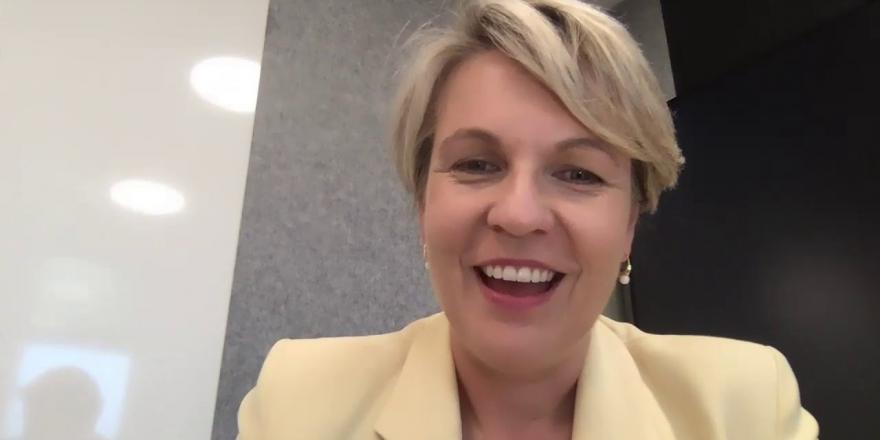
MoWiRQAnHUk

Descriptive transcript

Hello, everybody. Thank you for joining us for today's event.

Before we begin, I'd like to acknowledge that wherever you all are in Australia, we are all on the traditional lands of First Nations people. Here at UTS, we're on the land of the Gadigal people of the Eora Nation, and I really want to pay respect to Elders past, present and emerging as traditional custodians of knowledge for the land on which this university is built. It would be nice if all of you also, in your heads or even out loud, pay respect to the First Nations people where you are.

My name's Verity Firth. I am the Executive Director of Social Justice here at UTS, and I also head up our Centre for Social Justice and Inclusion. It's my pleasure to be joined today by some very distinguished guests. We have Tanya Plibersek, who is the editor of this book, "Upturn: A Better Normal After COVID-19". We have Tanya Plibersek, Professor Tim Soutphommasane, Adrian Pisarski and our own Vice-Chancellor here, Professor Attila Brungs. I'll have the chance to introduce them all properly shortly and give you a bit of an idea of their bios.

Before Professor Brungs welcomes us officially, I just want to do a few little housekeeping. Firstly, the event is live captioned. If you want to view the captions, you can click on the link that's in the chat. You can find the chat at the bottom of your screen in the Zoom control panel. The captions will operate in a separate window.

If you have any questions during today's event, there will be an opportunity to have your questions answered, but what we're going to do is do it through the Q&A function. Again, the Q&A function is on the bottom of your Zoom, next to the chat.

The good thing about the Q&A box is you can put your question in and then others can upvote your question. So, realistically, we tend to end up asking the questions with the most votes because they're up the top, but it's a good opportunity to be able to actually have your say. So, please, as we go along, type your questions into the box.

Before I introduce our panels, I will ask our Vice-Chancellor to now officially welcome you all, and I will hand over to you, Attila.

Thank you kindly, Verity. I'd like to join Verity in wishing you all a very warm welcome and thank you for joining us on this rainy day. It may not be raining where you are. I too would like to acknowledge the Gadigal people of the Eora Nation. Upon their ancestral lands, this campus now stands.

After a year of turmoil and hardship for so many, it is actually wonderful to be able to take the time together today to imagine how we can rebuild Australia and to make it a better place; most importantly, with a fairer society, a stronger economy and a more sustainable future. When so much of what we hear and what the media focuses on is fear, it is critical that leaders, and as a university, we present hope. I am not talking about a wild, fanciful hope. I'm talking about a concrete clear vision and a pathway to a better future, and that builds hope.

Now, as you can probably tell, I'm extremely pleased to be able to host today's event. At UTS we take our responsibility as a public institution serving society very, very seriously. We think that this primary role of ours in helping make the world a better place through the transformative power of knowledge in education is even more important now than it ever has been. That's why it is fitting today that we are discussing "Upturn: A Better Normal After COVID-19". This, as you would be aware, is a new book written by some of Australia's top thinkers and edited by Tanya Plibersek and published by New South Wales Publishing. As you can see, it's a real honour to have Tanya, Adrian and Tim join us today, alongside our own Executive Director of Social Justice, Verity Firth, for the discussion.

I, like so many of you, am looking forward to a return to the semblance of normality after COVID-19. But what we shouldn't let ourselves get into is meaning that just returns us to the status quo, that we should accept the parts of the world that were unacceptable before. Over the past eight months, our collective response to the pandemic has forced us all to make significant changes in a very short period but it also has allowed people to be imaginative, creative and flexible in ways that we would not otherwise have imagined. It has shown us that now is a perfect opportunity to proactively work for what we want a post-COVID world to look like, and not just accept what was before.

COVID-19 has proven to have accelerated many global changes already underway. One of these changes is, of course, a massive technological disruption, swooping across countries and economies, transforming the way the world of work is. That can be positive and/or negative. This wave of change which COVID has quickened can be very positive, with artificial intelligence and automation taking over dangerous and mindless jobs, leaving humans to focus on more meaningful, creative work, the things that only we can do. But it can have a disastrous effect on our society, particularly widening the divide between the haves and have-nots, if we don't ensure everyone is able to participate in this new world of work, that everyone is able to contribute.

Universities have an initial role to play in helping our workforce. We are razor-sharp focused at the moment on trying to help those who have lost jobs due to COVID, gain the skills they need for new jobs. We are razor-sharp focused on creating new types of jobs for people to go into. We, alongside vocational education, private providers and employers, need to provide this lifetime learning model, creating opportunities for people to upskill, re-skill and change careers all the way through their lives, with personalised learning experiences that they can dip in and out of.

Although 2020 has been challenging, I am an optimist about the future, as you can probably tell. One of the things that has buoyed me during COVID is how Australian universities have responded, even while facing our own challenges, in such a positive way to support society and help people. I know it's not my time to do this but if anyone who wants to talk to me, I can give you thousands of examples of where they have really focused on helping society. But to you all, thank you for joining today's webinar. I hope this conversation is about a concrete path towards hope and I will now hand you back to Verity to start the conversation.

Thanks for that, Attila. It's now my pleasure to welcome the panellists. So the first panellist and editor of the book is Tanya Plibersek. She's the Shadow Minister for Education and Training and the Federal Member of Parliament for the seat of Sydney. She served as Deputy Leader of the Labor Party and Deputy Leader of the Opposition from 2013 to 2019 and has served as member for Sydney since 1998. She was a Cabinet Minister in the Rudd and Gillard governments. Welcome, Tanya.

Hi, Verity. As you know, because you have registered to join this webinar today, released this week, Tanya's book "Upturn" outlines a path forward for a better future, with a more equal society, stronger economy, environmental sustainability and a more united community. In the foreword, Tanya quotes the award-winning author Arundhati Roy, who said: "Historically, pandemics have forced humans to break with the past and imagine their world anew. No-one is different. It is a portal, a gateway, between one world and the next. We can choose to walk through it, dragging the carcasses of our prejudice and hatred, our avarice, our data banks and dead ideas, our dead rivers and smokey skies behind us, or we can walk through lightly, with little luggage, ready to imagine another world and ready to fight for it."

So, Tanya, I'm really looking forward to hearing about how you brought this really amazing list of people together to write about their ideas and hoping that it is something that can give us all hope in what are increasingly unpredictable times. Speaking of amazing contributors, Paul Keating has called the people who wrote for this book "the people who know that imagination, inclusion and equity are the pathways to a national renewal". It is my pleasure to now introduce two of them. Firstly, Professor Tim Soutphommasane. Tim is a Professor of Practice (Sociology and Political Theory) and the Director of Cultural Strategy at the University of Sydney. He's a political theorist and human rights advocate and was Australia's Race Discrimination Commissioner from 2013 to 2018. His thinking on patriotism, multiculturalism and national identity has been influential in debates in Australia and Britain. He's also the author of five books, of which the most recent one, "On Hate", was released last year. Welcome, Tim.

Good to be with you. Thanks, Verity. Adrian Pisarski is the Executive Officer of National Shelter. He has a 40-year history in the community sector, including roles with housing, housing policy, advocacy, homelessness and youth peak bodies in Tasmania, Victoria, New South Wales, Queensland and nationally. Adrian was previously the Executive Officer of Queensland Shelter, the Chairperson of National Shelter and the Deputy President of ACOSS for five years. His housing policy knowledge and expertise has contributed immensely to Australian housing policy over many years. He was a member of the Affordable Housing Summit Group, instrumental to the development of the National Affordable Housing Agreement and the National Rental Affordability Scheme, and has just formed a new National Affordable Housing Alliance with key private sector peaks, the ACTU, industry super and key NGO peaks. Welcome, Adrian.

Thank you. Great to be here. Now, before we turn to the conversation, and we will start in a minute, Fiona has just put into the chat a link, and if you would like to get a copy of "Upturn", there are signed copies available, because we know that in a virtual environment, we can't do the signing, but there are signed copies available if you click on that link that's currently posted in the chat box. That's the closest we can get.

So, Tanya, I was reading—I was actually re-reading the introduction to this book last night and it was comforting. I found it comforting in light of the early results of the US election, which, of course, came through yesterday. And it was comforting because one of the points you make in the introduction is that in Australia in particular, but also elsewhere, but in Australia there really was a collective response to the pandemic and that people were able to understand the need to act with the whole of the community in mind. As I watched the results of the US election, it made me realise that there was a sizeable proportion of the US electorate that are so wedded to individualism that it trumps—to use the word—that it trumps every other consideration. So even a pandemic can't make some of those people believe in a collective response or even in the role of government. But Australians apparently still do. And what I thought I would do is open with the question: do you think that's true? Do Australians, in the words of Francis Fukuyama, whom you and Tim quote, still trust their leaders? Do they still trust the role of the state? What do you think?

I think it's obvious that 2020 has been a really extraordinary year, and it's been extraordinary in bad ways. Obviously, people died, people have got sick, people have lost their jobs, people have lost their businesses, and we saw some bad behaviour. We saw people hoarding toilet paper and people very proudly telling these kids on minimum wage at Bunnings that they weren't going to wear their masks. We did see elements of that. But, for the most part, I think we have been extraordinary as a nation. I particularly wanted Adrian to write about the homelessness response because this issue that seemed for so many years beyond us—housing rough sleepers—we were able to do it in extraordinary numbers during the pandemic. Kids moved overnight to online learning. We doubled unemployment benefits. We did a whole group of great things too. So I think we really tapped into a well in Australians of being prepared to work for the common good, being able to—being prepared to examine the evidence, read the science, listen to the experts and stay home for others, for the benefit of others. That actually gave me a lot of hope. It was one of the reasons that I wanted to write the book. I thought: how do we take this spirit of being all in it together and use that spirit in the rebuilding, in the recovery from the pandemic and in the recovery from the recession, that preparedness to sacrifice, to look to the common good. A lot of the chapters really do focus on that, that people have this extraordinary desire to know their neighbours, be part of the society and work together for the common good.

What do you think, Tim? Do you think Australians trust their leaders and still believe in the role of the state?

The short answer is yes, Verity. That trust has so far been repaid, to some extent, in the very strong response that we have had to COVID-19. When put into international context, Australia has performed exceptionally well. You look at what's happening in the United States, in Europe, and you see the daily numbers of infections, hospitalisations, deaths. That's the scenario that we have avoided through having a strong public health response. But I think it is crucial that political leaders repay that trust now into the future, that they don't squander this reservoir of goodwill that exists at the moment and think that we can just snap back to what we were before, because, frankly, we're not going to return to the society we had in exact form to what we had prior to the pandemic, and now is the time for us to be thinking about, as Tanya says, the common good, what a good society looks like and what rebuilding our economy and society should involve because it's going to take quite some time before we recover from the economic and social and cultural consequences of the pandemic. You look at the announcement this week of some quantitative easing from the Reserve Bank and interest rates being very close to zero in terms of the cash rate. These are emergency measures and we shouldn't for a moment believe that we're on a straightforward path back to recovery. It's going to require a lot of thinking but, more importantly, concerted action and it would be good to get government and civil society to work together to ensure that when we do come out of the pandemic, we're a stronger society and that the trust that people have had in government is repaid, because if we don't do that, what I fear is that we'll lapse back into that period of apparent decline of trust that we had in our governmental institutions, so don't mistake what's happening now for a permanent shift—not unless we take sustained and serious action to ensure that we undertake a good recovery.

What about you, Adrian?

I think if you look at the Queensland election last weekend, that certainly seems to me to be a vote for collective safety over individual freedom. I think we can take great heart from that. I also think if you look at Victoria and the enormous pressure that the Andrews government was under there, notwithstanding mistakes that I think were made in that scenario, Victorians also stuck together. In the end, they may not have liked being locked up in their own home for 23 hours a day but they copped it and now they're seeing the real benefits of that, where we've had no transmission for six days straight. I think their thinking about politics is really changing and really reinforcing that collective safety over individual freedom. I think that is something that Australia can be really pleased with. If you look at the UK as another example, they're now in lockdown for a month. It may last longer. They've flirted very dangerously with the individual freedom over collective safety road as well. So I think Australia has done very well and we should be proud of that.

I think one of the other things that has been demonstrated during this time is that inequality is bad for all of us. You see that most particularly in the labour market. If you've got workers who are on low wages with no safety net, no sick leave, casualised, then the risk is that they'll go to work, even if they have symptoms of sickness. That's bad for them obviously but it's bad for all of us. If you look at demand in the macro economy, even before COVID-19, we had low wages growth, low economic growth and so on, but this has really exacerbated that problem. Unless we do something to restore decent wages in our workforce, we're not going to have economic growth coming out of the recession. So it's really sharply highlighted that perhaps the transport worker filling the supermarket shelves, the supermarket worker—people who are looking after your kids while you go and work in a hospital, that these jobs are really critical and really underpaid as well. So I think the COVID-19 pandemic has been a sort of microscope on the damage that inequality particularly as it manifests in the workplace has had on people over years. We've used this opportunity to look at it in detail but this is a problem that has been snowballing I think for some time.

That's actually a good point to lead to my first question to you about your education chapter because when you think about it, considering that Australia always talks about that we're the country of the equal opportunity and the fair go and all of that, you point out in your chapter that Australia now has one of the biggest gaps between least and most advantaged students in the developed world and COVID-19 has, in fact, made it worse. It was interesting what you had to say about also just the shift to online and how we'll probably see more of a shift to online going forward because part of the program that we run here at UTS is our widening participation program, partnering with schools in south Western Sydney around access to university for students from low socioeconomic status backgrounds, and we deliver a lot of our programs in schools, and the big issue was the digital divide in a really real sense. So it wasn't even necessarily that the school didn't have the infrastructure; it was just that the students didn't have the infrastructure. So they didn't have WIFI, they weren't connected at home and they didn't have a laptop at home. So it's bridging that very economic gap to even be able to then have access to education. I want to ask you a little bit around digital access, but also some of the other elements that really strike at the heart of educational disadvantage in this country.

Well, it's such an important point. We think about 60,000 households with kids under the age of 16 have no internet connection. A lot of the ones that do have an internet connection, you've got one or two or three kids using mum's phone to download their lessons for the day. Schools did an amazing job at trying to bridge that gap by loaning school computers, buying dongles with internet plans for their kids or dropping off packets with paper lessons for their kids, but it is, without doubt, that kids from disadvantaged backgrounds fell behind during this period. The estimate is that they were learning at half their usual pace as if they were in the classroom. So for two months in lockdown, they lost a month of learning. That can be made up. The question is: do we have the will as a society to help those kids catch up? Are we going to put in extra teachers, extra teachers aides? Are we going to give teachers more time one on one with their kids by having other supports in the classroom? We're not doing that at the moment. The Federal Budget a couple of weeks ago had nothing extra to help kids in schools catch up. TAFE and university are another incredible example. We now have one in three young people looking for work or looking for more hours of work. We keep talking about 13 people competing for every job vacancy, but for entry level jobs, the number is more than 100. So if you've got more than 100 high school graduates competing for those entry level jobs, surely to God any society, any economy, would say: "let's get those kids into TAFE or uni because if they're not working, if they're not earning, they should be learning". We're doing the opposite. We have seen years of cuts to TAFE and university funding. We have seen just recently with the job ready graduates program, the cost of some courses has more than doubled. Increased by 113%. It makes no sense. It makes no sense in an environment where unemployment and under-employment are so high to lock people out of jobs—well, training and education that might help them get a job. Of course, the burden falls disproportionately on kids from a disadvantaged background. Your parents' level of education, your parents' wealth is the biggest predictor of educational success in this country. That is wrong. That is absolutely wrong. That is a failure of our system.

Where education is no longer the great equaliser, that is a pretty big problem.

In fact, it is the thing that is entrenching and locking in privilege or under-privilege in this country at the moment. So what would you change? Well, lots. Everything. Starting with parents as children's first educators, making sure that families have the support to be the best first educators of their child, and that means dealing with things like overcrowding, homelessness, domestic violence, the stress that pregnant mothers pass on to their babies even before they're born. Then making sure that our early education system is treated with the respect that it deserves and that the people who work in it are treated with the respect that they deserve, and that we have universal access to preschool. We're almost there with 4-year-olds. We should be there with 3-year-olds. We should look at kids earlier than that as well. Then school. It's about funding but it's about making sure that our teachers are the best and brightest and that they get the respect and the value that they deserve, that we're using the best available research and evidence about what works in the classroom and that TAFE and university are affordable and available to everyone. No-one should be locked out of education because they can't afford the course fees to get the education they need to do their dream job. I could talk about this for an hour and I'm not going to because we have Tim and Adrian. Sorry for going on a little—on a rant, but I did ask you!

And last question before I move on to Tim. Universities—I've got to ask a self-interested question. But I'll change the focus slightly, which is what role do you see universities playing in helping to rebuild the community? The concept of anchor institutions, is there more that universities could be doing to rebuild?

For sure. So universities have that absolutely vital role in preparing people for the jobs that will exist in a much more competitive labour market, but they have a much greater role than that as well. There's the economic role. If you're the University of Tasmania in Launceston, you're one of the biggest employers in town, so how do you make sure that you're spending your money in the local community, that you're building up the local community and that people who are not employed by—or students from the university get benefit from the massive public investment in that university. There's the research that universities do. We're not just training people for the jobs that exist today; we are doing research in universities that will create the jobs of tomorrow because of the breakthroughs, discoveries, innovations that our universities, in partnership with industry, often in partnership with community organisations at other times, that innovation will create the economy of tomorrow. I think we, to our peril, underestimate the potential of universities as driving not just the economy of the future but also making sure that the students that they turn out are active, engaged, thoughtful students that are up for the job of reconstruction.

Thank you, Tanya. So, Tim, your chapter outlines some disturbing facts about multicultural Australia, highlighted by the onset of COVID. So you talk—you describe a surge in anti-Asian racism, which I must admit we at universities have been aware of too. That has been noticeable. And the fact that the virus has, in a way, provided cover for their expression of racism. You've got Donald Trump calling it, you know, whatever he calls it. Your chapter was probably slightly less optimistic than some of the other chapters. What must we do to ensure we emerge from the pandemic with Australia's multiculturalism intact, rather than imperilled? It was one of your quotes. Are we only to hope that things return to normal, rather than improve? Is that even possible? What do you think?

I hope I wasn't painting too bleak a picture there. I think it never helps one cause to be in denial or not look reality in the face, and the reality of this year has been a very difficult one for Australian multiculturalism, for the reasons that you've noted. COVID-19—its origin in Wuhan, China; the rhetoric that Donald Trump and others have been using in describing the virus as the "China virus" or the Wuhan virus, this has contributed to the targeting of many Chinese and Asian Australians for racial vilification and attack. This has been established through the very good work that many civil society advocates have done in the last six months. There was research released only a few days ago by colleagues at the ANU which showed that of the Australians of Asian background they surveyed, 85% or so said they had experienced some racial discrimination that was largely linked to COVID-19. The challenge here for us is very simple as a society. It's to reject racism and to make sure that COVID-19 doesn't create social and racial division. Unfortunately, we haven't seen the kind of leadership on race issues that we should be receiving in recent years. If anything, we've seen developments relating to COVID feed into a broader and politicised suspicion of Australians of Chinese backgrounds in particular. I am referring here to the fears about the Chinese Communist Party's attempts to influence democratic institutions here and the targeting of Chinese Australians as potential fifth colonists. We don't demand from Australians who have German ancestry that they must unequivocally condemn Nazi Germany, and yet there are senators in the Federal Parliament who believe it's perfectly appropriate to demand of Australians who have Chinese heritage that they do precisely that for the Communist Party of China. So that's a deeply disturbing development this year, I think—the fact that we are having signs of McCarthyist bullying entering public discourse. What I fear is that it will deter many Australians from Asian backgrounds who want to contribute to public debate from doing precisely that. I can understand why it would turn people off. Why would you set yourself up for vilification and for public attack if that's what you expect your opponents or members of the political class to do?

I think in terms of what we need to do next: I think at the very least we've got to return back to some level of normalcy, and the key to that is to ensure that political leaders and citizens more generally can tell a good story about multiculturalism and immigration. This should be about a nation-building ambition for Australia. Immigration—and immigration, I think, has been a success story of our country, as has multiculturalism, but it's been accompanied by a story. We understood the role that immigration had in enlarging our country, not only in terms of population but in terms of our horizons. That's the kind of talk we need to get back to and this is going to involve a significant challenge because we have closed borders at the moment. Net migration is not in any significant form in existence right now, and what I fear is that if we're not careful, we can start seeing immigration purely as a source of biosecurity or national security threats rather than as a lifeblood to our society and to our economy. We've got to see multiculturalism as well as being about ensuring that people from whatever background can be part of our society and contribute to it as full and equal citizens. I think that's the kind of optimistic picture I would like to see come back to our political debate. Unfortunately, we're not seeing enough leadership on debates about race, multiculturalism to give us encouragement.

I agree with that. In your chapter, you explicitly talk about anti-racism campaigns funded by the Government, like a positive message from the top, and how compared to Canada, we don't fund anywhere near like what other democracies are doing. Can you just talk a little bit about that? How does the Government help lead that agenda?

Government has an important role at a number of levels here. One goes to the setting of the tone of public debate that I've mentioned. Political leaders of all stripes, with perhaps the exception of One Nation, are very happy to declare Australia is the most successful multicultural society in the world, but are not prepared to put forward the kind of money and resources you would expect from the world's most successful multicultural society with an official policy of multiculturalism. Put it this way, when I was at the Australian Human Rights Commission, we had for a number of years some modest funding for a national anti-racism strategy, but that was in the quantum of 1.5 million dollars over four years. Now, think about the millions of dollars we spend in educating people about the dangers of smoking or even road safety and wearing seatbelts. Today, we've got zero in terms of dollar quantum attached to a national anti-racism strategy, and to put it into perspective, Canada puts in about 30 or 40 million dollars a year in Canadian dollars, which is roughly the same as Australian dollars. I think if you were to survey the world at the moment and look at societies that are doing multiculturalism, Australia has a weak claim to being the world's most successful multicultural society when you look at what's happening in Canada. So that's got to happen. These efforts are important to educate people about racism, what it means, and how people can counter it. Then there's another level of activity that I think government has to be more serious about, and that's ensuring that there is a devoted attention to far right extremism, which has emerged in recent years as a very serious terror threat in our country. Don't just take it from me. Listen to the Director general of ASIO, who has publicly said this, that far right extremism is now the most prominent terror threat to this country. Yet you have members of Parliament from certain political parties who even dispute that you should be describing white nationalist extremism as far right extremism because it involves the use of the word "right". This is the very unfortunate state of affairs we have when it comes to the discourse around these issues.

Yes. Adrian, to you. So, in your chapter, you talk about how the future relies on having a diversity of owners, renters, incomes and dwellings in a mixed-tenure approach to housing reform, with balanced returns based around secure housing appropriate to needs. You end your chapter with the wonderful phrase that "if all of this is done, we will live happily ever after", which I think is exactly right. As part of your chapter, you list a clear and concise list of reforms that you believe will re-boot Australia in terms of housing. So for the sake of the webinar, can you elaborate on this? And do you think we can get there? Can you actually make your list of reforms happen?

I'll answer the last bit first. Yes, we can. I'll go back and acknowledge that I'm on Gubbi Gubbi land on the Sunshine Coast and acknowledge that everything about housing comes down to land. Land was taken away from Aboriginal people and it's no accident that they suffer the worst housing conditions of any group of people in Australia. So having said that, our whole housing system is unbalanced, and this is the point of that. We advantage investors over first home buyers. We advant

In this session Tanya Plibersek, Tim Soutphommasane, Adrian Pisarski, and Verity Firth imagine a better Australia, with a stronger economy, a fairer society, and a more environmentally sustainable future.

If you are interested in hearing about future events, please contact events.socialjustice@uts.edu.au.

I think the best thing we can do is convince people one by one, small group by small group, that there is a better Australia waiting for us and that we all benefit from that fairer society and stronger economy. We all benefit when we treat each other respectfully and debate the ideas, rather than feed like vampires off conflict. Tanya Plibersek.

Speakers

The Hon. Tanya Plibersek is the Shadow Minister for Education and Training and Federal Member of Parliament for Sydney. She served as Deputy Leader of the Labor Party and Deputy Leader of the Opposition from 2013-2019, and has served as Member for Sydney since 1998.

Prof. Tim Soutphommasane is Professor of Practice (Sociology and Political Theory) and Director of Culture Strategy at The University of Sydney. He is a political theorist and human rights advocate, and former Australian Race Discrimination Commissioner (2013-2018).

Adrian Pisarski is the Executive Officer of National Shelter. Since 1980 Adrian Pisarski has headed peak bodies at state and national level in youth affairs, homelessness and housing. He was deputy President of ACOSS for five years and a member of the influential Affordable Housing Summit Group.

The Hon. Verity Firth is Executive Director of Social Justice at UTS. She served as Minister for Education and Training in New South Wales (2008-2011), focusing on equity in education, and was previously NSW Minister for Women (2007-2009). After leaving office, Verity was the Chief Executive of the Public Education Foundation.

Share