

• Posted on 4 Nov 2020
  • 3-minute read

According to SBS News, 71% of Australians want a more diverse parliament. Yet, Australia’s Parliament, with its 227 seats, still does not fairly and equally represent the greater Australian population.

'Politics in Colour' brought together The Hon. Linda Burney, Senator Mehreen Faruqi, Ms Jenny Leong MP, and Ms Kaushaliya Vaghela MP to speak about what it’s like being a woman, an MP and Indigenous or Culturally and Linguistically Diverse (CALD), as well as how we can diversify Australia’s parliament.
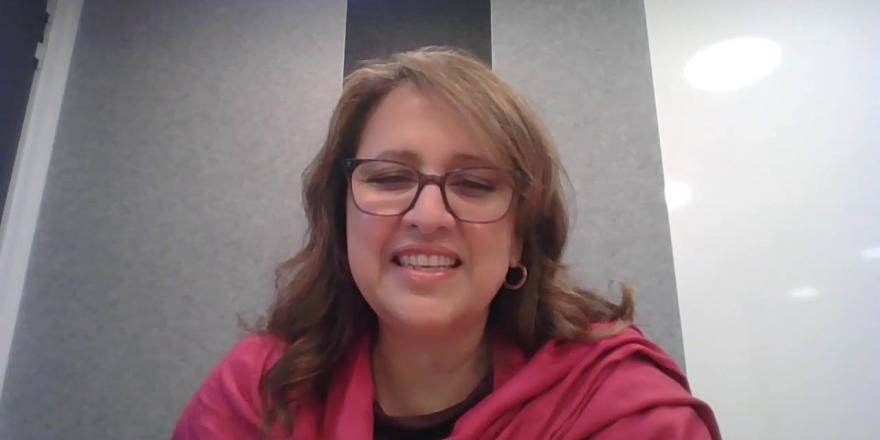
UADzUiNExxE

Descriptive transcript

Hello, everyone, and thank you for joining us for our inaugural Politics in Colour event.

Firstly, I acknowledge the Gadigal people of the Eora Nation, upon whose ancestral lands we hold this event. I would like to pay respect to the Elders past, present and emerging, acknowledging them as the traditional custodians of this land. I further acknowledge the traditional owners of the country where you are joining us from, and pay respect to the Elders past, present and future.

It would be really lovely to see where you're from, so please post in the chat whose ancestral lands you are dialling in from tonight.

My name is Kriti Collis, and I'm an Indian-Australian. Joining me is Kat Henaway, who is Indigenous-Australian. We are co-founders of Women's Business and Politics in Colour. Our purpose is to amplify women of colour in leadership. We collaborate with organisations to develop programs and events that respectfully and authentically engage people of colour and underserved communities. You can find more information about us via our website.

Women's Business have partnered with Women for Election Australia, whose Chair Jenny Morris and CEO Licia Heath are here with us. Licia, would you like to say a few words about Women for Election?

Thank you, Kriti and Kat, and so glad to be here with you tonight. I'm coming to you from Gadigal land of the Eora Nation, and I would like to pay my respects to Elders past, present and emerging, and also acknowledge that sovereignty of this land was never ceded.

Women for Election are so proud to partner with Women's Business to help bring you this event this evening. Our mandate, our mission at Women for Election is to help inspire and equip more women in Australia to run for public office. That could be at the local government, the council, or the state or federal level.

But the question is, why do we want more women to run? Well, there's a lot of reasons, and I'm sure most of you on the call intuitively understand them, but it's about what women prioritise when they run. Often it's policies that are more beneficial to a greater number of people in our community, whether that be climate change policy, health and education funding policy, and everything else that we've seen so many fabulous women leaders bring to the table.

Women are more visible out in their electorates, women leaders, and they tend to focus on the benefit of us all, our collective interests over self-interest. But Women for Election understand how critical it is that we are not enabling, frankly, more white women lawyers into our parliamentary chambers. It is critical that our parliamentary chambers are representative of the populations that they govern.

And that is why we are committed to partnering with Women's Business and the program that they have developed, Politics in Colour, to help inspire and equip more women of colour to see a pathway into politics in Australia.

So thank you for joining us all here tonight, and we look forward to engaging with you further.

Thank you, Licia.

I also wanted to thank our technology partners, UTS Centre for Social Justice and Inclusion, headed by Verity Firth, who herself is a former politician from the City of Sydney Council. And we have Fiona Versy from her team assisting us. We would also like to acknowledge other former politicians joining us, including Marcelle Hoff, who is a retired Deputy Lord Mayor of the City of Sydney.

Just before we get started, a little bit of housekeeping. If you have any questions during the webinar, please type them in the Q&A box, which you can find in your webinar control panel. You can like questions that others have asked. We may not be able to get to all the questions, but we will do our best towards the end of the webinar in the Q&A session. And also, being an online event, do bear with us if there are any technical issues, and we'll be working very quickly to resolve them if they do happen.

So you know, this event is also being recorded and will be made available via our website afterwards.

I would now like to take a moment and ask Torres Strait Islander woman, Kat Henaway, to introduce our incredible panel tonight.

You're on mute.

Thank you, Kriti, and welcome, everybody. We're really excited to know that there are many people joining us from all over Australia tonight, as well as the UK and India. So if you haven't already done so, please let us know which country you're dialling in from.

Your attendance here tonight shows us just how much women of colour are appreciated in political leadership. So thank you for joining us.

Our panel this evening brings together four of the most formidable women of colour politicians in Australia today, many of whom have made history achieving firsts through their journey as female politicians.

So in this next session, I'll introduce each politician and then invite them to share their story of how they became involved in politics.

We'll kick off with Shadow Minister Linda Burney, who is Shadow Minister for Families and Social Services and Shadow Minister for Indigenous Australians.

As a proud member of the Wiradjuri Nation, Ms Burney was first elected to the New South Wales Legislative Assembly at the 2003 election. She is the first Aboriginal person to be elected to the New South Wales Parliament and the first Aboriginal woman to serve in the Australian House of Representatives. She is the longest serving Indigenous female politician in Australia's history. So quite an achievement.

So Linda, if you could start by sharing the story of how you went from schoolteacher to politician.

Look, thank you so much for that introduction and hello to everyone. I'd also like to recognise country. I'm actually in Wangal country here in downtown Marrickville in the city of Sydney. And it's just on the border of the Gadigal, then there's the Wangal, then there's the Bidjigal people further south-west.

So it's wonderful. I'd like to recognise Kat and Kriti for organising tonight and particularly welcome our sisters from the UK and India and stand with you with the extraordinary challenges that your countries are going through at the moment, particularly from a health and economic perspective.

Verity, I know you'll be involved with this. Just to add to the introductions, Verity was not only a politician on the City of Sydney Council, she's also the member for Balmain for a number of years in the New South Wales Parliament. Marcelle, hello. I saw Carol Vale pop her head up there and Imelda, hello. And also to my fellow panellists, of course.

Look, we have a set period of time, so let me make this fairly brief because I'm sure there's many questions that people want to ask.

So I was born in a tiny country town and I was raised by my great aunt and uncle. And they are people that came through two world wars, the Great Depression, and we were raised very frugally and the old-fashioned values of honesty and honour and grace and generosity were very much a part of my childhood.

I didn't meet my Aboriginal father until I was 28 years old and discovered I had ten brothers and sisters I didn't even know existed. And such was the power of exclusion and racism at the time.

I was one of the very first Aboriginal teachers in New South Wales. I think when I graduated as a teacher, there were about 12 of us. There are now over 1,200, which is just fabulous.

And I became a very strong activist in the Aboriginal movement. So whilst I didn't join mainstream politics until 2003, I certainly was in the political arena for a long time.

And for me, the mystery of politicians and the mystery of politics that I think exists about now, how do you become a politician? What do you do? All of that was stripped away from me through my activism and through my role in the non-government sector as head of an Aboriginal NGO.

I was a bureaucrat in the Department of Education for a long time, so I knew how things worked. And I had the very real opportunity of meeting face-to-face with many people, politicians. I realised they were just people and had the same sorts of challenges that we all have, and not all that bright, some of them.

So I thought, well, I could do your job, I reckon, but I never really thought it was serious.

And then, and I'm sure Mehreen and others will tell you this, is that politics, I want people to think about this that are tuning in tonight. It's not just being the member. There are many amazing opportunities in politics. There's media advisors, there's chiefs of staff, there's political advisors, who often have much more information and power than the politician themselves.

But basically, I had the opportunity to stand for pre-selection in 2003 in the state seat of Canterbury. And my pre-selection was very unusual. I demanded a rank and file pre-selection, and I ran against a sitting Labor member in a different faction to me. And that's pretty brave.

I was successful, and I served in the New South Wales Parliament with distinction and held very senior positions. I was a cabinet minister for many years when Labor was in power.

And Labor was deservedly kicked out in 2011, and our numbers were drastically reduced, deservedly. I became the deputy leader of the party, which was extraordinary, and I held that position for five years.

And just very briefly, I became the federal member for Barton in 2016. And once again, I was in the right spot at the right time. So it's a lot of luck and demonstrating that you are a worthwhile candidate.

And I remember a very good non-Aboriginal friend of mine who's a very big name in the feminist movement in Australia said, you know, we as women have to grasp what's in front of us and just have a go.

And when I was called to see whether I'd stand for the federal seat of Barton, her words rang in my mind. I thought, what have I got to lose? So I grabbed the position.

There was a sitting Liberal member in the seat that I ran for, got rid of him decisively. And I've been able to increase the margin for Labor in Barton substantially over two elections.

Next year, we're expecting a federal election, and my goal is to increase the margin to double digits.

So that's my story.

And just to finish off, there are three motivating factors that drove me in 2003, and they are the same factors that drove me in 2016 going federal. And that is that there weren't enough women in parliaments. There certainly weren't enough black women. And my whole life had been about truth and social justice, which I thought are pretty decent things for a politician to be pursuing.

Absolutely. That is a wonderful story. Thank you, Linda.

It's really fantastic to hear your journey there. And we'd like to now move to our next speaker, who is Senator Mehreen Faruqi.

She is the Greens Senator for New South Wales and spokesperson for education, housing, industry and animal welfare. Dr Faruqi became the first Muslim woman to sit in any Australian parliament when she joined the New South Wales parliament in 2013. She is a civil and environmental engineer and a lifelong activist for social and environmental justice.

Dr Faruqi, if you can share with us your story.

Thanks so much, Kat, and hi, everyone. I acknowledge the traditional owners of the land that we are all zooming in from and pay my respects to the elders past and present. I'm on the land of the Gadigal of the Eora Nation, and I just want to acknowledge that sovereignty to this land was never ceded. This is, always was and always will be Aboriginal land.

And I also want to recognise that there can be no environmental or social justice without racial justice.

Thank you so much for having me tonight. And it's such a pleasure and a privilege to be here with so many fantastic women.

You know, my friends often, I think half-jokingly sometimes, point out how many minority boxes I tick in parliament: migrant, Muslim, woman of colour, and an engineer as well.

And as you can imagine, growing up in Lahore, Pakistan, which is a world away from Australia, I could not have imagined in my wildest dreams that one day I'd be sitting in the Australian Senate.

But I guess such are the wild and wonderful twists and turns of life.

As far as I can remember, I always wanted to be a teacher. Because in Pakistan, culturally, respect for teachers is the same and equal to respect for parents. And I wanted to be on that pedestal and be respected.

People are often very surprised to hear that I never planned to be a politician. And I think many politicians will probably tell you this, that sometimes it happens pretty organically and sometimes accidentally as well.

Because I moved to Australia when I was 28 and definitely a political outsider here in many ways than one.

You know, I didn't come through the political ranks of student unions or, you know, so-called party apparatchiks or political staffers. I definitely didn't have the networks or the boys' club connections that seemed to be so prerequisite for a political career.

But one thing I will say upfront is that I never actually consider politics as a career. I truly believe, and it might be an old-fashioned view to look at it, but I think politics is public service.

I have had a wonderful career in civil and environmental engineering, which has spanned more than two decades and two continents. As a consultant in structural and water engineering and environmental engineering, waste management, I've worked as a local government officer in Sydney and in regional New South Wales and as a researcher and an academic.

And I've loved every single minute of it.

And, you know, what I took into politics was all this lived experience, my professionalism and an open mind, really, when I first stepped into parliament.

And there was New South Wales Parliament and Linda was a colleague of mine there. And it's a pleasure that we are colleagues now in the federal parliament as well.

But most of all, when I look back on this, I took with me the spirit of challenging power, patriarchy and rejecting the limits that society imposes on us about who we should or shouldn't be or what we should do or shouldn't do as women, and especially as women of colour.

You know, my ammi, my mother tells me that I've had that spirit for as long as she can remember. She often reminds me of my arguments with her, I think when I was seven or eight. And these arguments were about being allowed to do the same things that my two older brothers, you know, were allowed to do.

And I think Kaushalya might relate to this well. And, you know, my two older brothers were allowed to fly kites at all hours of the day from the rooftop of our house and play cricket in the street, which I wasn't because girls supposedly weren't supposed to do those things.

But, you know, I won most of those fights.

You know, heck, I studied civil engineering in defiance of the fact that it was a male dominated profession and it wasn't considered suitable for women.

And I think it's the same propensity for pushing boundaries that attracted me to the Greens.

I joined the party when my family and I were living in the regional town of Port Macquarie. This was in 2004 and like a very white town. I think we were one of a couple of brown families that lived there.

And, you know, after 12 years of being in Australia, I finally got some time to, after we kind of settled in and found jobs and all of that, got time to get involved in some community activity.

And I was involved in supporting refugees there, bush care, land care. And one night I had about seven or eight people around my dinner table and I found out that all of them were members of the Greens.

I think they were the only members of the Greens in that National Party heartland. But that's when I thought, OK, I think now is the time to do it.

But there were also a few other incidents that happened at the same time, which showed me that this was a party that had the courage to say and do things that others didn't.

And one of those was, you know, known as the Tampa Affair, which was, you know, refugees who had fallen overboard a ship. And while other political parties were demonising these desperate asylum seekers, claiming, you know, that they had thrown their children overboard, the Greens were the only voice of humanity speaking out to bring those innocent asylum seekers here.

And soon after that, Green senators Bob Brown and Kerry Nettle heckled George Bush in Parliament as he was spinning his lies about the war on Iraq. They got kicked out of the chamber and I got inspired to join a movement of social and environmental justice.

And I do try and keep up with that tradition of being courageous and bold. And that's why I was so proud and humbled in 2018 to receive the Feminist Edna Ryan Award. And it was called the Grand Stirrer Award for inciting others to challenge the status quo.

And basically it was for the campaign that I ran with thousands of people in New South Wales to decriminalise abortion laws, a change which we have now thankfully made.

So for me, politics is about the courage to do the right thing, to push boundaries, to stick your neck out for something that you really believe in, and to say it like it is, to be a voice for people who generally wouldn't be heard in places of power, and to shake up the system to make it better.

That's wonderful. I'm so excited by hearing all of that. And although I don't have the temperament for politics, I'm so excited that there are so many amazing women moving into politics nowadays.

So thank you for that, Senator Faruqi. That was a really fantastic story.

We'll now move on to our next speaker, who is Ms Jenny Leong MP.

Jenny is the Member for Newtown in the New South Wales State Parliament, and the Greens New South Wales Spokesperson for Multiculturalism and Human Rights. She was first elected in 2015, and she is a passionate advocate for equality, justice, and human rights, and has a long track record of standing up and speaking out against racism, sexism, discrimination, and the politics of fear.

Jenny, we're very excited to hear your story next.

Thank you. Thank you so much, Kat. And I'd like to acknowledge also that I'm here on Gadigal land, and pay our respects to Elders past, present, and emerging.

Acknowledge the fact that there are leaders that are pushing the struggles, and acknowledge Linda, who I sat in a chamber with for many years in the bear pit of the New South Wales Parliament. And I think we were all very pleased to see the win that you delivered you to the Federal Parliament.

And I'd like to acknowledge my fellow panellists, and everyone else that has joined us for this event.

I've spent the day at a training where it was run by two white men. And everybody else on the Zoom call all day was white. So it is a refreshing boost to the colour of this session. And it's nice to be here with you all.

I was elected as the Member for Newtown in 2015. And as the Sydney artist William Yang once said about himself, I actually didn't come out as a Chinese Australian until much later in my life.

I was born in Adelaide to a Malaysian Chinese father, and a white Anglo mother from working class Melbourne. And at the time, much of my upbringing was classic, what you would describe as normal Adelaide.

In that sense, it was only when others started, I guess, explicitly or highlighting differences about me, that I began to sort of identify and realise that, hey, something might be up here.

And, you know, it happened when I was in primary school, it happened more and more as I was in high school.

And I think there could be a whole nother talk and discussion about the pressures on migrants to raise their children in certain ways. The time in the late 70s and early 80s might have been the best chances that we would have in life. And the identification of that would be to try and help us to assimilate as much as we could. And I think we could have a whole nother panel, but that's not for today. I've only got a few minutes.

So I think for me, right now, it feels like the time for being a Chinese-Australian woman and a Chinese-Australian MP for our democracy, for the state of the country and for the realities of the geopolitical landscape that is currently playing out. And let's all cross our fingers tomorrow that it's slightly less bad as a result of the election that we will see in the US.

But I feel like it is more important than ever that I came out as a Chinese-Australian, if I can use that. And I am actively trying to inform myself more, to be able to take on what is a role that I, in a sense, got given by default about being a voice for Chinese-Australian people in our democracy and something that I now feel a responsibility to actually inform myself about and make connections with so that I can actually live up to that voice in the absence of there being a diversity of representation of people in our parliaments to the level where there is a responsibility that I feel and that we have.

And so to me, I was a campaigner before I entered into politics. I worked for Amnesty International as a global crisis campaigner. I did engage early on in activism and politics when I was still based in Sydney and at Sydney University.

Like Mehreen, I credit those two periods of the Tampa crisis and Bob and Kerry standing up and speaking out against George W. Bush as inciting moments for me for joining the Greens.

But actually, full credit should go to both John Howard and Pauline Hanson for getting me distracted from my PhD at the time and turning me into the politician and the political activist that I am today. If it was not for their racist dog whistling, for the introduction of voluntary student unionism, if it wasn't for their cruel and inhumane treatment of asylum seekers and refugees, I would still be probably advocating for the need for a national theatre archive in Australia, which is what I was writing my PhD on at the time.

But instead, I found myself getting involved in activism, particularly refugee activism. My first encounters with the New South Wales police were around refugee actions and direct actions. Sadly, my ongoing encounters with the New South Wales police continue, even now as a member of parliament. I think they don't like it that I speak at rallies that they have not approved, and I will continue to do that.

But for me, I think the involvement and the connection, I think it's really important for people to know this because it can often just be a moment of someone asking. And I remember that moment really clearly. I was at a pub in Newtown. I was having a conversation with someone who was obviously very well trained in the tactics of organising and membership recruitment. And little to my knowledge, he used a very clear and obvious tactic. I was complaining about how the Greens on local council and how local councils don't focus enough on creative issues and support for cultural communities. And instead, they seem obsessed with only dealing with, you know, development applications and the details of plans and steps and all those things.

And he said the classic line, which was, oh, well, you know, well, why don't you join and why don't you run and why don't you change it?

And, you know, I had no idea at that stage. That was a really obvious tactic that people use all the time. But it worked on me. I got engaged. I got involved in the party in that way.

And I stood for as a candidate and a good lesson for anyone that has aspired to be an elected representative. I ran in the City of Sydney Council election in 2004, and I missed out on a council spot by 200 votes.

And I thought that that was the end because I just never thought I would be able to risk the idea of missing out on a spot that much.

And I had a whole new world and a whole new life working at Amnesty as a campaigner and then came back to be involved in the Greens.

And they created a beautiful seat called the Electorate of Newtown, which includes some of the most progressive, wonderful people in the whole country. And I was pleased to be able to stand for election and was elected then in 2015.

There's many things about this job that has been an absolute privilege to be able to do. And I could point to highlights, as Mehreen mentioned, about finally being able to co-sponsor the bill that saw the decriminalisation of abortion, to participate in the apology to the 78ers as a result of the police violence that was subjected to as a result of the first ever Mardi Gras.

But actually, to me, the most significant wins are the wins that happen every day when you feel like you have the opportunity to put into the public domain positions or viewpoints or voices of people that actually would not get heard if you weren't the one saying them.

And the fact that I get to have that privilege to be able to put those viewpoints and to actually represent people that otherwise would be ignored because of the white patriarchal heteronormative structures that exist in our democracy, I feel like is an absolute win.

And so each day I get to do that, whether it be a small rant on Facebook or a significant speech in Parliament, I feel like it is something that I am doing to contribute to finally removing the white patriarchal domination of our democracy.

And that is absolutely something that needs to be done. And that is truly long overdue.

So thank you very much, Kat, and I look forward to the discussion.

Fantastic. That's really wonderful to hear you talk about what a privilege it is. You feel very privileged to be doing this work. So that's really inspiring to hear your story. Thank you so much.

And finally, we will now hear from Ms Kaushalya Vaghela MP, who is the member of the Legislative Council of the Western Metropolitan Region in Victoria and a member of the Australian Labor Party.

Ms Vaghela is the first Indian-born member of Parliament to be elected to the Victorian Parliament. And she's also the first Indian-born Hindu to enter any Parliament in Australia. Kaushalya is a firm believer in family values and stands for the development of infrastructure for the people of the West. Kaushalya, we would love to hear your story.

Thank you very much, Kat. Before I begin, I would like to acknowledge the traditional owners of the land on which I'm sitting today for this event and pay my respects to their elders past, present and emerging. And I would also like to acknowledge all the panellists and, of course, Licia, Kat, Kriti, everyone who has played a part in putting this webinar together.

After hearing the first three speakers, I can say that we have got so many firsts in women today, first, you know, from different backgrounds. So it's good to hear.

As it was mentioned by Mehreen that she never planned to be a politician, I never planned to be a politician. And after hearing the first three panellists, I can see some common themes. And the themes, one common theme that I saw is we all started by some sort of activism. And that's how I started as well.

But before that, I just want to give a brief background of my family. So I'm from India. I was born in a very small town called Jamnagar in Gujarat. In my family, I was the first one to travel overseas. We had never had any family member who had gone overseas and we have never had any person who had contested any election. So I was the first one to do that.

I came to Australia to study in 1998 as an international student. After getting married back home in India, I had done my Masters of Science, but I wanted to do research. So I came to study Masters of Applied Science by Research at RMIT University. I came with my husband and my husband was on a spouse visa. And we did not have any family members, any relatives, any friends, nobody over here. And the story is similar to usually what other migrant stories are, which is full of challenges, especially when a woman from ethnic background comes from overseas. If she's a mum, it becomes even more difficult.

So my journey until just a few years ago was extremely, extremely difficult. After I finished my studies, me and my husband decided to stay in Australia and I applied for my permanent residency. I got that. I did many different types of odd jobs that we do when we come to a new country. And my husband did the same as well.

But after finishing studies, then I got a very good job. So by qualification, I'm a medical scientist and I am a research scientist. And I worked in the diagnostic lab as a medical scientist. And at Monash University, I did research on anti-cancer drugs.

So coming from science background, I had nothing to do with politics. Before becoming an MP, I was working in a private company as a risk and compliance manager, and I quit that job after becoming an MP. But before becoming an MP, I was also working part-time as a ministerial advisor in the office of the then multicultural affairs minister. And I was the first Indian female to become a ministerial advisor in the government. We have had quite a few male ministerial advisors, but they did not progress beyond the advisory role.

As I mentioned, I faced a lot of hardships after I got my job. I got very, very sick. So I lost my health. I lost my job. My husband was doing his business. Due to so many different circumstances, the business was gone. Our house was gone. So basically, whatever we had worked over the years, everything was gone.

But still, there was no plan of entering politics. So what happened in terms of how I came into politics was my husband was running a very small retail shop in what we have over here in Dandenong called a precinct, which is Little India. And there are predominantly South Asian traders over there. And that piece of land where the traders were trading was acquired compulsorily by the state government to revitalise the area.

And what happens is once the area was acquired compulsorily, the traders suffered huge losses because of the construction work. And the problem was the traders did not get justice. They were treated very, very badly.

And I used to see my husband come home and I'm like, they should not do this. How can they do this over here? This is what we try to escape from our country. And we can't put up with the same thing over here. We have to do something.

And when I would hear that every day, so I slowly got involved. And then, I mean, over a few years, then I took the lead and I ran that campaign because I just wanted to make sure that the traders who suffered, they get a fair go.

But it was very sad. The precinct, which was so multicultural, which was developed organically, the government just wanted to destroy that. I just could not accept that.

So while running that campaign and trying to save that precinct, I came across meeting with many politicians, many MPs and ministers. At that time, a Liberal was in government. And I also got a chance to meet with the Labor MPs. And that's the first time I met our current premier, Daniel Andrews, who was the leader of opposition at the time. And when I was telling the traders' stories to both MPs from both parties, I felt personally that when the MPs from Labor Party, when I was explaining to them, they were more sympathetic to the issues of the traders.

And that's how I got involved and started, you know, going to the Labor Party events, so on and so forth. And that actually put me on the path of politics where I got to know a little bit more about Labor Party MPs and all those sort of things. And I joined Labor Party in 2014.

So since then, since I took the advocacy, it's taken me and my husband's combined 25 years of time, effort and energy to be where I am today.

And in 2018, the opportunity arose for me to contest the election. And I won the pre-selection. So out of all the panellists that we hav

Its important to recognise there are systems and structures in place that are preventing women and particularly women of colour participating in our democratic systems, and thats across the board. Jenny Leong MP

For me politics is about the courage to do the right thing, to push boundaries, to stick your neck out for something that you really believe in and to say it like it is, to be a voice for people who generally wouldnt be heard in places of power, and to shake up the system to make it better. Senator Mehreen Faruqi

Speakers

The Hon. Linda Burney is the Shadow Minister for Families and Social Services and Shadow Minister for Indigenous Australians. She is a proud member of the Wiradjuri nation, and is the longest serving Indigenous female politician in Australia's history.

Senator Mehreen Faruqi is aGreens Senator for NSW and Spokesperson for Education, Housing, Industry and Animal Welfare. Dr Faruqi became the first Muslim woman to sit in any Australian parliament when she joined the NSW Parliament in 2013. She is a civil and environmental engineer and a life-long activist for social and environmental justice.

Ms Jenny Leong MP is the Member for Newtown in the NSW State Parliament and the Greens NSW spokesperson for Multiculturalism and Human Rights. She is a passionate advocate for equality, justice, and human rights – and has a long track record of standing up and speaking out against racism, sexism, discrimination and the politics of fear.

Ms Kaushaliya Vaghela MP is a Member of the Legislative Council for the  Western Metropolitan Region in Victoria and a member of the Australian Labor Party.  She is the first Indian-born Member of Parliament to be elected to the Victorian Parliament and the first Indian-born Hindu to enter any Parliament in Australia.

Presented by Women's Business Australia in partnership with Women for Election Australia. Supported by the UTS Centre for Social Justice & Inclusion.

Share