

• Posted on 2 May 2022
  • 44-minute read

In Australia, only 2.5% of people with intellectual disability work in open employment – where people with and without disability work together.

Australian Disability Enterprises employ the vast majority of people with intellectual disability, on wages as low as $2.50 an hour. Less than 1% of their trainees go on to work in the mainstream workforce.

But in Italy, the Hotel Etico and the Tacabanda Restaurant training programs are offering ground-breaking models for social change. Worldwide, 184 trainees have graduated the Hotel Etico program, with 68% moving on to open employment.

In this session, hear from Trevor Graham, Andrea Comastri, Tracylee Arestides and Dr Phillippa Carnemolla about how these models can change public perception and the lives of people with intellectual disability.
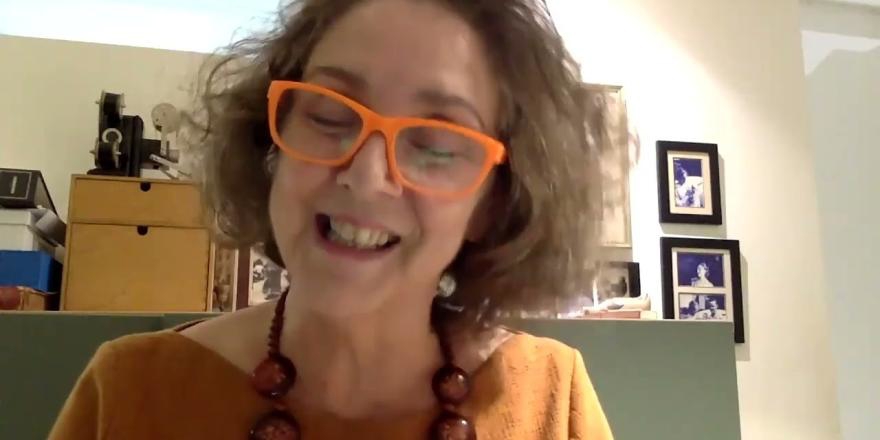
30aRyB72KZs

Descriptive transcript

Hello everyone. Thank you so much for joining us for today's event. Firstly, I'd like to acknowledge that wherever we are in Australia joining today, we're on the traditional lands of the First Nations peoples. I acknowledge the Gadigal people of the Eora Nation, upon whose ancestral lands the UTS City campus stands. I'm joining you this afternoon from Wangal lands near the banks of the Parramatta River. I pay my respects to Elders past and present and acknowledge them as traditional custodians of knowledge and their ongoing connection to country and culture. I further acknowledge the traditional owners of the country where you are joining us from and pay respects to their Elders today.

My name is Phillippa Carnemolla. I'm an Associate Professor at UTS and part of the UTS Disability Research Network. I'd also like to pay my respects and acknowledge the Indigenous ways of knowing and being that inform the work that we do, including the work in inclusion that we do here at UTS in the Disability Research Network. I'd like to draw attention to the work of Dr Scott Avery, an Indigenous disability researcher and advocate, and his work "Culture is Inclusion". I would like to start today's discussion by acknowledging that culture is inclusion.

It's my huge pleasure to be welcoming you all today to this conversation. I'm delighted to be joined by a distinguished group of speakers: Trevor Graham, Andrea Comastri and Tracylee Aristides, who I'll have a chance to introduce you to properly shortly.

So, in Australia, only 2.5% of people with intellectual disability work in open employment, where people with and without disability work together. The vast majority of people with intellectual disability over 25 are employed in ADEs—Australian Disability Enterprises—working in a segregated workplace on wages as low as $2.50 an hour. Less than 1% of those trainees go on to work in the mainstream workforce.

But in Italy, the Hotel Etico and Tacabanda Restaurant training programs are offering another model for social change. Hotel Etico opened their Australian arm in Mount Victoria in 2020. Their program offers hospitality experience, including cooking, bar and table service, and housekeeping roles for people with intellectual disabilities. Worldwide, 184 trainees have graduated the Hotel Etico program, with 68% of them moving on to open employment. Part of the original Hotel Etico in northern Italy, the Tacabanda restaurant staff journeys are documented in "Chef Antonio's Recipes for Revolution", offering personal stories and insights into this social model for disability rights.

I'd like to mention here, too, that we're offering people the opportunity to watch this film at home for free until next Wednesday, and we'll share the link to that in the chat now. Today, we're here to ask: is this model—a now Australian-applied Italian model—a better approach to getting people with intellectual disabilities into open employment?

I'm delighted now to go to our panel. Trevor Graham is the director of the film "Chef Antonio's Recipes for Revolution". He is a television producer and director of factual programs with over 35 years of experience. As an independent, Trevor has personally produced, directed and executive produced some of Australia's most acclaimed documentaries for the ABC, SBS and a multitude of international public broadcasters. His 30-plus documentaries have spanned a diverse range of stories and genres, including arts, science, history, culinary arts and contemporary content. We're delighted to say Trevor is a UTS alumnus. Welcome, Trevor.

Trevor: Hi, nice to join you all. Thank you. Pleasure.

And now we'll go to Andrea. Andrea Comastri is the founding director of Hotel Etico Australia. Andrea is focused on establishing Hotel Etico as a leading example of innovation in the sector, providing opportunities to young people with intellectual disabilities, as well as challenging the wider community to see both the human and economic value of an inclusive society that focuses on abilities rather than disabilities. Andrea is a passionate believer in the transformative power of the social enterprise sector. Thanks so much for joining us today, Andrea.

Andrea: Great to be here, Phillippa.

And now to Tracylee. Tracylee Aristides' passion for coffee, inclusion and advocacy for people with disability led her to share a cup with the Italian founders of Hotel Etico in 2015. A visit to the hotel in Asti the following year convinced her that this model of social inclusion—working, learning, living and community—was a perfect fit for Australia. With 20 years' experience working in the disability sector, and as the parent of a young woman with Down syndrome, Tracylee turned her energies and commitment to being part of the team that brought this game-changing social enterprise to Australians with disability and their families. She's a founding director of the project in Australia. Tracylee is a UTS alumna and currently National Manager, Policy Projects and Sustainability at the Australian Federation of Disability Organisations (AFDO). Welcome, Tracylee.

Tracylee: Thank you very much. It's a real pleasure to be here.

Phillippa: You have all been involved with Hotel Etico and their approach to employing people with intellectual disabilities. I wonder, can you each tell us a bit about your journey with them and why you wanted to be part of it? We'll start with Andrea.

Andrea: Yeah, sure. Thanks, Phillippa. Well, I have always been involved in the not-for-profit sector, working within or around the sector all my career, whether it be on the frontline as a CEO, as a director, or for the last five years in the philanthropic sector. When I first met Alex Pacelli, the co-founder in Italy of Albergo Etico, and Tracylee, who were exploring opportunities in Australia to establish Hotel Etico here, I was immediately sold on the idea for a number of reasons. First, because of my professional background—I thought it was a winning, transformative, innovative and disruptive model. Second, because I had some personal history: when I was a child growing up in Italy, one of my closest friends at school was a young child with Down syndrome. His name was Andrea as well. Unfortunately, Andrea passed away quite young in his late teens, but that story remained with me forever. Little did I know that eventually, it was going to close the loop with the Albergo Etico story, which was a great story for me to start getting involved in. Since then, I've just worked with Tracylee and the rest of the team to establish the model in Australia. I'm really proud of what we've achieved so far.

Phillippa: Wonderful. And Tracylee, I wonder if I could ask you the same question. Could you tell us a little bit about your journey with Hotel Etico and why you wanted to be a part of it?

Tracylee: Well, as you said in your very kind introduction, I was contacted by Alex Pacelli, who's one of the founders in Italy, when he was travelling in Australia on a family holiday. I was working for Down Syndrome New South Wales, and nothing ever to be lost by having a cup of coffee. I loved his explanation of what they were doing in Italy, because it wasn't just about giving people skills—it was actually about giving the trainees the opportunity to rotate through each of the areas, the business units of the hotel, and then they were able to work to their strengths, what they were good at. So it was really setting them up for success. It had the added layer of the Academy of Independence, which is where they were learning independent living skills concurrently with their work, so they could live anywhere afterwards. It was supporting them in working in the mainstream after their training. Also, the trainees were front and centre—you could see them at the reception desk, you could see them behind the bar. To me, that was far more real in terms of being able to be part of the community—really part of the community—being seen, being able to be seen and to be known and appreciated as well. If you don't see somebody, you can't get to know them. You can't get past that idea that they're different because they have a disability. And then seeing it in action in Italy was fantastic.

Phillippa: Wonderful. And Trevor, I'd like to ask you the same question as well. Can you tell us a little bit about your connection, how you came to be involved with Hotel Etico and the documentary, and why you wanted to be a part of it?

Trevor: Well, as a filmmaker, I come at it from a slightly different perspective to what Andrea and Tracylee have just said. It was actually Tracylee who introduced me in the first place to Albergo Etico in Asti. She told me about the hotel and she'd met Chef Antonio, and she suggested to me that it was maybe a good opportunity—a good film to be made out of it. My perspective is that when you're a filmmaker, you're looking for a great story, and you're looking for people who can participate in front of camera—let's call them characters for want of a better word—who have a rich life and a rich story to tell. When I went to Asti, I met the staff, the trainees that you see in the film, and I met Chef Antonio and Fiorella, the hotel manager. I fell in love with them all. I fell in love with them, what they were doing, and I fell in love with the food—so my waistline grew considerably! But look, the reality is I wouldn't have made the film just on the basis of "they're doing good things". They're doing great things—they're creating real social change in action. But for me, they're great people in front of camera with a great story to tell about how that social change is happening, how it's impacting them personally, and why they're doing it. They were all the special ingredients, if you like, that I needed to make up my mind to make a film there. Well, it paid off. And I think what audiences are getting out of the film is that they see all those things, they engage with the people, and they see that social change is possible on an ordinary human one-to-one level. It just requires people to take some action, to have some inspiration, and come up with a methodology—which is what Chef Antonio has done. So my challenge was to put all that on screen and create an engaging and meaningful story for people to watch.

Phillippa: Fantastic. Today's talk and discussion coincides with some hearings from the Disability Royal Commission, which have examined the experiences of people with disability working under the Supported Employment Services Award. I think today is a great opportunity to talk a little bit about that. I wanted to ask Andrea: those Supported Employment Services Awards, which can pay rates as low as $2.50 an hour—how does that compare with your payment model?

Andrea: Yeah, sure. The model we have—in the first 12 months of our operation (we opened in November 2020, in the thick of COVID)—we adopted a model where our trainees, true to the Italian model, are employed in open employment. So they work with people without disability alongside people without disability from day one. There's no segregation in any way. They are employed under the Hospitality Industry General Award 2020 within the supported wage system. What does that mean? We employ them for a period of 12 months. In reality, the first group has been around for a little bit longer because of COVID—we had to lock down for about four months—so they will finish within a period of 16 months altogether. But effectively, the program is a 12-month program.

Within the first three months of their employment, they are independently assessed under the supported wage system. As you would know, they are assigned a percentage based on their productivity, and this percentage translates into a percentage of the award rate—so in our case, the hospitality award rate. Our first group of six trainees ranged between 40% and 90% within the supported wage system, and they get reassessed after 12 months. Our normal program would see them reassessed at the end of the 12 months, so that we can then work with employers outside of Hotel Etico to help them gain longer-term employment in open employment outside of Hotel Etico.

In the first three months of their 12-month employment, they're employed a minimum of eight hours a week as they become familiar with the system, the model, the business, and develop their skills. Then the hours gradually increase over time, also because we are a startup ourselves, so we are expanding the model as we go in terms of business needs. At this stage, we have 10 trainees—six from the first inaugural group, plus four of the new intake. We've doubled the number of trainees from six to 12. Our next intake will be a complete cohort of 12, starting from the beginning of July.

The aim of the Etico program is to increase their capacity from day one. Holistically, we want to ensure that they're successful in mainstream placement at the conclusion of the program. What's important for us to say is that we, as a board, have recently adopted a policy that will see us, regardless of their SWS assessment, pay them as a minimum 50% or more of the award rate. So regardless of whether a 10, 20, 30, or 40% assessment, we will as a minimum be paying that 50%, with the aim over the next 12 months to work really hard together as a team, and within the constraint of making a startup business sustainable, to actually move beyond the SWS system and establish a system whereby we pay the full award wage. That's our aim. But of course, you need to see that within the context of the financial sustainability of the business, and we're working towards that because we really believe in being that disruptive and innovative business that, as a social enterprise, we can be. We think that's the best way of achieving that—moving on from the supported wage system.

Phillippa: There's another part of this question, too, which is about transitioning into open employment. Worldwide, Hotel Etico has successfully transitioned 68% of trainees into open employment, where people with and without disability work together. Comparatively, in ADEs, the rate seems to be at 1%.

Andrea: Exactly, that's where the difference is. Obviously, this is our first group—our inaugural group—so we can't give you a comparative history, but we set ourselves the objective, even with our funders, of having at least that 65 to 68% objective for moving on to open employment. We actually believe that we will be way above that. In fact, it is very likely that all of the current group of six will have open employment after they graduate, and we're working very closely with employers outside of Hotel Etico to ensure that. So that is the key: from day one, as Tracylee said in the introduction, they are front and centre of the business, and from day one they receive on-the-job training, both formal and informal, to build their capacity to be hospitality professionals, but also workers in general, because obviously, there are a lot of skills that are transferable to any industry.

In addition to that, the independent living skills—because they live on-site in what we call the Academy of Independence. The level of development of independent living skills that they develop from living on-site for the first time away from home, with peers, with some support, and close to their work, is immense and just revolutionary. You see that in the confidence that they show on an everyday basis.

We have partnered with external employers in the hospitality industry, and we're working at the moment with them on providing work experience for our trainees as they finish and graduate. This current group will graduate at the end of June, and before then, they will have done some work experience externally, with our support. Beyond that, they will be offered employment opportunities from those same employers. We're hoping to find sufficient financial support to be able to support them along the way as alumni of Hotel Etico as their work progresses within these employers. There's also some opportunities for some of them to work with us, but obviously, that's a finite amount because of the nature of the small business that we are—it's a small hotel, a 16-room hotel with a restaurant and bar. But obviously, there's a finite number of positions that we'll be able to offer.

Phillippa: I imagine this might be something we talk a little bit more about in the Q&A—that it's as much about capacity building for the people who are working at Hotel Etico as it is about capacity building for potential employers and the employment sector.

Andrea: Absolutely, and that's exactly what we're focusing on.

Phillippa: Now, this is a question for Tracylee and Trevor, a bit about the documentary. So, through the documentary "Chef Antonio's Recipes for Revolution", and the main tenet of the Hotel Etico approach, is ensuring the visibility of people with intellectual disability. You mentioned this before, Tracylee, as one of the reasons you were drawn to this model. Why is this so important?

Tracylee: It's so important because if we are genuine about including people with disability and people with intellectual disability in our communities and our societies, we need to know them—we need to know who they are. If they are kept away in the back room folding towels or putting things in boxes, there is not that opportunity for them to be seen in the community, be known in the community, and to get to know the community.

I've had an experience with my daughter when she started working in a café in the suburb next to ours. This was after leaving school, and I didn't have a lot to do with it because her support worker picked her up, they did the job, and then she came back. Over the months, I'd be shopping with her and people that I hadn't ever met and had no idea who they were would come up to her and say, "Hey, how are you? What's happening? Lovely to see you." She had the opportunity through that work to build a whole separate social group, a whole separate social identity for herself apart from her family that really opened up a lot for her.

If we're serious about including people, we should be serious about giving them, if you like, a place at the table. I saw it happen in Asti with all the trainees because they walk through—it's a little medieval town, the centre is closed off to traffic. All the trainees in their uniform walk through to the hospitality training college that they go to. They stop in at the local newsagent, they see people along the way that they know—they are actually known and appreciated in their community. Also, being able to know someone takes away a lot of the fear that I still think is evident in society, particularly around people with intellectual disability.

Phillippa: And emulating or demonstrating how—it's important in community to just show how it's done as well, that it can be done and that it is done. That visibility is obviously very important as well for other employers to see. Trevor, is there anything you'd like to add on that?

Trevor: Yeah, I think food is important. Once we're satisfied with our hunger, our desire to eat, have our taste buds satisfied, we feel happier, we feel more content. The restaurant is a place where friends go, with family, with lovers. So to have that eating experience fulfilled by people who are living with an intellectual disability—either in the kitchen, cooking the food, preparing the food, making the food, or being served, waited on, as you see Niccolò in the film, someone living with an intellectual disability serving your wine, interacting with you—it's visibility, as Tracylee has said, but I think it's also interaction. It's the opportunity for staff to interact with customers and to also satisfy the hunger of customers who are feeling content and happy.

So I think it's all of those things. For me, what drew me to the story and the people was that food was fundamental to what they were doing. As Chef Antonio himself says, he wants to change the world with his food. He wants to harmonise the world through his food, through good food. The other important point is the food has to be good. Again, you can't just rely on the feel-good factor of being cooked for and waited on by people with an intellectual disability. Yeah, that feels good, but you're not going to go back if the food's lousy. So the food has to be of a good quality, a good standard, and it reflects the whole intention of the project—to create a good, harmonised world through good quality food, served and made by people with an intellectual disability.

Phillippa: Andrea, I was just going to ask your perspective on visibility, based on experience in the local community here in Australia, where Hotel Etico is located, and the importance of that visibility and what the outcomes of that have been.

Andrea: It's transformative. I spend generally Thursday and Friday up at the hotel—otherwise I'm based in Sydney—and I love having conversations with the local community that comes in to visit the hotel, to eat at the restaurant, to drink at the bar and listen to the music every Friday night, and discover what it's like to work in a world and live in a world that is that inclusive. You can see the transformation through their faces and through the things that they say.

The local community has totally embraced the project, first of all from the point of view that, as Trevor says, we offer very good food, friendly atmosphere, good music, good drinks, and just a place to be, right? But it's a place to be that normalises the presence and the collaboration and the interaction of people with disability. It's just really emotionally charged for me every time I'm up there because I see that transformation happening for every person that walks through the door. You can read it in the comments that they leave online, in the visitors' book, and you can have it in conversation.

As Trevor says, there's nothing better—and as you hear in the film, some of the characters say—there's nothing better than being around the table with a plate of food in front of you or a drink in your hand to exchange a conversation and exchange a view and really become close to each other and understand the transformative power of what we're doing. So it's evident every single day the difference that we're making.

Phillippa: Trevor, how do you hope that audiences will engage with your film and what's the outcome that you'd like to see?

Trevor: Well, first of all, to enjoy the experience of watching the film and engage with the people on screen, and also engage with the themes behind it that inform the film, which is about creating a better world—a more harmonised world where social inclusion is a natural thing rather than something that needs to be fought for. The fighting's important too—I'm not dismissing that—but I think we can all evolve to a better world where we don't take these things for granted.

So I want audiences to engage and appreciate the themes behind the film, but in their own world, engage with people differently—engage with people who have intellectual disabilities. Seek it out. Go to Asti, go to Mount Victoria to the hotel there and stay there and experience it for yourselves. I think they're the best things that can happen. But, you know, change happens on a personal level in your own family too—just being aware of the need for social inclusion in our society and not putting up bridges and creating division.

Phillippa: A couple of questions from the audience now. What are the benefits of having more people with intellectual disability working in open employment?

Tracylee: One of the first benefits that I can see is actually for people with intellectual disability to be included and to have that thing that we all need—to have a role and to know the value of that role and to know how to operate within that role. That's the first and foremost benefit. I did speak about the benefit for the broader community in getting to know people with intellectual disability.

Another benefit for people with intellectual disability in the open workforce is that it opens other work opportunities to them. This really came home to me when I was in Asti and I was speaking, through an interpreter because my Italian's rubbish, to Niccolò, the head waiter, who swears going up and down the stairs—because if you've ever waited tables, it's one of the most tedious things you can do to work at a restaurant with stairs. Speaking to Niccolò, who at that stage had been waiting tables for six or seven years, I said to him, "Wow, you must really love your job here." And he looked at me and he said, "No, I hate it. I'm completely over waiting tables. I would like to be a sommelier." It suddenly dawned on me that if he hadn't been waiting tables, if he hadn't been working in a restaurant, if he hadn't been doing table service and kitchen and everything else, he would not know what a sommelier was. He wouldn't have that pathway open to him. He's subsequently trained as a sommelier and he's really good at it. So another great benefit is not having people with disability just stuck doing one thing forever—it opens up other work opportunities as well.

Phillippa: We've got some really interesting questions from the audience today, and it's one that I think is really important to ask the panel, particularly given the Disability Royal Commission and concerns so many people have about supported wage. You've described in detail, Andrea, how that works at Hotel Etico. But going even further, I have a question here from Linda Steele: Why are disabled workers paid under the supported wage system? Why aren't disabled people paid under the same award as non-disabled workers, even if this is under a trainee award to reflect their developing skills? Is this differential payment a form of segregation? Would any of you like to answer that?

Andrea: I can start, and I'm sure the others will be able to contribute. Definitely, the last adjective that I would associate with our program is segregation. From day one, they work front and centre in the hotel, and they are the hotel, and they participate in a completely open employment setting with the rest of the staff. In terms of the pay system, we are fully aware that our vision and our mission and our objective is to have a business that is self-sustaining, self-sustainable. As I said, we've been open for about 16 months, that can support itself, even actually free of philanthropy and donations, as a fully-fledged social enterprise model that uses a business model to support open employment. But at the same time, we also support the trainees in developing their independent living skills. So it's a very holistic type of approach for us.

We work within the current system, and we actually go beyond that. As I said, we actually have a policy that goes beyond the level of assessment that they have, and we are aiming to get to that point, and we believe that we will be. But at the same time, we also need to acknowledge that if we did, we actually wouldn't be open, because we wouldn't be able to actually sustain the business in a way that can be sustainable and operate. We're still quite a while away, and I'm very transparent, from us being a sustainable business in our own right, because we're relying on very generous philanthropic funding that has seeded our start and allows us to start operating. But we are definitely heading in the right direction very, very quickly. So that's where we're at.

Tracylee: I'd just like to add to that that Andrea mentioned the word "disruptive" before, and that's always been one of the aims of this model. One way that this model differs greatly from the traditional ADE model is that we have no vested interest in keeping our trainees. Our business model per se is not predicated on having a pool of low-paid workers to keep us turning the dollars over. The model has the hotel as a separate business unit that the trainees work within. So, as I said, it's not in our vested interest in this model to hang on to a pool of low-paid workers. We want to get them skilled up and out the door and supported to be successful in their careers after they leave us. It's a very different model, and I think Andrea's covered quite well how we've come to start under that supported wage system model, how we have as a board decided to work within that model and to limit the amount of time that we spend within that model. I thought that was an important difference to make.

Phillippa: Have you done any work yet with potential employers?

Andrea: Yes, definitely. We're working with the Trenton Hotel in the Blue Mountains in Leura, who many listeners and participants would know about. It's a hotel in the city and a larger group, which at the moment I can't disclose just because we are in discussions as we speak, but that has shown very strong interest, as well as other smaller employers that are interested in providing that support. We have a very small cohort of people at the moment, so we can afford to have those one-on-one customised approaches, but we are building that network as we go. We have other employers in the mountains that have shown great interest. We are members and supporters of Blue Mountains Tourism, which is the industry association in the Blue Mountains, and other significant employers in the mountains. Our catchment area is not just the Blue Mountains—our trainees come from as far as Bathurst at the moment, and as far as Roseville in the city. So obviously we are very keen to have employers everywhere. Plus our vision is to have a hotel in every other state in Australia, so we will need to get on to getting other networking and partnerships around Australia as well.

Phillippa: I have a question here from Murray Husker: Has the hotel and/or its trainees experienced any interface during their traineeship with the NDIS? If so, can you describe or discuss this experience, please?

Andrea: Simple answer—at the moment, in order to participate in the hotel program, you need to have an NDIS package. So they are NDIS participants. We have established a scholarship fund to allow people that have got a lower level package or no NDIS package to participate as well, but we're not at the stage of having raised enough funds to be able to do that. But yes, absolutely, they have an NDIS package and they are supported within the NDIS system.

Phillippa: I have a comment and question from Professor Bronwyn Hemsley at UTS. She notes that the uniform increases the visibility and identity as a worker, having a valued role in the community. It increases recognition and provides a way for people to connect outside of that role as if recognised in the same community. She asks: Do the restaurants have an external facing view of inclusion as well in terms of including customers with disability who need modified texture foods? People with disability report being stigmatised when eating out—they are treated like children or infants instead of adults. Is the Hotel Etico model also going to stimulate more inclusion of people with disability as valued customers in eating out culture and being able to order food that is soft, minced, moist or pureed as to their needs, or if they need mealtime assistance, creating inclusive menus that include the provision of texture modifications to suit the individual? Is that something you've considered yet or that you might consider?

Andrea: Definitely, by virtue of who we are and what we offer and the positioning and the story that we communicate, we have already been extremely attractive to visits and stays—both in the restaurant and the hotel—by groups and individuals and families with disabilities or with children with disability and so on. So that is quite a common visitor of the hotel and the restaurant. In terms of having specific foods—texture modified foods—I have to be honest, we haven't yet either encountered the demand or even thought about it, or at least personally, and I'm being very honest about it. But there is no reason why an inclusive joint like us wouldn't do that, right? In terms of being treated like children or being treated in a different way, that doesn't happen because of who we are. In fact, we often—especially in the early days

If you are interested in hearing about future events, please contact events.socialjustice@uts.edu.au.

The reality is I wouldn't have made the film just on the base of them doing good things. They are doing great things, they are creating real social change in action, but for me they are great people in front of camera with a great story to tell about how that social change is happening and how it is impacting them personally, and why they are doing it. Trevor Graham

The local community has totally embraced [Hotel Etico in Australia]. First of all, that they say we offer good food, good music, good drinks and just the place to be, but it is a place to be that normalises the collaboration and interaction of people with disability. Andrea Comastri

If we are genuine about including people with disability and people with intellectual disability in our communities and our societies, we need to know them, we need to know who they are. If they are kept away in the back room folding towels or putting things in boxes, there is not that opportunity for them to be seen in the community, be known in the community, and to get to know the community. Tracylee Arestides

Speakers

Trevor Graham is the Director of Chef Antonio's Recipes for Revolution – a film about the staff working at the Tacabanda restaurant. He has over 35 years experience as a television producer and director of factual programs. Trevor has personally produced, directed and executive produced some of Australia’s most acclaimed documentaries for the ABC, SBS and a multitude of international public broadcasters.

Andrea Comastri is the Founding Director of Hotel Etico Australia, which opened in 2020 in Mount Victoria. Andrea is focussed on establishing Hotel Etico as a leading example of innovation in the sector, providing opportunities to young people with intellectual disabilities as well as challenging the wider community to see both the human and economic value of an inclusive society that focusses on abilities rather than disabilities.

Tracylee Arestides is the National Manager, Policy, Projects & Sustainability at the Australian Federation of National Disability Organisations. After meeting the Italian founders of Hotel Etico in 2015, and as the parent of a young woman with Down syndrome and over 20 years experience working in the disability sector, Tracylee turned her energies and commitment to being part of the team that brought this social enterprise to Australia.

Dr Phillippa Carnemolla is a leading researcher in the design and evaluation of inclusive environments, products and information. In her role as Associate Professor in the Faculty of Design Architecture and Building at UTS, Dr Carnemolla is working on a diverse range of projects which evaluate the impact of the built environment on caregiving and independence in settings such as group homes, residential aged care and health facilities.

Share