

• Posted on 21 Mar 2022
  • 46-minute read

Gender inequity and gendered violence is a wicked problem worldwide.

It doesn’t exist in a vacuum, and is compounded by the intersection of other social issues. The inequity and violence faced by women is an ongoing issue and there is a lot of work needing to be done in Australian society and our institutions.

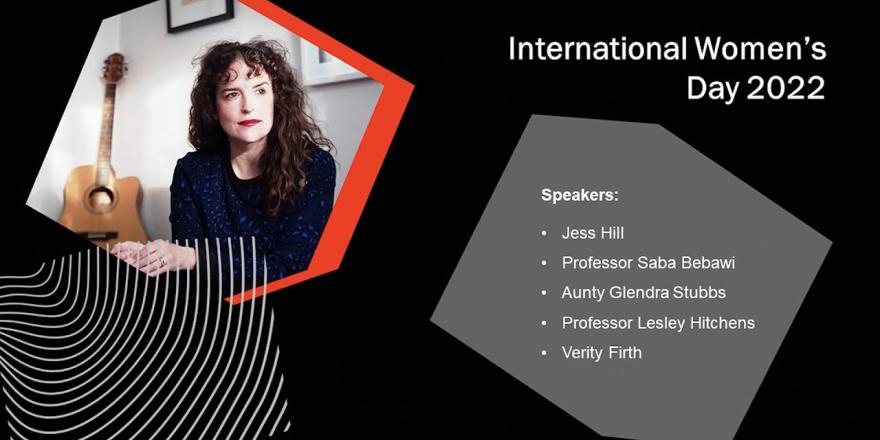
In this session, to mark International Women's Day 2022, author and journalist Jess Hill spoke with UTS's Professor Saba Bebawi on the ongoing reckoning in Australian society and politics to end sexism and gendered violence.
2oFP1evBTNI

Descriptive transcript

Thank you for joining us at today's event. It's a real pleasure to be with you here today. I'm really sad that we have converted this to an online event. We absolutely were hoping to do it in person. We were very excited that we would all get to be together at UTS on International Women's Day. But of course, the severe weather and the advice from the state government about not catching public transport over these two days really made us err on the side of caution and shift to an online event.

It has been a really difficult time for a whole lot of people, so I really want to extend my sympathy and support from UTS and from the Centre for Social Justice and Inclusion to those that the floods have affected. We're really delighted, although virtually, to be here with all of you to celebrate International Women's Day. This event is just one of many that are happening around UTS to showcase the important work that's being done to tackle gender inequality in our country.

I'd like to begin by welcoming Aunty Glendra Stubbs. Aunty Glendra is the UTS Elder in Residence, and she's going to open today's event and conduct an Acknowledgement of Country. She brings a wealth of experience and knowledge to UTS, and she's a mentor for all students and staff. She's also the former CEO of Link-Up Aboriginal Corporation and Aboriginal Engagement Advisor with Knowmore, which is the non-government legal organisation supporting people giving evidence to the Royal Commission into Institutional Responses to Child Sexual Abuse. Aunty Glendra is extremely passionate around out-of-home care issues, in particular the younger Aboriginal generation in the system. She has been an advocate for over 30 years and is a trained counsellor.

So I'd now like to welcome Aunty Glendra to do an Acknowledgement of Country.

Thank you, Verity. I don't tell people I'm a counsellor, because no one wants to talk to you then. But if you say you're the Aunty, everyone wants to talk to you, eh? So thank you, Verity. It's always wonderful to be in your presence.

Happy International Women's Day, in solidarity with women facing poverty, violence and war across this planet. I want to also acknowledge the achievements of strong women that have left this planet a better place. Hugs to them and anyone that has lost a strong woman.

I remember meeting these young women in Warburton, which isn't Warburton that's in the city. It's Warburton way out in the remote community. And it was women there that have brought that community into a much better place. They decided that the kids weren't getting lunches, so they started doing hospitality. Then they realised that the elders weren't getting looked after. So this is all bringing employment—employment to the young ones, employment and big support. So that community is now one of the most thriving communities, all by a few women saying, "We want our kids to be fed well. We want our elders looked after. We want our young ones in work." And that was all from a few women. So a few women can do that—think of what we can do as lots of women.

And people at UTS and people who are on the virtual are all articulate, educated women. So no pressure, but we're all depending on you, eh?

So, Yolamadumurrung Galindera. So Glendora or Galindera, which is my name, means peaceful waters. I'm peaceful and I'm calm until there's not social justice, and then I become the raging wild river. Sometimes you're given a name for a reason, I believe.

So, like Verity said, I am the elder and I would like to acknowledge and pay respect to the traditional owners, the Gadigal people, where the UTS campus is, and of the Eora Nation. I'm on Darug and Gundungurra land in the beautiful Blue Mountains, and I'm sure you're all on a different land.

So I put out a little challenge to find out, in the area that you're at, who are the traditional owners of that land? Try and learn a word, just hello, like Yolamadumurrung is hello. Yama is hello in Sydney. So yeah, just a little challenge out there by the Aunty.

As we share our knowledge, teaching and research practices within this university, may we pay respects to the knowledge embedded forever within the Aboriginal custodians of Country and acknowledge their struggles and their strengths, so that we can have opportunities that weren't afforded to them.

And I think one of the best opportunities that we can have is the opportunity for higher education, and UTS is a place where you can be the best you are, and you get supported in lots of ways to be the very best you are. So I'm always proud to put my hand up and say, love UTS, love all that it does. And I can't say how honoured and privileged I am to be in all your presence.

So big, happy International Women's Day, and think of our sisters all around the planet.

Thank you, Glendra. Thank you.

It's now my pleasure to introduce Professor Lesley Hitchens, who's the UTS Acting Provost and Vice-President. Lesley joined UTS in 2008 and she served as Associate Dean (Research) and then became the Dean of the Faculty in 2013. She's now, of course, our Provost. So over to you, Lesley.

Thank you, Verity. And Aunty Glendra, thank you also for that really powerful acknowledgement, and acknowledgement as well of the day that's bringing us all here—International Women's Day.

It's my great pleasure to welcome all of you to this virtual celebration of International Women's Day here at UTS. As a community at UTS, we come together to recognise both the outstanding achievements and the successes of those fighting gender inequity, but also to take time to highlight the ongoing issues and work still to be done.

And there is a lot of work needing to be done in Australian society and through our institutions, and that has been so starkly demonstrated over the past year. I'd also just like to take a moment to acknowledge the women and children of Ukraine who are caught up in this terrible situation, and to remember them on this particular day.

Today's keynote speaker, Jess Hill, recently wrote an essay titled "The Reckoning", which is the topic of today's conversation and a reflection on the collective rage at the lack of accountability and change in our society.

Gender inequity and gendered violence is a wicked problem worldwide. It doesn't exist in a vacuum—it's compounded by the intersection of other social issues. Culture, race, visa status, income, age, geography, class, beliefs and sexuality are all inseparable factors in how women experience life and how we as a society respond to their experiences.

The rage that Jess Hill writes about, and that Aunty Glendra just talked about—the raging waters—is fully justified, and we do not need to apologise for that rage.

Universities, though, must contribute their support and considerable resources, working alongside the experts in communities and frontline practitioners to tackle the issues of gender inequality and race. We exist for the public good, not just for those who pass through our doors, but for all civil society.

Our vision here at UTS is to be a leading public university of technology, recognised for our global impact. And we know that we can only achieve that vision when positive social change is at the heart of all we do.

We have to challenge stereotypes, fight bias, broaden perceptions and remedy injustices where we see them.

Here at UTS, we believe everyone has the right to live, study and work safely, and we are deeply committed to continuing our work to ensure that our university community is safe, inclusive and respectful for everyone.

So thank you for joining us today to be a part of this really important conversation, and a huge thank you to Jess Hill and Professor Saba Bebawi. We can't wait to hear from you. Thank you.

Thank you very much, Lesley. That was a wonderful opening.

So now to the business of our event. It's my huge pleasure to welcome up Jess Hill for today's conversation with Saba Bebawi, and it's going to be great. So I'll introduce them both to you now. But before I do that, I also want to quickly point out that there will be an opportunity to ask questions.

So if you do have a question, what we want you to do is to type it in the Q&A box, which you'll find in your Zoom control panel. The good thing about the Q&A box is that you can then upvote questions that others have asked. So that means that—I don't know how Saba's going to do it, but I often use the ones that have got the most votes because they're usually the best questions. So you can upvote other people's questions, but remember, please try to keep your questions relevant to the topics we're discussing here today.

I also want to apologise. We normally have closed captions for all of our webinars, but we weren't able to do that today because we shifted to online so quickly. We shifted just yesterday, and every single closed captioner in Sydney is currently doing closed captions for other Women's Day events. So we apologise for that, and we'll do better next time.

Professor Saba Bebawi is the Head of Discipline for Journalism and Writing at the School of Communications at UTS. She has published on media power and the role of media in democracy building, in addition to investigative journalism in conflict and post-conflict regions. Professor Bebawi has worked as a journalist since 1995 and is also a media development and policy consultant and a media trainer.

So we're very excited to have Saba here today to lead this conversation with Jess Hill.

Jess Hill probably doesn't need a whole lot of introduction. Jess is a journalist, author and speaker who focuses primarily on social issues and gendered violence. Jess's reporting has won two Walkley Awards, an Amnesty International Award and three Our Watch Awards.

Her first book, "See What You Made Me Do", on the phenomenon of domestic abuse and coercive control, was released in 2019 and awarded the 2020 Stella Prize. In 2021, it was adapted into a series on SBS. Her recent projects include a podcast series on coercive control and patriarchy called "The Trap" and a quarterly essay on how Me Too has changed Australia, titled "The Reckoning", as Lesley's already mentioned.

UTS is incredibly lucky because we had Jess as the inaugural journalist in residence with the Faculty of Arts and Social Sciences, which she was named in 2020. So we feel like she's one of ours.

Welcome, Jess. It's a real honour to have you here.

Over to you, Saba and Jess.

Thank you, Verity. Thanks, Lesley. And thanks, Aunty Glendra. And thanks, Jess, for being here.

I'm really excited to have a chat with you and we'll keep it relaxed and informal. I thought what we can do is I'll ask you a few questions and then you can answer as much as you want, and then we'll open it for questions after that if there's anything that we've missed, if that works for you.

So I guess the first question I'd like to ask you is: you believe that the Me Too movement has morphed from raising awareness of the ubiquity of sexual violence into an accountability movement. Tell us, what's the difference?

Well, thank you, Saba. Thanks, Verity. Thanks, Aunty Glendra. Really appreciate being invited to speak today. There's so many things that we can talk about on International Women's Day, and it's a real pleasure to be with you guys today.

So, what is the difference? That's what I was really contemplating as I wrote this essay. We've had consciousness raising since the 1970s, when it became the most prevalent, where women would gather in living rooms and talk to each other about the experiences they'd had, when they started to get this sense of a commonality of experience. So many of them had experienced harassment or sexual assault and started to strategise in those lounge rooms as small groups of women as to what they were going to do about it.

I think what has really typified the consciousness raising movements has been very much focused on awareness raising. Me Too had that awareness raising component, but the awareness raising happened as a result of the way that Me Too, as it launched in 2017—the Hollywood version, not the Tarana Burke version, which launched a decade earlier—had at its heart the need for accountability.

So in a way, as I wrote in the essay, this wasn't the consciousness raising movement of old, which is like, "I was raped and let's discuss what rape is. Let's discuss how it fits into the broader system of patriarchy." It's, "I was raped and he is the one who raped me, and they are the ones who protected him."

That was building on at least 20 years—it's hard to put a pin in the beginning, I don't think it has a beginning point—but at least 20 years of us really coming to terms with not only the nature of perpetration of sexual violence, but the nature of how institutions will form a protective ring around perpetrators, especially when they have power.

So I think the reason why Me Too raised awareness is because suddenly women were naming the institutions and the rapists and the harassers. There was this sense, I think, amongst everybody who was watching it, like, "Oh my God," either a sense of horror or a kind of mixture of exhilaration, a sense of a floodgate opening, but really something quite unprecedented.

But I think also, as I've written, in the amygdala of men worldwide, that old reptilian part of the brain that really processes fear, it's like, "This time they're coming for us. What have I got in my history? Have I done something wittingly or unwittingly that could have me become Me Too'd?" It was a totally different landscape.

The accountability side of it was not ever part of Tarana Burke's original mission—not that she doesn't want men to be accountable or perpetrators to be accountable, whoever they are—but her mission was really about healing and about solidarity and support.

Me Too, as it launched in 2017, off the back of the Harvey Weinstein exposé and really off the back of Trump being elected and the rage around that, was something else entirely. It was a total coincidence—well, we don't know this, but it's likely it was a coincidence that it too used "Me Too", although it's obviously a powerful phrase.

It's a happy coincidence, because I think had we just had a Hollywood approach to Me Too that then did go viral around the world, without a grassroots basis, I don't think we would have seen the longevity that we've seen of Me Too.

In fact, I think Tarana Burke, because she was able to step in and say, "Hey, wait a minute, I've been using this phrase for the last 10 years to do this work. Please don't just run away with the work that I've been doing, even if you're doing it inadvertently." But because she was able to step in, reclaim the movement, she's been able to sort of rescue it from becoming quite superficial. She's connected it back to the work.

And that's unfortunately what we keep on having to do—we have a very ahistorical approach to some of these movements. When something flares up, as it did again last year, we can really focus on what's happening in the moment and the people who are representative of the moment, and neglect to call upon and to platform the people who have been doing the grassroots work for years.

And I think in Australia, I know there's been a lot of conversations in the last 24 hours or so about a new group of women, including Grace Tame, Brittany Higgins, Lucy Turnbull and a bunch of others who are starting a campaign—all of whom deserve to be there, I have no problem with them starting a campaign the way they do.

I think that sometimes, aside from the diversity conversation that's been had about that, is actually just, you know, where are those grassroots people? Where are the people with the decades of experience working in gendered violence?

So I think that if we're going to have an accountability movement, it's not just about raising awareness, but it's about really not just holding perpetrators accountable but seeding really long-term change. We've got to stop reinventing the wheel every time these flashpoints occur and see it instead as this slowly evolving weather system.

Use whatever metaphor you like, but that's the one that made sense to me—this is a firestorm in a slowly evolving weather system. To understand what the firestorm means and what it portends, you also have to understand how the weather system developed and how the firestorm will affect the weather going forward, but to have that whole spectrum of experience present in how we prosecute it now.

Thanks, Jess. That's really interesting. And just building on that, especially in relation to your point on it's about long-term change, how does moving from awareness to accountability change the language we as a society and the media speak about perpetrators and victims or even survivors?

Yeah, it's a good question, because I think that, well, first of all, it's not even so much that—I think the language has not adequately changed to reflect the accountability moment that we're in. I think we still hide in the passive voice a lot.

I wrote something about that in the introduction to the essay, which was something that came to mind when the Women's Safety Summit was on. I was sort of stirring—I'm not suggesting that you just adopt this idea—but what would our conversations look like if we called it a "men's violence summit"?

Because essentially, that's what we're talking about the whole time. When we talk about women's issues, we're talking about men's violence. Why are they women's issues to begin with? It sounds like a lot of men who've got a lot of issues that are subjecting women to them. So maybe we talk about men's issues.

But I don't actually think that we have made the shift in our language to an accountability language where we use active language.

But I think that the accountability part of Me Too has definitely changed, or it has influenced, the sorts of conversations that have happened within that. And I think what's particularly forward-thinking and progressive, if not uncomfortable at times, is on days like International Women's Day—I just went to one of those sort of rah-rah breakfasts, which I always feel completely out of place in because I'm just not a rah-rah; my inner critic is just far too enlarged for that.

But, you know, the speakers there, particularly one speaker, Khadija Gbla, her address was all about how do you hold yourselves within the sisterhood accountable? So I don't want to divert from the very particular problem of men's violence, but the accountability movement has also, I think, filtered down into feminism in a way that was not happening to this extent prior to 2017.

When I say was not happening, not that women of colour were not trying to hold feminism to account, because that's been happening since there was feminism—Sojourner Truth, over 100 years ago, was holding feminists to account—but the platforming of this conversation, that accountability has actually become a theme within feminism that is circling around itself and going around in feedback loops, I think is really positive.

And I think that also, like when I first started writing the book on domestic abuse, I was writing the chapters on policing and on the courts. Back then, a lot of the media reporting on police responses to domestic abuse were pretty positive.

There was a sort of a quid pro quo—if you give positive coverage, you're going to get another ride-along. A ride-along gives you proximity to the action. For people who don't know, a ride-along is where journalists literally go out with the police and attend these call-outs. It makes for good copy, makes for good television.

I'm not suggesting that journalists have just sold out for this, but that level of access was something that people were seeking because they wanted to show what domestic violence looked like, and there's not many ways to do that aside from going on a police ride-along and seeing just after the moment of crisis or right inside the moment of crisis.

But—and I had also been guilty of this—in preferencing that, I had internalised the point of view of police, because they'll always take you out with the police who are the progressive ones and who are doing the best jobs; they're not taking you out with the guys who are getting the complaints against them.

So I found it—not uncomfortable, I don't have a problem with challenging police—but it was a thing that I had to do to get out of that old mindset and to do something that wasn't being done so much back then.

Now, since then, and I'd say really with the coalescence of Me Too and the Black Lives Matter movement, police have come under incredible scrutiny. Police, the courts, the family courts, our politicians—this whole thing of accountability that really was generated by Me Too and the rage about, particularly about Donald Trump being elected, despite or even because he had come out so overtly as a misogynist and a racist, to name just two of his problems.

That, I think, reminded people what was at stake if we do not hold these institutions accountable, if we coast. And so in that way, again, none of this stuff—Me Too doesn't operate in a vacuum. Me Too has been very much affected by Black Lives Matter, it's been affected by a number of different intersecting movements, and obviously the political climate in general in different countries. It shows up in totally different ways depending on which country it is taken off in.

So really, when we're talking about Me Too, we're talking about a particular movement about sexual violence and sexual harassment and mostly women's safety and the safety of non-binary people. But generally speaking, this is all happening inside various systems within which there are feedback loops and things that are changing the way that we come at it.

And I think the most hopeful thing I've seen about International Women's Day today has been—it's like we've been talking for long enough about gender equality, talking for long enough about men's violence to now feel comfortable enough to say, you know, we're now feel comfortable enough—and when I say feel comfortable enough, we're being pushed by women of colour—to address racism, to foreground racism.

And those voices are being platformed, I think, in ways that we haven't seen in years previous. That's what a sophisticated conversation provides the space for. But women of colour are still having to take it—it's not just being given to them. They're still having to fight and argue for it and to cajole and to make women like me, white women, uncomfortable about their role in this. That's the job that I think is the next phase of this.

And building more into that conversation and still speaking of language, what do you think are some of the movement's strategies to hear and engage audiences across spectrums and intersectional experiences and also respond to them?

I'll start with the political spectrum, because I wrote briefly about Nina Funnell's #LetHerSpeak campaign, which was a campaign to change laws and to educate people in Australia around sexual violence and being able to disclose in public.

I thought Nina Funnell really understands, as someone who's worked at the grassroots often does, that change doesn't just happen simply because it should or because it's fair or that it's deserved. It can't be just pushed through with blunt force; it has to be strategic.

What I thought was brilliant about Nina's #LetHerSpeak campaign is probably the same thing that others might find distasteful, and that is that she ran it in the News Limited newspapers. This is a campaign for and about victim survivors of sexual violence—not a natural fit with News Limited tabloids.

But what she did is she knew how important it was to use this as a teachable moment. As she said, every time there'd be a shift in the law or the campaign would have another win, she'd use that as an opportunity to platform that particular survivor—and there were 16 survivors—and use it to educate the readership on what that particular survivor had come up against, whether it had been barriers for being disabled, for being trans, for being whatever it is that they had experienced.

Now, as she said, News Limited readers generally were not going to be interested in just stories about sexual violence packaged in that way. But the reason why it was so successful as a campaign and so popular was that she didn't frame it as an issue of sexual violence, she framed it as an issue of freedom of speech. News Limited readers are very activated by freedom of speech issues.

So that meant that conservatives who would normally resist that kind of messaging were suddenly being engaged as well. And that's the point. Sometimes I think the women's movement, perhaps when we talk too often just to ourselves or to the choir, we can get sort of trapped in shoulds and feeling.

I know when I started writing my book, part of it—there was an emotional block I had to get past, which was like, "You should all eat your vegetables. I'm eating the worst vegetables, you can just have two beans," you know. But that's really not a helpful approach, because actually no one has to read my book. No one's holding a gun to their head. I have to make it something they can't put down.

That was the strategy that I tried to do—not a guaranteed strategy, but it was something that I worked very hard at. I think Nina opening that up to such a broad political spectrum was a stroke of genius.

In terms of intersectional work, as I said, Tarana Burke's grassroots movement for young women of colour was very much about connecting communities and doing that work on the ground. Of course, that continues as it always has in Australia, in various communities.

I'd say Me Too has not been successful in appealing to intersectional experiences. Generally speaking, it is trapped—even as we kind of move out of the trap of the ideal victim, which previously has been the victim who cries but doesn't cry too much, preferably white, middle class, someone you can have sympathy for, maybe someone with obvious bruises, or someone who can prove what happened to them beyond a doubt where there were witnesses.

There's a lot of things that have gone in to create the ideal victim such that it actually only covers a very small number of people. Particularly, they should not be angry—that is not an ideal victim's type of behaviour.

Now, that kind of ideal victim has been overturned, but we kind of have replaced it with another now, which is white—not necessarily middle class, because Grace Tame is not middle class, she came very much from the working class, and her mannerisms and everything are very much representative of that, and she's not shy about that.

But I guess that kind of able-bodied approach, and people that we like to look at—we don't have a problem with them being angry so much anymore—but yeah, there's still quite a narrow paradigm.

But I think also, it's difficult—it will change. I think back to what things were like when we had the only models you'd see were size six or size eight, and now how that's changed and how we now have plus-size models, we have a greater diversity of cultural backgrounds, all that sort of thing.

That had to be disrupted; we had to see that that was our problem, that we didn't have enough diversity, and then that had to be disrupted by brands and by fashion designers who were brave enough to do that. So I think we're probably on the way to doing that.

It's no surprise that, when you think about this whole ideal victim paradigm and the notion of even investing victim survivors of sexual violence with power, with cultural status, expertise—that is, for Western societies or Western cultures, very new.

You read stories like this recounted from Indigenous societies—one in particular, an Ojibwe woman who was raped by a neighbouring group, returned to the tribe and was revered as a warrior and a medicine woman. Her experience, what she was subjected to and what she survived, was central to what she became and became known as in that group.

I don't remember a time in the last 2,000 years of Western civilisation when that has been the case for victim survivors of sexual violence, who've either at best been pitied, at worst pathologised, blamed, ignored, disbelieved, et cetera.

So it's not surprising that the public, in making this massive leap to seeing victims—not only giving many victim survivors the benefit of the doubt, but raising a few victim survivors to icon status—that they have done that in that old prism of preferencing white, able-bodied, attractive women. That's not a surprise.

But now, yeah, the push is on to expand on that and to be like, how do we actually get that same public fascination and attention? Not just, "You should watch people from all backgrounds." We have to find a way to make them fascinating.

I know that sounds cold or harsh or like it's coming through a media lens, but honestly, a big part of my work has been to try to figure out how to make domestic abuse fascinating. That's actually what we have to do as storytellers or as journalists—if we want to get the public to pay attention to stuff that they don't want to pay attention to, we need to make it fascinating.

So that's what I'm wondering about—how do we do that? How do we shift this now forward so that it doesn't get trapped in another paradigm?

That's really a fascinating point. I might just pick a bit further on this, Jess. You've written that, and I'll quote, "It's no coincidence that here and overseas, Me Too landed so powerfully in two fields: entertainment and judiciary. They are two of the most influential parts of our culture. One establishes dominant cultural narratives, and the other decides what is socially permissible." So these are highly visible and high-profile industries, and spotlighting them prioritises the experience of privileged women. Building on what you've just said, how can we harness that same energy and scrutiny across all industries and institutions?

Yeah, it's a good question. Just before I answer that second part of the question, I think it has spotlighted more privileged women. As I point out in the essay, a lot of the women who have been Me Too'd, or who have become high profile, actually did not do so with their consent. Their stories became public actually largely against their consent, in various ways—where they were outed for political gain, you know, in the Geoffrey Rush case, for example, because a newspaper wanted to have a scoop and a front page, didn't want to do the work to actually back it up.

So while it has prioritised the experiences of privileged women, those women themselves have been extremely disadvantaged by the spotlight that was put on them. It is actually quite unique about the Australian situation just how few women who were written about in this context did so of their own volition.

The other thing I'd just say is that, even though it's put the spotlight on the women—because of course we need a narrative and we need to hear about the actual people involved—I'd say that the actual focus on these industries wasn't really driven as much by concern for the women, although that's not totally insubstantial, but more for the integrity of the institutions they were working for, and the influence of them.

So in the judiciary particularly, the shock to people who were not already aware of it—which was apparently most people within the judiciary and the judicial profession—that someone like Dyson Heydon could be so predatory, and known to be so predatory, was largely connected not just to the up-and-coming graduates that he had harassed and turned off working in the law, but the fact that somebody in that position could be of that character was a paradigm shift for people.

In entertainment, I mean, it's obvious, because these are people that, for a lot of people, are either heroes or occupy a myth-making part of Australian culture, and the people who are really having a huge influence

If you are interested in hearing about future events, please contact events.socialjustice@uts.edu.au.

If we are going to have an accountability movement, it's not just about raising awareness... it's about seeding long-term change. We've got to stop reinventing the wheel every time these flash points occur and see it instead as a slowly evolving weather system. Jess Hill

Speakers

Jess Hill is an investigative journalist who has been writing about domestic violence since 2014. Prior to this, she was a producer for ABC Radio, a Middle East correspondent for The Global Mail, and an investigative journalist for Background Briefing. Her reporting has won two Walkley Awards, an Amnesty International Award and three Our Watch Awards. 

Professor Saba Bebawi is Head of Journalism and Writing at UTS. She holds a PhD in international news and has published on media power, the role of media in democracy-building, and investigative journalism in conflict and post-conflict regions. She has authored a number of papers including Investigative Journalism in the Arab World: Issues and Challenges.

Share