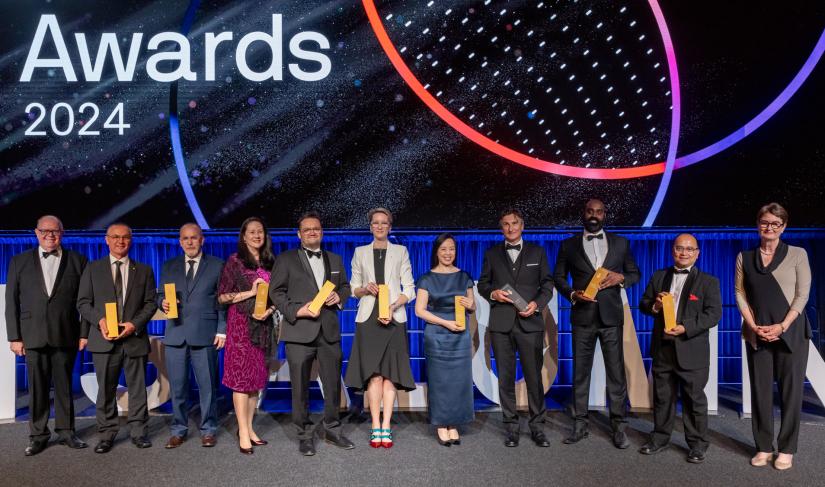

This year's UTS Alumni Award winners are leaders and champions in their fields, have uplifted their communities and made inspiring contributions to society. They truly represent the qualities of innovation and creativity that we value at UTS.
Law Award and Chancellor's Award for Excellence
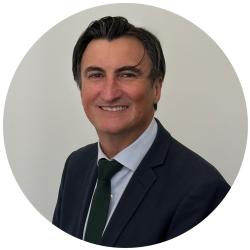
Peter O’Brien
Bachelor of Business/Bachelor of Laws, 1996; Graduate Certificate Legal Practice, 1998; Graduate Certificate CLP, 1999
Pursuing social justice has been ingrained in Peter O’Brien since his formative years, with his family upbringing and his mother and grandfather’s influence teaching him the value of doing good. Peter’s impressive career shows his lifelong commitment to advocating for the disadvantaged.
Peter became politically aware and active in his pursuit of justice during his undergraduate Business and Law degrees at UTS. He stepped in as an ally to overseas scholarship students who came up against the introduction of fees beyond their means. During his time at UTS, he was President of the UTS Student Representative Council, a member of the University Council and a board member of the UTS Union. These experiences powered Peter’s passion to use his skills to bring more equity into Australia’s justice system and to advocate for individuals against the state and powerful institutions.
Today, Peter is the Principal Lawyer at O’Brien Criminal and Civil Solicitors, a firm he founded in 2007. Under his leadership, the firm is a beacon of hope for many legally aided and pro bono clients seeking justice and legal representation. Peter’s conviction to build a firm focused on representing those at a disadvantage was influenced by his early career at the Children’s Legal Service of Legal Aid NSW. There, he acted for the most vulnerable in the community – a role he later continued at the Northern Territory Aboriginal Legal Services, working with Indigenous communities. His selfless work was recognised when Peter was awarded Children’s Lawyer of the Year for the Northern Territory in 2001. He was also awarded a Human Rights Law Award from the Australian Human Rights Commission in 2016 and the NSW Law Society President’s Medal in 2023.
Known in the legal field as an ‘advocate for the disadvantaged’, Peter’s efforts have made a positive impact beyond his clients. His legal expertise was instrumental in the High Court case of Fairfax v Voller in 2021 – a case that revolutionised the sphere of defamation law as it applies to social media. Peter’s fearless advocacy has also set notable precedents for police accountability in NSW and throughout Australia. His representation for Bill Spedding in Spedding v The State of NSW set a landmark ruling regarding malicious prosecution and misfeasance in public office against NSW Police. It also led to a national record damages award for his client.
Peter continues to influence law reform in Australia. His commitment to supporting the underrepresented and ensuring access to justice stands strong.
I think it’s innate for any lawyer with a sound approach to law, if they're interested in pursuit of justice, to instinctively want to help those who are disadvantaged.
Arts and Social Sciences Award
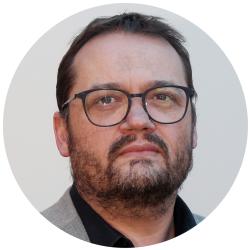
David Hobson
Bachelor of Education (Special Education), 2nd class Honours, 2001
Growing up on the northern beaches of Sydney, Dave Hobson always felt disconnected from school. His teachers described him as having unfilled potential which only made him feel more disillusioned. After leaving school, he worked at a petrol station for a couple of years then went back to do his HSC at Bradfield College – a pilot school in NSW. It was this experience of seeing education done differently that inspired him to become a teacher.
During his time as a student at UTS, Dave’s lecturers role modelled a strengths-based approach to teaching that he still uses today. But when he first started studying, he wasn’t particularly drawn to special education. In his second year of his primary education degree, he started to think teaching wasn’t the right path for him. It was a conversation with one of his lecturers that made him see that special education might be a good fit and he switched, thinking it would give him the skills to help students with additional needs in his classes.
Now, Dave is the principal of Cook School – a government school that educates students from kindergarten to year 12 with emotional disturbance and behavioural disorders. Since he started the role, Cook School has more than doubled its enrolment capacity, and implemented a number of innovative programs to meet the needs of students with complex emotional, behavioural and mental health issues.
Thanks to the work of Dave and his incredible team, Cook School was recognised as the Special Education School of the Year at the 2023 Australian Education Awards. It then went on to win Australian School of the Year, chosen from winners across all categories.
Over the years, Dave has been consistently recognised for his leadership and impact on the field of special and inclusive education including a World Teachers Day Award for Outstanding Contribution to Educational Initiatives from the Australian College of Educators in 2019. That year he was also awarded the Outstanding Educational Initiative – Director’s Award, Metropolitan South Operational Directorate from the NSW Department of Education.
More recently, Dave was part of a significant research project in partnership with UTS and two other schools to demonstrate the power of a transdisciplinary approach to allied health support in schools. This million-dollar project was funded by Toyota through SchoolsPlus Australia.
I’m really proud of all our successes as a team. But for me, the biggest successes are when kids with complex trauma, mental health, neurodivergence or disability re-engage with education and we see the outcomes.
Community Alumni Award
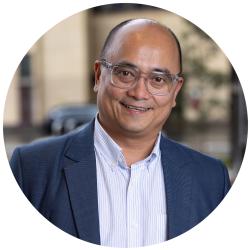
Dr Michael Camit
Doctor of Philosophy (Communication), 2021
As a teenager growing up in Tondo, Manila, Michael Camit was always questioning his world. After his dreams of becoming a priest were dashed due to his non-conformity and lack of obedience, he got a scholarship at the University of the Philippines to study a Bachelor of Arts in European Languages. From there he came to Sydney for further study, eventually completing a PhD in Communication at UTS in 2021.
Michael has always been passionate about righting inequality by educating and empowering marginalised communities to improve health outcomes. After arriving in Australia, he set up the first HIV positive Asian support group in the country. Seeing the communities he was working with receive translated health information rather than any substantial effort being made to address power imbalances planted the seed for his future career.
Since then, he’s developed numerous award-winning multicultural health communication campaigns, including the award-winning Pink Sari Project which increased breast cancer screening rates for women from Indian and Sri Lankan backgrounds from 5% to 24% in two years. He also successfully lobbied Breast Screen NSW to expand their language and ethnicity data for women from Indian backgrounds to include six Indian languages other than Hindi and Tamil. During COVID he provided advice on addressing health misinformation and anti-vaccine sentiments among migrant communities.
In his current role as Manager of Health Literacy for South-Western Sydney Local Health District, Michael has implemented a mental health literacy program in 10 languages. He’s also received $400,000 over two years from NSW Health in partnership with UTS to develop the South Western Digital Health literacy and refugee project, addressing lack of health resources for refugee communities. This project is aimed at giving refugee communities the education and resources to evaluate and assess health information, address misinformation and create social media content to promote health information that’s relevant to them.
During his time at UTS, Michael was touched by the kindness of the people he met. He learned to trust himself and focus on the impact he was making on people and communities rather than volume of publications.
I share what I know about the system with people and hopefully light a fire within them. My proudest achievements are when I see individuals or groups I work with become independent and excel, like the Pink Sari Project.
Design, Architecture and Building Award
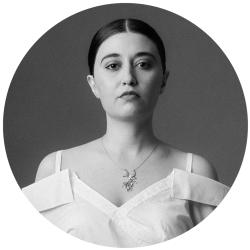
Noora Niasari
Bachelor of Design in Architecture, 2010
Born in Iran and raised in Australia, Noora Niasari’s childhood not only shaped the person she is today – it’s become a powerful platform. Now a film writer and director, Noora uses her work to highlight under-represented stories.
Her debut feature film ‘Shayda’, executive produced by Australian actor Cate Blanchett, has left an indelible mark on audiences worldwide. Drawing from personal experience, the film explores the challenges an Iranian mother faces as she seeks refuge from domestic violence. It sheds light on the Iranian diaspora experience and the struggles of Iranian women. Since its release, ‘Shayda’ has garnered international critical acclaim, including winning the Audience Award at the 2023 Sundance Film Festival and being selected as Australia’s submission for the Best International Feature Film at the 2024 Oscars.
It was during her time as a Design in Architecture undergraduate at UTS that Noora re-discovered her passion for cinema, encouraged by then mentor, Richard Goodwin, to become a storyteller. The seed was first planted at age 7 when her mother introduced her to the late Iranian filmmaker Abbas Kiarostami’s ‘Where is the Friend’s House?’. At the time, Noora would never have guessed that less than 20 years later, Kiarostami himself would mentor her in a filmmaking workshop in Barcelona. A dream come true for Noora, this mentorship and her background in architecture have influenced her visual style and narrative approach.
With an emphasis on curiosity and personal identity, Noora’s filmmaking style is notable for its emotional depth and authenticity. Addressing the sensitive issue of domestic violence, ‘Shayda’ resonates with survivors and advocates across countries and cultures. The film has sparked important conversations about domestic abuse and the need for support resources.
Noora continues to focus on stories that shine a light on Iranian women, currently working on an adaptation of Mahsa Rahmani Noble’s novel ‘Raya’. Her ongoing work is a powerful vessel for representation and cultural understanding in cinema.
It’s not about the piece of paper but what you learn about yourself along the way. Stay curious and open to the world. And never let rejection stop you from pursuing your dreams.
Engineering and Information Technology Award
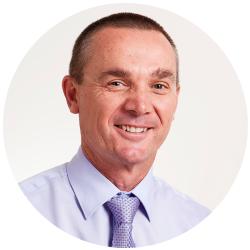
Warren Sharpe OAM
Bachelor of Engineering (Civil Engineering) 1st class Honours, 1985; Graduate Certificate Environmental Engineering Management, 2001
Growing up on a dairy farm on the NSW south coast, Warren Sharpe knew he wanted to be an architect or an engineer. He got a cadetship at Sydney Water Board when he was 18 years old, moved to the city and started a part-time Bachelor of Engineering (Civil) at UTS. Working during the day and mostly attending classes at night, Warren enjoyed learning on the job and in the classroom. It was a solid foundation to a remarkable career.
After graduating university, Warren landed a job with Eurobodalla Shire Council (ESC) as a Junior Works Engineer. By the time he retired 38 years later, he was the Director of Infrastructure Services and was responsible for all council infrastructure including community spaces, sewer and water services, emergency management, stormwater and flood management, and transport.
The council provided the variety and career progression Warren was looking for, but being able to shape the community for the better is what kept him there. Warren’s commitment to growing engineering expertise in the local government workforce has seen him heavily involved in innovative programs for cadets and trainees, in both professional and operational areas. He is known as a committed, passionate, humble and visionary professional, a dedicated mentor, and an advocate for the community.
Warren is also passionate about disaster resilience in public infrastructure and held the role of As Eurobodalla’s Local Emergency Management Officer (LEMO) for 16 years. He guided the Shire through the devastation and recovery from the extreme fires of 2019/20 working around the clock over a 100-day period.
Warren’s work has been recognised nationally, receiving the Order of Australia Medal in May 2014 for services to engineering and to the community. He was also named NSW and National Public Works Leader of the Year 2011.
Warren is the Immediate Past President and Emeritus of the Institute of Public Works & Engineering Australasia (IPWEA) NSW & ACT. Following his retirement from ESC he has continued consulting to government on models for improving regional roads, bridges and infrastructure. His expertise, commitment and genuine care is as impactful as it is inspiring.
In a regional space, the full gamut of infrastructure that supports the community is vital. You are helping to shape the community for the better.
Indigenous Australian Alumni Award
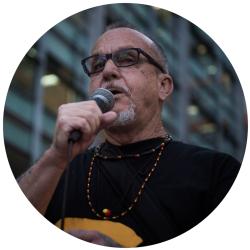
Uncle Ken Canning
Bachelor of Arts in Communications, 1988
Uncle Ken Canning – also known as Burraga Gutya – is from the Kunja Clan of the Bidjara Peoples of South West Queensland. A celebrated poet, lifelong activist and respected elder, he was the first Aboriginal person to graduate from UTS.
Growing up, Uncle Ken never imagined he’d become a writer. He was placed in a boys’ home when he was 10 and never received an education. At age 16, he was incarcerated in Brisbane’s Boggo Road Jail where he learned to read and write from a fellow inmate. He began writing craft as a mental escape from the rigors of prison life.
Uncle Ken’s activism began in prison. He would help smuggle messages out to raise awareness of fellow inmates who were wrongfully incarcerated and campaigned to get Aboriginal prisoners access to prison education programs. Over the years, he’s been a tireless advocate for Indigenous rights and a dedicated campaigner for prison reform, mentoring Aboriginal men in prison. He also mentored those just released in his role as a support officer at Rainbow Lodge in Glebe.
His activism has spread far beyond prison reform - he’s also been a strong voice in environmental activism and co-organised the Invasion Day rallies to protest Australia Day.
In 1985, Uncle Ken enrolled at UTS and studied for a degree in Communication while on parole and working as a cleaner part time. While still studying, he teamed up with the late Frances Peters-Little – the first Aboriginal woman to graduate from UTS – to campaign for an Aboriginal education centre. The centre, now known as the Jumbunna Institute for Indigenous Education and Research, was given the go-ahead in 1987 and continues to provide culturally affirming support to Aboriginal and Torres Strait Islander students at UTS today.
Through his plays and poems, Uncle Ken continues to advocate and raise awareness for Aboriginal rights. His poetry includes Ngali Ngalga, published in 1991 and Yimbama, published in 2015. He urges Aboriginal students to rise above racism and remember that creating change doesn’t rely on conscious activism.
You’ve got to operate from a position of love. Love for justice, love for people and love for Country you’re on. If you come from a position of hate, you’re no better than the people you’re fighting against.
International Alumni Award
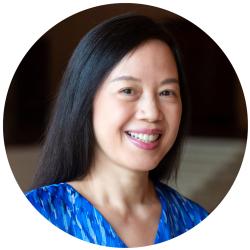
Pham Thi Bich Ngoc
Master of Laws (International Law), 2004
Thi Bich Ngoc Pham is an extraordinary woman, who has demonstrated her dedication to progressing international co-operation, social justice and creating more opportunities for young people through education.
Ngoc’s impressive career spans nearly three decades at the Office of the National Assembly of Vietnam (ONA), across several senior leadership roles including Project Manager and Director of International Co-operation Programs. She significantly contributed to strengthening ONA’s capacity and championed capacity building for young officers by promoting in-country and international training programs.
As the Deputy Director General then Director General for the Department of Protocol and International Co-operation, Ngoc was instrumental in facilitating the enrolment of selected Vietnamese MPs and administrative staff in various educational programs in Australian universities, including UTS. She also fostered and coordinated an internship program that allowed foreign post-graduate students to attend the Legislative Studies Institute of Vietnam Parliament for the first time in the history of the institute.
In 2017, Ngoc became Ambassador Extraordinary and Plenipotentiary of Vietnam to Sri Lanka and the Maldives – making her one of the youngest non-carrier female diplomats ever appointed by her country to such a position. As ambassador, she actively coordinated to further promote the trade cooperation between Vietnam and Sri Lanka, securing several vital industry partnerships during her service. At the height of the COVID pandemic, Ngoc worked tirelessly to help Vietnamese migrant workers in Sri Lanka and the Maldives. Her exemplary work had a meaningful impact on the lives of Vietnamese migrant workers in these two countries during this challenging period – including contributing to the Maldives’ efforts to cope with the pandemic by coordinating Vietnamese aid.
Over the years, Ngoc has earned a reputation for her high professional integrity, resourcefulness and dedication. Her devotion and contribution to fostering sustainable education programs means people in Vietnam can build their knowledge and skills to forge their own pathways and make their own contributions to society.
Ngoc holds bachelor degrees in Economic Law and Foreign Languages (English), as well as a Master of International Laws from UTS. Today, as the Deputy Director General for the Office for Party and Union Affairs at the ONA, she hopes to continue to help young people in her office gain new knowledge and perspectives and apply these in supporting Vietnam and its people.
Education gives people the foundation and knowledge that can help develop their career and contribute to society. And when we support people who are involved in the policy making process, that foundation will have a very positive impact for a country and its people.
Health Award
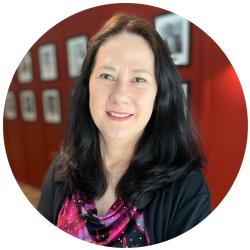
Adjunct Associate Professor Patricia Bradd
Doctor of Philosophy, 2018
Starting as a young speech pathologist in a small rural hospital, Patricia (Trish) Bradd quickly realised the importance of our public health system, and she’s been passionate about it ever since. Her speech pathology career gave her a deep appreciation of the breadth of clinical practice, and over 35 years she has progressed from purely clinical roles to influential management and leadership positions.
The opportunity to work with many patients and remarkable healthcare professionals underpins her current role as Director of Patient Safety at the NSW Clinical Excellence Commission.
This agency exists to support the public health service and enhance the system so staff can provide consistently safe, high quality and compassionate care. Trish and her team seek to understand systemic safety issues and challenges and work to develop practical, clinical-based solutions that are implemented statewide.
About six months into the role, the health system was thrown into uncertainty when COVID-19 hit. Trish was appointed as a lead executive to coordinate the CEC’s response to the pandemic, which included supporting a specialised infection prevention and control team and ensuring relevant system-level clinical patient safety and health worker advice.
Prior to this, she completed her PhD under the supervision of Professor Andrew Hayen and the late Professor Joanne Travaglia at UTS in 2018, which explored allied health leadership in the provision of person-centred health care. She was appointed an Adjunct Associate Professor here in 2019. Now an industry co-supervisor to PhD students, her doctorate highlighted her belief in supporting early and mid-career clinician progression into senior leadership roles, for improved health outcomes and better patient care.
While no longer in clinical practice, Trish is Chair of the Speech Pathology Australia Ethics Board. She was recognised with a life membership to the Speech Pathology Association this year for outstanding leadership and commitment to the organisation and the profession over many years.
The inspiration I get from the people I get to work with, it’s such an opportunity and a privilege. It’s a joy to be involved in things that are interesting, meaningful and where you feel you can make a difference. I'm very grateful for everything that working in public health has given me, especially the chance to give back.
Science Award
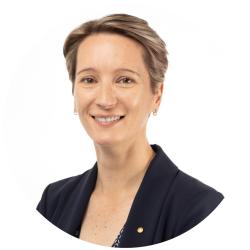
Kate Cole OAM
Bachelor of Applied Science (Biotechnology), 1999; Master of Environmental Engineering Management, 2000
Growing up, Kate Cole spent a lot of time around trades and construction sites with her electrician dad. From a young age she was drawn to science by an urge to make sense of the unknown and be involved in new discoveries.
Today, Kate is at the forefront of new discoveries as a multiple award-winning scientist and engineer. Her main focus is on the control of respirable crystalline silica (also known as silica dust) and advocating for the health of construction workers across Australia.
Named as an AFR top 100 woman of Influence and one of Science and Technology Australia’s Superstars of STEM, Kate is a leading advocate for the recent ban on engineered stone in Australia and new legislation to protect workers.
During COVID, Kate also advised state and federal governments on ventilation management and solutions, including respiratory protection and general health and safety. Her incredible impact on worker health and safety led to her being recognised in the COVID-19 Honour Roll in 2022 and receiving a Medal (OAM) of the Order of Australia in the 2022 Australia Day Honours.
None of her many achievements would have come about without collaboration with other professionals and institutions. It’s a skill she developed during her time studying science and engineering at UTS. Her undergraduate degree was the first time Kate had experienced working with people from completely different cultures and backgrounds to solve problems together and the friendships and networks she developed during her time at UTS are still a big part of her life today.
After 20+ years working in the industry, Kate set up her independent consultancy Cole Health. She continues to work with organisations as an occupational hygienist to help prevent worker illness and fatalities across construction sectors and land remediation. Her overarching goal is to eliminate preventable dust diseases in workers across multiple industries in Australia within the next 10 years.
My job is to push through the grey areas, gather as much evidence as I can and make the best decisions with the information I have to do good in society.
UTS Business School Award
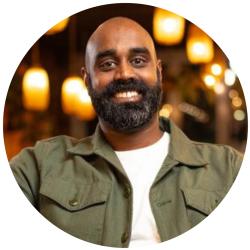
Shaun Christie-David
Bachelor of Business (Finance), 2011
Social entrepreneur, Shaun Christie-David believes food is a powerful catalyst for change. It allowed him to connect to his Sri Lankan heritage and to people across different cultures, backgrounds and generations. This belief, coupled with the deep-seeded sense of social justice inherited from his mother, has helped Shaun change the lives of countless people from marginalised communities.
Shifting from a career in finance into the for-purpose sector, Shaun has used his commercial nous to drive strategic partnerships, diversify revenue streams and innovate income generation for a selection of not-for-profits and charities over the past decade.
He created Plate It Forward in 2020 – a collective of soon-to-be six social impact restaurants that provide food relief, training, and employment opportunities to people who need it, including refugees and asylum seekers from Afghanistan, Sri Lanka and Ukraine. The organisation’s meal donation initiative, The Social Meal, also delivers up to 2,000 restaurant-quality meals each week to community members who are facing food insecurity – and repurposes over 800kg of food each week that would otherwise be discarded. Since its foundation, Plate It Forward has employed 150 staff members, paid over $3.5 million in wages and provided 75,000 hours of training. It has also delivered over 600,000 meals to people in need across the globe.
In the years prior, Shaun worked in partnership with the Australian Federal Government to develop the Aboriginal Health Television Network. The Network is a world-first in-language, culturally appropriate platform dedicated to improving health outcomes and health literacy for Aboriginal communities and First Nations people. Since its launch in 2019, the network has been instrumental in changing the conversation around First Nations health.
In 2009, Shaun completed his Bachelor of Business majoring in Finance, Financial Planning and Banking from UTS – an experience he says opened the doors that led him to where he is today.
In recognition of his work, Shaun has received many prestigious accolades including the inaugural Time Out's Hospitality Future Shaper, the AMP Tomorrow Maker and the Westpac ChangeMaker awards. In 2021, Plate It Forward was also recognised as the Community Human Rights Champion by the Australian Human Rights Commission.
My mum always said when you have an opportunity, make sure you give back to people. That’s what we’re doing with Plate It Forward – using the power of being an employer to empower people.
Young Alumni Award
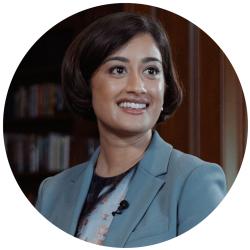
Jessica Washington
Bachelor of Arts in Communications and Bachelor of International Studies, 2018
Jessica Washington aspired to be a journalist from the young age of 10. Encouraged by her teacher at the time, her love of writing led her to enter a local newspaper competition. After seeing her name published in print, she knew without a doubt that journalism was her future.
Today, Jessica is dedicated to human rights advocacy through her work as a prominent foreign correspondent at Al Jazeera. It is a job she has always dreamed of and she credits her success to the teachers who supported her along the way. Teachers like Jenna Price, renowned Australian journalist and a regular columnist for The Sydney Morning Herald, who guided Jessica to discover her niche in journalism.
Focused on amplifying the voices of marginalised communities and underrepresented voices throughout Asia, Jessica fearlessly tackles challenging situations through her reporting. During her outstanding career to date, she has reported on high profile elections, legal cases and natural disasters across Asia. More recently, she got an exclusive interview with the President Elect of Indonesia, the first journalist to acquire such an opportunity.
Her reporting has done more than raise awareness – it has led to tangible outcomes. From exposing human rights violations to holding authorities accountable, Jessica’s work has made a real difference. This impact has even been recognised on a global scale, with international bodies like the United Nations commending her investigations.
Beyond the headlines, Jessica works tirelessly behind the scenes, collaborating with legal experts to address concerns affecting freedom of expression and minority rights.
Jessica’s work is built on the foundation of her academic pursuits. She says she still applies her learnings from studying a Bachelor of Communications (Journalism and International Studies) at UTS, especially her immersive year in Beijing. About to start her Masters in International Human Rights Law at Oxford University, Jessica is keen to look deeper into issues and enhance her ability to advocate for those who need it most.
The value of good journalism is contributing to positive change. Even on a micro level – local journalism is equally important and all journalism is fundamentally local.
*Alumni Award profiles written at the time of the Awards Presentation in 2024.