


- Posted on 18 Nov 2026
Russia’s best known independent newspaper is dead, “strangled” as its inaugural editor-in-chief put it, after decades of intimidation and even the assassination of six of its reporters. Novaya Gazeta, since the start of Russia’s full-scale invasion of Ukraine in 2022, had been shunted online, endured many a police raid, had its donations platform shut down and has now been stripped of both its right to publish and the building from which its reporters have worked for years. It’s a sad ending for a publication which Mikhail Gorbachev helped establish in 1993 with money from his 1990 Nobel Peace Prize.
Gorbachev, the last President of the USSR, a figure mystifyingly reviled in his homeland for having brought about, if inadvertently, the end of Soviet communism, remained committed to the newspaper to his end. In 2006, he and the deputy president of the Russian Parliament, the Duma, bought a 49 percent stake in the Novaya Gazeta – the staff owned the remaining 51 percent. “The paper should retain its editorial policy”, Gorbachev said at the time. The editorial policy was to be fiercely committed to investigative journalism that exposed corruption, organised crime, state malfeasance and war crimes.
But its journalism brought it much heartache. Since 2000, six of its journalists have been murdered. Igor Domnikov who reported on business corruption, Victor Popkov who reported from Chechnya which was trying to break away from Moscow, Yuri Shchekochikitin who reported on organised crime, Anastasia Barburova who reported on Russian neo-Nazi groups, and Natalyia Estimirova who with perhaps the papers most famous reporter Anna Politkovskaya reported on war crimes in Chechnya as Moscow wrestled its insurgents into submission – all were killed for their journalism. Ominously, Politkovskaya was gunned down in the foyer of her apartment block on Vladimir Putin’s birthday in 2006 which in the heated, conspiracy laden atmosphere in Moscow at the time, and still, was enough to convince most that the order to assassinate her had come from the president about whom she had written so critically. No one ever used Politkovskaya’s office at the paper again. It became a shrine, everything preserved. Now Politkovskaya’s journalistic life lives in boxes stored for safekeeping – perhaps the paper’s journalists hoping they’ll be unpacked in a post-Putin Russia.
The years since Moscow’s feud with Kyiv began have been tough for Novaya Gazeta. The first online paper it published after the February 2022 invasion was in both Russian and Ukrainian, for which it received an official warning from the state censorship agency. Another warning came when it published material from Russian occupied Kherson, after which the paper itself suspended its online publication in Russia and moved to Europe where it opened a legally separate entity – Novaya Gazeta Europe where it continues to publish journalism highly critical of the Kremlin and its war in Ukraine even if it can’t be accessed inside Russia. The Moscow based journalists continued to work, but as one of its last remaining reporters noted of her colleagues:
They were afraid to come to the newsroom – but they came every single day. They went to the occupied territories, investigated, documented the repression, talked to people as people, without simplifying, generalising, or looking away. Many kept prison bags in their hallways – clothes and medicine packed in case of arrest. Everyone learned their lawyer’s number by heart. Everyone gave their neighbours a set of keys so – if anything happened – someone would water the plants and feed the cats.
For the Moscow publication, the kiss of death came in September with a government declaration that what remained of the paper in Russia was a foreign agent, which meant banks could no longer legally process donations to Novaya Gazeta and staff could not be paid. When the government evicted the paper from its Moscow headquarters, its long-time editor in chief, Dmitri Muratov, himself a Nobel Peace Prize winner told the BBC "There are different ways to commit murder. They chose to strangle us."
After its final editorial meeting in Moscow and as its reporters left the building, the last editor of the paper Sergei Sokolov defiantly declared: “We will live on. And I’m sure that this country that has fallen into this terrible time will finally stir. As soon as the slightest first signs appear, Novaya Gazeta will come back to you, our readers and our colleagues.”
The Kremlin too defiantly denies it had any hand in the paper’s woes and final closure. Kremlin spokesperson Dmitri Peskov told foreign reporters: “It would be wrong to say that the era of independent Russian media is ending. Russian media are very diverse. They’re multimedia, they’re developing quickly, and they operate in conditions of fairly tough competition. Of course, from year to year some outlets cease to exist and new ones take their place. It’s an ordinary, ordinary rotation process.” If Novaya Gazeta had met its demise in any other circumstances, perhaps. But the evidence of execution is clear.
Author
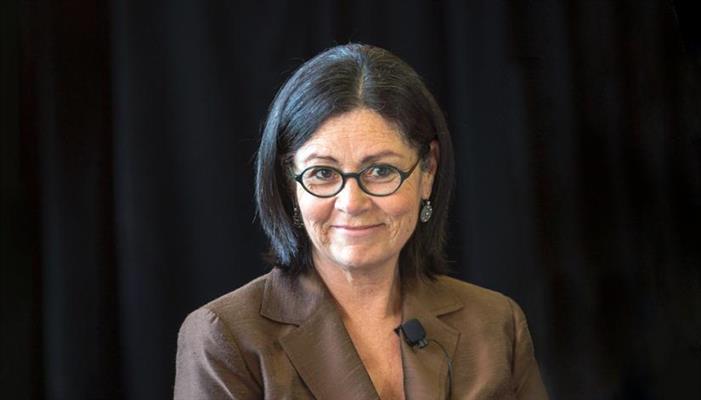
Co-Director, Centre For Media Transition, Faculty of Design and Society
Explore

News
Giving consumers somewhere to turn to when online services get it wrong
David Cazzulino and Stef Roberts-Thomson from the Telecommunications Industry Ombudsman explain why an independent ombudsman and a private right of action can...

News
Showdown over the digital duty of care
CMT Co-Director Derek Wilding looks at the current state of the Bill to introduce a digital duty of care into the Online Safety Act.
News
Frames, offence, and AI
Centre for Media Transition | From Gaza and Ukraine to France, One Nation, and Neighbours | Issue 19
News
Fog of war journalism
CMT Co-Director Monica Attard shares the CMT study of how four Australian media outlets framed the Israel–Gaza and Russia–Ukraine conflicts. The differences...
News
Giving consumers somewhere to turn to when online services get it wrong
David Cazzulino and Stef Roberts-Thomson from the Telecommunications Industry Ombudsman explain why an independent ombudsman and a private right of action can...
News
Showdown over the digital duty of care
CMT Co-Director Derek Wilding looks at the current state of the Bill to introduce a digital duty of care into the Online Safety Act.
News
Frames, offence, and AI
Centre for Media Transition | From Gaza and Ukraine to France, One Nation, and Neighbours | Issue 19
News
Fog of war journalism
CMT Co-Director Monica Attard shares the CMT study of how four Australian media outlets framed the Israel–Gaza and Russia–Ukraine conflicts. The differences...