
- Posted on 25 Nov 2026
- 3-minute read
Industry Professor Chris Matthews is putting culture at the heart of learning mathematics for Aboriginal and Torres Strait Islander students.
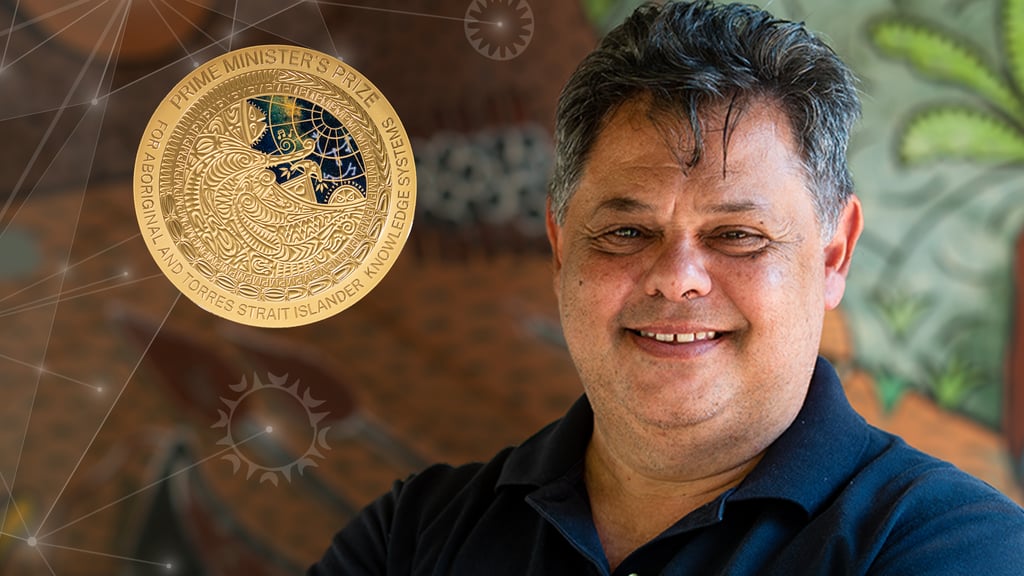
Professor Chris Matthews is a mathematician and educator who is chair of the Aboriginal and Torres Strait Islander Mathematics Alliance (ATSIMA) and Industry Professor in the UTS Faculty of Science. He is a proud Quandamooka man from Minjerribah (Stradbroke Island) in Queensland who recently received the Prime Minister's Prize for Aboriginal and Torres Strait Islander Knowledge Systems in the 2026 Prime Minister's Prizes for Science.
Have you had any the turning points in your career, both as a mathematician and as an educator?
In my career as a mathematician, I’d often got the sense that people I was working with struggled with the idea of an Indigenous person being there. There was never anything overt, but I definitely got the feeling the academic mathematics community wasn’t quite ready for someone who looked and thought like me.
It made me question my place, so I went back to my mob. At about the same time, Professor Tom Cooper from the Queensland University of Technology approached me to help him out with a research project on maths education. The rest, as they say, is history …
Do you see a similar disconnect being a wider issue in mathematics education?
When I look back over my entire journey with maths, there was nothing to support who I am as an Aboriginal person. Maths is often presented as cultureless and objective. It can feel disconnected from who we are, like our subjectivity doesn’t matter.
In reality, maths is a knowledge system that somehow finds the truth of things. When I think about First Nations cultures, we do the same thing. Our knowledge connects us to the world.
With that in mind, I’ve spent the past few years exploring the connection between culture and mathematics. I’m looking at how bringing culture in can give us different ways of understanding and teaching maths.
How do you see culture leading to new ways of teaching maths to engage students?
Culture is fundamentally important to all Indigenous students. It’s critical to all learning.
When I started my maths journey, I did a project back in a school back in my community on Minjerribah. I was doing research exploring what maths really is about – the physical world we see every day. There’s an abstraction process to create knowledge, but this is only a mirror of reality.
As part of this, I turned my mind to creativity and how we express ourselves mathematically. I worked with students to delve deeply into expressing themselves through mathematical concepts.
There can be very rich storytelling which can come into something as simple as a linear equation and how students perceive it. Then when you apply that some something more complex like algebra it opens up a whole world of relations to storytelling and culture.
What role can teachers play in bringing Indigenous culture into the maths classroom?
Most teachers of Indigenous students are non-Indigenous people. We can’t put any extra pressure on them to become experts in our culture. That would just be silly.
We want to give teachers tools to help them take new approaches to learning, rather than doing the same old thing and not getting anywhere. There’s a lot of value in changing teaching mindsets, especially in high school, away from presenting maths as a series of process-driven steps to the right answer.
Indigenous students need to embrace maths and be innovators in it, to experiment and give their own perspectives. That then opens up a beautiful exchange between teachers and all their students.
How do you see the exchange between Indigenous culture and mainstream mathematics working?
For me, exploring how Aboriginal people create knowledge is really thrilling and exciting. I’ve been working with the Yolngu community for a little while now, whereas far back as the 1980s the great Mandawuy Yunupiŋu had the vision of what they now call two-way education.
That system was mainly to make sure Yolngu young people were strong within their own culture and knew their responsibilities. But it also included them getting to know Western knowledge and working out the connections between the two.
What I found fascinating is he said mathematics has one of the closest connections between Yolŋu and Western knowledges, and Yolŋu Mathematics is Gurruṯu.
We know when Yolŋu students learn to relate the structures of Gurruṯu to numbers, teaching gets quicker and easier.
What do you see as being some of the benefits of this approach?
I’m hoping if more Indigenous students experience how their culture connects with mathematics and how this knowledge can benefit them and their Communities, we could enrich mathematics and how mathematics is used.
I want to see more future thinking where Indigenous knowledges can make a real contribution. In quantum computing, for example, the process to perform operations on numbers is akin to Aboriginal kinship systems. The question then is, could this connection be about innovations in quantum computing processes?
Similarly in building a sustainable future, there’s a natural affinity with Gurruṯu which is about knowing our place in the world and our responsibility to maintain a healthy system. It’s a system that has worked for 65,000 years so these sophisticated systems have a lot to contribute.
If we build on that future thinking, then Indigenous knowledges working together with Western knowledges could create a sustainable future.
Featured researcher
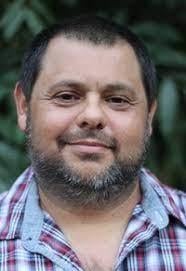
Industry Professor, Faculty of Science
News by topic
News
UTS named the top research institution across 9 fields
The University of Technology Sydney’s nation-leading research in artificial intelligence, telecommunications and water recognised in the 2027 The Australian...
News
Professor Chris Matthews receives Prime Minister's Prize
Cultural approach to mathematics is reshaping education across Australia and internationally.
News
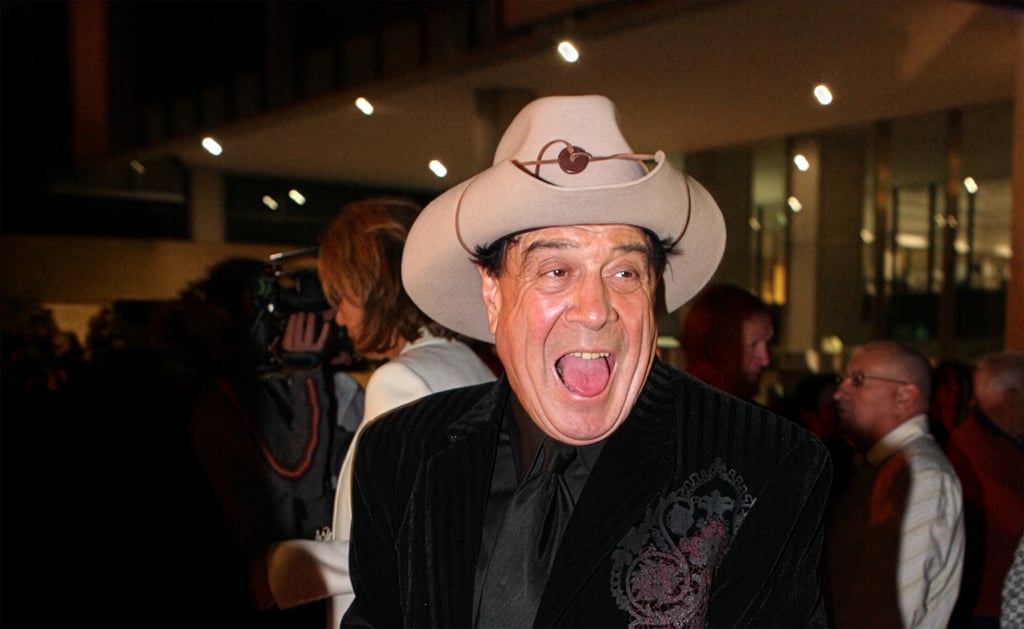
No one loved Aussie music more than Molly Meldrum
Ian “Molly” Meldrum has died aged 83. Born on January 29 1943, Meldrum was a central part of the Australian music scene as a performer, producer, record label...

News
Awards for research to tailor cancer care
Dr Darren Haywood has been recognised with major awards for his work developing an online tool to help tailor care to the needs of people with cancer.
News
UTS named the top research institution across 9 fields
The University of Technology Sydney’s nation-leading research in artificial intelligence, telecommunications and water recognised in the 2027 The Australian...
News
Professor Chris Matthews receives Prime Minister's Prize
Cultural approach to mathematics is reshaping education across Australia and internationally.
News
No one loved Aussie music more than Molly Meldrum
Ian “Molly” Meldrum has died aged 83. Born on January 29 1943, Meldrum was a central part of the Australian music scene as a performer, producer, record label...
News
Awards for research to tailor cancer care
Dr Darren Haywood has been recognised with major awards for his work developing an online tool to help tailor care to the needs of people with cancer.