


- Posted on 8 Oct 2026
- 4-min read
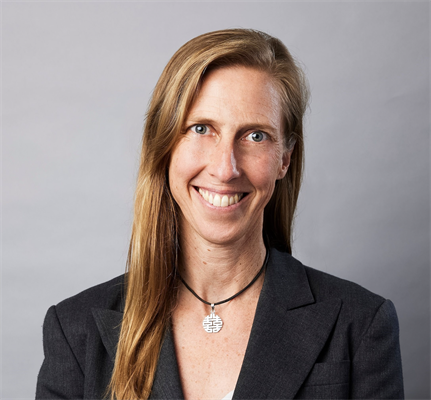
Professor Juliet Willetts will bring more than two decades of water and sanitation research and practice to her new role as a United Nations Special Rapporteur.
Professor Juliet Willetts from the UTS Institute for Sustainable Futures (UTS-ISF) has been appointed United Nations (UN) Special Rapporteur on the human rights to safe drinking water and sanitation.
Appointed by the UN Human Rights Council, Special Rapporteurs are independent experts who examine human rights issues and advise on their implementation around the world.
The role will see Professor Willetts undertake country missions, contribute thematic reports and engage with governments and other organisations to advance access to safe water and sanitation.
“For me, this role provides the chance to contribute, to influence, to lead, on an issue I am passionate about and around which I have centred my career,” Professor Willetts said.
Professor Willetts has dedicated her career to defending and advancing the human rights to water and sanitation, with much of her work focused on people and communities who continue to experience barriers in access to these essential services.
For me, this role provides the chance to contribute, to influence, to lead, on an issue I am passionate about and around which I have centred my career.
At UTS-ISF, her research across Asia and the Pacific and elsewhere has covered issues ranging from pro-poor service delivery and governance to climate resilience and inequality. She was commissioned by the Australian Government Department of Foreign Affairs and Trade to co-lead the design of the $160 million Water for Women fund and has worked with UNICEF, the World Health Organization, World Bank and Sanitation and Water for All.
In taking on the UN mandate, Professor Willetts has identified the period beyond the 2030 Sustainable Development Goals as an important opportunity to ensure the human rights to water and sanitation remain embedded in the global agenda.
She will also focus on strengthening governance and accountability, while addressing the growing effects of climate change on water security and access to services. Sanitation, where progress and investment continue to lag, will be a particular focus, alongside the inequalities experienced by women and marginalised communities.
“With the end of the SDGs approaching, and realisation of these rights far from reality with evident persistent inequalities, securing this commitment is imperative,” she said.
“I hope the mandate can achieve increased dialogue on difficult areas where there are divergent viewpoints, across governments, civil society and other actors.”
Reflecting on her time at UTS-ISF, Professor Willetts said the Institute's approach to applied research has helped prepare her for the international role.
“My work at UTS-ISF over the last 25 years has given me a firm grounding to approach this role and mandate”, she said.
“Working across diverse topics and with a broad set of community, country, regional and global stakeholders makes me value different perspectives and knowledges that can be brought to bear to progress realisation of these rights.”
Featured researcher
Professor, DVC (Research)
News
Liquid gold: could we turn our pee into fertiliser?
For thousands of years, human urine has had real value.
News
Australia’s EV sales are skyrocketing. Our charging infrastructure may soon struggle to keep up
Tighter regulation and careful planning will ensure our public chargers actually work.

News
Australia's first roadmap helps investors tackle the hidden carbon in buildings and infrastructure
For years, investors have focused on the emissions generated when buildings are operating.

News
Australians brace for higher fuel prices as US‑Iran conflict resumes (again)
The closed Hormuz Strait and a dearth of Russian diesel will trigger further volatility.
News
Liquid gold: could we turn our pee into fertiliser?
For thousands of years, human urine has had real value.
News
Australia’s EV sales are skyrocketing. Our charging infrastructure may soon struggle to keep up
Tighter regulation and careful planning will ensure our public chargers actually work.
News
Australia's first roadmap helps investors tackle the hidden carbon in buildings and infrastructure
For years, investors have focused on the emissions generated when buildings are operating.
News
Australians brace for higher fuel prices as US‑Iran conflict resumes (again)
The closed Hormuz Strait and a dearth of Russian diesel will trigger further volatility.