


- Posted on 22 Oct 2026
Platforming and deplatforming voices that meet or don’t meet the bars set by journalists, editors, political players and the general zeitgeist of the moment is nothing new. A 2018 interview conducted by the ABC’s Sarah Ferguson with MAGA strategist Steve Bannon, billed as a dive into the thinking of then-US president Donald Trump on his populist nationalist movement, still gets slammed every now and then on social media for platforming a far-right figure.
A more dangerous pursuit in 2026 is platforming views which critique the West’s handling of Russia’s war against Ukraine or which attempt to give air to Russia’s explanation of its brutal invasion or what its intentions are towards broader Europe. Freelance Russian journalist Leonid Ragozin in his analysis of these questions has discovered the limits of free speech in Latvia where he lived in exile from 2014, the year Russia annexed the Ukrainian territory of Crimea. Those limits appear to be anything critical of either Ukraine or the European Union.
Ragozin has now been made persona non grata by Latvia, an EU member and former Soviet republic which accuses him of spreading Kremlin misinformation. As the Latvian Interior Ministry posted to X:
“In his public activities, L. Rogozin: has blamed the West for Russia's aggressive actions; has spoken about the ineffectiveness of sanctions, labeling (sic) them as ones that provoke Russia; has sought to justify Russia's aggressive foreign policy, questioning whether Russia could have imperialist interests in gaining influence in Ukraine and elsewhere; has discredited Ukraine, its political leadership, and its armed forces. His expressed opinions have often overlapped with messages aimed at reducing Western support for Ukraine; has criticized the West and Ukraine in his public activities.”
From the beginning of the full-scale Russian invasion of Ukraine in February 2022, Ragozin hasn't been alone in restating one of the Kremlin’s justifications for the war: NATO’s eastward expansion, and Russia’s desire to recast European security arrangements in the post-Soviet era. But restating the Kremlin line, whether you agree with it not, isn’t a particularly safe pursuit. Nor is questioning the EU’s support for Ukraine to continue fighting Russia, despite the human and territorial losses it is suffering. This, to Rogozin’s accusers is encouraging capitulation and gifting Vladimir Putin an embattled Ukraine, economically and demographically weakened by five years of war. Such thoughts in 2026 easily attract the label “Kremlin stooge”.
But Leonid Ragozin doesn't appear to be obviously pro-Russia. He has been stridently opposed to Putin's war on Ukraine, and before the full-scale invasion of 2022, was stridently opposed to Russia’s annexation of Crimea. He’s also denounced various of Russia’s evidenced war crimes in Ukraine. Russia has jailed people for much less.
What may have upset the Latvian government, itself very sensitive about its Russian neighbours, is Rogozin's posts and reposts about Ukraine’s sometimes aggressive mobilisation tactics and allegations of corruption in the Ukrainian government, some of which have been addressed by Ukraine itself. But what likely tipped the Latvian government into action was Ragozin’s recent comment that Western pressure is compelling Russia to act aggressively, which his critics say is simply absolving Russia of responsibility. Ragozin says he was describing the Kremlin’s motives: “They, I say, feel they’re the 'weaker side.' And as the weaker side, they feel compelled to compensate by striking first, with a preemptive, devastating blow, a disproportionate response. That isn’t what Leonid Ragozin thinks. That’s what, in Leonid Ragozin’s view, the Kremlin thinks.” And therein lies the problem: few see any benefit in hearing what the Kremlin thinks.
Defenders of Ragozin do not uniformly agree with his analysis of the war’s causes and Ukraine’s prospects for success. They do, however, uniformly agree he has a right to express them, regardless of how uncomfortable they may be for Ukraine and Europe. Free speech is what the EU rightfully condemns Russia for having quashed.
And free speech can’t be limited to what one side in a war as brutal and bitter as this one wants to hear. The dissenters from the Western-aligned view – that Russian accounts of the causes and progress of the war are propaganda and should not be heard – rarely appear in legacy media. This is reflected in research the CMT will soon release on how the war has been framed by four media outlets. The outlets we surveyed rarely engaged with Russian framing of the war without immediate disparagement and contextualisation through the lens of Western foreign policy. Such is war, most would say, although not Ragozin, which makes his views valuable in a media environment where, it appears, only a very narrow range of information escapes the Kremlin stooge label.
Another person labelled a "Kremlin stooge", Iulia Mendell, the Ukrainian president’s former spokesperson, now subject to Ukrainian sanctions and recently prevented from addressing the European Parliament, wrote that journalism is supplying consumers with what they wish to read rather than what they need to know about the war.
“Over time, we have blurred the distinction between the journalism of verified facts and the journalism of statements and narratives. Too often, we have favored expansive metaphors and resonant framing over the more demanding, and sometimes unwelcome, work of confronting inconvenient realities that audiences may prefer not to hear. In practice, this has meant supplying readers with what they wish to read rather than what they need to know in order to form sound judgments.”
In the meantime, the war grinds on with tragically diminishing scope for resolution.
Author
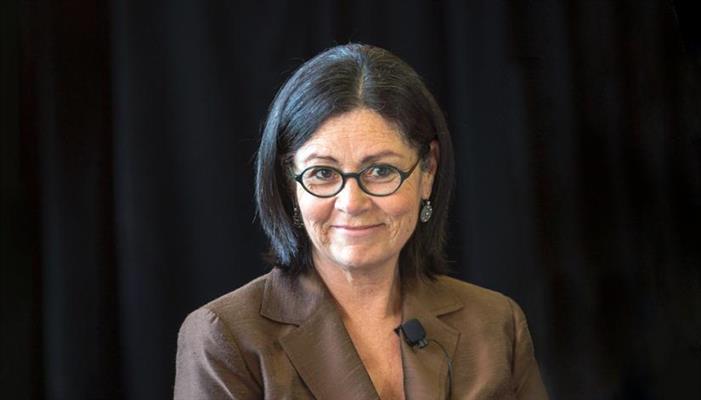
Co-Director, Centre For Media Transition, Faculty of Design and Society
Explore

News
Embedded links
Michael Davis looks at the recently announced partnership between USA Today Co. and Palantir, whose reputation has the company’s reporters up in arms.

News
A'muse'ing
Harry Craigie looks at Meta’s newly released agentic AI system Muse, which like many AI products, gives us plenty of what we want, but likely at the price of...


News
Is AI really the problem?
Susanne Lloyd-Jones looks at the AI breaches of Australian Federal government sites and questions whether agentic AI working independently of human...
News
Embedded links
Michael Davis looks at the recently announced partnership between USA Today Co. and Palantir, whose reputation has the company’s reporters up in arms.
News
A'muse'ing
Harry Craigie looks at Meta’s newly released agentic AI system Muse, which like many AI products, gives us plenty of what we want, but likely at the price of...
News
Is AI really the problem?
Susanne Lloyd-Jones looks at the AI breaches of Australian Federal government sites and questions whether agentic AI working independently of human...