


- Posted on 13 Aug 2026
- 5 min read
For Uttam Nadgouda and Kaitlyn Farquhar, volunteering has been about far more than ticking off hours – it's shaped their university experience, their sense of purpose and the leaders they want to become.
Their stories reflect this year's National Youth Volunteer Week theme, ‘Your year to lead’ which encourages students to see every volunteering opportunity, however big or small, as a chance to step up and make a difference. Between them, Kaitlyn and Uttam have built a remarkable range of volunteer experiences through UTS. They both agree that volunteering isn’t something you do on the side of your degree, it’s something you do to enhance your studies and build leadership, communication and soft skills to help you develop personally and professionally.
Uniting people, one volunteering role at a time
For Kaitlyn, volunteering is fundamentally about connection. “I think volunteering is such an important aspect of growing up and being in the university experience,” she says.
Across the organisations she's worked with, she's built skills and connections that have been vital to her education. More than that, her volunteering has centred on uniting people and working in spaces where people feel powerless or unheard.
“Volunteering means a lot to me because it allows me to influence society as a whole but also allows others to influence me and develop me as a person.”
Kaitlyn earned her SOUL Award hours across a wide spread of organisations:
- 80 hours with the United Nations Australian Association
- 20 hours with Youth Decide
- 20 hours as Head of Legal with EveryLeader.
Her advice to other students considering the program is simple: read up on what counts as volunteering on the website, then say yes to as much as you can.
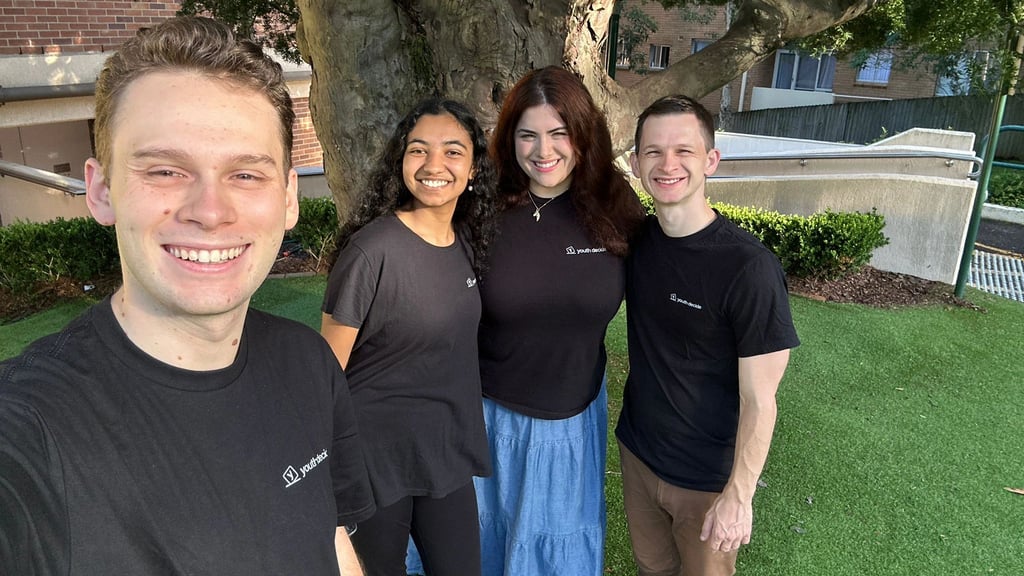
“I had experiences that were completely random and were things I would never usually do. I found those to be the most insightful ,”she says. “My tip is to figure out what opportunities are available and try them.”
One of her standout moments came recently, teaching a cohort of about 40 students in civics education. One student, who outwardly seemed disengaged, approached her afterwards and told her something she hadn't expected – that politics and voting had never been taken seriously in their family, but that this session had helped them recognise just how powerful their vote really was.
“The fact that I could influence one person to recognise how much power and agency they hold in decision-making, that can be as small as one person or as big as affecting Australian society as a whole, that has stayed with me,” she says.
As a law student, Kaitlyn found the crossover with her degree went both ways. She'd already worked through hundreds of contracts and constitutions through her volunteering before her contracts unit even began. Beyond the technical overlap, she's built soft skills in marketing, social media, lobbying, organising and advocating for groups of people.
“If you are asking me how valuable volunteering is, I think that it is important to do at least one or two ventures in your time at university,” she says.
Volunteering as a launchpad to a career
Where Kaitlyn's volunteering has been about connection, Uttam has always been driven by using volunteering as a genuine pathway to professional experience and career readiness. It's an approach that's paid off – Uttam now works at UTS Careers.
In 2025 alone, Uttam's volunteering spanned student transition, peer support, wellbeing, language development, inclusion and environmental action, adding up to more than 125 hours of service across multiple programs.
As part of the UTS Orientation and Transition Team, Uttam volunteered 40 hours with the UTS Peer Network and Peer Network Cafe during Spring 2025 Orientation and the five weeks that followed. He completed training in communication, leadership, teamwork, event facilitation and cross-cultural awareness, skills that have strengthened his ability to support students from diverse backgrounds.
Through UTS HELPS Talkfest and the Buddy Program, Uttam contributed 30 hours and a further 6 hours through Dive Against Debris with Dive Centre Manly.
He also contributed 50 hours as a Wellbeing Representative with ActivateUTS, facilitating activities using food, crafts, painting and drawing, origami, letter writing and board games to promote mindfulness.
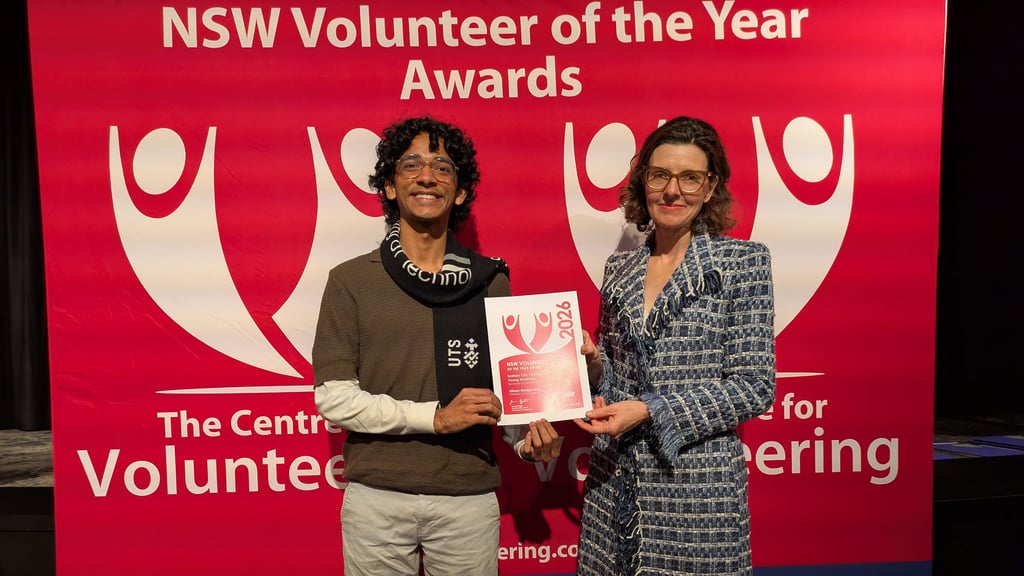
A defining moment has stuck with him whilst in this role. Mid-semester, with deadlines looming, one student at a painting activity was visibly distressed. They opened up to Uttam, and he connected them with the right support on campus, including a counsellor. “A couple of weeks later, they eventually got back to me and thanked me,” he says. “That was an experience that stayed with me.”
For Uttam, an international student, this breadth of experience solved a very real problem: landing that first local job. “The biggest issue I had in landing my first job in Australia was the fact that I had only overseas experiences,” he says. “Not having any local experience made me ‘less desirable’.”
Volunteering gave him a way to build teamwork, communication and leadership, the soft skills expected in any role, which ultimately helped him land his first job and go on to work at UTS Careers.
Why volunteer?
Kaitlyn and Uttam's stories show what volunteering through UTS's SOUL Award program can offer: new skills, unexpected friendships, moments of real impact, and a clearer sense of your own agency, both on campus and beyond it.
It's the random opportunities, the unplanned conversations and the small moments of connection that tend to leave the biggest mark and often, that's where leadership quietly begins.
This is ‘Your year to lead’ So, if you're a UTS student wondering whether to get involved – why not start now?
News
Powered by purpose: UTS students finding meaning through volunteering
For Amelia Grace Wilson-Williams and Mahir Munot, volunteering isn’t just something they do – it’s part of who they are.
News
How can you be part of social justice at UTS?
Interested in contributing to meaningful change during your time at UTS? Here are some places you can start.
News
Powered by purpose: UTS students finding meaning through volunteering
For Amelia Grace Wilson-Williams and Mahir Munot, volunteering isn’t just something they do – it’s part of who they are.
News
How can you be part of social justice at UTS?
Interested in contributing to meaningful change during your time at UTS? Here are some places you can start.