


- Posted on 13 Aug 2026
She’s whip smart, highly eloquent, telegenic and sharply political. If any member of the so-called 5th estate had a chance of contesting and winning a lower house seat at the next federal election it would be Hannah Ferguson, the 28-year-old founder of Cheek Media. Time and polls will tell whether she beats the Prime Minister in his own, very safely held seat of Grayndler in Sydney’s inner west. But surely Ferguson has one thing in her favour that Anthony Albanese does not. A media company. Will it make a difference?
Grayndler has only ever been held by the Labor Party – Fred Daly (1949-1975), Tony Whitlam (1975- 1977), Frank Stewart (1977-1979), Leo McLeay (1979-1993), Jeanette McHugh (1993-1996) and most famously by Anthony Albanese since 1996. Ferguson now lives in the electorate, and she says she is disappointed in her representative in federal parliament. She says Australia needs better options to stand up to the rise and rise of One Nation but, to counter Hansonism, she says Australia needs to address the failure of the major parties to make life better for us all. Fair enough and no, she says her tilt at Grayndler is not a publicity stunt to bolster her media company, which has proven to be an extremely popular platform for young people from which Ferguson can comment and criticise the political class.
Cheek Media produces news and commentary – and has more than 250,000 Instagram followers for content that is doing what you would expect journalism would do – shining a light etc – though from the perspective of a decidedly leftish/progressive position. Ferguson says she’ll put a disclaimer declaring her political ambition on her articles from now until the time she steps away from the company to fully devote herself to the campaign. And stepping away from the business she founded, Ferguson says, will allow the journalists working for Cheek Media to critique their boss who will, presumably, maintain her ownership of the organisation. In the spirit of the 5th estate, "insert quizzical emoji”.
The issue no-one has so far directly raised is whether – like Pauline Hanson’s financial backer moving into the media business – Ferguson moving from the media business to politics is compromising the independence that comes with not having invested political affiliation. Maintaining the boundary between media and the issues it covers is an historically important standard for journalism.
Maybe one reason this has not been challenged, is because there is a distinct whiff in the air that Australia is about to be smothered by right leaning media outlets. There is the Murdoch owned News Corp which its critics say is merely the communications arm of conservative politics, based on the right wing skew the publication brings to most issues it covers in news and commentary. There’s News24 which after dark at least skews sharply right. And now there is the spectre of Pauline Hanson getting less critical coverage from the newly merged Seven West Media and Southern Cross after the former’s commercial director, Bruce McWilliam used Hanson’s financial backer Gina Rinehart’s bank account to build a 9.5 percent holding in the company. This move has raised eyebrows. Ferguson’s ability to use her media asset to push her political campaign, or even just her political beliefs, has so far raised none. Maybe Ferguson’s move and the presumably not-very-critical coverage that will be afforded her campaign by her own media company will balance the tables. But is this the new normal for Australian media – for both the 4th and the 5th estate?
And a final word from me about the recent decision by Pauline Hanson to ban the ABC, The Guardian and The Age from her media events over what she considers unfriendly reporting of her and her party. On ABC radio I said journalists permitted entry ought to boycott those Hanson events when she bans some of their colleagues, to prevent Australia’s slide into a Trump-like version of media freedom – where media is free to report only what a political leader wants. This might alienate some Hanson supporters and turn them even further away from objective journalism, but leaving the One Nation leader to dictate who reports her and who doesn't, sets a standard that would damage social cohesion and journalism. It's a question of the standard you walk past is the standard you accept.
Author
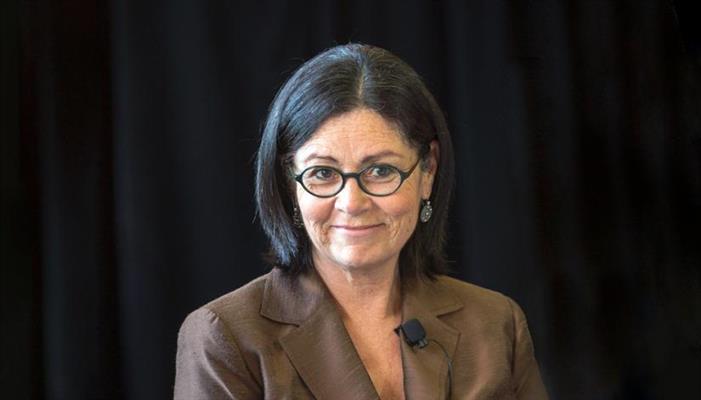
Co-Director, Centre For Media Transition, Faculty of Design and Society
Explore

News
Is AI really the problem?
Susanne Lloyd-Jones looks at the AI breaches of Australian Federal government sites and questions whether agentic AI working independently of human...

News
Maintaining trust in an era of AI Slop
Chris Hall takes a deep dive into the increasing amount of AI use on YouTube and he looks at how serious youtubers are being challenged by the increased...

News
Jason Arday and the media
This DoubleTake episode of the podcast features journalist and University of Melbourne lecturer Sami Shah talking with Monica about the media treatment of the...
News
Is AI really the problem?
Susanne Lloyd-Jones looks at the AI breaches of Australian Federal government sites and questions whether agentic AI working independently of human...
News
Maintaining trust in an era of AI Slop
Chris Hall takes a deep dive into the increasing amount of AI use on YouTube and he looks at how serious youtubers are being challenged by the increased...
News
Jason Arday and the media
This DoubleTake episode of the podcast features journalist and University of Melbourne lecturer Sami Shah talking with Monica about the media treatment of the...