


- Posted on 24 Jun 2026
- 5-min read
ASIC and the AASB Introductory Capability Building for Climate-related Financial Disclosures Roadshow.
During 2025 and 2026, the UTS Institute for Sustainable Futures (ISF), Climate KIC Australia, the Centre for Climate Risk and Resilience and Studio 3 Learning were commissioned by the Australian Securities and Investments Commission (ASIC) and the Australian Accounting Standards Board (AASB) to develop capability building materials to support entities in understanding the foundational concepts behind the climate-related financial disclosure requirements.
Climate-related financial disclosures
In late 2024, the Australian Parliament introduced mandatory climate-related disclosure requirements through amendments to the Corporations Act 2001. These changes have been described by former ASIC Chair Joe Longo as the most significant to financial reporting in a generation.
At their core, these reforms are about improving the quality, consistency and comparability of climate-related disclosures.
The reporting requirements are phased in, with larger Group 1 entities commencing reporting for financial years from 1 January 2025, Group 2 entities for financial years from 1 July 2026 and Group 3 entities for financial years from 1 July 2027.
UTS is leading a national project with ASIC and the AASB
On the surface, this could be seen as a technical compliance exercise. But from a systems perspective, it’s a profound intervention in how capital markets understand risk, value and responsibility.
This is new territory for companies. Capability building is particularly important for smaller and mid-sized organisations (i.e. Group 3 entities), who may not have dedicated sustainability teams but will still be required to disclose from 2027.
E-learning
The first phase of the project involved developing educational materials across eight topics, in both document and e-learning formats. The modules cover topics ranging from an introduction to climate change through to climate-related governance and risk management. Since their launch at the end of last year, stakeholder interest in the educational materials has been strong.
Each e-learning module is designed to be interactive and accessible and is broken down into various units with key content, animations, check-in questions and key takeaways.
The educational materials can be accessed on the ASIC Educational Modules web page.
In-person workshops
In May 2026, the next phase of the project began. UTS delivered three-hour in-person workshops in Melbourne, Brisbane, Sydney and Perth.
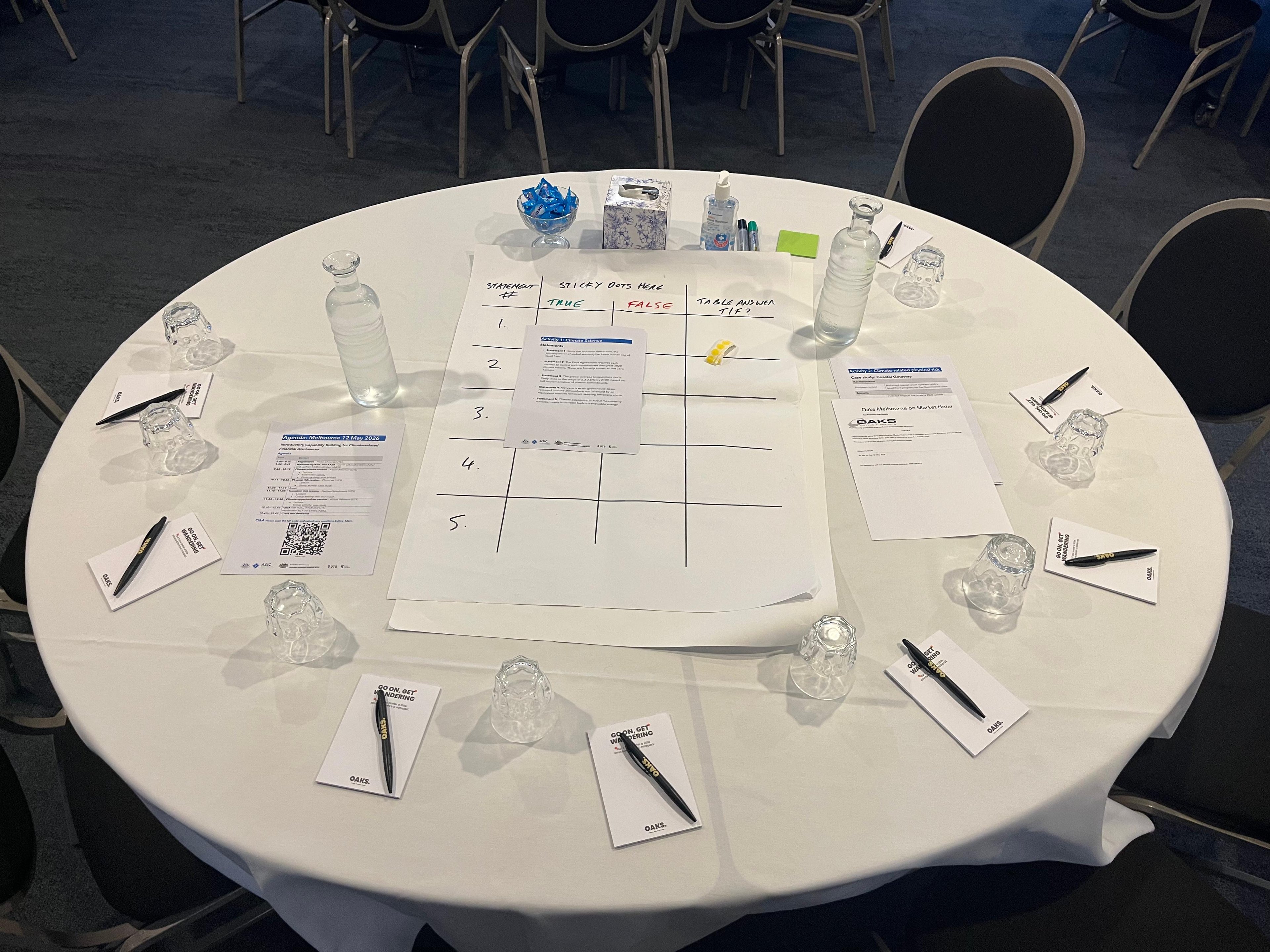
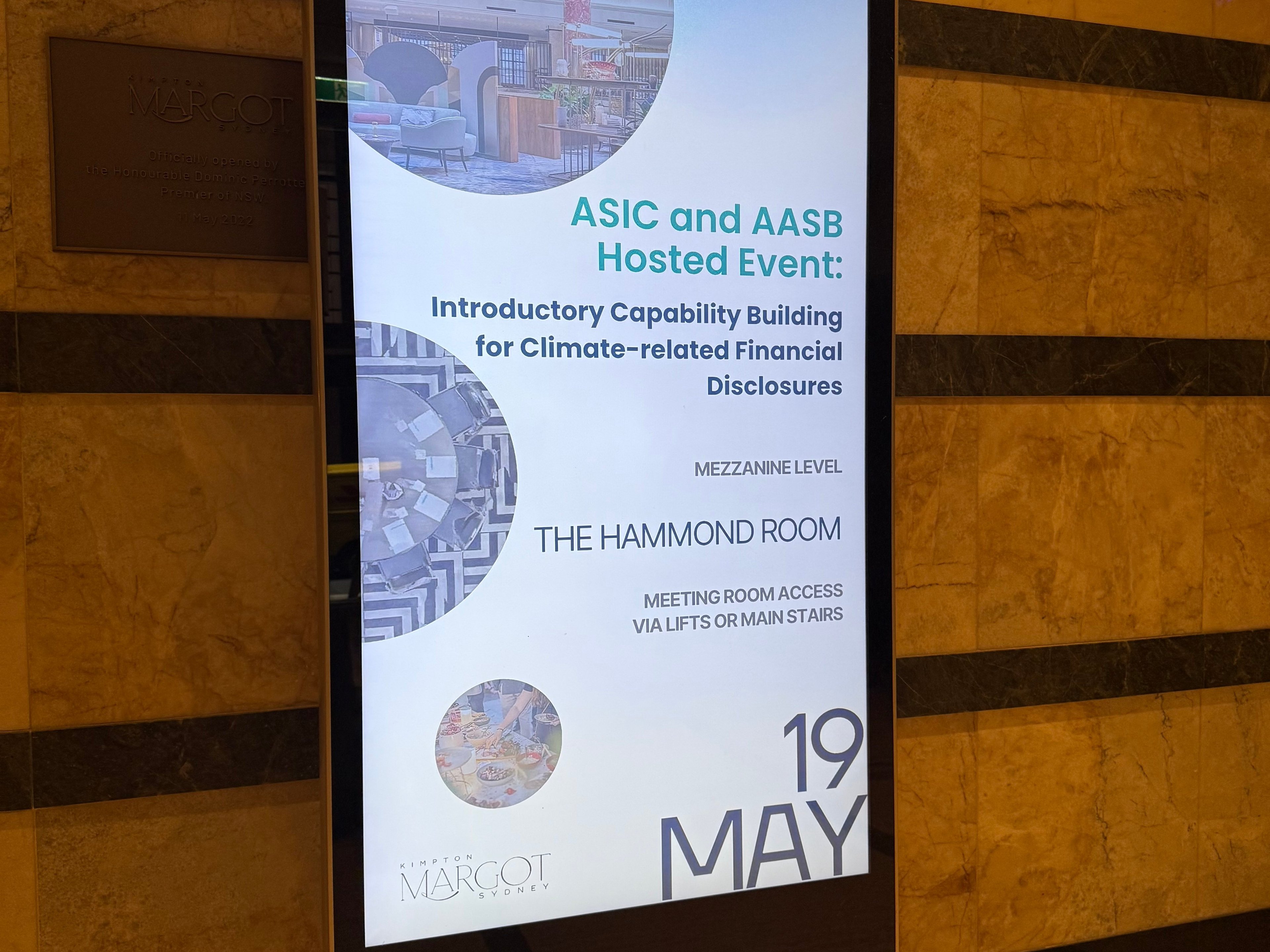
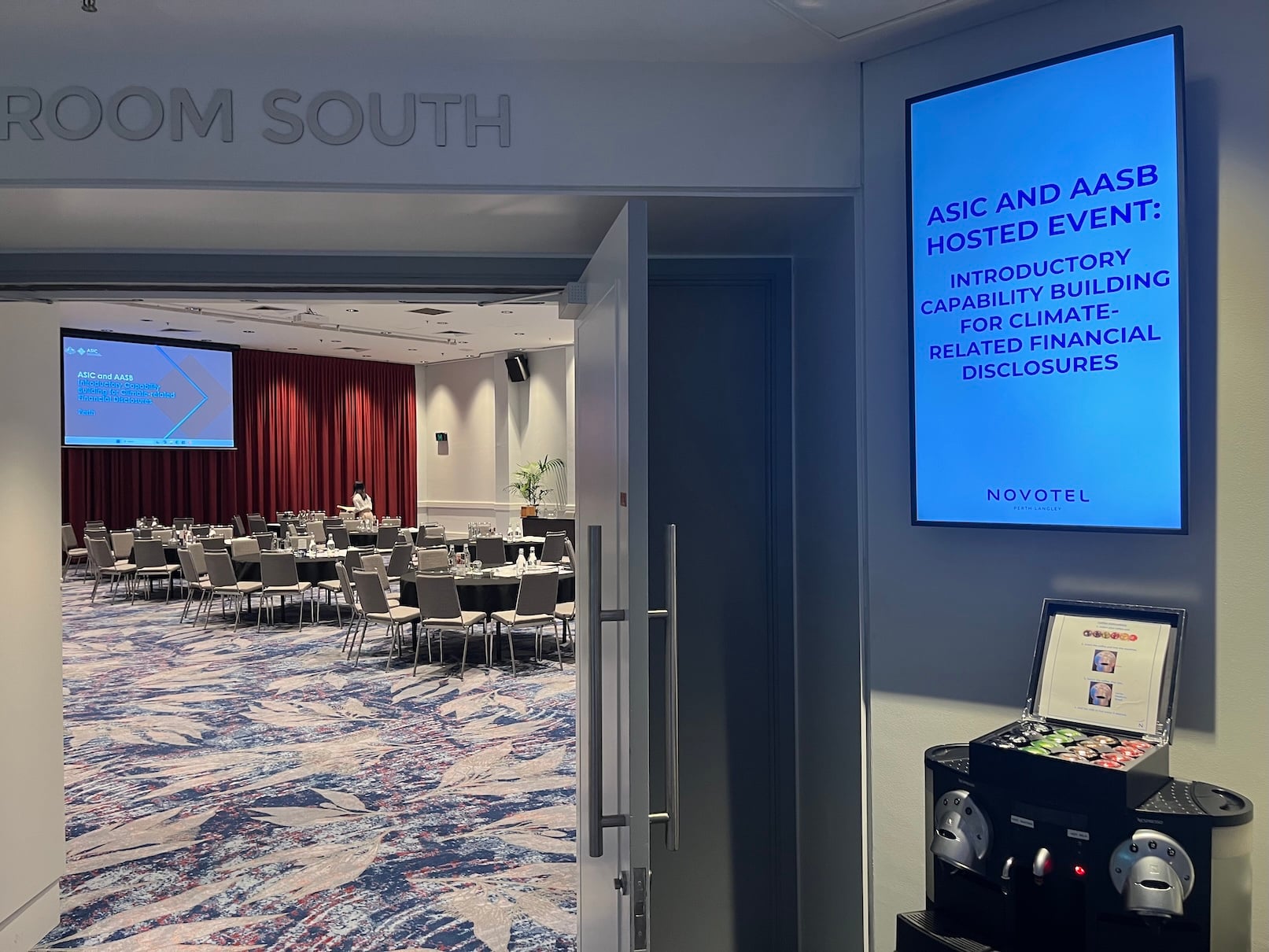
Each roadshow presentation covered introductory content on climate-related risks and opportunities through lectures and interactive group activities. Including:
- opening from ASIC and the AASB
- climate science
- climate-related physical risks
- climate-related transition risks
- climate-related opportunities
- Q&A with ASIC and the AASB.
By working in partnership with government, for business, this project helps turn a regulatory change into a systemic learning moment.
The workshop series attracted strong engagement from preparers, advisers and auditors across Australia. Case studies and interactive elements were particularly valued, along with opportunities for peer discussion.
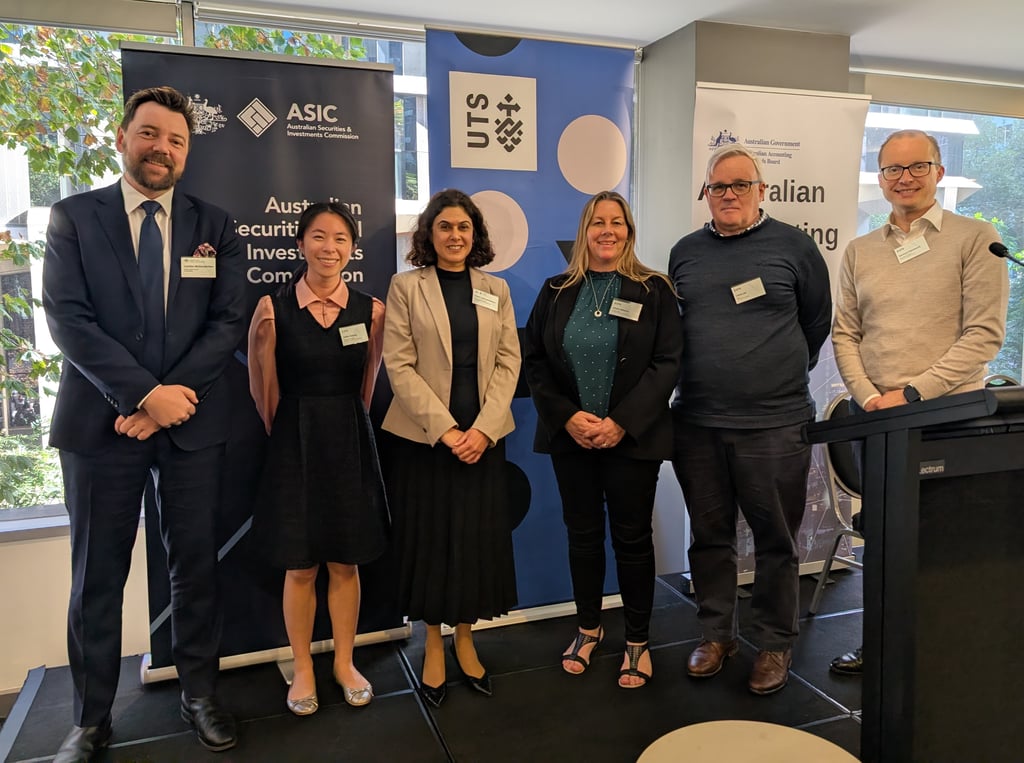
“By working in partnership with government, for business, this project helps turn a regulatory change into a systemic learning moment – building the skills, confidence and decision frameworks needed for a more resilient, low‑carbon economy,” said Alison Atherton, Program Lead of the Business, Economy and Governance team at ISF.
The capability building continutes with three webinars this month in June.
Participants should monitor ASIC communications for any updates regarding the educational materials.
News
Professor Juliet Willetts appointed UN Special Rapporteur on human rights to water and sanitation
Professor Juliet Willetts will bring more than two decades of water and sanitation research and practice to her new role as a United Nations Special Rapporteur.
News
Liquid gold: could we turn our pee into fertiliser?
For thousands of years, human urine has had real value.
News
Australia’s EV sales are skyrocketing. Our charging infrastructure may soon struggle to keep up
Tighter regulation and careful planning will ensure our public chargers actually work.

News
Australia's first roadmap helps investors tackle the hidden carbon in buildings and infrastructure
For years, investors have focused on the emissions generated when buildings are operating.
News
Professor Juliet Willetts appointed UN Special Rapporteur on human rights to water and sanitation
Professor Juliet Willetts will bring more than two decades of water and sanitation research and practice to her new role as a United Nations Special Rapporteur.
News
Liquid gold: could we turn our pee into fertiliser?
For thousands of years, human urine has had real value.
News
Australia’s EV sales are skyrocketing. Our charging infrastructure may soon struggle to keep up
Tighter regulation and careful planning will ensure our public chargers actually work.
News
Australia's first roadmap helps investors tackle the hidden carbon in buildings and infrastructure
For years, investors have focused on the emissions generated when buildings are operating.