


- Posted on 22 Apr 2026
- 3-min read
How does working with nature help communities and ecosystems adapt to climate change - and what can we learn from those already doing it?
On Wednesday 23 April, ISF researchers Jessie Meaney-Davis and Keren Winterford and their collaborators in Asia and the Pacific will showcase insights from their recent evaluation of Climate Resilient by Nature (CRxN), a flagship Australian Government initiative delivered by WWF Australia, supporting nature-based solutions in Asia and the Pacific.
CRxN has implemented nature-based solutions (NbS) in Asia and the Pacific between 2021 and 2026 that work with communities to restore and protect crucial ecosystems, build sustainable livelihoods and increase resilience to climate shocks. ISF conducted the end of program evaluation from May 2025 to February 2026, assessing its relevance, effectiveness, impact, efficiency and sustainability, and producing five project impact case studies that illustrate the key findings in collaboration with researchers in Laos, Solomon Islands, Vanuatu and Vietnam.
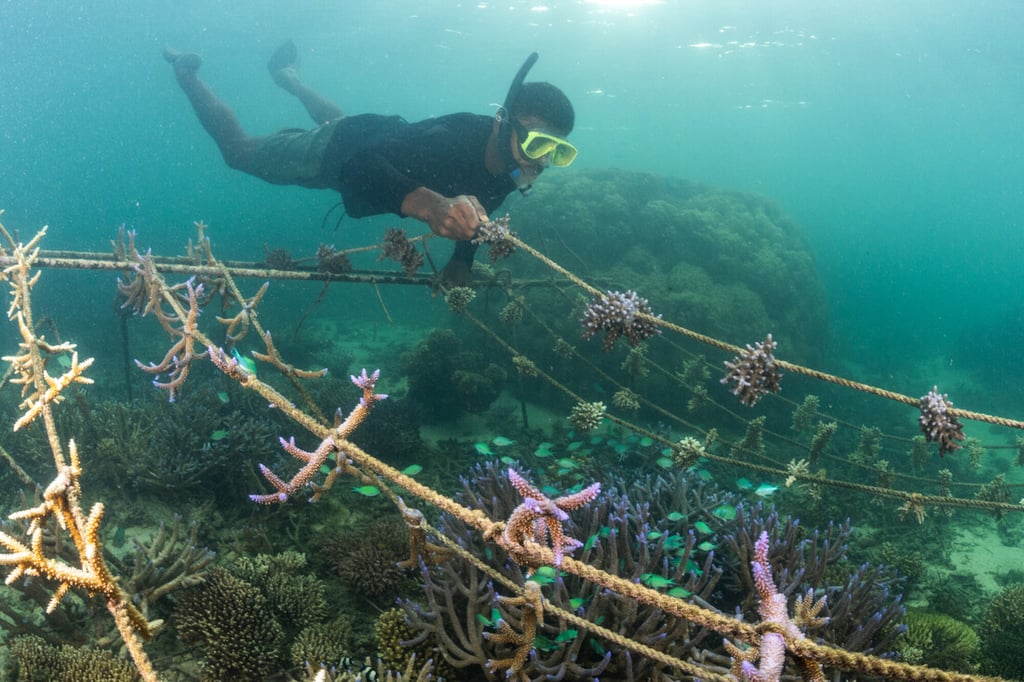
WWF‑Australia welcomes this evaluation as a strong evidence base for improving future NbS programming.
How the research will be used
WWF is already using the evaluation findings and recommendations to shape how nature-based solutions are designed, monitored, adapted and evaluated in their programs. Evidence from the report can also be used by DFAT and other international donors to improve investments in nature-based solutions for climate resilience.
Charlotte Sterrett, Senior Manager, Community Resilience and Adaptation, WWF Australia says, "“WWF‑Australia welcomes the ISF evaluation as a strong evidence base for improving future NbS programming. The organisation is committed to implementing all recommendations and to using CRxN learning to inform longer‑term, locally led, equitable, and high‑integrity NbS investments that deliver lasting benefits for people, nature, and climate.”
What we found
Lessons for the sector include:
- Impact takes time: ecosystems grow and evolve slowly, as do social and governance systems. Long-term investment in nature-based solutions is essential to see lasting benefits.
- Local, Indigenous and traditional knowledge is essential for nature-based solutions that truly work.
- Inclusive decision-making on environmental stewardship and natural resource governance strengthens nature-based solutions.
Some (but not all) nature-based solutions support market-based livelihoods, which depend on strong systems being in place, such as supportive policies and functioning markets. - To understand what works, for whom, and in which circumstances, nature-based solutions aiming for climate resilience must be shaped by locally led planning, learning and adaptation, reflecting diverse community perspectives of what successful climate resilience looks like in their context, for their needs and aspirations.
- ‘Scaling’ nature-based solutions is not solely about replication. Scaling can mean deepening impact in one place, expanding to new and similar contexts, embedding nature-based solutions in policy, or focusing on shifting values and behaviours.
Join the webinar, or read the evaluation report and case studies, to see what these lessons mean for the future of climate action.
News
Professor Juliet Willetts appointed UN Special Rapporteur on human rights to water and sanitation
Professor Juliet Willetts will bring more than two decades of water and sanitation research and practice to her new role as a United Nations Special Rapporteur.
News
Liquid gold: could we turn our pee into fertiliser?
For thousands of years, human urine has had real value.

News
Australia’s EV sales are skyrocketing. Our charging infrastructure may soon struggle to keep up
Tighter regulation and careful planning will ensure our public chargers actually work.

News
Australia's first roadmap helps investors tackle the hidden carbon in buildings and infrastructure
For years, investors have focused on the emissions generated when buildings are operating.
News
Professor Juliet Willetts appointed UN Special Rapporteur on human rights to water and sanitation
Professor Juliet Willetts will bring more than two decades of water and sanitation research and practice to her new role as a United Nations Special Rapporteur.
News
Liquid gold: could we turn our pee into fertiliser?
For thousands of years, human urine has had real value.
News
Australia’s EV sales are skyrocketing. Our charging infrastructure may soon struggle to keep up
Tighter regulation and careful planning will ensure our public chargers actually work.
News
Australia's first roadmap helps investors tackle the hidden carbon in buildings and infrastructure
For years, investors have focused on the emissions generated when buildings are operating.