


- Posted on 26 Mar 2026
- 5-minute read
A four-organisation collaboration will build a generative AI design system and rapid manufacturing capability for the Optimus Viper spacecraft.
A consortium led by Space Machines Company (SMC) has been awarded $2.9 million in Cooperative Research Centres Projects (CRC-P) grant funding from the Australian Government. Combined with contributions from the project partners, the total investment reaches $6 million, directed at fundamentally changing how spacecraft are designed and built in Australia.
The two-year project, titled “Optimised Generative AI Design for Mass-Manufacturable Spacecraft”, brings together SMC, the University of Technology Sydney (UTS), the Advanced Manufacturing Readiness Facility (AMRF) at Bradfield City in Western Sydney, and Sydney-based design and engineering firm Fordyno.
Together, the partners will develop a machine learning system capable of generating optimal spacecraft structures in direct response to shifting design requirements. This will be coupled with additive manufacturing and robotic assembly processes that can produce physical hardware within days rather than months.
The work addresses a challenge that has long constrained the space industry. Engineering software can model spacecraft in extraordinary detail, but sophistication has a cost: teams spend years refining virtual designs before committing to manufacture, only to discover problems the moment they start building.
For SMC, targeting production of 20+ Optimus Viper vehicles annually from its Australian facilities, closing that gap is not a theoretical goal; it is a manufacturing necessity.
The project is expected to support the creation of 15 to 20 high-skilled roles during its term, with SMC's longer-term expansion trajectory pointing to a workforce requirement several times that size.
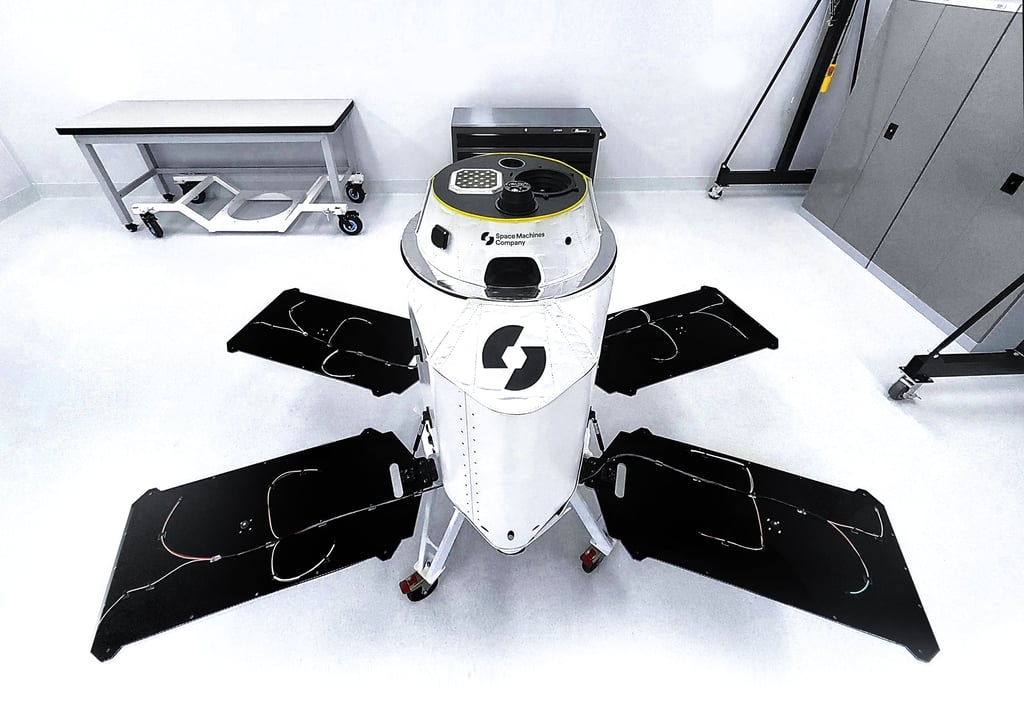
The final milestone is the delivery of at least one flight-qualified Optimus Viper primary structure, validated to launch standards and ready for orbital deployment.
That outcome marks the point at which the project's research outputs become directly applicable to SMC's production plans: a commercial version of the generative design software, validated manufacturing procedures, and a proven path from requirement to flight-ready hardware in weeks, not months.
"Space security demands hardware that can evolve as fast as the threat. This project gives us the generative design and manufacturing capability to move from requirement to flight-ready structure in a fraction of the time, and repeat that process at scale as the mission changes,” said Rajat Kulshrestha, CEO and Co-Founder of Space Machines Company.
The generative design application will be developed by UTS under the supervision of Professor Zhen (Jeff) Luo, Leader of the Advanced Metacomposite Materials and Structures group. His team brings world-leading expertise in topology optimisation to a problem that has not previously been solved at the level of complete spacecraft structures.
While generative design has been applied to individual aerospace components, the multi-physics complexity of a full spacecraft primary structure, carrying launch loads, managing thermal cycles, and accommodating constantly evolving payload and mission requirements, has until now resisted it.
UTS is proud to be working with our partners on this project at the nexus of artificial intelligence and advanced manufacturing to deliver world-leading research for the space industry.
“Our long-standing partnership with Space Machines Company is an example of how UTS brings value to the industry. We combine deep academic expertise and outstanding technical capabilities with cutting-edge facilities,” said Deputy Vice-Chancellor (Research), Professor Kate McGrath.
“Most importantly, we bring these together with a collaborative and commercial mindset to address the big challenges faced by our partners and their industries, and translate research into real-world outcomes.”
Physical manufacture of the prototype structures will take place at the AMRF’s advanced facility at Bradfield City, a NSW Government-funded centre whose machinery and capabilities are designed specifically for the kind of rapid, iterative production the project demands.
The team will cycle through up to five build-test-iterate rounds once the AI system is generating structures, with the target of completing each cycle from updated requirement to tested hardware within three weeks.
“This partnership with Space Machines Company and UTS shows how the Advanced Manufacturing Readiness Facility is turning research capability into applied outcomes for industry,” said Ken Morrison, Chair of the Advanced Manufacturing Readiness Facility and CEO of the Bradfield Development Authority.
“By bringing together business, university expertise and government in Bradfield City, we’re creating the right conditions for advanced industry and space technologies to be developed, tested and scaled here in Australia.”
Fordyno, a Sydney-based engineering services firm, brings structural analysis, design-for-manufacture expertise and hands-on fabrication experience to the project.
Their role spans the translation of AI-generated structural concepts into manufacturable designs, contributing the kind of applied engineering judgement that bridges computational output and physical production.
For Fordyno, the project also marks an entry into the space sector, extending a practice built on solving demanding manufacturing challenges across other industries.
“Fordyno is honoured to join Space Machines Company in the ‘Optimised Generative AI Design for Mass-Manufacturable Spacecraft’ program. This initiative represents an exciting opportunity to combine cutting-edge generative AI with advanced engineering to transform how spacecraft are designed and manufactured,” said Chunhua Wang, Managing Director of Fordyno.
“With our expertise in lightweight structural engineering, composite materials design, and simulation-driven optimisation, Fordyno is excited to contribute to the development of next-generation spacecraft structures that are both high-performance and production-ready.
"We look forward to collaborating with industry partners to help strengthen Australia’s capabilities in advanced manufacturing and the space sector.”
The project builds on work already underway at UTS Tech Lab in Botany, where SMC currently manufactures Optimus Viper spacecraft. It extends the collaboration between SMC and UTS that has been central to the company’s development since its founding.
The generative design algorithms developed are expected to carry intellectual property value well beyond the space sector. Any complex manufacturing environment where requirements evolve at pace stands to benefit.
The rapid manufacturing techniques developed through the project directly support Australia's sovereign defence industrial priorities and the responsive capability development needs of its partners and allies.
News by topic
News
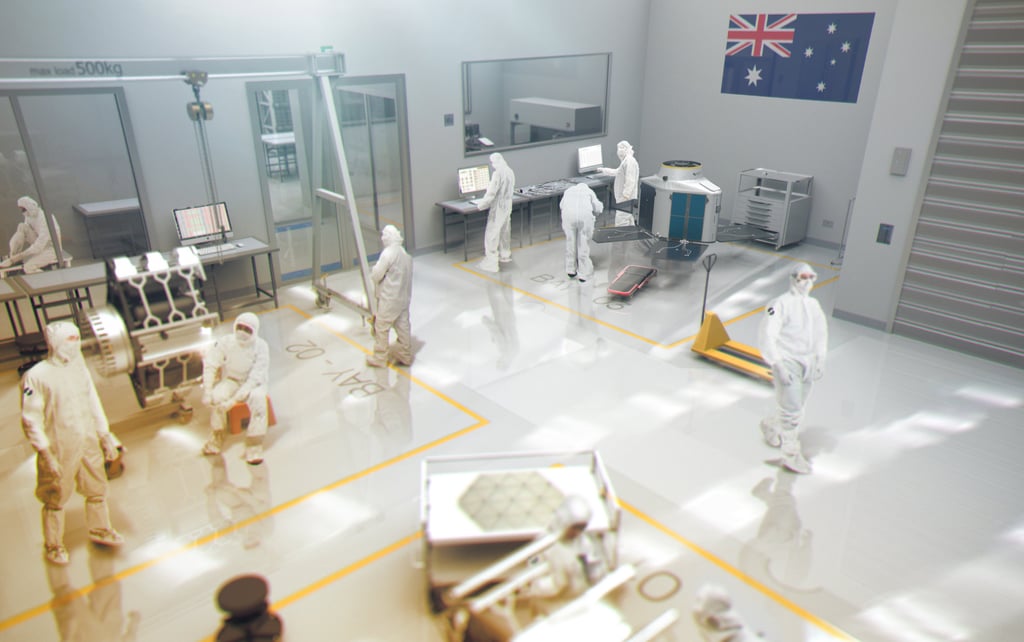
Australia’s largest industrial-scale spacecraft manufacturing facility established at UTS Tech Lab
UTS and Space Machines Company are creating Australia’s largest industrial-scale spacecraft manufacturing facility.

News
AI improves long-term flood forecasting
Through the power of advanced artificial intelligence, UTS research could help communities get warnings weeks ahead of floods.

News
Australia-Vietnam Strategic Technologies Forum in Hanoi
HANOI, VIETNAM — Today, senior government representatives, industry leaders, researchers and innovators from Australia and Vietnam convened in Hanoi for the...
News
The AI leader building resilient cities
Distinguished Professor Fang Chen made a fellow of the Australian Academy of Technological Sciences and Engineering.
News
Australia’s largest industrial-scale spacecraft manufacturing facility established at UTS Tech Lab
UTS and Space Machines Company are creating Australia’s largest industrial-scale spacecraft manufacturing facility.
News
AI improves long-term flood forecasting
Through the power of advanced artificial intelligence, UTS research could help communities get warnings weeks ahead of floods.
News
Australia-Vietnam Strategic Technologies Forum in Hanoi
HANOI, VIETNAM — Today, senior government representatives, industry leaders, researchers and innovators from Australia and Vietnam convened in Hanoi for the...
News
The AI leader building resilient cities
Distinguished Professor Fang Chen made a fellow of the Australian Academy of Technological Sciences and Engineering.