


- Posted on 31 Mar 2026
- 3-minute read
Researcher developing new ways to design safer and more sustainable structures has been honoured with a major award from the Australian Academy of Science.
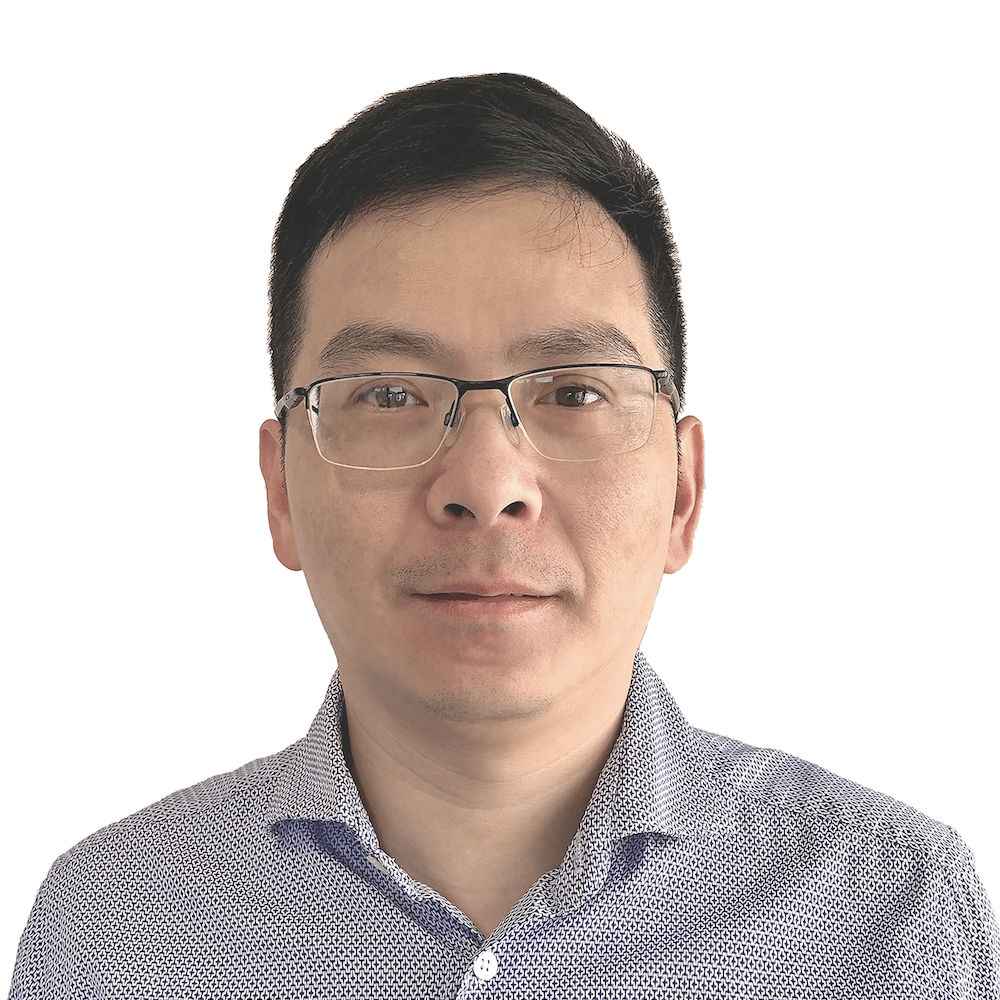
Associate Professor Jianguang Fang has received an early-career research award, the John Booker Medal in Engineering Science, for breaking new ground in engineering mechanics.
Dr Fang, an ARC Future Fellow at the UTS School of Civil and Environmental Engineering, was one of 23 scientists recognised for outstanding contributions to the advancement of science at the 2026 Australian Academy of Science Honorific Awards.
Regarded as a global leader in his field, Dr Fang is an extensively cited researcher whose work examines the complex relationship between safety and sustainability in engineering, particularly how sophisticated algorithms can be used to design more resilient engineering structures.
“When accidents happen, the structures of vehicles must protect lives – often just in a fraction of a second,” Dr Fang said. “Rather than relying on physical trial and error, I developed advanced computational mechanics models to predict how structures deform, absorb impact energy, and ultimately fail under extreme conditions.”
Dr Fang studies how materials and structures – including concrete and 3D-printed systems – behave under extreme conditions, such as high-speed crashes. His research is helping engineers create stronger, more reliable structures by advancing design approaches in the construction, transport and aerospace industries.
“By using less material more intelligently, our research supports safer vehicles and lower carbon emissions across multiple transport sectors.”
His work also challenges the notion that improving safety must come with an increased environmental cost. Vehicles are typically made safer by adding more material to increase robustness, but with that added weight comes a larger carbon footprint.
Using a framework he developed called phase-field fracture modelling, Dr Fang’s research enables advanced design optimisation, paving the way for engineers to explore thousands of design possibilities for lighter, more sustainable structures.
“By using less material more intelligently, our research supports safer vehicles and lower carbon emissions across multiple transport sectors,” he said.
Each year, the Australian Academy of Science’s awards celebrate excellence across disciplines and career stages, highlighting research with real-world impact.
Professor Chennupati Jagadish AC, President of the Academy, said the organisation is “immensely proud” of this year’s winners.
“Each of the researchers recognised today represents the very best of Australian science, through the depth, rigour and impact of their work. From fundamental research to applied science, they improve lives, protect our environment, and help secure a better future for all Australians.”
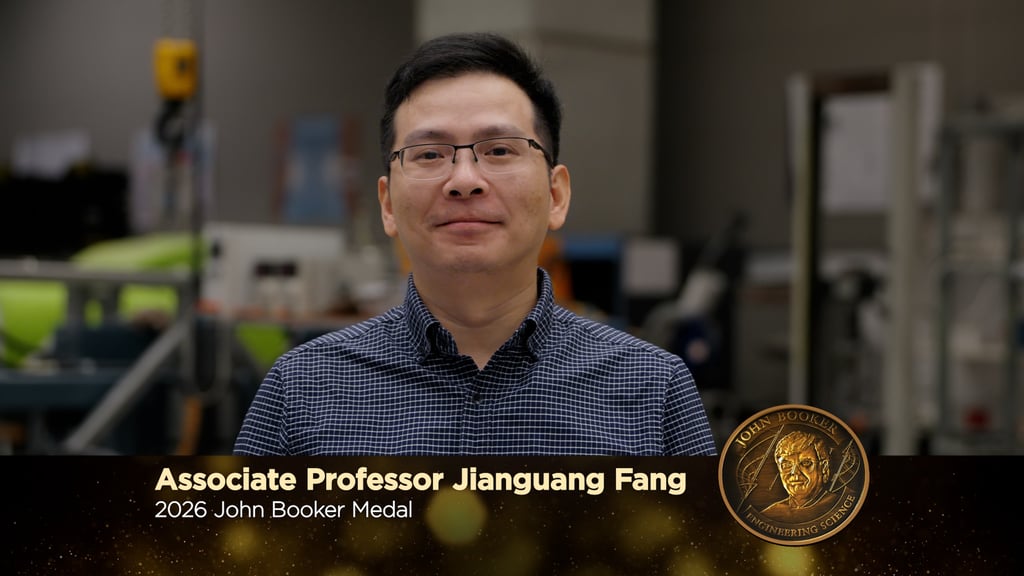
Dr Fang was grateful to his students and collaborators for the award, which supports early-career researchers who are up to 10 years post-PhD.
“I’m truly honoured by this recognition from the Australian Academy of Science,” he said. “It encourages me to keep pushing engineering boundaries to help build a safer and greener future.”
Professor Philip Gale, a visiting professor at UTS, was also among those recognised at this year’s awards, taking home the David Craig Medal and Lecture in honour of his outstanding contributions to chemical research.
Professor Gale specialises in supramolecular chemistry, where he is developing small molecules that can help negatively charged ions (or anions) pass through cell membranes. His findings have the potential to improve health outcomes by unlocking new treatment options for conditions like cystic fibrosis and cancer.
News by topic
News
Research puts resilient infrastructure on solid ground
Groundbreaking $24 million research centre will develop sustainable technologies that stabilise the foundations underpinning major infrastructure.
News
UTS researchers develop new AI tool to better predict stroke risk
New AI model analyses DNA to identify genetic risk factors for stroke, paving the way for more personalised prevention and treatment.
News
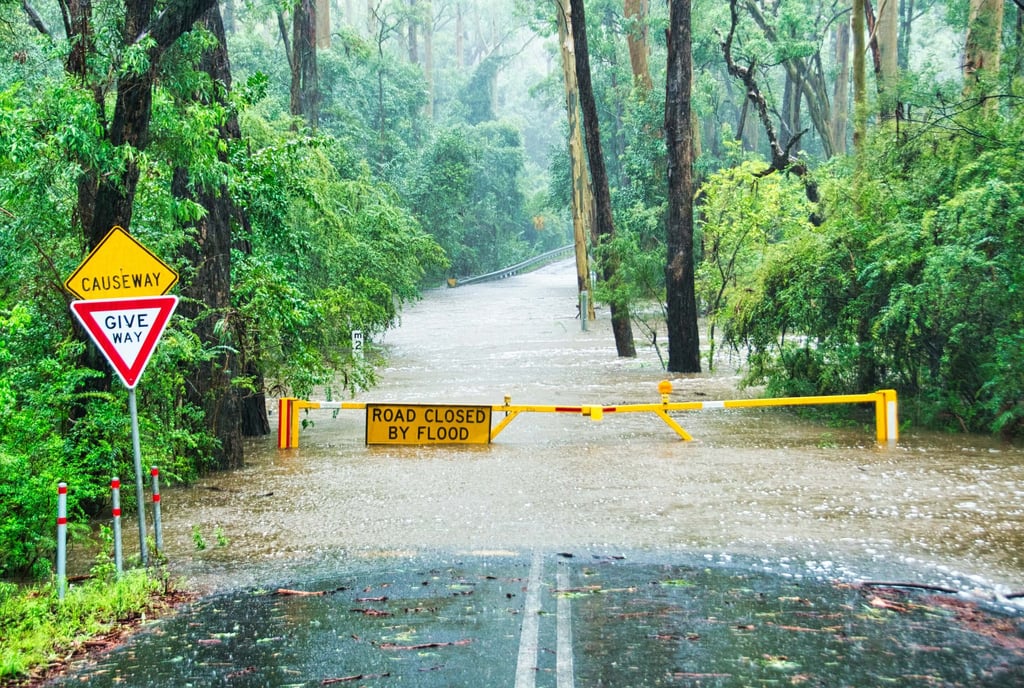
AI improves long-term flood forecasting
Through the power of advanced artificial intelligence, UTS research could help communities get warnings weeks ahead of floods.

News
Australia-Vietnam Strategic Technologies Forum in Hanoi
HANOI, VIETNAM — Today, senior government representatives, industry leaders, researchers and innovators from Australia and Vietnam convened in Hanoi for the...
News
Research puts resilient infrastructure on solid ground
Groundbreaking $24 million research centre will develop sustainable technologies that stabilise the foundations underpinning major infrastructure.
News
UTS researchers develop new AI tool to better predict stroke risk
New AI model analyses DNA to identify genetic risk factors for stroke, paving the way for more personalised prevention and treatment.
News
AI improves long-term flood forecasting
Through the power of advanced artificial intelligence, UTS research could help communities get warnings weeks ahead of floods.
News
Australia-Vietnam Strategic Technologies Forum in Hanoi
HANOI, VIETNAM — Today, senior government representatives, industry leaders, researchers and innovators from Australia and Vietnam convened in Hanoi for the...