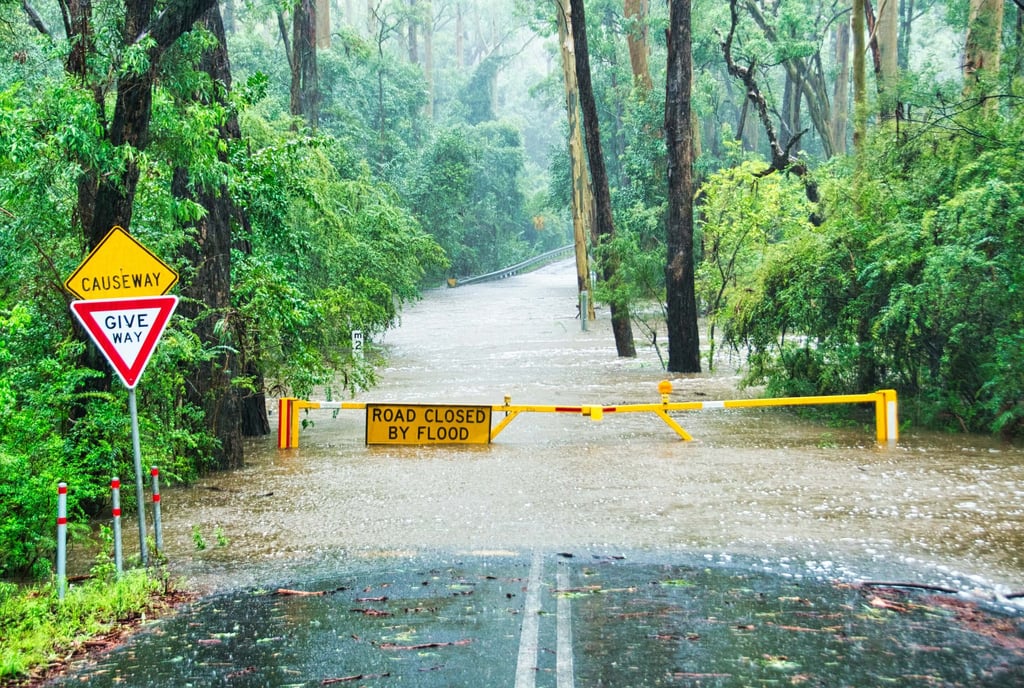
“Right – flood’s on. Get ready.” That’s what Jody Cheetham has told her staff the last two times she’s watched the river rising, following after heavy rain in Lismore in northern New South Wales.
In February and March 2022, record rain and floods inundated Lismore, killing five people.
The floods caused major damage to 1,400 homes, 656 commercial and industrial properties, schools, sewer and water treatment facilities. Three out of four businesses were hit.
Cheetham is the chief executive of Multitask, a local disability services provider. Like so many in Lismore, home to 44,000 people, Multitask lost “absolutely everything” in those floods. But they and others in Lismore now have plans in place to stop that happening again.
As communities across Australia rebuild from a summer of fires, heatwaves and floods, we need more examples of how small businesses and communities can recover.
That’s why we spent the past year working on (Not) Business as Usual, a new report and video case studies being launched today. They capture how Lismore is preparing for the next time disaster strikes.
Trial and error over years
One of the lessons from our research is that recovering from a disaster isn’t perfect or fast. Even when you think you’re prepared, you have to learn through trial and error.
That’s been true for Cheetham and her team at Multitask, who have had two practice evacuations of their five buildings in the centre of town since 2022.
“The first one wasn’t that good. We didn’t have the equipment, didn’t have the boxes, so the trial runs have been really important,” Cheetham says.
Multitask has also looked at practical steps to make any future flood recovery faster, easier and cheaper.
For example, after having to deal with mud-caked, flood-damaged facilities in 2022, they’ve stripped back their building interiors to more easily cleanable materials, such as a stainless steel kitchen. They’ve also moved electrical power points above flood level.
Different versions of what Multitask has done can be seen as you walk around Lismore today, from the local library to a furniture business to the region’s music conservatorium. It’s rebuilt with fully waterproof walls and a new goods lift, so even its biggest instruments, such as pianos, can be moved to higher floors.
Rebuilding for the next flood
“We can’t eliminate the risk, but we can minimise the impact,” says Bruce Parry, Summerland Bank’s community and sustainability manager.
The bank was founded in 1964 in the Northern Rivers as a customer-owned bank. It made an early commitment to rebuild in Lismore. But it’s done so with the lessons of the 2022 floods in mind.
“You can’t hold the flood out, the water is going to get in. It’s what you do when that happens that is important,” Parry explains. “We’ve done a lot to make sure the materials we have used can either be removed, or can go under the water, under the flood, and then hosed out.”
Repeating past mistakes is costly
Beyond what businesses can do to recover on their own, our project also sought to find out what infrastructure improvements would minimise future flood impacts in Lismore.
After talking to around 40 business and service organisations, their number one priority was needing electricity to get back to work.
Damage to electricity networks hits communications, electronic payment systems, storage and distribution of perishables, water supply, sewerage, and transport.
Business leaders were frustrated it took six weeks in 2022 to get power restored to the central business district.
They were even more frustrated that the overhead poles and wires delivering electricity into their shops – all run from centralised power supplies, many of which were knocked out by flood debris further away – were rebuilt exactly the same way.
Their message to government and electricity providers is simple: with the power back on, we can get on with business. So why aren’t you making sure our power supply is more resilient than before?
But small businesses shouldn’t have to go it alone. Becoming more resilient to power outages during a disaster is best done at a community scale.
This challenge and other ideas we discussed – such as building storage and temporary business operations on higher ground – are resource intensive. It’s helped having Lismore City Council and NSW Reconstruction Authority staff at the table for these conversations, as those solutions would require government support.
Our report and video case studies will be released at a flood plan workshop hosted by Business Lismore today. Events such as this represent the latest incarnation of something we need more than ever: sharing local knowledge and experience for others to learn from.