


- Posted on 19 Jan 2026
- 3-minute read
Research demonstrates the danger posed by over-abundant koala populations and offers a humane solution.
Research into South Australia’s koala populations, led by Dr Frédérik Saltré from UTS and the Australian Museum, provides the first comprehensive population estimate for the region and identifies a cost-effective, humane solution to stabilise current unsustainable koala numbers.
Published in Ecology and Evolution, the study was led by Dr Frédérik Saltré who holds a joint appointment as a Research Scientist at the Australian Museum and Senior Lecturer in Ecology and Biogeography at UTS.
The research, supported by Flinders University and the University of Wollongong, shows that South Australia’s koala population in the Mount Lofty Ranges, currently numbers around 10% of Australia's total population, which is threatening its long-term survival.
Without intervention, this number could grow by a further 17–25% over the next 25 years, impacting food supply, vegetation and native habitats.
"Koalas are in steep decline across much of eastern Australia, but in South Australia's Mount Lofty Ranges, the opposite problem is happening: a booming koala population. This should be good news, but these numbers are concerning.
Many areas now have koala densities far beyond what the ecosystem can sustain, creating a growing risk of severe over browsing that could rapidly damage the very forests koalas rely on for food.
In the next few decades, following this trajectory, there will almost certainly be a terrible situation of mass koala starvation and death,” Dr Saltré said.
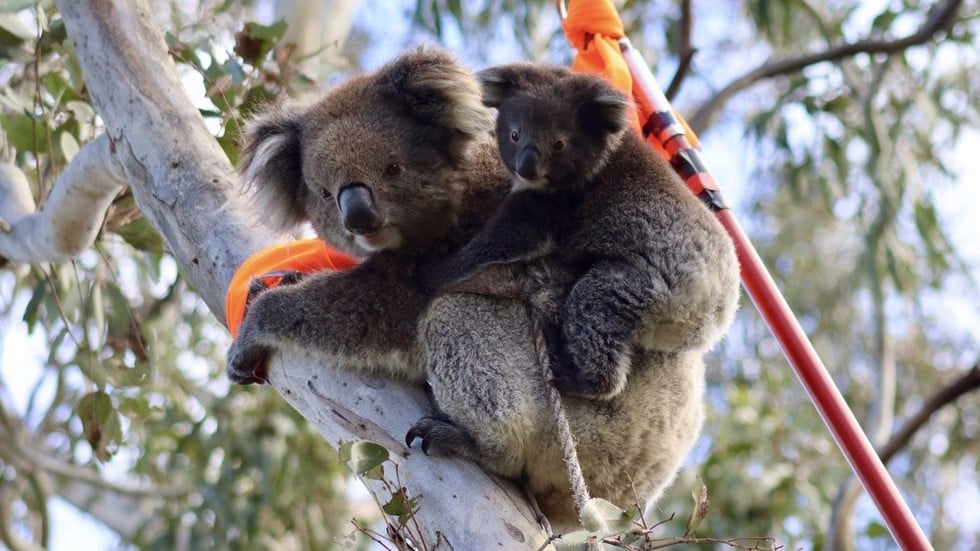
Using advanced spatial modelling and data from thousands of citizen science observations, researchers found koala densities in many areas are above what is considered sustainable.
“We are faced with a difficult conservation dilemma, because traditional methods of population management, like culling or relocation, either raise ethical concerns from the public or are not appropriate for such an iconic native animal.
“How do we manage a species that is now threatened by its own abundance, and do so in a way that protects both animal welfare and long-term ecosystem health?” Dr Katharina Peters, co-author of the study at the University of Wollongong said.
Dr Frédérik Saltré and his team found the answer through testing multiple fertility-control strategies, which demonstrated that sterilising approximately 22% of adult females annually, focusing on high-density hotspots rather than across the entire region, would stabilise the population at an estimated cost of $34 million over 25 years.
The novelty lies in the proactivity of the approach: instead of spending money on a conservation plan without knowing whether it will succeed, we use computer simulations to identify in advance which strategies are most likely to work — optimising both costs and taxpayer investment
As climate change continues to reshape habitats and species distributions, the researchers say such evidence-based and anticipatory approaches will become increasingly essential for managing high-profile species where public values and ecological needs collide.
This research builds on the previous work carried out at the Australian Museum in sequencing the approximately 20,000 genes in the koala to open up opportunities for medical treatments, provide knowledge about how koalas evolved, and indicate how best to conserve the species.
News by topic

News
What the Australian government’s apology to LGBTQ+ Defence personnel and veterans means
Current or former Defence personnel can now “apply to have historical homosexual convictions extinguished from their service records”.

News
AI gives rural doctors tools to tackle antibiotic resistance
Evaluation shows new decision support tool helps rural and remote doctors make better antibiotic prescribing decisions.

News
A new study finds that to counter misinformation online, we need to copy its style
Online wording matters, even when the information stays the same, new research finds.
News
The electric car myths Australians can’t shake
Electric cars are dangerous, bad for the environment and impossible to use in the outback. These are just some of the claims circulating among Australians...
News
What the Australian government’s apology to LGBTQ+ Defence personnel and veterans means
Current or former Defence personnel can now “apply to have historical homosexual convictions extinguished from their service records”.
News
AI gives rural doctors tools to tackle antibiotic resistance
Evaluation shows new decision support tool helps rural and remote doctors make better antibiotic prescribing decisions.
News
A new study finds that to counter misinformation online, we need to copy its style
Online wording matters, even when the information stays the same, new research finds.
News
The electric car myths Australians can’t shake
Electric cars are dangerous, bad for the environment and impossible to use in the outback. These are just some of the claims circulating among Australians...