


- Posted on 16 Dec 2025
- 6-min read
Local councils and community groups can help turn draughty, expensive houses into comfortable, efficient homes – if given the right support.
Summer in Australia often means sweltering heat, leaving many people stuck inside homes that feel more like ovens than shelters. Australian houses are notoriously hot in summer and cold in winter, and while most of us know upgrades are needed, many aren’t sure where to start – or have shelved the idea as too costly or complicated.
Yet upgrading our homes is not just about comfort. It can dramatically cut household bills, is central to achieving net zero, and can have flow-on benefits for health and wellbeing. Modelling from Climateworks Centre suggests that an average household can typically save $1,800-$2,200 per year through energy upgrades. Rewiring Australia suggests that this climbs to over $4,000 per year if switching to an all-electric home that includes solar power, battery storage and an electric vehicle.
Across Australia, community groups and councils are stepping up to make energy-efficient homes a reality, running local programs that connect residents with quality upgrades. These initiatives vet suppliers, engage households and address barriers that make it harder for people to improve their homes, such as upfront cost, confusion and knowing which suppliers to trust.
Tailored upgrades for individual communities
Designing these programs isn’t simple. Every community faces its own mix of housing types, climates, and socio-economic contexts. What works in suburban Sydney may not suit regional Victoria or Tasmania.
That’s where the RACE for 2030 Energy Upgrades for Australian Homes project comes in. We’ve recently completed the Upgrade Accelerator Program, which took 10 teams from across Australia through the process of designing an upgrade initiative tailored to their community.
The response to the callout was surprisingly strong. When the Accelerator opened, more than 50 groups applied, evidence of both the appetite to help households and the need for practical support to do this. Applications came from community groups, councils and partnerships between the two. Many groups said they were especially keen to reach renters and low-income households, who are often locked out of upgrades.
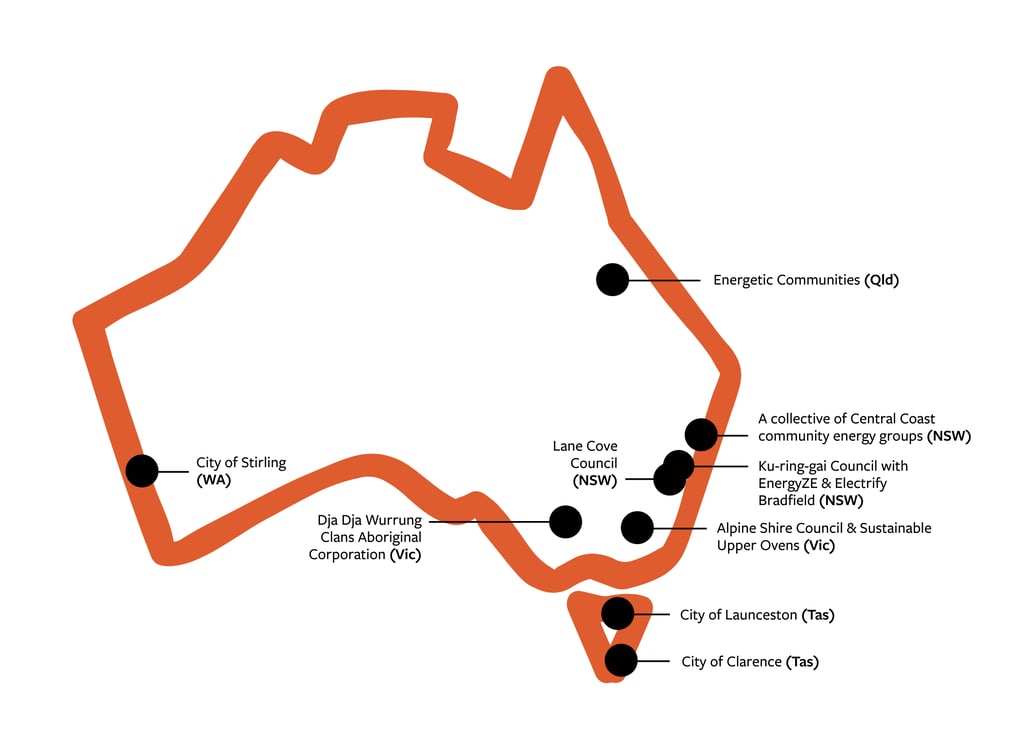
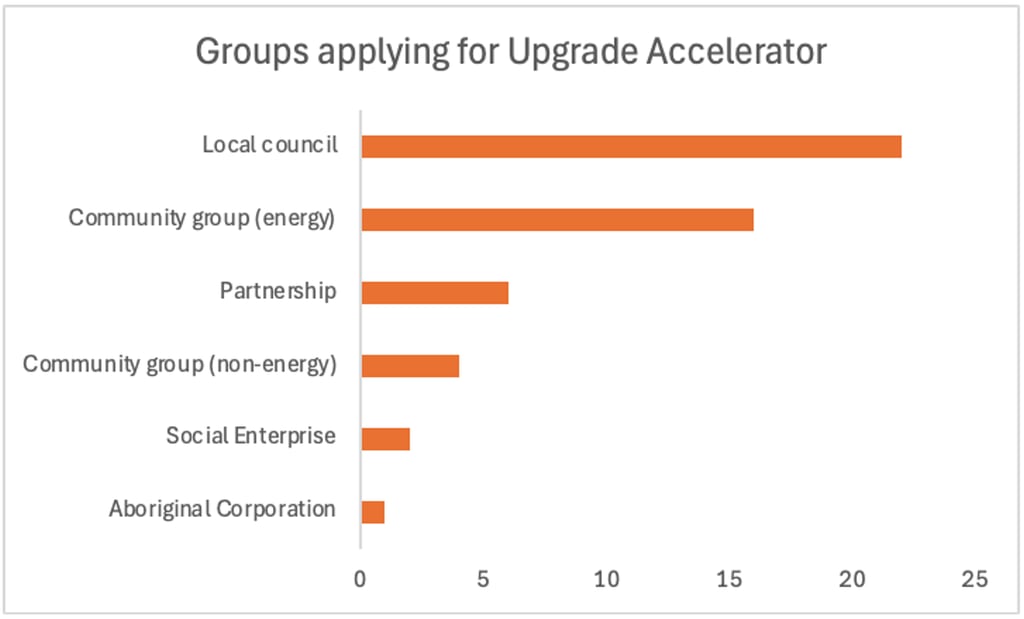
Our final 10 teams were spread across five states (NSW, WA, Tasmania, Victoria and Queensland), to test the different conditions for setting up such projects. They included two community groups, three local councils, four council–community partnerships and one Aboriginal Corporation.
Over five months, pioneers of successful upgrade programs have shared insights, and researchers have guided the 10 teams through the process of designing their own upgrade programs, supported with tools and resources to decide what kinds of upgrades their communities need and what kinds of support will make those upgrades accessible. The tools tested and refined with this cohort will ultimately be made available to any community leader on the online EUAH platform for upgrade program organisers, currently under development (for release in late 2026).
The Accelerator covered setting program objectives, understanding household decision-making, analysing local demographics and housing stock to understand what upgrades are needed, designing activities based on program type, local needs, the skills of who they’re working with and suitable business models, and mapping and evaluating program impacts and outcomes.
Enabling programs to vet quality suppliers
The first tool we’re releasing is the Supplier Vetting Toolkit, which consolidates guidance on how to choose good energy upgrade suppliers. It draws on insights from pioneering practitioners at Geelong Sustainability, Rewiring Australia, Zapcat, and Yarra Energy Foundation, and covers how to set criteria, run an Expression of Interest (EOI) process, review, engage, shortlist, interview and contract respondents.
We were surprised to learn that programs with a single supplier – as distinct from offering customers a panel of suppliers to choose from – can yield better results. Single suppliers are often more deeply invested as they become the delivery ‘face’ of the program. Councils and community groups opting for a single supplier need to do their due diligence and weigh up the pros and cons of limiting choice for households. Any supplier for a home energy upgrade program needs to be able to meet household demand to ensure that there are no delays in handling household enquiries, which can lead to dropouts. Whichever process is selected, vetting for quality is critical, and our Toolkit helps to simplify this process.
Success from programs grounded in local knowledge
We also heard from Yarra Energy Foundation’s Lloyd Heathfield that these EOI processes can help to develop suppliers that do a range of upgrades – like draught proofing, insulation, solar and hot water – to sidestep the hassle of households having to get four different quotes, alleviating a key pain point in the Australian market.
Through the program, we heard from suppliers delivering local upgrade programs that participate as their conversion rate is typically higher when the leads come from upgrade programs that are organised or endorsed by a trusted local council or community group.
More information
Our Accelerator program has ended for 2025, but we’re continuing to partner with councils and community groups to develop best practice policies and programs for home upgrades.
If you’d like to learn more, please visit our website.
Written by:
Jaime Comber, Senior Research Consultant, UTS
Ed Langham, Research Director, UTS
Paris Hadfield, Research Fellow, Monash University