


- Posted on 22 Dec 2025
- 4 minutes read
Pioneering hydrogeologist Professor Bradley Moggridge is being acknowledged for his world-leading expertise bridging western and Indigenous science.
Professor Bradley Moggridge has achieved an impressive series of firsts throughout his career.
A proud Kamilaroi man and Associate Dean (Indigenous Leadership and Engagement) in the UTS Faculty of Science, he was the first in his large extended family to attend university.
He was the first and only Indigenous water researcher at the national science agency CSIRO and the first Aboriginal person to lead an Indigenous water unit in NSW.
Now, this pioneer of blending Indigenous scientific knowledge with western water management and environmental science is taking on a new first.
He’s the only Australian Indigenous lead author working on one of the chapters for the next assessment report (AR7) for the Intergovernmental Panel on Climate Change (IPCC).
Every five years, the IPPC publishes assessment reports that summarise the best-available climate science for government and policymakers to use globally.
For the next edition, Professor Moggridge will be a lead author for chapter 10 (working group 1) of the assessment report that will focus on climate information and services by incorporating Indigenous knowledges.
“I put my hand up through the federal environment department (DCCEEW) to be lead author on the chapter that is considering how Indigenous knowledges can better inform climate change, adaptation and mitigation,” he said.
“I've been publishing in this space for a number of years with a group of other scholars to bring Indigenous voices to climate change, and this is a natural extension of that work.”
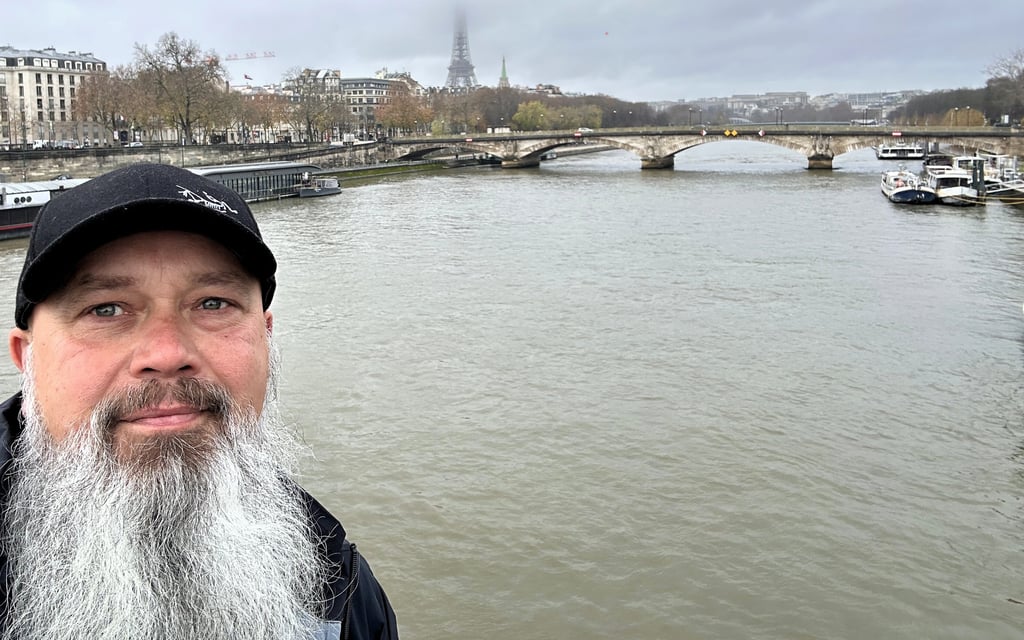
It’s not Professor Moggridge’s only achievement this year. In December, he was awarded the Royal Society of NSW Aboriginal Torres Strait Islander Medal for his more than 20-year scientific career in academia and industry.
He was also made a fellow of the Australian Academy of Technological Sciences and Engineering (ATSE) and an honorary member of the International Association of Hydrogeologists earlier in the year.
Another one of Professor Moggridge’s sentimental accolades was when he took out the UTS Alumni Award for Indigenous Excellence in 2023. He graduated from UTS with a Master of Science from UTS in hydrogeology and grioundwater management in 2005.
“I greatly appreciate my nominators and supporters in winning these awards and fellowships,” he said.
The basis of these accolades is a body of research that has improved land and water management practices across the country using Indigenous knowledge.
“When mum was a child, she wasn't even counted as a human until the late 1960s. Her and her parents’ Aboriginal knowledge was seen as myth and legend. It wasn’t seen as science even though there's thousands of generations of observation behind it,” he explains.
Aboriginal knowledge is real science that has stood the test of time. It has been tested, retested and replicated over millennia.
“Sometimes it met the ultimate test and helped people survive. For instance, during the end of the last Ice Age when the sea levels rose or when surviving on the driest inhabited continent on earth. You're not going to last long if you don't know where water is in the desert.”
“Exploring this deep knowledge in caring for Country and really understanding, it’s a great opportunity for western or Euro-centric science to accept and learn.”
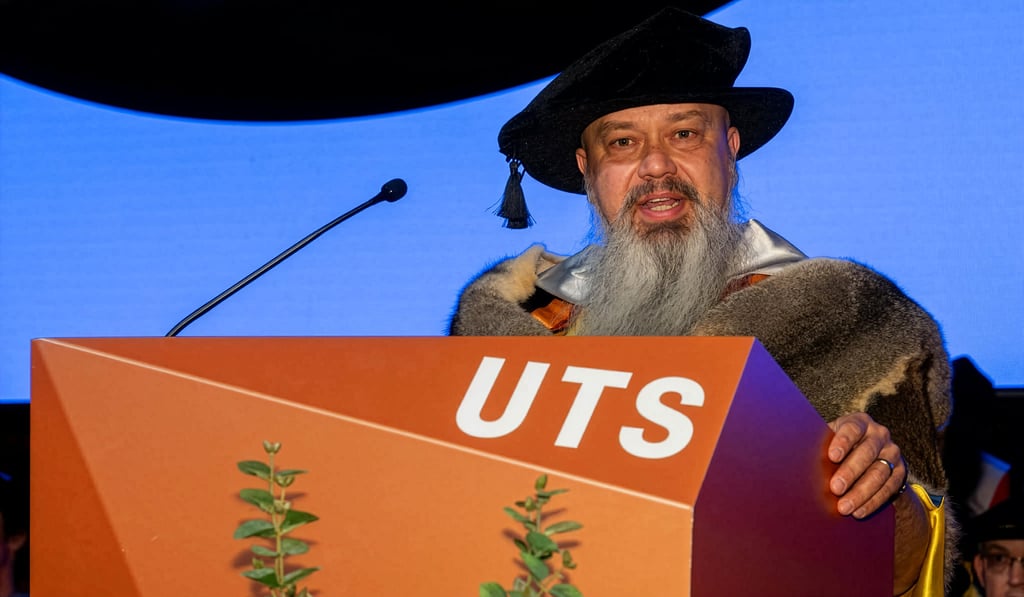
Professor Moggridge has been opening up this opportunity for the past two decades. He’s been decolonising the academy, while drawing on his connections to country and communities throughout NSW, to build up a bank of research bridging the two knowledges.
“Through my research I’ve built a large body of knowledge from interviews with elders on country. With the data I'd captured, I was able to build a map of places in the landscape that are culturally significant and water dependent,” he said.
“This evidence has then been used to inform policy. You want your work to change water and land management practices or legislation. A lot of my papers are referenced by the authorities and water industry.”
It’s this focus on making a difference in how the landscape is managed that drives his work.
“Because we've got highly modified landscapes in eastern Australia, this old knowledge has real value in solving modern problems in the water space,” Professor Moggridge said.
“Modern influences are diverting and moving water away from some of these landscapes. If you add water, you get a natural response that includes birds breeding or fish spawning. Take water away and you also get a natural response observed by Aboriginal people, this can be via cultural indicators.”
“In the end, you work from building evidence to implementing it. You build a methodology and then go out on country and identify parts of the landscape that need water.”
As crucial as his research and its impact is, Professor Moggridge sees his most important role in inspiring young Indigenous scientists and engineers.
“If my research can inspire a new generation of Indigenous scientists then I’m happy. I’ll be there to support them, especially if they choose to study at UTS,” he said.
News by topic

News
Electronic nose puts police detection dogs to the test
UTS researchers are using scent-sensing technology to help validate human-remains detection dog training.

News
Working from home for over-55s
The law provides a right to make a properly grounded request to work from home, a right to genuine consideration and, where necessary, access to an independent...

News
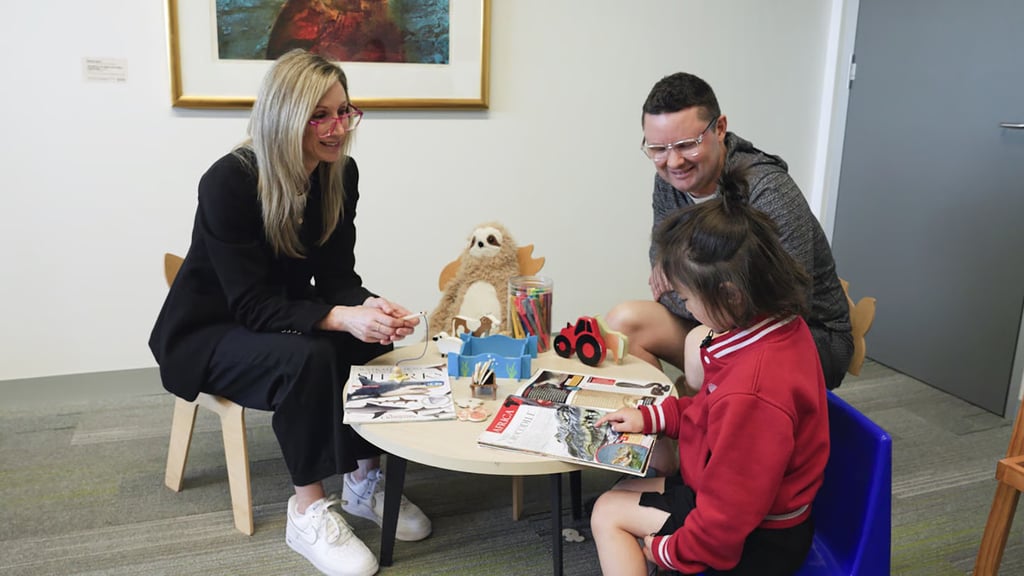
Australia leads the world in stuttering research, now digital innovation is reshaping stuttering care
The Australian Stuttering Research Centre at UTS marks 30 years of world-leading research.
News
Electronic nose puts police detection dogs to the test
UTS researchers are using scent-sensing technology to help validate human-remains detection dog training.
News
Working from home for over-55s
The law provides a right to make a properly grounded request to work from home, a right to genuine consideration and, where necessary, access to an independent...
News
Australia leads the world in stuttering research, now digital innovation is reshaping stuttering care
The Australian Stuttering Research Centre at UTS marks 30 years of world-leading research.