


- Posted on 10 Nov 2025
- 3-minute read
In a significant step towards dealing with the persistent harmful algal bloom affecting the South Australian coast, researchers have identified the species chiefly responsible for mass deaths of marine animals and potential human health impacts during the past seven months.
In results presented to the 21st International Conference on Harmful Algae in Chile and now under peer review, a research team led by Professor Shauna Murray of the University of Technology Sydney has identified the neurotoxin producing marine microalgae species Karenia cristata as the dominant strain found in samples collected in South Australia.
The work, conducted with the assistance of the South Australian Research and Development Institute and the state’s Department of Primary Industries and Regions, has involved harmful algae experts from Australia, New Zealand and the UK.
“K.cristata is one of the rare Karenia algae species producing an abundant amount of a neurotoxin called brevetoxin, before only known to be produced by the species Karenia brevis for which it was named,” Professor Murray said.
Among the 849 marine mass animal mortality incidents recorded in an international harmful algal database, this situation ranks among the most impactful reported.
“Harmful algal blooms dominated by brevetoxin-producing Karenia are well-known occurrences in isolated locations around the world, particularly along coastlines of the south-eastern United States where Karenia brevis is the known source.
“The events can last up to 20 months with severe environmental and human health effects, but this is the first such occurrence in Australia.
“Brevetoxins can kill marine animals from the bottom to the top of the food chain, from zooplankton, invertebrates to fish, birds and marine mammals. They also can become aerosolised, causing respiratory distress in humans, as well as accumulating in seafood causing neurotoxic shellfish poisoning.”
Professor Murray said K. cristata has been previously reported in only two locations internationally: False Bay and Walker Bay South Africa in the mid-1990s, and a remote island off the coast of Newfoundland in Canada, but the species responsible was not known at the time of these events and any presence of brevetoxin was not detected.
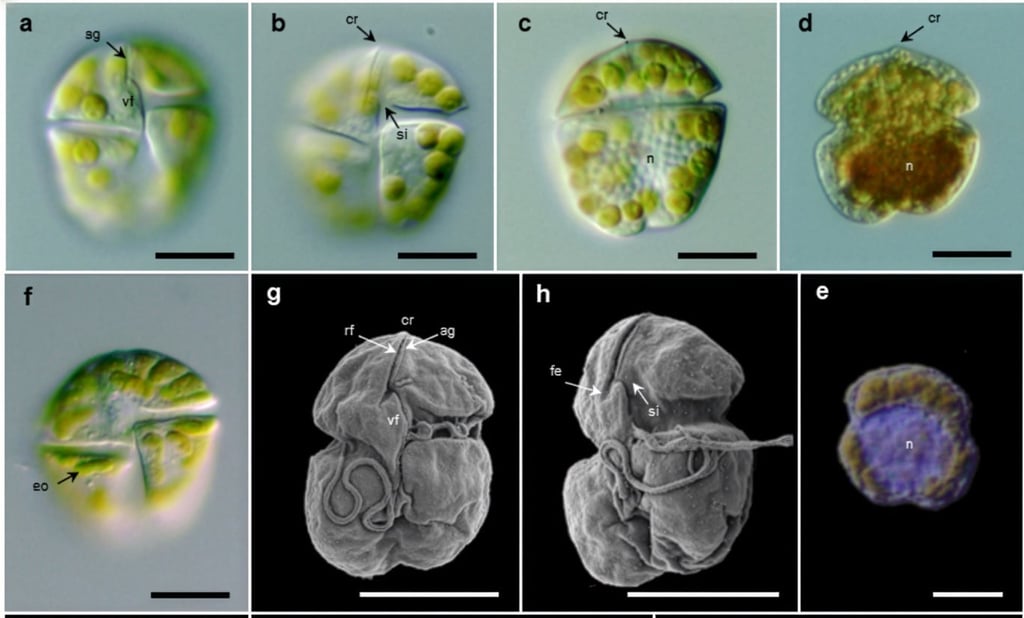
“Among the 849 marine mass animal mortality incidents recorded in an international harmful algal database, this situation ranks among the most impactful reported,” Professor Murray said.
“The ecological conditions that allowed this multi-species harmful algal bloom, and specifically K. cristata to proliferate and persist are currently being investigated.
“While we cannot yet be certain of the impact of the considerably warming ocean waters experienced around Australia and increasing nutrients that may be fuelling coastal phytoplankton blooms worldwide, the role of changing marine environments in enhancing and intensifying Karenia harmful algal blooms is crucial to establish.
“Investigations of Australian Karenia diversity are important to determine whether K. cristata has long been present in Australia, or whether it has established relatively recently.
“The investigation of marine microbial diversity, including the ‘hidden flora’, or species present at low abundances, needs to be of high priority in order to mitigate potential future detrimental effects of marine harmful algal blooms and prepare for changes in marine ecosystems, given our rapidly warming coastal waters.”