


- Posted on 18 Nov 2025
International award highlights UTS-led biosolar innovation driving greener, smarter cities.
Bradfield City’s First Building, a landmark project in Australia’s newest city, is integrating living green roofs with solar energy generation based on proven sustainability research from the University of Technology Sydney (UTS).
The development aims to create a scalable blueprint for designing future cities that are fundamentally more climate-resilient and energy-efficient.
That work, led by Dr Peter Irga, Senior Lecturer at UTS, has just received international recognition, winning the prestigious 2025 World Green Infrastructure Network (WGIN) Award for Academic Work.
The award celebrates the team’s research into biosolar technology: an integrated system that combines the ecological benefits of a green, living roof with the renewable energy generation of solar panels.
“For too long, urban development has treated green space and renewable energy as separate goals,” said Dr Irga.
“Our research provides empirical evidence to show that integrating them is more effective. Adopting biosolar solutions is a practical tool for urban sustainability.”
From street level, the problem is clear: vast hard surfaces make our cities hotter, strain the power grid during heatwaves, and increase flash flooding risks during heavy rain.
This urban heat island effect not only impacts public health and energy use but also displaces the natural biodiversity that is crucial for a healthy ecosystem.
The award recognises a key study Dr Irga conducted in partnership with Lendlease and the City of Sydney at Barangaroo, which offers data-driven solutions. The project directly compared a conventional rooftop solar array with a biosolar roof and the results were conclusive.
We found the cooling effect of the vegetation on the biosolar roof increased the solar panels’ energy output by up to 107% during peak periods
“At the same time, the green roof component reduced surface temperatures by nearly 10°C, cut stormwater runoff by 60% during major storms, and created a thriving habitat for insects and birds. A biosolar roof is a win-win-win,” said Dr Irga.
The principles proven at Barangaroo are now being applied at one of Australia's most significant new urban developments: Bradfield City.
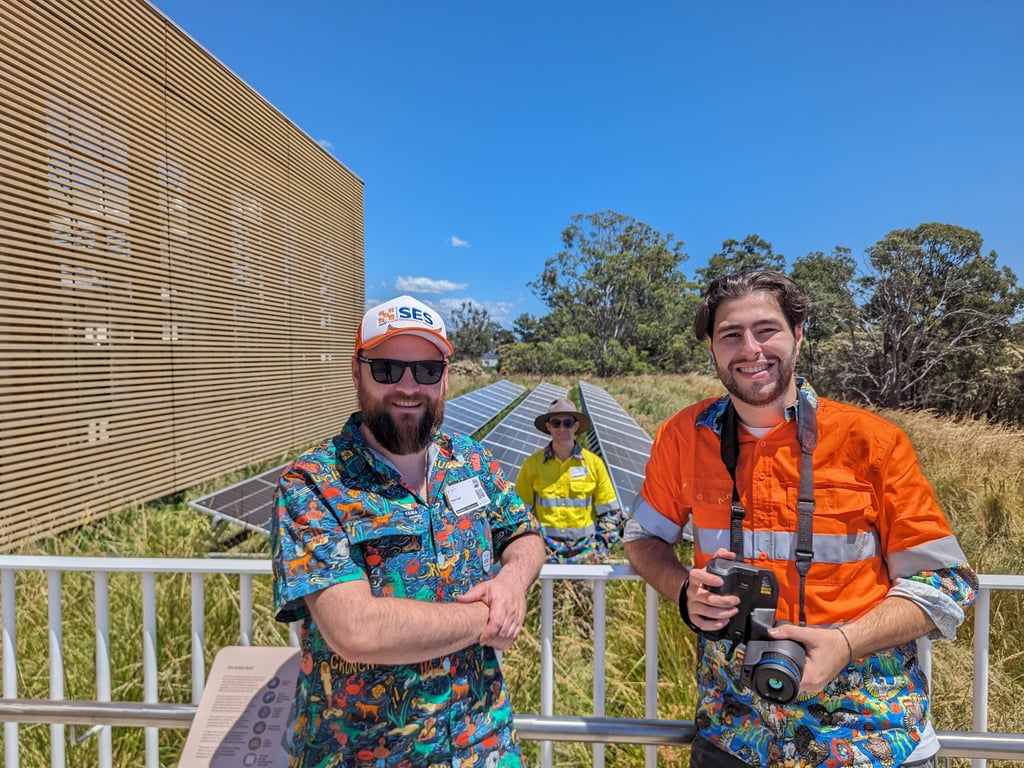
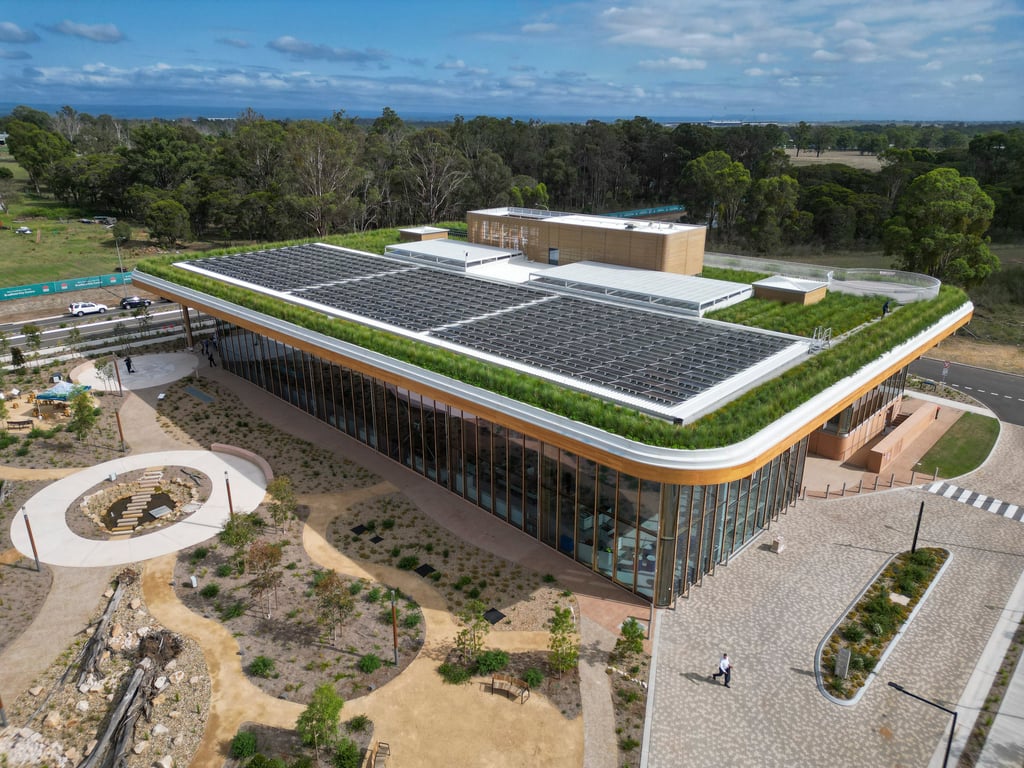
The Bradfield Development Authority (BDA), a NSW Government body, has partnered with Dr Irga’s UTS team to monitor and quantify the benefits of Bradfield City First Building’s 1,300 sqm native green roof, which incorporates biosolar design.
“Bradfield represents a rare opportunity to get it right from the start,” said Ken Morrison, CEO of BDA.
“As Australia’s first new city in 100 years, we are integrating nature-based solutions into the city’s foundational planning.”
The idea of mandating a building feature like a biosolar roof might seem impractical, but there is strong precedent. Decades ago, smoke alarms and building insulation were new concepts.
Today, they are standard requirements. Dr Irga argues that in a changing climate, biosolar infrastructure should be viewed with similar importance.
While obstacles like upfront costs and industry inertia exist, Dr Irga said the long-term returns provide a strong economic case. These benefits include energy savings, reduced spending on large-scale stormwater infrastructure, and improved public health.
“This award recognises a broader trend: Australia is emerging as a global leader in green infrastructure research and application," said Dr Irga.
“UTS is at the heart of that, translating years of academic work into real-world solutions that other cities are now looking to.”
That leadership extends to fostering the next generation of experts. At the same WGIN awards, UTS PhD candidate Louwen Lyu received an honorary mention for her research poster on optimising water usage in green walls.
Her project demonstrated that using a low-flow drip system is crucial, as it significantly conserves water while maintaining the wall’s air filtration performance.
As developers and governments plan the cities of tomorrow, evidence from UTS shows that biosolar technology is a valuable tool for achieving a cooler, greener, and more resilient future.
“We’ve proven the concept and quantified the benefits of green infrastructure. With projects like Bradfield City, we now have the chance to turn that proof into a blueprint for every new city in Australia,” said Dr Irga.
“The question is no longer if it works, but how quickly we can make biosolar the new standard.”