


- Posted on 24 Apr 2025
Executive Summary
As Australia approaches the 2025 federal election, cost-of-living pressures continue to dominate voter concerns. Yet beneath the surface of the economic debate, foreign policy, particularly Australia’s relationship with the People’s Republic of China (PRC), remains a significant backdrop to national conversations about security and leadership. The Australian Labor Party has focused on stabilising relations with Beijing while maintaining a firm security posture. The Liberal-National Coalition is adopting a more assertive tone, challenging Labor’s approach as too passive in the face of growing threats. Despite this, public opinion, at least for the time being, continues to favour Labor’s handling of the PRC relationship.
Both parties support core strategic frameworks like AUKUS but differ in emphasis. Labor prioritises diplomatic management; the Coalition leans into security framing. Global shifts, especially a more combative US under Donald Trump and increasingly assertive behaviour from the PRC, are reducing Australia’s room to hedge. Whoever forms government will face a more volatile external environment and rising pressure to define clearer lines on the PRC.
This report finds that:
- Labor and the Coalition both emphasise sovereignty and the national interest in their public messaging on the PRC but diverge in tone and strategic emphasis. Labor leans towards stability and diplomatic management, while the Coalition projects strength through more explicit security framing.
- Labor has sought to present itself as a steady, non-ideological manager of the bilateral relationship, maintaining disciplined messaging and avoiding direct provocation. Its approach may face growing pressure amid global volatility.
- The Coalition has adopted a refined but still hardline stance with a tripartite messaging strategy. Opposition Leader Peter Dutton projects strength on national security while engaging constructively on trade and diaspora issues; Shadow Foreign and Trade Ministers adopt a pragmatic, moderate approach; and Defence and Home Affairs figures take a firm ideological line on PRC threats. Each portfolio group represents a messaging pillar, with the three pillars together forming a cohesive whole. Whether this balance could be maintained in government, under greater domestic and international scrutiny, remains uncertain.
- Across both parties, Australian-Chinese communities have become pivotal electoral constituencies, prompting sustained efforts at engagement and messaging sensitivity. This evolution reflects the growing recognition that domestic cohesion is inseparable from effective foreign policy.
- While bipartisanship remains the dominant feature of Canberra’s PRC policy, the contours of difference between Labor and the Coalition are becoming clearer. Much of this divergence reflects evolving global dynamics and an increasingly transactional international environment.
- Both parties support expanded trade with the PRC but differ in emphasis. Labor promotes risk-informed engagement grounded in commercial pragmatism while the Coalition frames trade through a more strategic and security-driven lens.
- However, critical minerals have been positioned as central to trade diplomacy for both parties. Labor has aligned more closely with the Coalition’s view that Australia’s resource wealth should be leveraged in alliance-building and strategic negotiations, particularly with Washington.
- Connected technologies like electric vehicles (EVs) may be a growing fault line between the parties. Labor has thus far prioritised consumer access and affordability, backing PRC-made EVs while monitoring for risks. The Coalition has taken a harder line – warning of data vulnerabilities and pushing for strict cybersecurity standards, signalling a likely regulatory shift should it win government.
- On the Port of Darwin and CPTPP accession, positions converge but are framed differently. Both parties now support ending the PRC-linked lease of Darwin Port, with Labor emphasising resilience and domestic investment and the Coalition stressing national security. On the CPTPP, both endorse strict accession standards, but Labor prefers a process-driven approach while the Coalition has exhibited a willingness to frame the issue as a values-based.
- Labor will likely continue to publicly condemn PRC human rights abuses and cyberattacks but avoid unilateral Magnitsky-style sanctions in favour of multilateral diplomacy. The Coalition advocates a firmer approach, including targeted sanctions as a tool of cyber deterrence and values-based policy.
- Foreign interference will remain a national security priority, but approaches are likely to diverge. Labor is likely to maintain a restrained, risk-managed model; the Coalition would take a more interventionist route. While Labor has expanded Australia’s counter-interference toolkit, it maintains a broadly country-agnostic approach. The Coalition has called for more direct attribution and stronger enforcement. A key priority for the Coalition is the restoration of the Department of Home Affairs to its ‘rightful place as the pre-eminent domestic national security policy and operations portfolio’. It has also proposed structural reforms, including annual reporting by the Office of National Intelligence and reform of the Foreign Influence Transparency Scheme.
- Both parties support the one China policy and oppose unilateral change to the status quo but differ in emphasis. Labor maintains strategic ambiguity and prioritises multilateral deterrence, while the Coalition signals closer alignment with US deterrence efforts. AUKUS deepens Australia’s integration with US planning, potentially narrowing future flexibility in any military escalation involving Taiwan.
- Whichever party wins the 2025 election will confront a foreign policy landscape defined by intensifying strategic competition and rising expectations for resolve.
1. Introduction
As Australia approaches the 2025 federal election, cost-of-living pressures continue to dominate voter concerns.[1] Yet beneath the surface of the economic debate, foreign policy, particularly Australia’s relationship with the People’s Republic of China (PRC), remains a significant backdrop to national conversations about security and leadership.
In contrast to the 2022 federal election, where the PRC featured prominently as a national security concern,[2] the last three years have seen a more muted, bipartisan consensus around PRC policy prevail, with the issue remaining relatively depoliticised in the lead-up to this year’s vote.
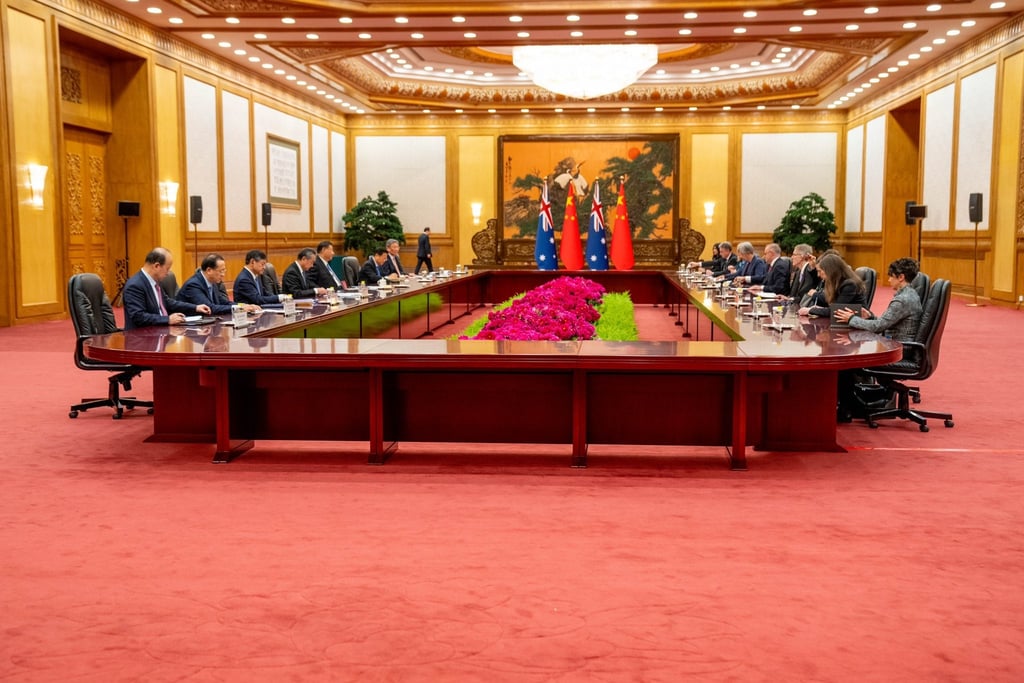
The Australian Labor Party, under the prime ministership of Anthony Albanese, has maintained a strategy of ‘stabilisation’, seeking to restore, then maintain, functional diplomatic and economic ties while reinforcing national security through defence investment, foreign interference laws and a stance on the PRC grounded in risk-informed engagement. Under Labor, relations with Beijing have improved: trade restrictions have been lifted, high-level dialogues have resumed and diplomatic interactions – such as Prime Minister Albanese’s meetings with President Xi Jinping and Premier Li Qiang – have been constructive, if cautious. The Albanese government also secured the release of Cheng Lei, an Australian journalist detained for more than three years in the PRC. These developments unfolded amid ongoing tensions, including increased military encounters in the South China Sea, the sentencing of Australian democracy activist Gordon Ng in Hong Kong, the death sentence handed down to Australian prodemocracy writer Yang Jun, PRC state-backed cyberattacks, foreign interference and espionage, as well as what Foreign Minister Penny Wong has described as the ‘permanent contest’ between Australia and the PRC in the South Pacific.[3]
However, this fragile consensus between the two major parties is beginning to fray. In recent months, the Liberal-National Coalition has revived more combative rhetoric, accusing the government of inaction and complacency in the face of growing strategic threats. Citing the ongoing tensions discussed above, the opposition has sharpened its criticisms. While avoiding the incendiary rhetoric of its 2022 campaign, the Coalition has returned to familiar critiques, portraying Labor as indecisive and soft on authoritarianism.
Yet public opinion appears to reward Labor’s approach. A December 2024 Australian Financial Review/Freshwater Strategy poll asked voters whether 12 key areas of Australian life were ‘improving, worsening or unchanged’ under the Albanese Labor government. Only one – relations with the PRC – was viewed positively.[4] Similar results were reported in December 2023, indicating sustained public approval of Labor’s PRC policy.[5] Similarly, the 2024 UTS:ACRI/BIDA Poll reported that four in 10 Australians (40 percent) expressed satisfaction with the Albanese government’s management of PRC relations, a continuation of sentiment from 2023 (39 percent). This marked a steady rise from satisfaction under the previous Coalition government, which stood at 34 percent in 2022 and 32 percent in 2021.[6]
Foreign Minister Wong has accused the Coalition of deliberately reigniting the PRC as a wedge issue in the election campaign. Condemning the opposition for invoking ‘gunboat diplomacy’, she stated, ‘Such rhetoric does not make Australians safer.’[7] Still, even as the Coalition seeks to cast Labor as ‘weak’, it has so far resisted a full return to the combative khaki politics of 2022. Notably, it has generally refrained from using provocative labels such as calling Labor representatives ‘Manchurian candidates’, a term previously deployed to cast doubt on their loyalties.[8]
The Coalition’s rhetoric is still sharp, but more strategic. Whether this discipline will hold remains uncertain, especially if polling pressure intensifies. Indeed, even commentators generally sympathetic to the opposition have voiced concern about their relative quietude on security. As one put it, ‘The Liberals are meant to be strong on national security... So far, Dutton is losing this campaign and he’s even managing to mangle national security.’[9] This suggests that while the Coalition is treading cautiously for now, internal and external pressures may yet push it toward a more combative posture as the campaign unfolds.
Meanwhile, both major parties remain publicly committed to AUKUS and increasing defence expenditure, though questions persist over how such investments will be funded. Some within the Coalition have floated the possibility of cuts to other sectors to support a ‘significant’ increase in defence spending underscoring broader debates about national priorities.[10]
PRC Ambassador to Australia Xiao Qian has lauded the ‘complete turnaround’ in bilateral relations since 2022, striking a conciliatory tone while publicly expressing no preference for either major party and declining to comment on past rhetoric by the Coalition. ‘Whoever is going to go next, we hope that China and Australia continue to engage… in the spirit of cooperative, strategic partnership,’ he said. The Ambassador added, ‘We are open to welcome Mr Dutton to visit China’, saying that ‘President Xi will send an invitation [to] whoever will be in power.’[11]
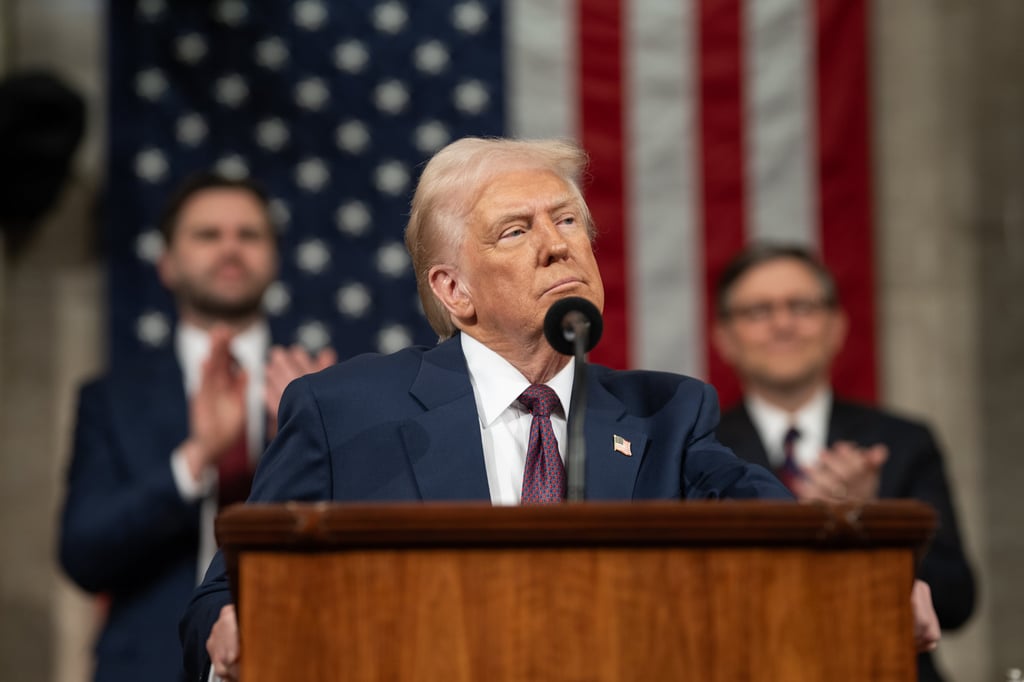
Complicating the landscape is the return of Donald Trump to the US presidency, with senior officials known for hardline views on the PRC appointed to key roles across the US State Department, Defence Department and National Security Council. Writing in The Australian, a former Coalition national security adviser stated:[12]
The Prime Minister’s formula of ‘cooperating where we can, disagree where we must and always engage in our national interest’ when dealing with China is seen by key Trump nominees as cover for a timid approach that merely avoids rather than manages difficulties in that relationship.
The return of a more confrontational US posture towards Beijing could have serious ramifications for Australia’s foreign and economic policy.
During his first term, Trump’s administration initiated a broader economic and ideological confrontation with the PRC under the banner of ‘strategic competition’. While President Joe Biden continued some elements of this approach, particularly in technology export controls, his administration sought to manage tensions through selective engagement and alliance coordination. A second Trump administration appears less interested in managing competition and more inclined toward escalation, with key economic advisers advocating for aggressive protectionism and a radical rethinking of global supply chains to reduce US dependency on PRC manufacturing.
For Australia, the repercussions could be profound. As a close US ally and a major trading partner of the PRC, Canberra risks being caught between two increasingly irreconcilable poles. The intensified US-PRC trade war has already disrupted global markets and has the potential to apply indirect pressure on Australia’s export sectors, particularly if Washington seeks to coerce allied compliance through ‘with-us-or-against-us’ economic policies. At the same time, any escalation in strategic rivalry, especially around Taiwan, would place additional pressure on Australia to clarify its defence commitments under AUKUS and ANZUS.
At his confirmation hearing, US Secretary of State Marco Rubio stated that the PRC had ‘lied, cheated, hacked and stolen their way to global superpower status, at our expense’ and suggested that the US ‘will have to deal with’ an invasion of Taiwan before 2030.[13]
This dynamic was echoed in recent comments by US Treasury Secretary Scott Bessent, who hinted that Washington may seek to first solidify its economic and security relationships with ‘good military allies and not perfect economic allies’, before turning to confront the PRC as a bloc. The implication for countries like Australia is clear: align more closely with US strategic priorities, even if it comes at the expense of economic pragmatism.
Layered over these developments is Beijing’s increasingly assertive behaviour in the IndoPacific, with rising military activity in the South China Sea and a growing sense among Western defence planners that a Taiwan contingency could emerge by 2027. Indeed, as Bloomberg reports, Taiwan itself identified 2027 as the potential year for a PRC invasion for the first time in its annual military drills in March this year.[14] These trends further constrain Australia’s strategic flexibility and underscore the growing difficulty of maintaining a balanced approach. As geopolitical polarisation intensifies, the idea of a ‘middle path’ between Washington and Beijing may become increasingly untenable. These pressures challenge the viability of any policy based solely on stabilisation and reinforce the sense that Australia’s PRC strategy must evolve alongside broader shifts in the geopolitical environment.
Section 2 of this report will explore how Labor and the Coalition are framing their public messaging on the PRC in the context of the 2025 election.
Section 3 explores how both major parties are intensifying efforts to engage Australian-Chinese communities, an electorally significant and politically symbolic group, whose support may prove decisive in the 2025 federal election.
Section 4 will unpack how each party is translating those positions into policy and what this could mean for Australia’s future PRC strategy.
Section 5 concludes the report.
2. Political Communication
Both Labor and the Coalition have emphasised themes of national interest and sovereignty in their messaging on the PRC. Yet beneath these shared touchpoints lie two distinct narratives about how Canberra should navigate its complex relationship with Beijing. The tone and strategy shaping each party’s communication reveal as much about each party’s vision for Australia’s place in the world as they do about how they interpret and seek to influence the priorities of the Australian electorate.
2.1 Australian Labor Party messaging
Since assuming office in 2022, Labor has shaped its PRC policy messaging around the theme of ‘stabilisation’, aiming to balance national security concerns with economic pragmatism and diplomatic re-engagement. Through this framing, the party has sought to signal that while it does not seek a reset with Beijing and remains firm on core values – such as sovereignty and the rule of law – it is open to dialogue and cooperation where interests align.[15] In essence: engagement where possible, resistance where necessary.
Rejecting binary notions of capitulation or confrontation, Labor has framed its relationship with Beijing as a balancing act. Deputy Prime Minister and Defence Minister Richard Marles has summed this approach up as the need ‘to see the entirety of the relationship and guide this through with all the nuance that is required’.[16]
2.1.1 Messaging discipline, narrative coherence and calibrated criticism
Labor has sought to position itself as the party of ‘responsibility’ in foreign affairs.[17] Its PRC messaging has been tightly managed, reinforcing its broader foreign policy narrative of ‘communication over confrontation’ and ‘patience and perseverance.’[18]
This messaging consistency has been enabled by strict discipline across ministerial portfolios, ensuring unified language and tone. Senior ministers have closely adhered to coordinated talking points, with the aim of projecting a clear narrative and reducing the risk of mixed signals that could complicate diplomatic efforts.
Central to this is the phrase: ‘cooperate where we can, disagree when we must, and engage in the national interest’ – adapted from the Biden administration’s 2022 formulation, ‘cooperate wherever we can; contest where we must’.[19] This rhetorical framework was formalised in the Labor Party’s national policy platform in 202320 and has for now proven broadly politically effective,[21] despite some criticism by hawkish observers.[22] Domestically, it has helped Labor neutralise opposition attacks on national security. Internationally, it has framed Australia’s engagement with the PRC as principled yet pragmatic.
Public criticism of the PRC by the Labor government has been selective. Senior Labor ministers consistently flag efforts to raise points of difference with their PRC counterparts, but in managed ways – that is, publicly acknowledging that difficult conversations occur while avoiding overly specific details.[23] Labor has also opted to remain broadly country-agnostic in public discussions of initiatives and activities that address challenges posed by the PRC – for instance, with respect to foreign interference and investment controls in critical infrastructure.
Where firm messages are necessary, they are often expressed through departmental statements by officials,[24] as well as in concert with aligned partners as opposed to unilaterally,[25] albeit with some direct public interventions by senior ministers, particularly Foreign Minister Wong.[26] Perhaps the strongest public criticism levelled at Beijing by the Albanese government to date has been with respect to the death sentence handed down to Australian citizen Yang Jun.[27] Wong stated that ‘the nature of this sentence was such that it was important for us to speak publicly and directly from me and to make those representations – ahead of those representations being made in private.’[28]
The Albanese government’s approach to the PRC deliberately avoids overtly ideological framings or narratives of civilisational struggle. Instead, it situates the bilateral relationship within a broader foreign policy framework that emphasises Australia’s commitment to multilateralism, collective security and the rules-based international order. Foreign Minister Wong has consistently underscored the importance of working in concert with allies and partners, particularly the US, Japan, India and ASEAN nations, to uphold regional stability and international norms. This strategy reflects Australia’s intent to act as a sovereign nation aligned with like-minded countries, rather than as a subordinate to any single power.[29]
2.1.2 Dialogue and diplomacy over ‘drums of war’
While Labor affirms the importance of utilising ‘all elements of national power’ in foreign policy,[30] it has consistently positioned dialogue and diplomacy as central, particularly to its PRC policy posture.
Premier Li’s visit to Australia in 2024 and Prime Minister Albanese’s trip to Beijing in 2023 symbolised a mutual willingness to restore functional ties. In welcoming Li, Albanese emphasised the importance of engaging as ‘mature nations’ and fostering open dialogue, describing it as the pathway through which ‘benefits flow’ and differences are constructively managed.[31]
Since Labor’s election in 2022, Australia and Beijing have re-engaged in sustained diplomatic dialogue, reflected in a series of high-level visits, ministerial meetings and bilateral talks – including at the leaders’ level.[32]
Concurrently, Labor has also endeavoured to underscore the strategic challenges posed by the PRC. It continues to highlight its prioritisation of national security through supporting AUKUS, boosting defence spending and bolstering foreign interference and anti-espionage frameworks.
But while it has acknowledged the worrisome nature of the PRC’s growing military might and its behaviour on the global stage, instead of focusing on framing the PRC as a looming threat, Labor speaks of the need for ‘guardrails’ in the context of US-PRC tensions and emphasises the importance of diplomacy and communication in addition to military deterrence in preventing escalation.[33]
While broadly aligned on the fundamentals of national security and strategic positioning, the Labor Party has sought to distinguish its rhetorical restraint from what it characterises as the Coalition’s performative belligerence.
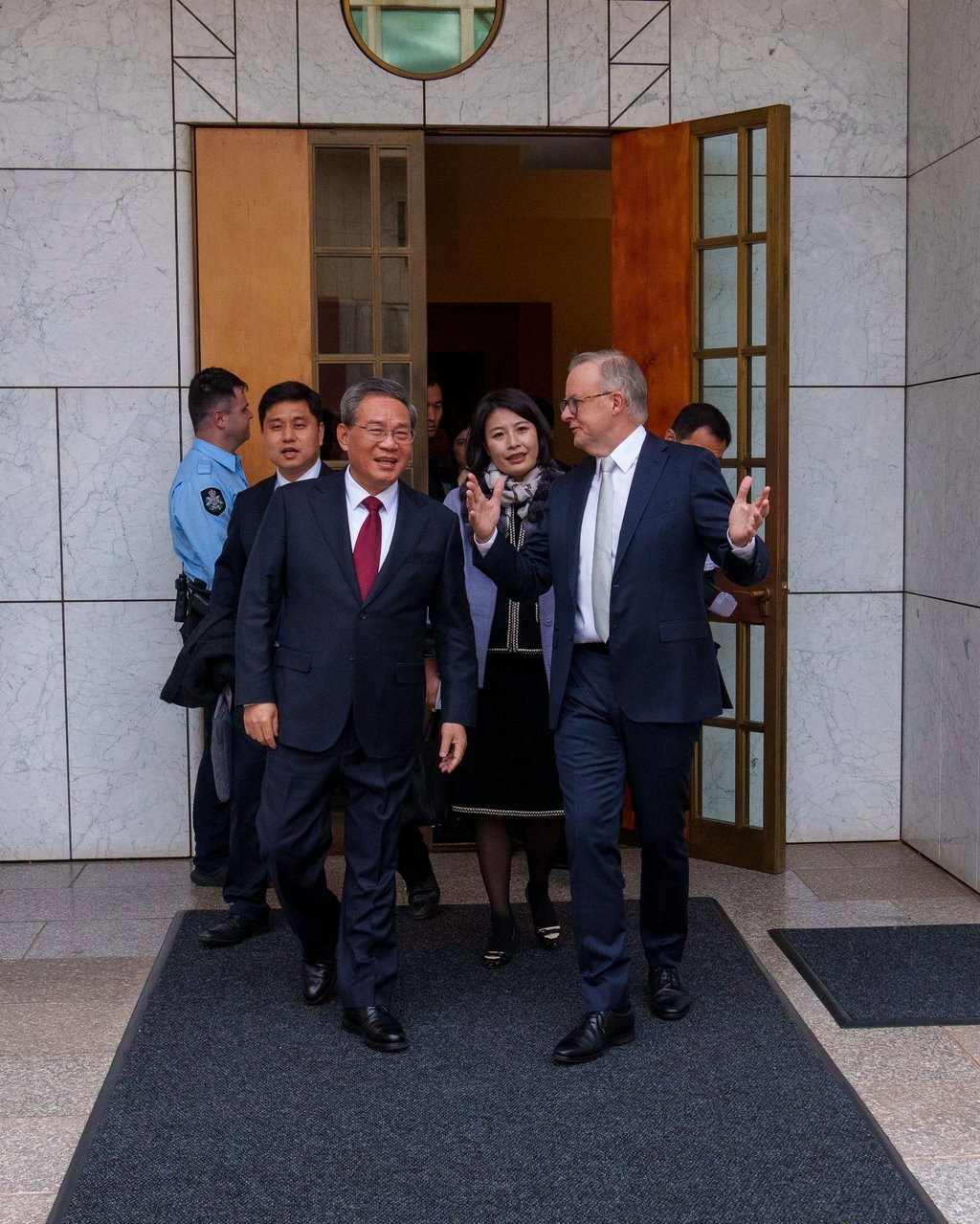
Prime Minister Albanese has contrasted Labor’s approach to the combative tenure of the previous Coalition government, stating that there was ‘a marked difference’ in engagement with the PRC between the two administrations. He said it was ‘problematic’ that during the tenure of the Scott Morrison-led government (2018-2022), ‘there wasn’t a single phone conversation, let alone a meeting, between any minister in the Australian government and any minister in the government of China’. He said Labor would continue to engage ‘constructively’ and ‘diplomatically, without a loudhailer’.[34]
This contrast was again highlighted by Foreign Minister Wong in an opening statement at Senate Estimates in February 2025, where she stated: [35]
[The opposition] are at it again – trying to turn China into an election issue.
We have been very clear that China is going to keep being China.
Just as Mr Dutton isn’t going to stop being Mr Dutton – the man who once said it was inconceivable we wouldn’t go to war is going to keep beating the drums of war.
The Labor government will be calm and consistent, not reckless and arrogant.
Labor is also acutely aware of the domestic political sensitivities that come with managing the PRC relationship, not least the criticality of tone for diverse constituencies.
The government’s messaging has sought to avoid the kinds of broadbrush rhetoric that alienated Australian-Chinese voters during the Morrison years. It seeks to present itself as the party that values multiculturalism and protects social cohesion while also defending against foreign interference. This dual-track messaging – tough on interference, soft on community – is a critical part of Labor’s strategy to maintain credibility on national security without losing support in key marginal seats. (See also Section 2.3 Australian-Chinese communities).
2.1.3 Looking ahead
As the 2025 federal election approaches, Labor’s PRC messaging remains focused on the projection of calm competence. It aims to present itself as the party that restored diplomatic channels and removed trade blockages, as well as enhanced national security without aggravating tensions. Its strategy rests on the belief that voters prefer steady hands over sabre-rattling.
This rhetorical approach has helped the government in its efforts to balance the pursuit of economic interests and national security priorities and preserve the fragile diplomatic stability that was re-established in the wake of its election in 2022, following seven years of tensions and non-communication.
However, this balance will be increasingly tested by evolving strategic tensions and external shocks, such as developments in the Taiwan Strait, an escalation in dangerous maritime incidents or renewed PRC coercion. The challenge for Labor will be to maintain narrative discipline without appearing passive or indecisive.
The success of this messaging strategy will depend on more than rhetoric, it will hinge on Labor’s ability to demonstrate policy coherence, regional influence and a credible response to a complex and evolving geopolitical landscape should it secure a second term.
2.2 Liberal Party messaging
Across the political aisle, the Coalition seeks to present a more forceful and values-driven narrative on PRC policy. While the stark ideological confrontations of past years have abated somewhat, the Coalition continues to frame the Australia-PRC relationship through the lens of vigilance and moral clarity.
Under Morrison’s prime ministership, the Coalition’s tone on the PRC tilted towards open hostility, especially as Beijing engaged in its own combative ‘wolf warrior’ diplomacy – publicly confronting and criticising foreign governments. This mutual escalation contributed to a sharp deterioration of bilateral ties.[36]
Domestically, this hardline posture alienated sections of Australian-Chinese communities.[37] It also provoked concerns from within the business sector, particularly at the height of the PRC’s campaign of economic coercion. At that time, some of the country’s largest companies lobbied the Coalition government to blunt some of the sharper edges of their language in the interest of economic stability.[38]
Since Peter Dutton assumed the leadership, the Coalition has recalibrated its messaging in order to avoid accusations of diplomatic recklessness or race-baiting.[39] In 2024, then-Shadow Foreign Minister Simon Birmingham, reflecting on the Morrison government’s approach to the PRC, suggested it had been counterproductive: ‘Can you look back on any one incident or otherwise and consider lessons to be learned? Yes,’ he told The Guardian.[40]
The Coalition has sought, however, to refine rather than soften its position. This shift is aimed at reassuring the business community that the Coalition is cognisant and appreciative of trade ties, while also regaining the support of AustralianChinese voters. Indeed, since its defeat, winning back marginal seats with large Australian-Chinese communities has been an explicit priority, with ‘significant effort and resources’ directed at the endeavour.[41] At the same time, the Coalition seeks to continue to appeal both to its political base and to a broader electorate increasingly anxious about Australia’s place in a more contested region.
In line with this repositioning, the Coalition has developed a more disciplined communications strategy, though one distinct from Labor’s. While broadly welcoming the resumption of highlevel diplomatic dialogue with Beijing after a multi-year freeze,[42] the Coalition has adopted a tripartite approach to messaging, with clear rhetorical divisions across the portfolios of the Opposition Leader, Shadow Foreign and Trade Ministers and Shadow Defence and Home Affairs Ministers. Each portfolio group represents a messaging pillar, with the three pillars together forming a cohesive whole.
This has allowed the opposition to maintain a ‘national security first’ stance while adjusting tone and emphasis depending on audience and context. Shared themes, such as values, frankness and strength, anchor this messaging.
2.2.1 The Opposition Leader
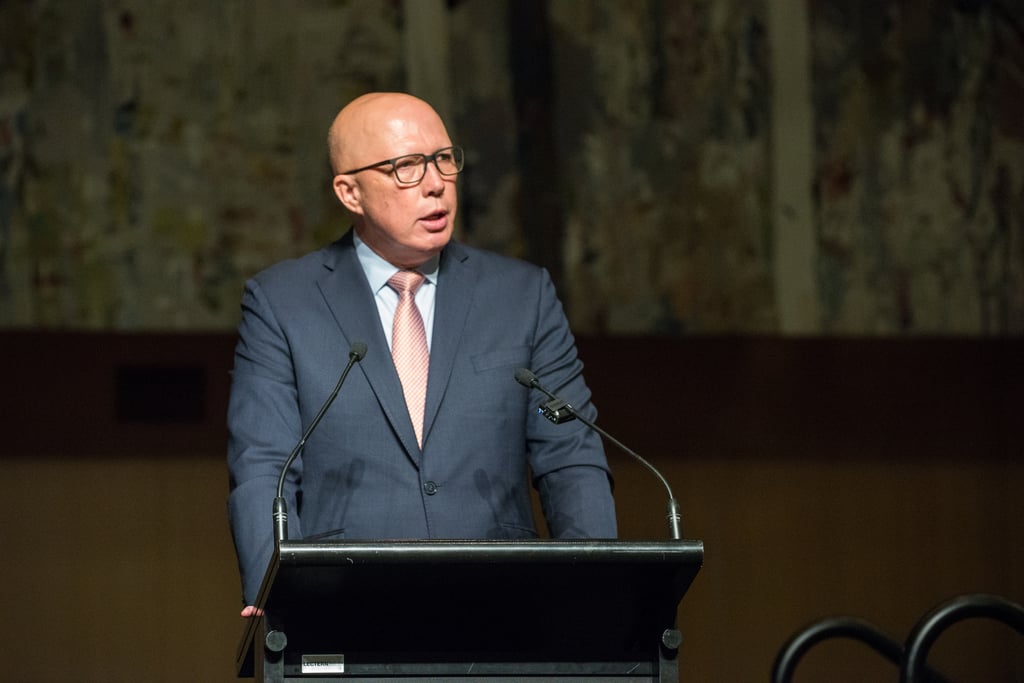
Dutton’s tenure as Opposition Leader has been marked by a noticeable tonal shift. In contrast to the stark – and at times provocative – language he employed as Defence Minister in the Morrison government (2021-2022) and as Home Affairs Minister under both the Malcolm Turnbull and Morrison governments (2017-2021), Dutton now adopts a more measured public posture toward the PRC. While this change reflects an effort to broaden appeal, his underlying worldview remains largely unchanged.
During his time in government, Dutton made headlines with dire warnings. One of the most striking examples of Dutton’s earlier rhetoric came during an Anzac Day interview on April 25 2021 when he said that he did not think that a military conflict over Taiwan ‘should be discounted’.[43] Although he qualified this by saying, ‘Nobody wants to see conflict between China and Taiwan’, the comment gained traction, not least because it coincided with a robust missive from Australian Department of Home Affairs Secretary Michael Pezzullo who warned in an email to departmental staff on the same day that the ‘drums of war beat’.[44]
Later that same year, Dutton invoked ‘echoes of the 1930s’ to describe regional tensions and suggested that Beijing viewed nations such as Australia as ‘tributary states’.[45]
On Anzac Day 2022, Dutton bluntly stated:[46]
The only way you can preserve peace is to prepare for war and be strong as a country. Not to cower, not to be on bended knee and be weak.
Following the Coalition’s electoral defeat in May 2022, Dutton shifted his approach. While he continued to stress ‘honesty’ and ‘frankness’ in Australia’s dealings with Beijing,[47] he moved away from a strategy of routinely ‘call[ing] out’ the PRC each time ‘they have done the wrong thing’.[48] Instead, he has primarily focused on accentuating the positives in the bilateral relationship, praising trade ties and the contributions of the Chinese diaspora.
It would be a mistake to interpret this as a wholesale reinvention as these themes have long been present in Dutton’s public statements, although oftentimes near buried as a postscript to the expression of harsher sentiments.[49] More recently, however, these sentiments have been suffused with a level of enthusiasm previously absent.
During Lunar New Year celebrations in 2025, Dutton extolled the importance of bilateral trade, telling reporters: [50]
The relationship that we have between Australia and China is our most important trading relationship. We intend to build and to grow it to our mutual benefit and we will make sure from day one we continue to strengthen this great relationship.
In a 2GB radio interview ahead of Premier Li’s visit, Dutton even described himself as ‘proChina and the relationship that we have with them.’[51] He subsequently said that ensuring ‘a stronger trading relationship’ was ‘a very important part of the manifesto that we’ll take into the next election’.[52] (See also Section 4.1 Trade and investment).
There are faint echoes here of former Prime Minister Morrison, who during the 2019 election campaign pledged to continue to ‘enhance the relations with China’, characterising the relationship as ‘co-dependent’.[53]
Dutton as Opposition Leader has also been consistent in weaving in warm praise for the Chinese diaspora in Australia when discussing the PRC. He has paid tribute to these communities as an ‘amazing’[54] and ‘integral, wonderful part of Australia’,[55] stating that diaspora contributions were ‘something to celebrate every day of the year’[56] and that ‘[t]he story of Australia would not be the same’ without them.[57] (See also Section 3. Engagement with AustralianChinese communities).
Dutton’s tonal shift was especially apparent during a state luncheon for PRC Premier Li, where Dutton opened his remarks by expressing ‘hope’ for the future of the bilateral relationship. He described the gathering itself as ‘a very clear message of how we regard the relationship and how we intend to continue to work with you.’ The theme of hope was woven through his speech:[58]
In our offer of hospitality today – and your acceptance of it – I believe that there is hope.
Hope that tensions of recent years can ameliorate.
Hope that we can reinvigorate the constructive spirit which defined our signing of a Free Trade Agreement in 2015.
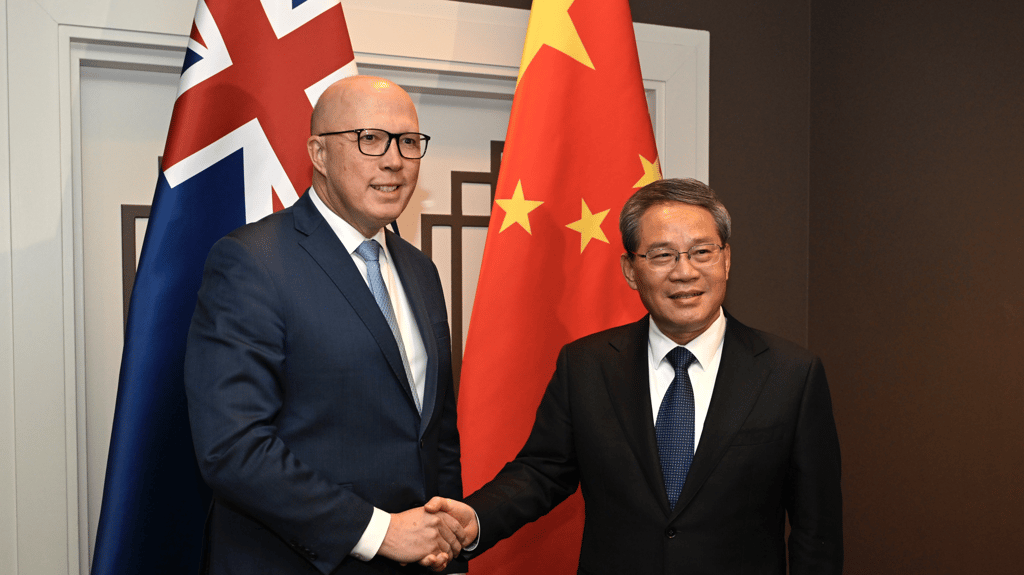
Further reinforcing this shift in tack, Dutton has made a point of engaging in dialogue with PRC government representatives, warmly reflecting on his exchanges with PRC leaders and officials. According to The Australian Financial Review, he ‘turned up unannounced’ to a March 2024 meeting between PRC Foreign Minister Wang Yi and Shadow Foreign Minister Simon Birmingham, offering ‘several positive comments about the relationship’ during the discussion.[59]
Asked three months later whether he would be ‘shirt-fronting’ Premier Li during his visit to Australia, Dutton replied, ‘The short answer is no,’ adding that he had had ‘a great meeting with Foreign Minister Wang Yi’ and was ‘very happy’ to meet the Premier.[60] Indeed, after his meeting with Li, Dutton described the exchange as ‘productive’, adding it was ‘a pleasure to discuss their [Australian-Chinese communities’] contributions, and other matters important to our bilateral relationship’.[61]
Dutton made reference to the ‘excellent relationship’ he had developed with the PRC Ambassador to Australia.[62] This marked a departure from his previously outwardly sceptical view of PRC diplomacy. In 2019, responding to criticism from then-acting Ambassador Wang Xining, Dutton had dismissed the remarks as ‘provocative comical statements’ and ‘just so silly, it’s funny.’ He said further:[63]
I think the acting ambassador is probably reading off a script from the Communist Party but I think most Australians see through the non-productive nature of the comments… They should be dismissed in that vein.
Notwithstanding these warmer moments, Dutton has continued to portray Labor as weak in its handling of Beijing, returning to familiar themes of ideological clash and hard power at various points over the last three years. In a September 2022 interview on the ABC’s Four Corners, when asked about his ‘vision’ for Australia, Dutton stated it was ‘to keep our country safe’, particularly in the context of ‘the actions of China and the South China Sea and the direction that China has taken by President Xi’.[64] The following year, he said:[65]
The world needs to unite, not to be divided, particularly the West and western democracies need to stand up together to make sure that peace does prevail in our country.
In his 2024 budget reply speech, Dutton warned that authoritarian regimes such as the PRC, Russia, Iran and North Korea were ‘emboldened’. Once again, he drew parallels to the 1930s, saying, ‘Appeasement and weakness of leadership do not end well.’[66]
As the 2025 election campaign has gathered pace, Dutton’s assertive tone on national security, particularly in relation to the PRC, has been reamplified. This year, Dutton has asserted that ‘red lines need to be made clear’.[67]
He has seized on high-profile flashpoints, including the controversial 99-year lease of the Port of Darwin to PRC company Landbridge, calling it ‘a clear mistake’,[68] and the March 2025 movements of PRC deep-sea science and engineering research vessel Tan Suo Yi Hao along Australia’s southern coastline. Dutton used the latter incident to sound alarms about undersea surveillance and critical infrastructure vulnerability, accusing the Albanese government of complacency.[69] He also charged Labor with failing ‘time and again… to call out the Chinese Communist Party’s military aggression against our men and women in uniform’[70] and of creating a ‘vacuum of leadership’ in the face of escalating threats. He cited, in particular, live fire exercises in the Tasman Sea conducted by PRC warships in February 2025, during which ‘Chinese Communist Party warships tested weapons off our coast and circumnavigated our country’.[71]
Throughout this period, Dutton has pledged that a Coalition government under his leadership would be defined by ‘moral clarity’ and ‘strong, clearsighted and values-driven leadership.’[72] He has insisted that ‘first and foremost, a Dutton Coalition government will prioritise the security of Australia’, portraying Albanese as ‘defined by weakness.’[73] He accused the Prime Minister of recognising the strategic risks of the current environment and failing to ‘do anything about it’,[74] dismissing, for example, his response to PRC vessel Tan Suo Yi Hao as ‘wet lettuce.[75] He asserted that ‘Australia must be willing to criticise any nation whose behaviour imperils stability in the region.’[76]
Dutton has sought to position himself as a leader of resolve and conviction, stating, ‘I want to protect our national security from a weak Prime Minister’.[77]
In 2025, the language of diplomacy has given way to Dutton’s core message: only strength preserves peace. As one source reportedly told The Australian, while Dutton may publicly seek to reframe the Coalition as champions of trade with the PRC, ‘In private, he hasn’t changed.’[78]
2.2.2 The Shadow Foreign and Trade Ministers
Simon Birmingham, who occupied the role of Shadow Foreign Minister from 2022 to 2024, and Shadow Trade Minister Kevin Hogan have played a pivotal role in moderating the Coalition’s public tone over the last three years. While they sought to show a preparedness to criticise aspects of Beijing’s conduct – particularly its campaign of trade coercion against Australia – they consistently paired those critiques with an optimistic outlook on the future trajectory of bilateral ties. Their messaging leaned into the idea that, despite geopolitical tensions, pragmatic cooperation and respectful engagement remained both possible and necessary.
Birmingham echoed at times Labor’s language of ‘stabilisation’. He spoke of pursuing ‘positive engagement in areas of collaboration’[79] and stressed the need for nuanced debate. In a 2024 speech he said: [80]
Too much China discussion here in Australia, and throughout much of the world, is binary, like the first two options my daughter gave me…
Like, dislike. Love, hate. Good, bad. Growth, stagnation. Peace, war. Engage, decouple.
The truth is much more sophisticated and complicated. It requires honesty and analysis; resolve and nuance.
Hogan has likewise favoured a lower-key approach, opposing megaphone diplomacy as ‘option A’ and advocating for quiet, behindthe-scenes discussions with respect to disagreements.[81] He has also underlined the importance of trade and people-to-people ties as buffers against diplomatic volatility:[82]
[W]hen things were really tight, it was better that we were trading than if we were not trading. It’s given us a common interest and a common respect that we need each other, that we are good for each other in that level… I will always be pushing to maintain that relationship, the tightness of that relationship, the importance of that relationship, because that will help us complementarily deal with other issues and disagreements we may have.
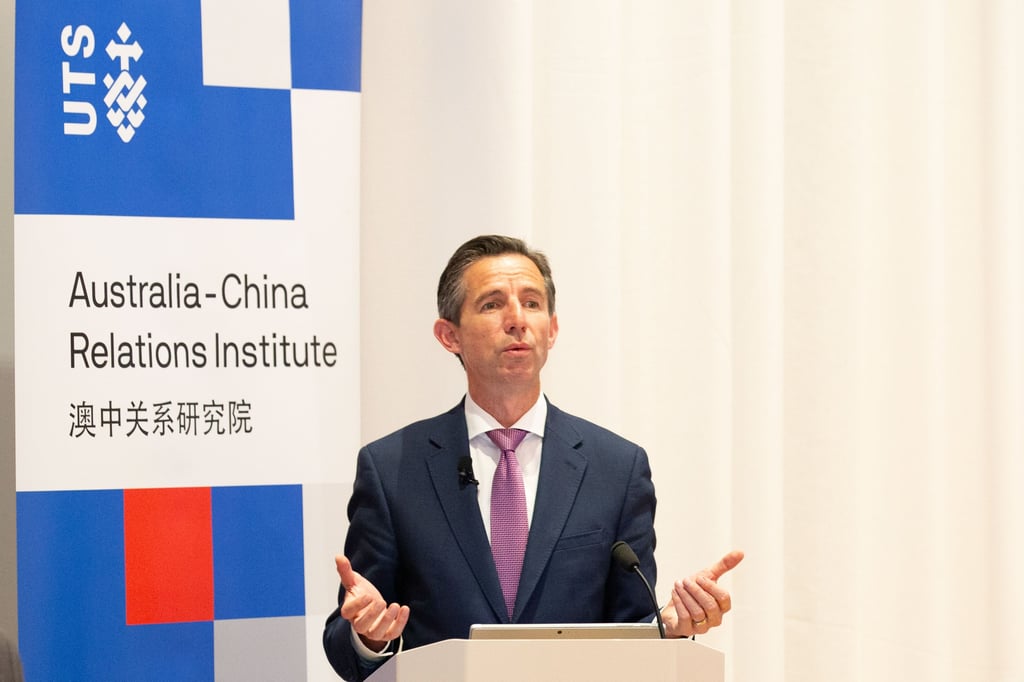
With the appointment of David Coleman as Shadow Foreign Minister in early 2025, it remains to be seen whether the Coalition will maintain this balance or adopt a firmer posture in the foreign affairs portfolio.
Described by the Sydney Morning Herald as ‘aligned with the moderates but not a factional player’, Coleman is also ‘arguably the party’s most active MP in the Chinese community, a key part of his electorate’.[83] This dual positioning suggests that his approach may be shaped as much by domestic electoral considerations as by foreign policy thinking.
Coleman has swiftly moved to engage directly on the PRC portfolio. Soon following his appointment, he met with PRC Ambassador Xiao[84] and participated in a roundtable with the Western Australian Chinese Chamber of Commerce.[85] These actions reinforce his reputation as a Coalition figure with longstanding ties to Australian-Chinese communities and business groups.
At the same time, his past statements reflect a readiness to foreground national security considerations and ideological distinctions. In 2019, he endorsed Dutton’s statement that the Chinese Communist Party’s policies were ‘inconsistent’ with Australian values, saying he agreed ‘in many cases’ with this assessment.[86] And as chair of the House of Representatives Economics Committee in 2016, Coleman supported then-Treasurer Scott Morrison’s decision to highlight national security as a key factor in his verdict on Ausgrid, even as some of his Liberal Party colleagues were exercising caution about putting forward a public view on the matter. Coleman said that looking at security was ‘standard procedure and it’s entirely appropriate for those matters to be taken into account.’[87]
Together, these positions suggest that Coleman is no stranger to adopting a harder edge when strategic or political imperatives require it, even as he maintains community engagement and a broadly centrist tone.
2.2.3 The Shadow Defence and Home Affairs Ministers
Shadow Defence Minister Andrew Hastie and Shadow Home Affairs and Cybersecurity Minister James Paterson constitute the hawkish flank of the Coalition’s PRC messaging. Their position forms a critical third pillar in the Coalition’s tripartite approach. Both have adopted an openly ideological frame, casting the Australia-PRC relationship as a key front in the global contest between liberal democracy and authoritarianism.
Hastie, a former special forces officer, has repeatedly criticised Labor for what he views as evasive language on the PRC. In 2024, he accused Defence Minister Marles of failing to draw a direct link between Australia’s increased defence spending and the PRC’s military build-up:[88]
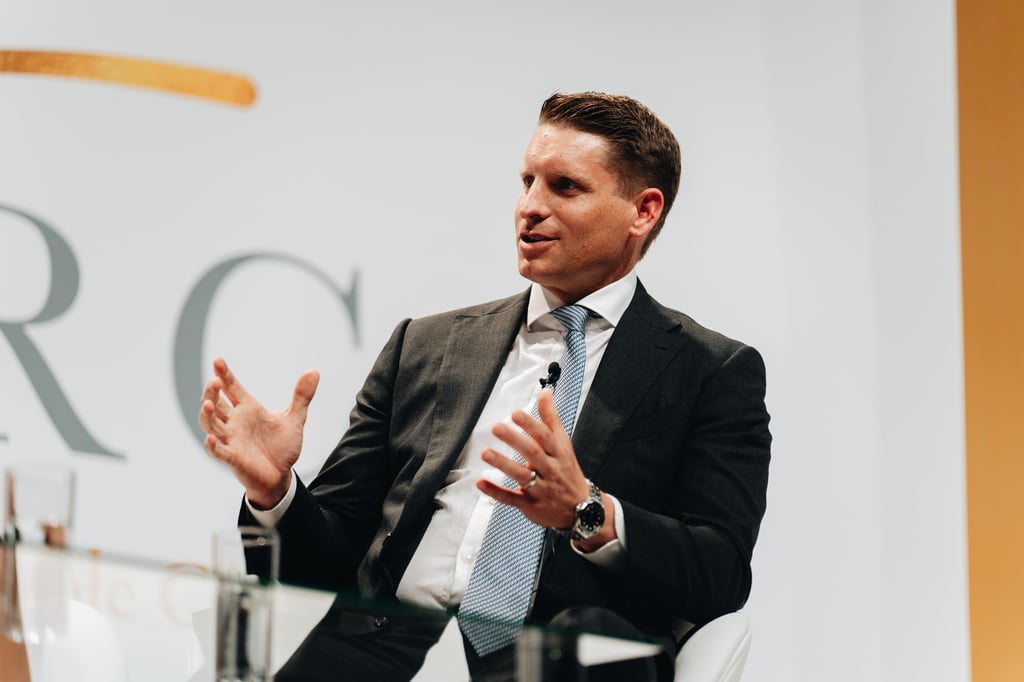
China under Xi Jinping commenced the biggest peacetime military buildup since the end of the Second World War. This is what Richard Marles didn’t talk about yesterday. He mentioned China a few times, but he didn’t make the connecting link between the need for our increased Defence expenditure and the rise of China and the risk of a war between the United States and China. That’s the reality here. And it’s time to talk plainly about these things.
Paterson, who has carved out a prominent role in national security debates, shares this perspective. In May 2024, he stated that Australia should be unafraid to ‘call out’ the ‘malign activities’ of authoritarian nations such as the PRC.[89] He has questioned the Albanese government’s stabilisation agenda, asking whether such an approach is realistic and suggesting that such a strategy undermined the ideological and coercive nature of the PRC’s actions:[90]
It’s up to the prime minister to explain how you can have a stable relationship with an authoritarian power that is determined to threaten our critical infrastructure assets, interfere in our democracy and intimidate Australian citizens into silence.
These warnings have only intensified in the wake of military provocations. In September 2024, after the People’s Liberation Army released a video showing a 2022 incident in which a PRC J-16 fighter intercepted an Australian P-8 Poseidon maritime surveillance aircraft over the South China Sea, Hastie reinforced his narrative of strategic mistrust:[91]
This is not the actions of a friend, this is not the language of a friend, in fact, it just demonstrates to the Australian people why we have a trust deficit with Beijing.
If this is how they treat their friends, I’d hate to think of the way they treat their enemies.
This theme was further sharpened in 2025, when a PRC fighter jet dropped flares dangerously close to another Australian Poseidon aircraft. Hastie criticised what he viewed as the government’s delayed response: [92]
They continue to fail to show strength and stand up to their Chinese counterparts to condemn such actions.
Both shadow ministers continue to frame the PRC challenge as fundamentally ideological. In a July 2022 address to the Henry Jackson Society in London, Hastie cast the geopolitical stakes in stark terms, contrasting liberal democracies with authoritarian regimes: [93]
The governments of the People’s Republic of China and the Russian Federation have flown their revisionist ambitions like Regimental Colours…
The writing has been on the wall. We’ve just been unwilling to see it.
Why?
Perhaps the economic costs of confronting these strategic realities have been too painful…
Hastie invoked British geostrategist Sir Halford Mackinder to highlight what he sees as an endemic reluctance in democracies to engage with power politics until crisis strikes:
I think Sir Halford Mackinder – the intellectual father of geopolitics – was right about democracies when he argued that we don’t like to think in terms of strategy and power politics, and that we only do so under compulsion.
Even warnings of relentless political warfare, subversive campaigns and cyberattacks from our intelligence chiefs tend to sink in the news cycle after 24 hours.
Framing the PRC’s challenge as both strategic and moral, Hastie posed a blunt question:
So let me ask: have we had enough of this ruthless and coercive compulsion? Will we now see clearly the challenges set before us and face them together?
I hope so.
He concluded with a call to defend democratic values globally:
We must speak up for nations and individuals under the boot of authoritarianism.
Similarly, Paterson, speaking at a 2024 conference hosted by the Information Power Institute of Australia, warned against minimising the role of ideology in shaping strategic competition:[94]
We risk making a dangerous category error if we tell ourselves that ideology of the great powers of our region does not matter.
Even as they call for greater candour, Hastie and Paterson acknowledge the complex tradeoffs facing Australian policymakers. This includes the challenge of balancing economic interdependence with national security priorities, particularly amid shifting global dynamics. Following Trump’s return to the White House in late 2024, Hastie observed:[95]
[E]very big issue that Australia has to make a decision on will be refracted through the geopolitical competition of the United States and the People’s Republic of China. And I think that’s going to be more acute now that Trump has won the election. …
And so we’re going to be under pressure… to sort of somehow find a pathway where we uphold our relationship with the United States and also uphold our trade relationship with China.
Ultimately, Hastie and Paterson’s interventions place national security above diplomatic caution or commercial pragmatism. While their hardline tone stands in contrast with the more moderate tones of colleagues like Simon Birmingham, Kevin Hogan and David Coleman, it is still emblematic of a broader Coalition narrative: one that seeks to position itself as unflinching in the defence of Australian interests and values.
2.2.4 Looking ahead
The Coalition’s messaging on the PRC has evolved in tone, and, as the discussion in Section 4 will show, has also started to show some divergence in substance. While the rhetoric has been refined under Dutton’s leadership, the core framing remains unchanged: the PRC is a strategic and ideological rival and Labor’s approach is too deferential and too cautious.
The Coalition now presents a tripartite strategy: assertive leadership from Dutton that blends strategic concern with trade optimism; measured diplomacy from its foreign and trade spokespeople; and firm warnings from its national security team. This recalibration is more tactical than philosophical.
As the 2025 federal election approaches, a key question remains: if returned to power, will the Coalition preserve this balance or revert to the more confrontational style of the past? Much will depend on the strategic environment, domestic political pressures and stances assumed by Beijing and Washington. Any return to government would also bring heightened domestic and international scrutiny, a level of accountability currently borne more heavily by the Albanese government as the incumbent.
3. Engagement with Australian-Chinese communities
Both the Australian Labor Party and the Coalition are intensifying their efforts to win over Australian-Chinese voters, a diverse and closely watched demographic concentrated in electorates that could decide government. While Australians of Chinese ancestry make up around 5.5 percent of the national population, they are disproportionately represented in marginal electorates, making them a potential kingmaker group in close contests. As Per Capita researcher Osmond Chiu has observed, electorates with high Australian-Chinese populations often fall within the critical swing seat band of under six percent, giving these communities unique political leverage.[96]
Following a significant decline in support from these communities during the 2022 election, the Coalition is actively working to rebuild trust. This includes adopting more sensitive rhetoric and increasing direct community engagement. Meanwhile, Labor is working to consolidate the gains it made last time, reminding voters of the Coalition’s past missteps and presenting itself as the more inclusive and respectful steward of Australia’s multicultural identity. For both parties, Australian-Chinese voters have become a central battleground in the 2025 campaign.
The Labor and Liberal parties have invested in local campaign events, digital outreach and letterboxing.[97] Community-specific social media initiatives such as through the creation of accounts on RedNote[98] also gained traction although participating political accounts on this platform have recently been subject to a shadowban, limiting their reach.[99]
3.1 The Coalition’s pitch
During the 2022 campaign, many within Australian-Chinese communities expressed concern that the Coalition’s muscular rhetoric on the PRC blurred into rhetoric that alienated Australian-Chinese people more broadly. As one community leader told The Guardian: [100]
Every time they attack China, they don’t say Chinese-Australians have made a great contribution to Australia, they don’t clarify that they are attacking the CCP and not the community here.
These concerns were reflected in survey data and voting patterns.
Survey data showed a noticeable decline in identification with the Liberal Party across Australian-Chinese communities between 2021 and 2022.[101] The electoral consequences were pronounced: of the top 15 electorates with the largest Australian-Chinese populations, the Coalition lost six of the nine it held, [102] suffering a 6.6 percent two-party-preferred swing in those seats, well above the national swing of 3.7 percent.
In its post-election review, the Liberal Party acknowledged the damage. The December 2022 internal report found that a major factor behind the swing was ‘a perception the previous government’s criticisms of the CCP government of China included the wider Chinese community more generally.’ It went on to say:[103]
There is a particular need for the Party’s representatives to be sensitive to the genuine concerns of the Chinese community and to ensure language used cannot be misinterpreted as insensitive.
A number of Liberal MPs and senators, including former minister Alan Tudge,[104] Senator James Paterson,[105] and backbencher Keith Wolahan[106] reinforced this sentiment, calling for greater care in drawing a clear line between the Chinese Communist Party and the broader Chinese diaspora.
However, not all in the party agreed that there was a problem with rhetoric. During a party room post-mortem on the 2022 federal election loss, the Sydney Morning Herald reported that David Coleman, Minister for Immigration during the Morrison government (2018-2020), now Shadow Foreign Minister (2025-) in the Duttonled opposition, ‘told the party room the main issue wasn’t the Morrison government’s tone but its policies. And given the policies were correct, he said “we can’t do anything about it” in a macro sense.’
The report went on to say, ‘Coleman said Labor was now in government and rightly adopting the same policies so to an extent, the situation would improve. Instead of labouring on what divided them, he suggested that Liberal MPs should focus on the issues that would bring back pro-business Chinese Australians.’[107]
Both views – the call for rhetorical recalibration and the amplification of shared values around enterprise – have shaped the Coalition’s approach since.
Towards the end of last year, an unnamed Liberal source told the Sydney Morning Herald, ‘We pissed off a lot of the Chinese community in 2022 [under Scott Morrison] and Dutton instinctively knows we can and must improve on last time.’[108]
Indeed, the Opposition Leader has ramped up personal engagement with Australian-Chinese communities across various states and territories, attending at least half a dozen in 2024.[109]
Dutton has also sought to highlight his contribution to migration by people from the PRC to Australia, using his budget reply speech in 2022 to ‘celebrate our migrant story’ noting that as the Minister for Border Protection, he ‘brought in record numbers of people from India, China’.[110]
Symbolically, Dutton held his unofficial campaign launch in Chisholm,[111] an electorate that, prior to redistribution, had the country’s highest proportion of Australian-Chinese residents[112] (28.9 percent at the 2021 Census)[113]. After boundary changes, the neighbouring seat of Menzies now holds the distinction.[114] Both major parties have turned their attention to Menzies as a crucial contest area.
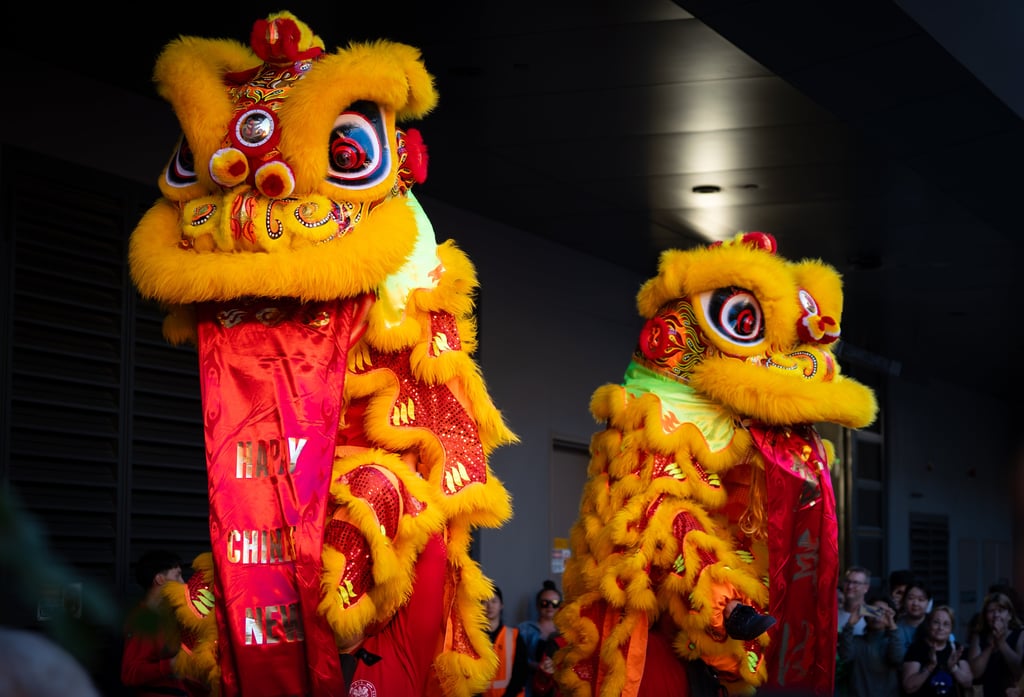
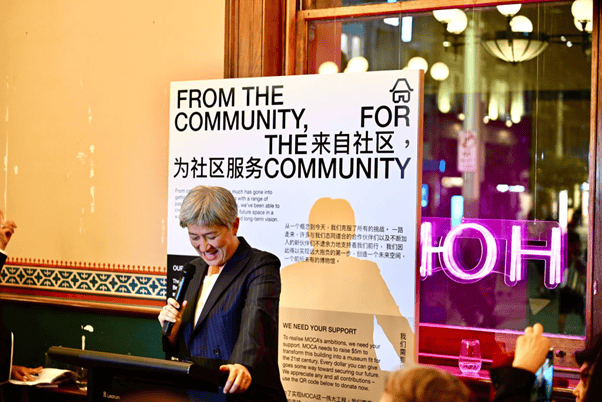
In February 2025, both Opposition Leader Dutton and Prime Minister Albanese attended Lunar New Year festivities in Menzies’ Box Hill. Albanese announced a $150,000 grant for the local council’s Lunar New Year celebrations, while Dutton countered with a $250,000 pledge[115] and a pledge to fund a memorial sculpture dedicated to Australian-Chinese soldiers.[116] Both leaders subsequently attended Lunar New Year events in the Sydney suburb of Ryde[117] and Sydney’s Chinatown,[118] respectively, signalling the symbolic and politically strategic weight of these communities.
Engagement with these communities continues in earnest, with Dutton pledging $225,000 for the Chinese Museum of Queensland at the end of March 2025 to ‘help preserve and share their remarkable history.’[119]
However, other dimensions of proposed Coalition policy have the potential to further complicate relations with migrant communities more broadly, such as a potential referendum floated by Dutton to empower the government to strip Australian dual nationals of citizenship if they committed certain crimes.[120] This is part of a broader push to toughen Australian citizenship requirements. Dutton has also committed to reduce the size of the public service, including the removal of cultural diversity and inclusion adviser roles, which, he says, ‘do nothing to improve the lives of everyday Australians’.[121]
The Coalition in April 2025 also entered into a preference deal with Pauline Hanson’s controversial, populist One Nation party, placing One Nation candidates at number two in the majority of lower house seats on its how to vote cards.
3.2 Labor’s pitch
Labor figures have similarly prioritised engagement with Australian-Chinese communities.[122]
Labor’s message to Australian-Chinese voters is that the opposition’s change in tone is cosmetic rather than substantive, portraying itself as the inclusive alternative. Writing in Crikey, Professor Wanning Sun, cultural and media studies expert and Deputy Director of UTS:ACRI, laid out the Labor Party’s pitch to Australian-Chinese voters. She cited Foreign Minister Wong drawing sharp contrasts with the opposition at a community forum in Box Hill:[123]
The Liberals’ approach is to pick fights and to look for opportunities to divide… I say to you that Peter Dutton is still Peter Dutton.
Wong concluded her address by saying:
As we head for the election, I am asking you to consider who you can trust.
NSW state Labor MP Jason Yat-sen Li echoed the sentiment even more forcefully during an AustralianChinese communities’ forum in Burwood:[124]
Remember that Peter Dutton, then the defence minister, told us that the drums of war were beating? Remember that in April 2022, Dutton also said that to achieve peace we must be prepared for war? By that he meant war with China. That’s why we should never go back to the days of anti-China politics of Dutton and the Liberals.
Beyond campaign optics, the Albanese government has placed significant emphasis on people-to-people ties with the PRC as a diplomatic cornerstone. Speaking at a welcome luncheon for Premier Li Qiang in Australia in 2024, Albanese stressed that these connections were ‘at the heart’ of what linked the two nations.[125] Foreign Minister Wong, at an event marking 100 years of Chinese student enrolment in Australia described multiculturalism as ‘a source of national pride and… national power’. She told the gathering that Australia had ‘profound advantages in this world because we are multicultural, because we are diverse, including through the contributions of the Chinese-Australian communities’.[126]
This message has been reinforced through some tangible initiatives. The National Foundation for Australia China Relations has been tasked with promoting these ties, prioritising funding for initiatives that promote people-to-people exchange.[127] One recent pilot program announced by the Australian government seeks to ‘build Australia’s Asia literacy and create a pipeline of senior Asian-Australian representation in civic life’[128] And two weeks out from the federal election, Wong announced a pledge to invest $2.6 million to support the Museum of Chinese in Australia to open its doors in 2025.[129]
However, Labor is not without its vulnerabilities. The government has faced criticism for slow progress on the Multicultural Framework Review, which called for sweeping reforms to multicultural governance. Sociologist Andrew Jakubowicz has noted that the opposition has remained silent on the review and may ultimately resist implementation.[130] He observed that ‘multiculturalism may struggle to flourish, whoever wins the election.’[131]
3.3 Looking ahead
Both parties appear to have taken to heart a recommendation articulated by Jason Yat-sen Li in the pages of The Australian Financial Review in 2018: ‘When we mean the CCP or the PRC, let’s explicitly say that rather than just using the term “Chinese”.’[132]
It is likely that Labor and the Coalition will continue their rhetorical mindfulness and community engagement. However, given current circumstances, there is likely a limit to the efficacy of this advice on language, useful though it is. Recent academic research suggests that ‘overall, holding cold attitudes toward the Chinese Government has stronger negative implications for diasporic Chinese in Australia.’[133]
Polling by Sydney Today in early 2025 suggests the Liberal Party has made modest gains among Australian-Chinese voters in select electorates. While not indicative of a full rebound, it signals that the Coalition’s efforts to rebuild trust may be resonating in some quarters.[134]
Whether these gains are enough to undo the damage from 2022 remains to be seen. For now, one thing is clear: both major parties recognise that Australian-Chinese communities are not only symbolically important, but electorally decisive. In an election expected to hinge on razor-thin margins, the support of these groups may again shape the course of Australia’s political future.
4. The policies
Australia’s relationship with the PRC has entered a new phase, more stable on the surface, yet increasingly complex beneath it. While bipartisanship remains the dominant feature of Canberra’s PRC policy, the contours of difference between Labor and the Coalition are becoming clearer. Much of this divergence reflects evolving global dynamics and an increasingly transactional international environment.
The Labor government has allowed itself as much flexibility as possible in policy-making on the PRC. As Prime Minister Albanese remarked, ‘There is no fixed model for a stabilised relationship’.[135] This has been particularly visible in areas such as trade and investment, where diplomatic re-engagement has delivered tangible outcomes, including the unwinding of PRC trade sanctions. At the same time, Labor has maintained much of the national security architecture inherited from its Coalition predecessors. As Assistant Foreign Minister Tim Watts put it: ‘[W]hile the Australian government changed, our policy settings haven’t changed’.[136]
The Coalition, for its part, has largely supported this continuity. In 2023, Opposition Leader Dutton said:[137]
[W]e’ve got a good relationship with China. There will always be tensions, but Australia is going to stand up for our sovereignty. This government’s done that and we can do it in a respectful way.
Then-Shadow Foreign Minister Birmingham stated, ‘There have been no changes of policies in Australia’[138] He credited Labor with retaining key national security settings, saying that Albanese had ‘enjoyed bipartisan support for his government’s engagement with China’.[139]
Nationals leader David Littleproud commended Foreign Minister Wong for prioritising dialogue, saying she had taken ‘the right approach’.[140] He had also welcomed the push for a negotiated settlement in Australia’s two WTO cases against the PRC, saying it was ‘the right thing’ to do.[141]
Yet this cautious bipartisanship has clear limits. As international dynamics become more contested, the Coalition is sharpening its posture and differentiating itself by leaning more heavily into security-led framing. It is positioning itself as more assertive and values-driven in its approach to the PRC, going on the offensive regarding what it perceives to be Labor’s shortfalls in PRC relationship management.
In a March 2025 speech to the Sydney Institute, Shadow Foreign Minister Coleman outlined a ‘values-first’ foreign policy, asserting that defending democratic and economic freedoms ‘starts with national security.’[142] Indeed, a key priority for the Coalition is the restoration of the Department of Home Affairs to its ‘rightful place as the pre-eminent domestic national security policy and operations portfolio.’[143] Shadow Home Affairs Minister Paterson has accused Labor of having ‘dismantled’ Home Affairs ‘in all but name’ and flagged a future Coalition government would intensify, in particular, efforts to counter foreign interference and state-backed espionage and cyberattacks.[144] Paterson has also warned that while the relationship may appear more stable, the PRC’s long-term strategic goals remain unchanged.[145]
Most recently, Dutton flagged returning Michael Pezzullo to the public service. Pezzullo had been sacked by Labor from his Home Affairs post in 2023 after an inquiry by the Australian Public Service Commission found he had breached the public service code of conduct at least 14 times.[146] Since then, Pezzullo has ramped up confrontational rhetoric on the PRC, saying in 2024, ‘I think we should have warm, close relationships with the Chinese people… We should have nothing warm to do with their government.’ He added, ‘It’s a totalitarian Communist regime. We take them on forcibly in ideology, values, mores. We should have arguments with them about how to construct a better society on universal principles.’[147] This provides some indication of the views a future Coalition government would be comfortable incorporating into policy-making.
This section examines how both major parties are approaching several critical elements of the Australia–PRC relationship: trade and investment; Magnitsky-style sanctions; foreign interference; and cross-Strait tensions.
4.1 Trade and investment
Both major parties remain acutely aware of the economic weight of Australia’s trading relationship with the PRC. Prime Minister Albanese frequently underscores this interdependence, noting that ‘one in four Australian jobs [is] export dependent, and one in four of our export dollars comes from China.’[148] While Labor is committed to diversification and derisking, it continues to advocate for expanded trade under the Department of Foreign Affairs and Trade’s principle of ‘risk-informed engagement’.
Trade Minister Don Farrell has expressed confidence in the relationship’s future, suggesting two-way trade could grow from $300 billion to $400 billion annually.[149] Opposition Leader Dutton has gone further, stating he would ‘love to see the trading relationship increase two-fold.’[150]
As the 2025 election approaches, the Coalition has sought to remind voters of its track record on positive economic engagement with the PRC.[151] Shadow Trade Minister Hogan has advocated for expanded agricultural exports, citing a recent $300 million agreement between Australian avocado sellers and Shanghai Huizhan Fruit Markets as an example of unrealised potential. In a letter to Trade Minister Farrell and Agriculture Minister Julie Collins, he urged expedited access for Australian avocadoes into PRC markets.[152]
Yet whoever forms government will face mounting pressure to align more closely with the US as it intensifies efforts to contain the PRC economically. Both parties recognise this tension but differ in how they balance alliance obligations with economic pragmatism.
Foreign Minister Wong has framed the dilemma clearly, stating that ‘geopolitics is ever more entwined with economics, and this will only get harder.’ 153 Her comments reflect a broader recognition across the political spectrum that Australia must carefully navigate the space between opportunity and vulnerability.
Labor has been firm in resisting US-style economic confrontation. Albanese has rejected the logic of Trump-style tariffs, describing them as ‘economic self-harm’ that exacerbate inflation and undermine Australia’s trade interests.[154] He has stressed that Australia will act in its own interest, not as an economic proxy: ‘We are a sovereign nation and we will act in terms of our economic interest… We believe in free trade, not protectionism.’[155]
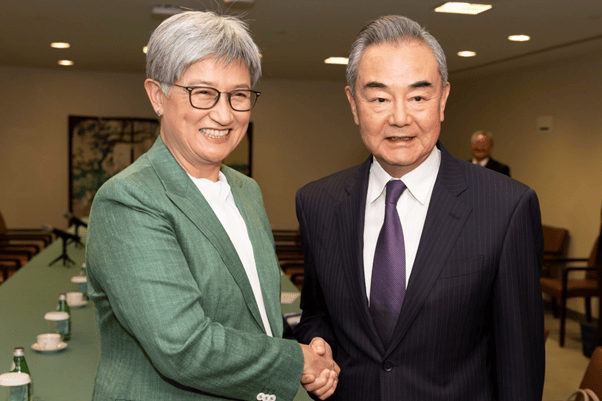
When the PRC Ambassador to Australia invited Canberra to ‘join hands’ against Trump’s tariffs,[156] Prime Minister Albanese rebuffed the suggestion, stating that Australia would ‘speak for ourselves’. Defence Minister Marles added that the nation would not be ‘holding China’s hand’. Both reaffirmed the government’s commitment to diversifying trade, with Marles highlighting an aim to deepen ties with India, Indonesia, the UAE and the UK, in particular.[157] These efforts form part of a broader diversification agenda, with the government’s Southeast Asia Economic Strategy to 2040 serving as a key pillar for engagement with the ASEAN region.[158]
At the same time, Labor has begun deploying more assertive economic statecraft of its own, using access to Australia’s critical minerals as diplomatic leverage in negotiations with Washington (see 4.1.1 Case study: Critical minerals).
This approach reflects a growing convergence with the Coalition’s geostrategic framing of trade. While Dutton supports encouraging and expanding trade with the PRC, calling it ‘good for Australian jobs and for our industry’, he also insists on maintaining ‘rock-solid’ ties with Washington, stating that ‘bullies don’t respect weakness’.[159] A Dutton-led government would likely pursue a more securitised trade agenda, placing greater weight on strategic leverage and alliance priorities.
The Coalition has already demonstrated this positioning. In May 2024, following an audit conducted by the office of Shadow Home Affairs Minister Paterson, the Future Fund – Australia’s $223 billion sovereign wealth fund – divested from 11 PRC companies identified as high risk due to ties with the PRC military or due to alleged human rights abuses. Paterson stated:[160]
Taxpayer funds and Australians’ retirement savings should never be invested in companies linked to serious human rights abuses, sanctions evasion or military suppliers to an authoritarian state… If even the Future Fund had this exposure, imagine what the less transparent industry superannuation funds are invested in.
He called on the Albanese government to issue clearer investment guidance to prevent exposure to ‘morally dubious and strategically dangerous companies.’[161]
This view is shared by other Coalition-aligned voices. Justin Bassi, a former chief adviser to then-Foreign Minister Marise Payne, has called for a default ban of PRC firms supplying critical infrastructure, following the logic of the Huawei 5G ban. He asserted that Australia’s PRC policy helped secure tariff exemptions during the first Trump administration:[162]
Of the multiple factors that helped Australia get the full exemption during the first Trump term, our China policy was the most significant.
4.1.1 Case study: Critical minerals
Both major parties view critical minerals as a strategic asset, vital not only to Australia’s economic resilience but also to its national security. Reducing the PRC’s dominance in the global processing chain is a shared objective, with recent remarks suggesting a narrowing of the strategic gap between Labor and the Coalition.
Labor’s Critical Minerals Strategy 2023-2030 focuses on strengthening supply chain resilience. While the strategy avoids overt geopolitical confrontation, Resources Minister Madeleine King has indicated that Australia must be prepared ‘to compete’ with the PRC in this space, a framing that signalled growing strategic intent.[163]
Over the past three years, the Australian government has quietly deepened cooperation with partners such as the US, EU, Japan and South Korea through a range of economic security initiatives focused on supply chain resilience such as the Critical Minerals International Partnership, aimed at fostering collaboration on ESG standards, investment and technological exchange.
Domestically, the Albanese government has leaned on industrial policy to build sovereign capability. For example, early this year, it increased its financial commitment to Arafura Rare Earths through a $200 million equity injection via the National Reconstruction Fund.[164] This new investment brings total federal support for the company to over $1 billion, demonstrating a readiness to underwrite local processing in order to reduce dependence on the PRC.
In tandem, the government has tightened foreign investment scrutiny. In 2023, Treasurer Jim Chalmers blocked an attempt by Singapore-registered, PRC-linked Yuxiao Fund to double its stake in Northern Minerals Ltd. The proposed increase from 9.9 percent to 19.9 percent was rejected on national interest grounds following advice from the Foreign Investment Review Board (FIRB).[165] He later prohibited another PRC-linked company, Austroid Corporation, from acquiring lithium miner Alita Resources.[166] In 2024, Chalmers ordered Yuxiao Fund and four other companies with links to the PRC to divest their shares in Northern Minerals.[167] These moves reinforced a more cautious and proactive management of strategic assets, consolidating a national interest stance that had already been emerging through prior decisions.
In response to Trump’s tariffs on Australian steel and aluminium and concerns about further tariffs on agriculture and pharmaceuticals, the Albanese government has begun leveraging Australia’s mineral resources in negotiations with Washington.
In March 2025, Prime Minister Albanese and Foreign Minister Wong confirmed that access to critical minerals formed part of Australia’s diplomatic proposals. In April 2025, it was reported that Labor was working on plans for a strategic critical minerals reserve, enabling the government to allocate stock to key partners.[168]
These developments mark a convergence with the Coalition’s framing of critical minerals as a geopolitical bargaining tool. The Coalition’s April 2025 Plan for a Strong Resources Industry proposes aligning critical minerals strategy more explicitly with defence and allied priorities.[169]
Shadow Defence Minister Hastie[170] and Shadow Trade Minister Hogan have suggested using critical minerals as a bargaining chip in bilateral economic diplomacy, especially where the US has limited alternatives. Hogan said:[171]
We have some great critical minerals that are very important to them, especially some that they can’t access many other places.
Opposition Leader Dutton confirmed the Coalition would adopt this approach, stating that critical minerals were ‘a natural point of leverage for us in the relationship’ with Washington.[172] The Coalition has also pushed for more aggressive use of investment screening powers to prevent strategic assets from falling into PRC-linked hands. While supportive of Labor’s recent screening decisions,[173] it has called for clearer statutory thresholds and faster decision-making under the FIRB. In March 2025, Shadow Treasurer Angus Taylor announced that, if elected, a Coalition government would establish a taskforce to overhaul the FIRB. This initiative includes designing a ‘whitelist’ process to expedite approvals for trusted investors from partner nations, such as those in the Five Eyes, Quad and AUKUS partnerships.[174]
Whoever forms government after the 2025 election is likely to embed critical minerals policy within a broader architecture of economic statecraft.
4.1.2 Case study: Electric vehicles
Electric vehicles (EVs) have become an emerging front in the Australia-PRC trade relationship, raising complex questions around economic access, environmental goals and national security. Both major parties have grappled with how to balance public demand for affordable EVs – many of them made in the PRC – with concerns about data privacy and cyber vulnerability.
While the Biden administration imposed sweeping restrictions on PRC-made EVs in 2024, the Labor government has taken a more cautious route.[175] Energy Minister Chris Bowen said, ‘We won’t be banning vehicles made in any particular country. We’ll continue to work with all the relevant agencies to ensure that all [the] necessary arrangements in place. But I want Australians [to] have more choice of vehicles to buy, not less, more choice.’[176] Bowen has publicly endorsed models like BYD’s Shark 6, a PRC-manufactured plug-in hybrid ute,[177] and referred favourably to BYD’s affordability in a 2024 speech to the Sydney International EV Show – the only brand namechecked during the address.[178] Bowen’s rhetoric has emphasised price accessibility and consumer choice, even as national security concerns over connected vehicles continue to mount.
The Coalition has assumed a more cautionary stance on PRC-made EVs and connected infrastructure. While still stopping short of advocating a blanket ban – Shadow Transport Minister Bridget McKenzie has explicitly stated that the Coalition ‘won’t be banning [PRC-made] EVs’[179] – Coalition figures have increasingly framed the issue through the lens of cyber risk and the potential long-term erosion of Australia’s technological sovereignty.
Shadow Home Affairs Minister Paterson has repeatedly voiced concerns that PRC EV manufacturers pose a unique and elevated risk. In late 2024, he stated:[180]
It’s hard to see how it is in our national interest for companies headquartered in an authoritarian state to become the dominant supplier of vehicles in Australia and retain access to the enormous amounts of data they collect.
In place of a ban, Paterson has advocated for the introduction of stringent mandatory minimum standards for all connected vehicles sold in Australia, stating:[181]
I am not advocating a ban or tariffs. But what we should be doing is setting very high mandatory minimum cyber security standards that all car makers would have to meet if they want to sell to Australians so that we are protected against these risks.
But, he added, ‘[W]e should recognise there is elevated risk from China.’[182]
Paterson has also left the door open to stronger action, particularly for vehicles used by government officials or in sensitive sectors. He notably criticised Home Affairs Minister Tony Burke for driving a PRC-made EV, describing it as ‘a Chinese listening device.’[183] He argued that ministers with sensitive portfolios should avoid such vehicles altogether and that it may be safer to ‘eliminate the risk’ rather than manage it.[184] Reports later noted that Australian Security Intelligence Organisation (ASIO) Director-General Mike Burgess had a ‘conversation’ with Burke regarding the vehicle, reinforcing the perception of heightened concern within national security circles.[185] In Senate Estimates, officials from the Department of Home Affairs confirmed they were ‘looking at the security issues of connected vehicles.’[186]
More broadly, the Coalition has positioned Australia’s openness to PRC-made EVs as an economic liability. Pointing to US and European decisions to tighten restrictions, Paterson has warned that Australia risks becoming ‘a dumping ground’ for PRC EVs.[187] In this view, allowing a dominant market share for PRC EVs risks locking Australia into a supply chain that may one day become a national security chokepoint.
This debate parallels similar concerns raised by the Coalition around cyber vulnerabilities in the renewables sector. In early 2024, Paterson called for urgent regulation of PRC-made home batteries and solar inverters, [188] warning that Australia’s reliance on connected infrastructure supplied by the PRC could become backdoors for cyberattacks or espionage. He said:[189]
It is not in our national interest for our number one supplier of connected batteries to be an authoritarian superpower who are also our number one source of statebacked cyberattacks, espionage and foreign interference.
Together, these interventions appear to reveal a growing divide between the major parties.

4.1.3 Case study: The Port of Darwin
In a policy convergence, both major parties have now pledged to end PRC company Landbridge’s 99-year lease of Darwin Port. Though earlier reviews – under both Coalition and Labor governments – found no grounds for termination, the governing rationale has shifted.[190]
On April 4 2025, Prime Minister Albanese announced the government’s intention to return the port to Australian ownership. He expressed a preference for a domestic purchaser, ideally a superannuation fund, but confirmed compulsory acquisition was a fallback option. In announcing the decision, Albanese criticised the original lease deal, struck under the Coalition, saying the port had been ‘flogged off to a company with links to the Chinese government’. He predominantly framed the move as a matter of ‘economic resilience’, citing the port’s underutilised economic potential, although also acknowledged national defence imperatives identified in the Defence Strategic Review as well as the importance of northern Australia to national defence.[191]
While Albanese declined to say whether intelligence or security advice had changed since earlier reviews, he acknowledged that ‘a political decision has been made on the basis of advice.’[192] Defence Minister Richard Marles also noted that discussions had taken place with the US but did not confirm whether American pressure influenced the decision.[193]
Opposition Leader Dutton has taken a more decisive line, committing to reacquire the port within six months if elected.[194] In a notable diplomatic move, he also revealed that he had informed PRC Ambassador Xiao of the Coalition’s position ‘out of respect’ a day before making the announcement.[195]
Shadow Home Affairs Minister Paterson has also weighed in, framing the port ownership predominantly in security terms. In 2024 he described Landbridge’s financial difficulties as an ‘opportunity’, urging the government not to squander a chance to remove the asset from ‘a potential strategic adversary.’[196]
Public sentiment appears to support bipartisan action. The 2024 UTS:ACRI/BIDA Poll found that only 26 percent of Australians supported letting the lease stand, while 62 percent believed the government should force Landbridge to sell.[197]
As at the time of writing, the port’s current owner has shown no intention of selling voluntarily, with reports indicating that there has been ‘no sense from him to potentially change his mind.’[198]
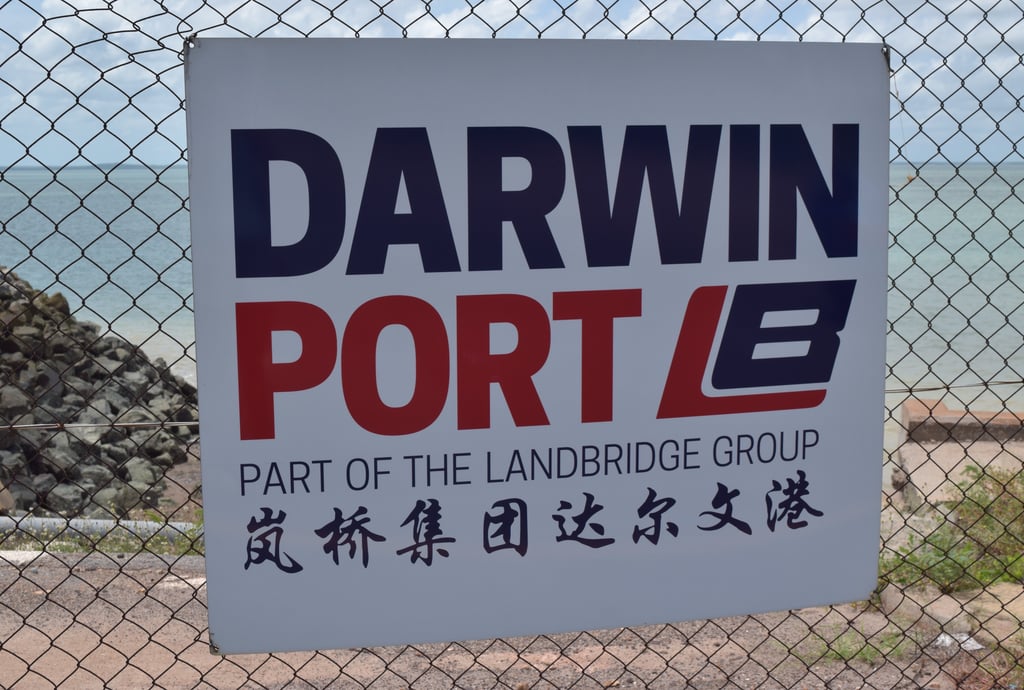
4.1.4 Case study: The Comprehensive and Progressive Agreement for Trans-Pacific Partnership
Australia’s engagement with the Comprehensive and Progressive Agreement for Trans-Pacific Partnership (CPTPP) has become a litmus test of sorts of its ability to balance economic policy with geopolitical sensitivities. The PRC formally applied to join the agreement in September 2021, but its accession remains unresolved and politically fraught. As chair of the CPTPP Commission in 2025, Australia will play a central role in shaping the bloc’s enlargement criteria and broader strategic direction.
The CPTPP has emerged as a strategic arena in the contest to shape regional trade architecture. For Beijing, accession offers more than economic integration, it represents an opportunity to assert leadership within a multilateral framework, potentially challenging US-led initiatives such as the Indo-Pacific Economic Framework (IPEF). Securing membership is therefore a priority for PRC policymakers.[199]
At the November 2024 CPTPP summit meeting, member states agreed to postpone any decision on the PRC’s accession for at least one year, citing ongoing concerns over transparency, state subsidies, digital trade practices and alignment with existing CPTPP standards.[200] Australia has so far avoided a definitive public stance. When asked whether the PRC’s aspiration to join the pact was reasonable, Prime Minister Albanese responded that ‘this will be a matter for the members’, underlining CPTPP’s consensus-based decisionmaking process and deflecting direct commentary while keeping diplomatic options open.[201]
The Coalition, by contrast, has adopted a firmer position against the PRC’s bid. In 2023, Shadow Home Affairs Minister Paterson declared it ‘absurd’ for Australia to support the admission of a country that had ‘imposed $20 billion of unlawful and unjustified sanctions’ on Australia, arguing that such behaviour was fundamentally incompatible with CPTPP norms.[202]
Complicating the debate further is Taiwan’s parallel application for membership. Labor has not issued an explicit position on Taiwan’s bid, with government ministers remaining noncommittal when pressed on the matter.[203] While the Joint Standing Committee on Foreign Affairs, Defence and Trade’s Trade Sub-Committee in 2022 recommended Taiwan be considered for CPTPP membership,[204] Canberra continues to avoid explicit advocacy, likely wary of triggering diplomatic escalation with Beijing, particularly given ongoing efforts to stabilise bilateral ties.[205] While in 2023 then-Shadow Foreign Minister Birmingham offered qualified support for Taiwan’s accession – ‘if they can meet the high standards of trade liberalisation and accountability that apply under the CPTPP, and then they should be welcomed as a member’[206] – the Coalition have remained fairly quiet on this front.
In April 2024, the Australian Productivity Commission released economic modelling on the potential impacts of PRC CPTPP accession. It found that while the PRC’s entry would have limited economic benefit for most Regional Comprehensive Economic Partnership (RCEP)- CPTPP overlapping members, including Australia, non-RCEP CPTPP members like Canada and Mexico stood to gain significantly due to their existing tariffs on trade with the PRC.[207] This sheds some light on the economic dimension of the debate, suggesting that strategic concerns are likely to outweigh immediate commercial gains for Australia and its regional partners.
4.1.5 Looking ahead
Whichever party wins the 2025 federal election, Australia’s commitment to economic diversification and resilience is expected to remain a core policy priority. Both Labor and the Coalition will face the enduring challenge of balancing domestic economic imperatives – particularly the benefits of trade with the PRC – with rising geostrategic pressures shaped by US-PRC rivalry.
A re-elected Labor government would likely continue in its efforts to manage tensions with Beijing while preserving space for commercial cooperation. This approach would continue to emphasise risk-informed engagement, aiming to rebalance trade exposure without overt politicisation. Labor is also expected to support behind-the-scenes coordination with the US and like-minded partners on shared economic security concerns, particularly in areas such as critical supply chains, dual-use technology export controls and foreign investment screening.
While still wary of aligning with overtly protectionist US trade policies, Labor is increasingly willing to deploy geoeconomic tools to advance strategic objectives.
By contrast, a future Coalition government would likely adopt a more securitised and values-driven trade stance. While supportive of continued trade with the PRC in non-sensitive sectors, the Coalition is expected to impose greater conditionality on engagement, linking it directly to national security priorities. A Dutton-led government would likely expand coordination with Washington across strategic sectors.
This may involve tighter investment screening and expanded export controls. Technologies such as EVs, solar inverters and home batteries could face new regulatory scrutiny under a Coalition government.
On CPTPP expansion, both parties are likely to insist on strict accession standards. However, their frames may diverge. Labor is expected to maintain a neutral, process-driven stance, framing decisions through economic and institutional lenses. By contrast, there is some possibility that the Coalition may adopt a more ideological posture, positioning accession debates as part of a broader values-based contest in regional trade architecture.
On the Port of Darwin, bipartisan convergence is already underway. Both Labor and the Coalition support ending Landbridge’s lease, signalling that the political calculus has shifted decisively. Labor has positioned the move as a sovereignty and resilience measure, rather than an overt anti-PRC stance. By promoting the idea of transferring the port to domestic superannuation funds, the government has framed divestment as a national economic opportunity, recasting security concerns as an argument for investing Australia’s $3 trillion retirement savings into local infrastructure. While the Coalition’s position is firmer, Dutton’s diplomatic engagement in this regard also suggests awareness of the need to manage fallout. Both parties now appear attuned to the potential repercussions for bilateral ties and are crafting their messaging accordingly.
Ultimately, whichever side governs, Australia’s economic policy will remain shaped by a growing convergence of trade, security and values. The next government will be forced to navigate an increasingly complex space in which economic decisions carry strategic weight, and strategic choices have direct economic consequences. How deftly it manages this balancing act may determine not only the stability of AustraliaPRC-US relations but also the resilience of its economic future.
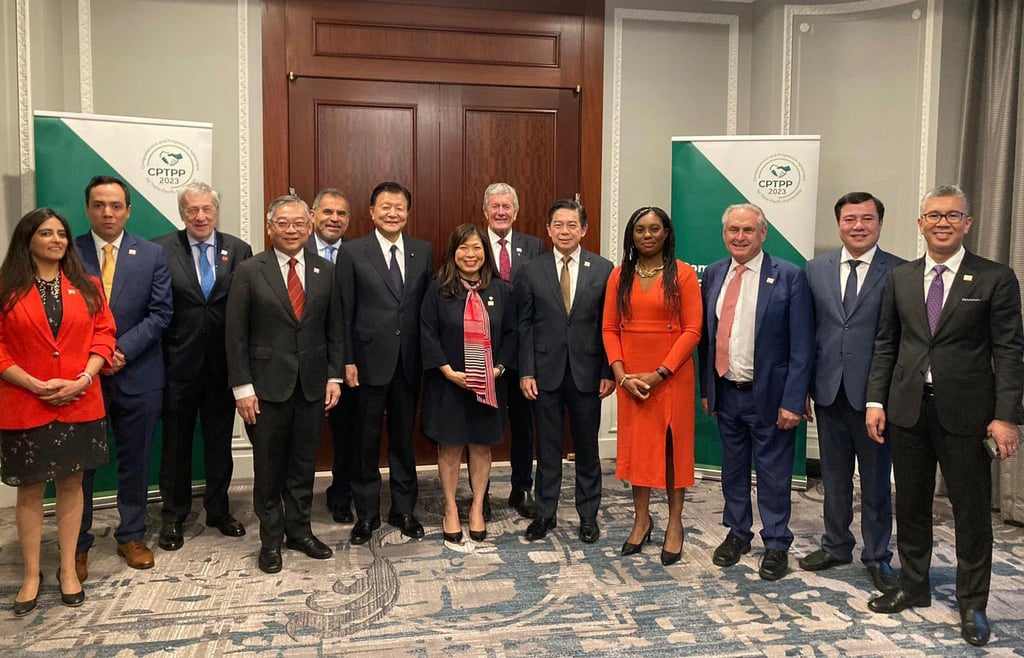
4.2 Magnitsky-style sanctions
The Labor government has consistently condemned human rights abuses committed by Beijing in Xinjiang, Tibet and Hong Kong. However, it has largely opted to express these concerns through multilateral forums, joint statements with international partners, private diplomatic channels and occasional ministerial statements rather than through direct punitive action, such as the application of Magnitsky-style sanctions. Since taking office, the Albanese government has aligned itself with several global initiatives spotlighting the PRC’s human rights record. In October 2022, Australia joined 50 nations in condemning the PRC’s treatment of Uyghurs and other ethnic minorities in Xinjiang.[208] During the UN Universal Periodic Review in January 2024, Australia recommended that the PRC ‘cease suppression of freedoms of expression, assembly, media and civil society’ and called for the repeal of the Hong Kong National Security Law. When Beijing rejected Australia’s recommendations and failed to engage with advance questions, Canberra publicly expressed its ‘disappointment’.[209]
Australia has since intensified its multilateral efforts. In September 2024, Australia joined nine countries – the ‘Xinjiang Core Group’ – calling on the PRC to release all arbitrarily detained individuals, clarify the status of missing persons and allow family reunifications.[210] The following month, Australia led, for the first time, a 15-country joint statement at the UN General Assembly expressing concern about ongoing human rights violations in Xinjiang and Tibet.[211]
Despite these efforts, the Labor government stopped short of imposing Magnitsky-style sanctions on PRC officials or entities, despite using such measures against targets in Russia, Iran and Myanmar.[212] This restraint marks a notable shift from Labor’s pre-election rhetoric, when the party criticised the Morrison government’s inaction and voiced support for targeted sanctions.[213]
When questioned on the absence of sanctions, Foreign Minister Wong defended the government’s cautious approach, stating:[214]
Sanctions are not our only choice, and they will rarely be our first choice. It’s about making the best judgment I can in this role, about the right approach at the right time.
Defence Minister Marles echoed this sentiment, emphasising that while human rights remain central to Australia’s engagement with the PRC, they must be pursued in a manner that supports the broader goal of stabilising the bilateral relationship:[215]
[H]uman rights is a central part of the way in which we engage with China… But it’s also important that this is done in a way which is respectful in the context of a relationship which we are seeking to stabilise.
The Coalition, meanwhile, has grown increasingly critical of what it views as Labor’s inaction. While Opposition Leader Dutton has avoided a definitive commitment to sanctions, stating, ‘I think it’s right that we call [human rights abuses] out, and the next steps from there are for others to consider’, views within the Coalition have varied.[216]
Shadow Trade Minister Hogan expressed disagreement with former Prime Minister Morrison’s call for sanctions in early 2023,[217] arguing that Beijing’s ‘wolf warrior diplomacy has lessened’ and that reengagement was underway:[218]
They are thawing things with us… I think that is good news and I don’t think we should be putting sanctions on at the moment.
However, other Coalition figures have taken a harder line. Then-Shadow Foreign Minister Bimingham was especially vocal, criticising the government’s ‘inaction’ after ‘talk[ing] a big game on the use of Magnitsky-style sanctions’ while in opposition. Birmingham said:[219]
The Albanese government speaks again and again of condemnation but, unlike most like-minded nations, where is the action on Xinjiang?
He noted that the Coalition had formally offered bipartisan support for targeted sanctions in 2022, following the UN report on Xinjiang yet received no response.[220] That offer was reiterated in 2023 and again in 2024.[221] In a pointed remark questioning Labor’s broader PRC posture, he said:[222]
We can all draw conclusions about why Australia may not have acted… By not acting Australia weakens international efforts and the effectiveness of the efforts of others.
Calls for action have intensified further in the context of growing global concern over PRC-linked cyber operations. In early 2024, the UK and the US imposed sanctions on two PRC nationals and a front company tied to a state-backed hacking group responsible for cyber espionage.[223] In response, Shadow Home Affairs Minister Paterson urged the Albanese government to follow suit ‘so there are real costs and consequences for their behaviour’.[224]
Although Labor has continued to publicly condemn state-sponsored cyberattacks – in April 2024, Foreign Minister Wong and then-Home Affairs and Cybersecurity Minister Clare O’Neil released a joint statement denouncing PRC hacking as ‘unacceptable’[225] – the government has yet to impose any cyber-related sanctions under the Magnitsky framework.
Federal Labor MP Peter Khalil, chair of the Parliamentary Joint Committee on Intelligence and Security, said that the government was ‘enhancing our cyber security, intelligence and our defence capabilities’ to deter foreign threats, including cyberattacks, grey zone attacks and force. At the same time, he said the government would continue with efforts to stabilise ties with the PRC. He said, ‘Simply, we can do both – because they are both in our national interest.’[226] He added, ‘It is not incongruent with our national interest to improve and enhance our economic and diplomatic relationship with countries like China because of the importance of trade to our national interest.’
Khalil’s remarks reflect the government’s broader position: that it is both possible and necessary to reinforce national security while maintaining constructive economic ties with the PRC even amid strategic competition.
4.2.1 Looking ahead
While both major parties agree on the importance of defending democratic values and condemning the PRC’s human rights abuses, they diverge on the policy tools best suited to the task. Labor has consistently framed sanctions as a tool of last resort, best deployed when diplomacy has been exhausted or when coordinated multilateral action is not possible. This reflects a broader preference for behind-the-scenes coalition-building, particularly when it comes to sensitive issues in the Australia-PRC relationship.
However, international partners are increasingly taking bolder action. Against this backdrop, the Coalition is steadily escalating its calls for a firmer Australian response, pressing for a sharper stance.
Should the Coalition win the 2025 election, it is expected to assume a more assertive stance on the use of Magnitsky-style sanctions. A Dutton-led government would likely be more inclined to align Australia’s human rights and cyber deterrence policy with those of its key allies and partners by imposing targeted sanctions on PRC individuals or entities involved in egregious abuses or malicious cyber activity. This would not necessarily be framed as a wholesale confrontation with Beijing, but rather as a demonstration of values-based foreign policy and national sovereignty. The Coalition’s rhetoric has consistently highlighted the importance of ‘speaking plainly’ about authoritarian behaviour.
Australia’s sanctions policy is likely to remain under scrutiny regardless of who forms government. Whether Labor’s commitment to quiet diplomacy can continue to satisfy public expectations, or whether the Coalition’s more assertive posture will gain traction, remains to be seen.
In this context, the debate over Magnitskystyle sanctions has become more than a legal mechanism, it is a proxy for broader questions about how Australia projects values, balances principle with pragmatism and navigates the growing demands of a contested international order.
4.3 Foreign interference
Foreign interference and espionage remain among the most persistent and complex national security threats facing Australia. In his 2025 annual threat assessment, ASIO Director-General Burgess described espionage, foreign interference and politically motivated violence as threat vectors that were ‘already at extreme levels’ and likely to intensify. In a follow-up interview, Burgess said one purpose of the speech was to ‘[put] foreign intelligence services on notice.’ While Russia and Iran were explicitly named, the PRC was not.[227] Still, Burgess confirmed that the PRC Ambassador to Australia had been ‘deliberately’ invited to the speech,[228] stating that foreign representatives should be left in no doubt as to ‘where and what the issues are for us.’[229]
Although the PRC went unnamed, the implications were clear, particularly given escalating incidents tied to the PRC. Most recently, The Guardian reported anonymous letters sent to Melbourne residents offering $203,000 for information on Australian pro-democracy activist Kevin Yam, wanted in Hong Kong under its National Security Law.[230] Around the same time, fake pamphlets targeting mosques in Adelaide falsely accused Australian resident and former Hong Kong politician Ted Hui of being a pro-Israel extremist – an apparent disinformation campaign aimed at discrediting him within the local community.[231]
The Albanese government has acknowledged the scale of the threat[232] and introduced new safeguards to complement Australia’s 2018 foreign interference laws (see Box 1). However, it has so far maintained a largely country-agnostic approach to attribution, deliberately avoiding naming the PRC in public statements and official policy documents.
Box 1. Expanded safeguards introduced by Labor
Labor has built on the 2018 foreign interference laws with several targeted initiatives:
- The Counter Foreign Interference Taskforce, first established in 2020, was made permanent in April 2024 and broadened to include agencies such as the Australian Taxation Office (ATO).[233]
- A new Technology Foreign Interference Taskforce was created to coordinate efforts between government and the tech sector.[234]
- Visa screening was tightened for postgraduate students in sensitive research fields.[235]
- The Safeguarding Australia’s Military Secrets legislation, introduced by Labor in 2023 [236] and which came into effect in May 2024,[237] now requires foreign work authorisation for individuals with access to certain classified capabilities.[238]
- The Department of Home Affairs in July 2024 instructed government entities to identify Foreign Ownership, Control or Influence (FOCI) risks in tech procurement.[239]
- The Department of Industry, Science and Resources was allocated $3 million over three years from 2024 for a pilot program to help the critical minerals sector detect and prevent foreign interference.[240]
The Albanese government’s reluctance to single out the PRC reflects its broader strategy of man aging national security concerns while stabilising diplomatic relations. In early 2023, then-Home Affairs Minister O’Neil said the government would name specific countries only ‘when it is in the national interest’.[241] While she later acknowledged that Beijing was engaged in foreign interference activities, she stressed that this was ‘not just a China problem, although it is a China problem.’[242]
This approach was echoed in the January 2025 release of Countering Foreign Interference in Australia: Working Together towards a More Secure Australia – the first public government analysis of foreign interference threats.[243] The document identified threat types but named no states. In an August 2024 interview, ASIO’s Burgess said there were ‘at least three or four [countries]’ known to be involved in foreign interference in Australia, some of which ‘would surprise you’ and were ‘also our friends.’[244] When asked to name them, Prime Minister Albanese reiterated the government’s position:[245]
No, in a word… [O]ur priority here isn’t to get a headline. Our priority here is to keep Australians safe. First, second and third priority.
In contrast, the Coalition has consistently called for greater transparency and explicit attribution, particularly regarding the PRC. Following O’Neil’s decision to name Iran but not the PRC in 2023, Shadow Home Affairs Minister Paterson criticised the omission:[246]
Let’s be honest, Iran is not the number one source of foreign interference or espionage in our country. It’s not even close. The Chinese government is the number one source... The minister and the government have not been open and honest in discussing that issue.
He stated that the PRC’s activities ‘should be at the forefront of the government’s public discussion’.
Paterson reiterated this in 2024, stating that ‘foreign interference and espionage conducted by China is Australia’s primary security threat’[247] and called for the Albanese government to be ‘publicly candid’ about it.[248]
This position has been reinforced by Opposition Leader Dutton, who in 2025 stated:[249]
We also won’t tolerate foreign interference which targets Australians of Chinese ancestry – or any Australian for that matter.
A government I lead will jealously guard the rights and freedoms of Australians like Kevin Yam and Ted Hui.
Dutton’s remarks deliberately frame foreign interference not just as an abstract security risk but as a direct assault on civil liberties and democratic inclusion. By highlighting Australians of Chinese ancestry, specifically naming Yam and Hui, both targeted in suspected PRC-linked influence operations, Dutton has sought to position the Coalition as both more willing to call out the PRC and more attuned to the lived vulnerabilities of diaspora communities.
Paterson has also expressed concern that the effectiveness of current laws is being undermined by weak enforcement, telling a Senate Estimates hearing in May 2024:[250]
One of the reasons why the Chinese-Australian diaspora and others involved in these issues are anxious about their safety in Australia is that they don’t see a lot of prosecutions that have flowed under the counter foreign interference legislation.
He said, ‘If there are no consequences there is no deterrence.’[251] He had previously described successful prosecutions as ‘key’ to deterring attempts to interfere in Australia’s democracy, following a guilty verdict in Australia’s first foreign interference case before the courts. He noted that the Australian Federal Police and prosecutors should continue to enforce the law ‘robustly’.[252]
Paterson has also called for a more public role for the Office of National Intelligence (ONI), whose expertise he described as ‘underutilised’. He recommended that ONI publish an unclassified annual assessment providing ‘specific examples of foreign interference, cyberattacks, corruption and coercion’. He added that this assessment could be accompanied by an annual speech delivered by ONI’s Director-General, in the manner of the ASIO Director-General’s annual threat assessment. Paterson said:[253]
These kinds of disclosures serve to shine a light on false narratives perpetuated by Beijing, which can deter China from undertaking coercive activities targeting countries in our region and equip those countries to recognise and respond to activities when they do occur.
Additionally, Paterson has raised concerns about charity exemptions under the Foreign Influence Transparency Scheme (FITS), suggesting that activities that he characterised as ‘reputationwashing’ via philanthropic foundations deserves greater scrutiny.[254]
At the beginning of 2025, Paterson called for ‘fixing’ Australia’s foreign influence transparency scheme as an ‘urgent priority’, stating that the scheme was an ‘important tool’ that ‘is not working as intended’.[255]
Paterson had previously urged PRC-headquartered companies with ‘close connections to the Communist Party’, such as Huawei, DJI, TikTok, Dahua, BYD and WeChat, to declare lobbying activities, stating in December 2024 that these firms ‘should all be transparent about their attempts to influence public policy in Australia and their close relationships with the Chinese government.’[256]
4.3.1 Case study: Universities
Australian universities continue to face heightened scrutiny over their exposure to foreign interference risks, particularly in relation to partnerships and joint research initiatives involving PRC institutions or nationals. Concerns centre on the potential for unwanted technology transfer, intellectual property theft and the coercion of students and academics, especially those from diaspora communities.
Labor navigates a delicate balance. On one hand, as discussed above (Section 4.3 Foreign interference) it acknowledges the real and growing threat of foreign interference, including within the higher education sector. On the other hand, it has sought to preserve academic freedom and institutional autonomy, winding back, for example, what it characterised as overly prescriptive measures introduced by the Coalition, most notably the discretionary ministerial veto over Australian Research Council (ARC) research grants.[257]
Labor has also overseen the gradual phasing out of PRC government-funded Confucius Institutes hosted on Australian university campuses. But it has sought to avoid blanket bans on such programs, preferring to monitor as opposed to dismantle despite criticism from members of the opposition and security analysts.[258] As of early 2025, nearly half of the existing Confucius Institutes had closed.[259]
Coalition figures, particularly Shadow Home Affairs Minister Paterson, have been vocal in highlighting what they describe as ongoing vulnerabilities in the university sector. Paterson recently pointed to a case involving a PRC national engaged in drone research at the Queensland University of Technology, while contesting a visa denial on national security grounds[260]:
It’s several years on from the intelligence committee inquiry and there’s really no excuse today for permitting high-risk research in the dual-use area to occur on university campuses, particularly with students who come from authoritarian countries and especially China, given that it’s been publicly assessed to be the number one source of state-backed intellectual property theft and we know it has coercive and intimidatory intentions towards the region…The naivety of facilitating dual-use research for an authoritarian state is just unforgivable in this day and age.
Paterson also criticised the continued employment of an academic at the Australian National University (ANU) with alleged PRC ties supervising sensitive research, calling the episode emblematic of broader institutional complacency:[261]
It is no longer tenable to plead ignorance. By now, universities should have incredibly robust policies in place to manage the increasingly fraught national security environment.
4.3.2 Looking ahead
Foreign interference is set to remain a defining national security issue for Australia in the years ahead. As interference operations grow more sophisticated, ranging from covert surveillance and disinformation to coercion and intellectual property theft, the choice between quiet containment and public exposure is emerging as a defining policy fault line between the major parties.
If Labor is re-elected, it is likely to maintain its current strategy: one that is risk-informed, agency-led and that avoids public attribution unless deemed necessary. While it has significantly expanded the counter-interference toolkit – including the establishment of new taskforces, tightened visa rules for sensitive research areas and updated legislation to protect classified capabilities – Labor continues to favour restraint over public confrontation, particularly when it comes to naming the PRC. This approach reflects its broader objective of managing security concerns while maintaining diplomatic stability.
Should the Coalition win government in 2025, it is expected to pursue a more forward-leaning and interventionist stance. As Home Affairs Minister under the Morrison government, Peter Dutton led efforts to strengthen safeguards against foreign interference.[262] Under his leadership, a renewed Coalition government is likely to expand enforcement resources, seek to pursue more prosecutions and elevate public disclosure of state-based threats. It is likely that it will break from Labor’s country-agnostic approach, seek to establish annual reporting on interference modelled on ASIO’s annual threat assessments and reform the Foreign Influence Transparency scheme through tightened disclosure rules. There is a possibility, too, it would enhance oversight in the university sector.
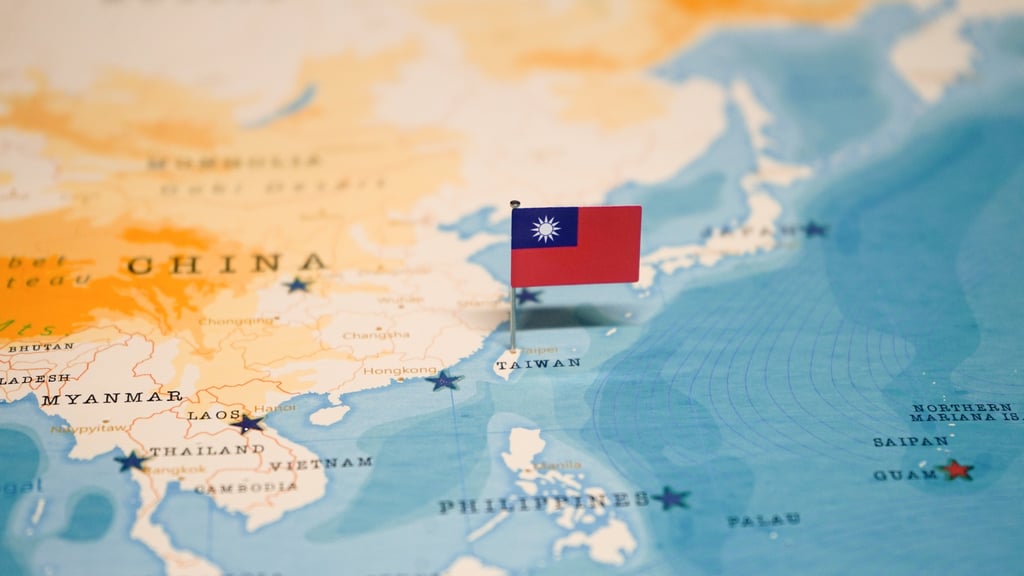
4.4 Cross-Strait tensions
Australia’s approach to Taiwan remains grounded in its longstanding one China policy.[263] It supports the status quo and opposes any unilateral change through force or coercion. While this position remains formally unchanged under both Coalition and Labor governments, recent years have seen subtle variations in tone and emphasis between the major parties, particularly in response to increasing tensions in the Taiwan Strait and growing concern over Beijing’s disinformation and pressure tactics, including incorrect assertions regarding Australia’s policy[264] and intensified efforts to limit Taiwan’s international identity and visibility.
This changing environment has led to a broader shift in political mood vis-à-vis Taiwan. In August 2024, the Senate passed a bipartisan motion rejecting Beijing’s interpretation of UN Resolution 2758, reinforcing Australia’s support for Taiwan’s international participation and the peaceful maintenance of the status quo.[265]
Defence Minister Marles has repeatedly stated that the Australian government’s position on Taiwan ‘remains as it has been for a long time’, opposing any unilateral change across the Taiwan Strait.’[266] While Marles has rejected speculation on military involvement, he has made clear that a war between the US and the PRC over Taiwan would be ‘so grave’ that Australia cannot be a ‘passive bystander’.[267] Marles’ comment does not amount to a commitment of military support, but it underscores a key shift in tone: Australia would not be indifferent to a conflict over Taiwan, that is, complete neutrality is no longer tenable.
Marles has placed particular emphasis on the importance of statecraft, the utility of all components of national power, in navigating rising tensions. He stated that no country can manage the dangers of great power confrontation alone, underscoring the need for coordinated international action. He said:[268]
We must work together to navigate this challenging new period with nuance and judgement, with statecraft that ensures that no country judges that the benefits of conflict might outweigh the consequences.
He added:
[N]o country can reduce this risk alone. It will require increased cooperation to strengthen the norms and principles that underpin our collective security and prosperity.
Opposition Leader Dutton has at various points signalled a more assertive posture in relation to Taiwan. While he has stopped short of a formal policy commitment to military intervention, he has expressed views consistent with strategic alignment alongside the US in the event of conflict. As Defence Minister in 2021 he remarked:[269]
It would be inconceivable that we wouldn’t support the US in an action if the US chose to take that action.
He had also previously expressed openness to arming Taiwan in the face of future PRC aggression.[270]
In more recent comments, Dutton has taken a less definitive stance. In 2024, The Nightly reported that Dutton ‘did not have a stated policy when it came to Taiwan’, although ‘Australia was obligated to discourage China from making any hostile move’. If that failed, he said that any decision would be contingent on the circumstances at the time:[271]
We don’t have a [similar] position that America [has] adopted for a long period of time, and we would see the circumstances [in Taiwan] at the time [and] make a judgement.
Dutton has also supported symbolic moves to affirm Taiwan’s international position, such as endorsing then-US House Speaker Nancy Pelosi’s 2022 visit to Taipei. However, he stated he would not personally accept an invitation to visit Taiwan, describing such trips as potentially counterproductive:[272]
I think we’re better off not to involve ourselves in political stunts, but to do what we can to speak honestly about the situation.
However, while Dutton has modulated his language, the underlying strategic posture remains clear. Writing in November 2024, a columnist at The Australian said that ‘Peter Dutton told me Australia almost certainly would join the US if it became involved in such a war [with the PRC over Taiwan]’,[273] indicating firm if unofficial alignment with Washington’s deterrence agenda.
4.4.1 Looking ahead
Taiwan is likely to remain one of the most strategically sensitive issues in Australia’s foreign and defence policy in the years ahead. Both major parties recognise that a potential conflict in the Taiwan Strait would carry serious consequences for Australia’s security.
The Albanese government is expected to maintain its current position: supporting the status quo and opposing the use of force, as well as avoiding precommitments to military involvement. This approach reflects a broader strategy of strategic ambiguity and regional risk management without inflaming tensions. As Marles made clear, while Australia cannot be a ‘passive bystander’ in the event of a conflict, a Labor government would focus its efforts on diplomatic engagement and deterrence through multilateral cooperation, not on direct confrontation.
The Coalition would likely adopt a more forwardleaning strategy. While it also supports the one China policy and the status quo, its rhetoric and positioning suggest greater willingness to publicly align with US efforts and reduce ambiguity.
A key variable in shaping Australia’s Taiwan policy will be the direction of US policy, which could further complicate domestic political consensus as well as introduce more strategic uncertainty.
Moreover, some observers contend that Australia’s deepening integration with the US through AUKUS further increases the likelihood of involvement in a Taiwan conflict, even absent a formal commitment. While AUKUS is officially framed as a deterrent and capability-enhancing arrangement, some suggest it functionally ties Australia more closely to US strategic decisions in the Indo-Pacific, reducing its flexibility in any future crisis.[274]
5. Conclusion
Both the Labor and the Coalition acknowledge the complexity and centrality of the relationship with the PRC to Australia’s future, yet their paths diverge in tone, tactics and thresholds for action.
The Albanese government’s approach is defined by narrative coherence and a commitment to diplomacy over escalation. It has sought to de-risk the relationship while sustaining engagement, framing its strategy around principles of patience, national interest and coordination with international partners. Labor’s messaging has emphasised multilateralism and rhetorical restraint, aiming to safeguard economic ties while expanding national security safeguards behind the scenes.
In contrast, the Coalition under Peter Dutton offers a more assertive alternative, blending economic pragmatism with a security-first posture. Its rhetoric is more explicitly valuesdriven, calling for ideological clarity. While Dutton has altered his language compared to his tenure in government, the Coalition’s emphasis remains on transparency and an unambiguous alignment with Western allies.
There is a possibility that the 2025 election could result in a minority government. Should this transpire, the major parties may need to engage in negotiations with independents and the Greens on key elements of PRC policy, particularly around AUKUS. The Greens, for example, have consistently opposed AUKUS citing non-proliferation and cost concerns, while some teal independents have expressed concerns about transparency and long-term strategic implications of the security partnership. Their influence could introduce new constraints or at least calls for greater parliamentary scrutiny.
Ultimately, Australia’s PRC policy is no longer simply about the PRC – it is a prism through which broader questions of sovereignty, identity and values are being contested. As Australia approaches a potentially pivotal federal election, the electorate will be asked not only to choose between two parties, but between two competing visions of how to navigate the defining strategic relationship of the century: one grounded in stability and restraint; the other in strength and resolve.
Whichever path is chosen, one thing is clear: the age of rhetorical ambiguity is ending. In its place emerges a new era of sharper choices and the growing fusion of domestic and international strategy. Which vision proves more effective will be tested in the years to come.
Read the full analysis
AUTHOR

Manager, Research Analysis, Australia-China Relations Institute, University of Technology Sydney