


- Posted on 23 Jan 2025
A UTS-led research team is developing vaccines to combat Alzheimer’s disease, based on ground-breaking ‘plug-and-play’ nanotechnology.
Medical research teams worldwide are racing to develop treatments that target two abnormal proteins in the brain – beta-amyloid and hyperphosphorylated tau. These form clumps over time and contribute to the cognitive decline seen in Alzheimer’s disease.
A multidisciplinary research team from UTS, Macquarie University and the University of Adelaide has joined the race by engineering an innovative vaccine technology as an early intervention to halt the onset of Alzheimer’s disease.
Now backed by a $1.4 million National Health and Medical Research Council Ideas Grant, the team will spend the next four years advancing nanotechnology vaccines from laboratory models to pre-clinical studies that aim to demonstrate their ability to slow or stop the progress of the devastating disease.
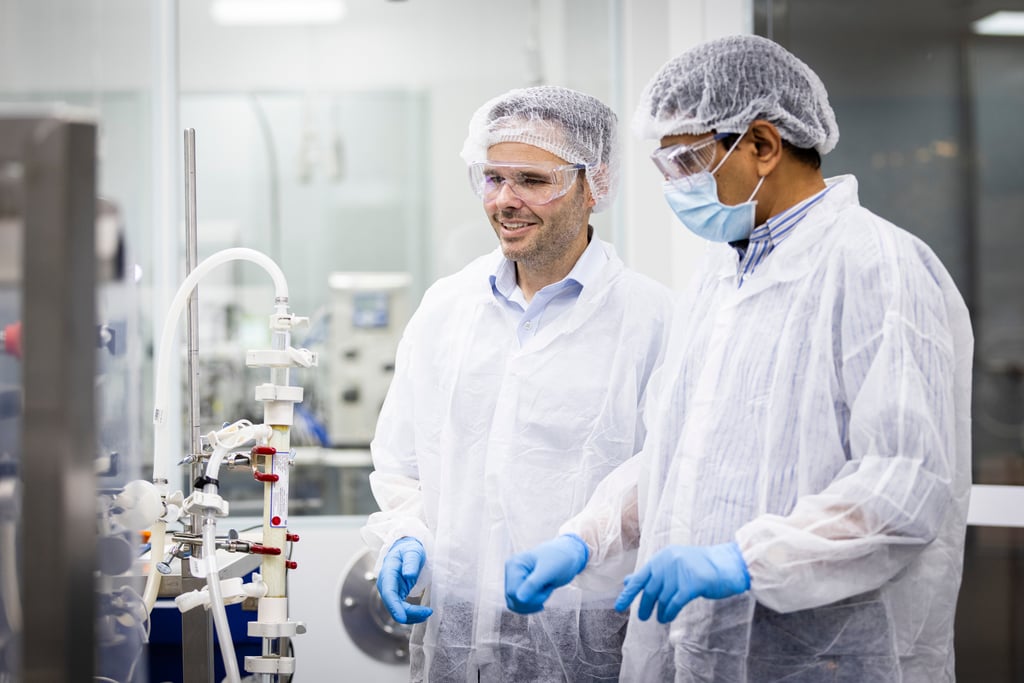
Associate Professor Andrew Care, senior lecturer and director of the Biologics Innovation Facility in the UTS Faculty of Science, is leading the team and specialises in developing therapeutics that creatively combine nano-medicine and synthetic biology.
“Our vaccine platform uses tiny natural particles called nanocages that are designed to be coated with fragments of the proteins that cause Alzheimer’s disease. Essentially, we plug the proteins into the nanocages to help the body’s immune system recognise them,” he explained.
“When they’re injected into the body, these nanocages then empower the immune system to produce antibodies that break down the abnormal proteins in the brain. By degrading and removing these proteins from the brain, we hope to halt the Alzheimer’s in its tracks.”
The flexible nature of the nanotechnology platform – which allows targeted proteins to be relatively easily plugged into the nanocage – also opens up the possibility of more personalised vaccination.
“Alzheimer’s is a complex disease with harmful proteins that can change their identities over time and differ between individual patients,” Associate Professor Care said.
Our plug-and-play nanocages enable us to rapidly develop and test vaccines that target the various forms and combinations of Alzheimer’s-causing proteins.
Due to the progressive nature of Alzheimer’s disease, where problematic proteins accumulate as brain function declines, means early intervention with a vaccine is critical.
“Alzheimer’s-causing proteins accumulate in the brain over time. By the time a diagnosis is made, it is often too late to reverse the disease,” he says.
“Our long-term goal is to develop vaccines that can be safely and easily administered early in life, particularly to those at greater risk, to prevent or delay the onset of Alzheimer’s,” Associate Professor Care said.
“The vaccines we’re looking to develop have the potential to be affordable and accessible, making them an effective solution to potentially protect the global population from Alzheimer’s.”
Ultimately, the team hope this newly-funded research will create Alzheimer’s vaccine candidates for clinical studies, with large-scale manufacturing optimised in the state-of-the-art UTS Biologics Innovation Facility.
People with Alzheimer’s disease makes up approximately 60 percent of the more than 480,000 people living with dementia in Australia, and more than 55 million people worldwide.
Symptoms of the debilitating disease include loss of memory, language difficulties, inability to perform routine tasks and personality and mood changes.
Lead researcher
Associate Professor, Faculty of Science

Story
Fighting for the future of coral reefs
Why do some coral species thrive when others are degrading and dying? Groundbreaking research is revealing their secrets to survival and how these traits can...
News
Australian researchers prove world-leading flood sensing technology
UTS researchers have demonstrated the effectiveness of world-first real-time water level and rainfall sensing technology using existing mobile phone networks.

News
Artificial intelligence maps genome gaps for women’s health
Distinguished Professor Jie Lu AO is pioneering artificial intelligence that unlocks the power of the genome to target improved women’s health.
News
NiCE Loo feeds new growth in nutrient recycling
The problem of valuable nutrients being flushed away in sewage has long been recognised and now an Australian-developed solution has been unveiled.
Story
Fighting for the future of coral reefs
Why do some coral species thrive when others are degrading and dying? Groundbreaking research is revealing their secrets to survival and how these traits can...
News
Australian researchers prove world-leading flood sensing technology
UTS researchers have demonstrated the effectiveness of world-first real-time water level and rainfall sensing technology using existing mobile phone networks.
News
Artificial intelligence maps genome gaps for women’s health
Distinguished Professor Jie Lu AO is pioneering artificial intelligence that unlocks the power of the genome to target improved women’s health.
News
NiCE Loo feeds new growth in nutrient recycling
The problem of valuable nutrients being flushed away in sewage has long been recognised and now an Australian-developed solution has been unveiled.