

- Posted on 15 Jul 2021
- 5-minute read
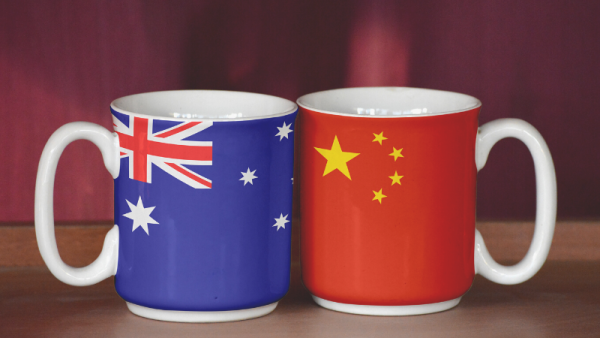
Aritra Deb / Shutterstock

Maggie Ying Jiang, Australian Director, University of Western Australia Confucius Institute
Perspectives is UTS:ACRI's commentary series, featuring a piece on a topical subject in the Australia-China relationship from an invited expert contributor.
In the first three quarters of 2020, domestic sales in the People’s Republic of China (PRC) for Chinese consumer goods brands increased two percent while those of foreign brands shrank six percent year-on-year. According to data released by internet group Alibaba, at the PRC’s June 18 2021 e-commerce festival, the country’s second-biggest annual shopping event, local brand Babycare surpassed Procter & Gamble’s Pampers in terms of both sales volumes and brand ranking, assuming the number one position in the category of infant care products. It has also been observed that households in the PRC are losing their taste for Australian dairy products, with the market share of foreign milk brands on ecommerce platform Tmall declining to 23 percent in 2020, down from 35 percent in 2019 and 52 percent in 2016. In these case studies, nationalism was considered a key reason for weaker sales.
Multinational companies and marketing firms in the PRC have observed that young Chinese are showing increasing nationalism, quickly able to turn against foreign brands and generally showing more interest in domestic brands.
Credit Suisse’s annual emerging consumer surveys since 2018 have found that Generation Z in the PRC are expressing increasing national pride. The financial services firm’s analysts observe that improvement in product quality, marketing and distribution strategy, as well as heightened skepticism of imported products, have led to more confidence in homegrown brands over recent years. In parallel, they note that the COVID-19 pandemic and geopolitical tensions have ‘accelerated’ demand for domestic brands in the PRC. As such, domestic brands appear poised to enjoy a strong future.
The difference in attitudes between Generation Y and Generation Z towards foreign brands is stark. In Cyber-nationalism in China, a book focused on Generation Y’s attitudes towards the West published a decade ago, nationalism in the PRC was described as encompassing paradoxical feelings about the West: sharp resentment towards Western ideology while simultaneously embracing Western culture and consuming Western brands.
Things have changed. The current wave of nationalism in the PRC is marked by different features. While the resentment towards Western ideology remains the same, if not heightened, it marks the emergence of a generation of consumers who are detaching from foreign brands. The selling points of foreign brands representing a more desirable Western lifestyle which were pursued by Generation Y no longer resonate. Generation Z in the PRC are now more confident in their own lifestyle and seek to distinguish themselves from previous generations by choosing products which reflect their values.
According to recent research by Beijing Normal University, consumers in the PRC occupying the 20s age bracket today are more value-conscious in making their purchase decisions and are thus more open to buying domestic brands.
Another point of differentiation between this wave of nationalism in the PRC and the one that preceded it is the increasing frequency of the expression of nationalistic sentiments and the tendency to engage in boycotting of foreign brands perceived to engage in insensitive behavior. This new wave seems to have reached a fever pitch in recent years. There have been more than 60 well-known foreign brands which have faced boycotts in the last three years. One of the most severe cases was the boycott of Italian luxury brand Dolce & Gabbana. After the company posted videos that were criticised as racist and insensitive, followed by derogatory comments from founder Stefano Gabbana in late 2018, D&G lost 98 percent of their market in the PRC.
Despite the deterioration in relations between Canberra and Beijing, there has so far been no public call by any celebrity or other prominent figure in the PRC for a boycott of Australian products on social media platforms. This is notable given influential PRC social media stars can command millions of loyal followers. And although it was reported in February that education agents in the PRC have been instructed not to recommend Australian universities, the general public in the PRC still rank Australia as their top education and tourism destination. However, nationalist articles opining on how to deal with Australia’s ‘arrogance’ are appearing more frequently on social media, with users questioning why Australia - a country with neither historical nor territorial dispute with the PRC - has opted to ’get out in front’ of the international community with respect to ideological confrontations.
Almost half (49.6 percent) of the respondents participating in a Beijing Foreign Studies University survey this year on relations with Australia believe that Australia is ‘too dependent’ on the PRC in terms of its economy. On the other hand, the reverse did not ring true for the majority of respondents – 76.9 percent do not believe that the PRC is overly dependent on Australia. This is despite the continuing rise of bilateral trading volume in the face of political tensions, and the fact that iron ore remains essential to the PRC’s development. While the PRC has few iron ore alternatives in the short-term, it may be over-optimistic to neglect the increasing possibility of the country’s consumer base actively seeking to find substitutes for all things Australian.
Author
Dr Maggie Ying Jiang is Australian Director at the University of Western Australia (UWA) Confucius Institute and Associate Professor at UWA Business School.