


- Posted on 23 Sep 2020
- 1-minute read
Microbiology researcher Dr Laura McCaughey has received the 2020 NSW Tall Poppy of the Year award for her work tackling antimicrobial resistance and communicating science, especially to girls and young women.
Dr Laura McCaughey is a high-achieving scientist both in the lab – tackling the global scourge of antimicrobial resistance – and outside it – as a science communicator and role model for women in STEMM (Science, Technology, Engineering, Mathematics and Medicine).
Now she can add a new accolade for the breadth of her contribution to science – that of NSW Young Tall Poppy of the Year, awarded by the Australian Institute of Policy and Science.
Dr McCaughey is a postdoctoral research fellow in microbiology at the UTS Faculty of Science ithree institute, in collaboration with the University of Oxford. She is also project manager for Soapbox Science Sydney.
Originally trained as an analytical chemist, her research tackles one of the greatest challenges faced by society – antimicrobial resistance.
“Antibiotics can be taken for granted – we often don’t think of them as the cornerstone of modern medicine. Without them, things like chemotherapy, routine surgeries and organ transplants couldn’t be performed. Even a simple cut could once again become life-threatening,” Dr McCaughey said.
“Worryingly, antibiotics are already no longer working against a huge range of bacteria because the bacteria are always changing and evolving to ‘fight off’ and resist the antibiotics effects.
“It’s important to get this message out to the general public so they can understand the difference between viral and antibacterial infections or why their GP can be reluctant to prescribe antibiotics,” she said.
Dr McCaughey is working on a group of protein antibiotics, called pyocins, and how they kill bacteria. She hopes her research will advance these new antibiotics through clinical trials to the mass market, providing an alternative strategy for treating multi-drug resistant bacterial infections.
Associate Professor Garry Myers, ithree Director (Interim), said Dr McCaughey is a “deeply worthy recipient of a NSW Young Tall Poppy Award”.
“She is an exceptional research scientist and a talented science communicator. Her world-leading work on antimicrobial resistance, looking for new antibiotics and mechanisms of action, resonates even more strongly in the midst of a global disease pandemic,” he said.
“It is rare for a scientist to not only operate at the cutting edge of research, but to also have the capability of effectively communicating those findings to a non-scientific audience.”
The annual Young Tall Poppy Science Awards have recognised more than 700 Young Tall Poppies since they were founded in 1998. They recognise the best young scientists from around Australia, who are making a significant contribution to a more publicly engaged scientific leadership.
Previous UTS Tall Poppies include Faculty of Science C3 marine scientist Dr Emma Camp and biomedical engineer Associate Professor Majid Ebrahimi Warkiani, of the Faculty of Engineering and IT, who were recognised in 2019.
News by topic
News
Electronic nose puts police detection dogs to the test
UTS researchers are using scent-sensing technology to help validate human-remains detection dog training.

News
Working from home for over-55s
The law provides a right to make a properly grounded request to work from home, a right to genuine consideration and, where necessary, access to an independent...

News
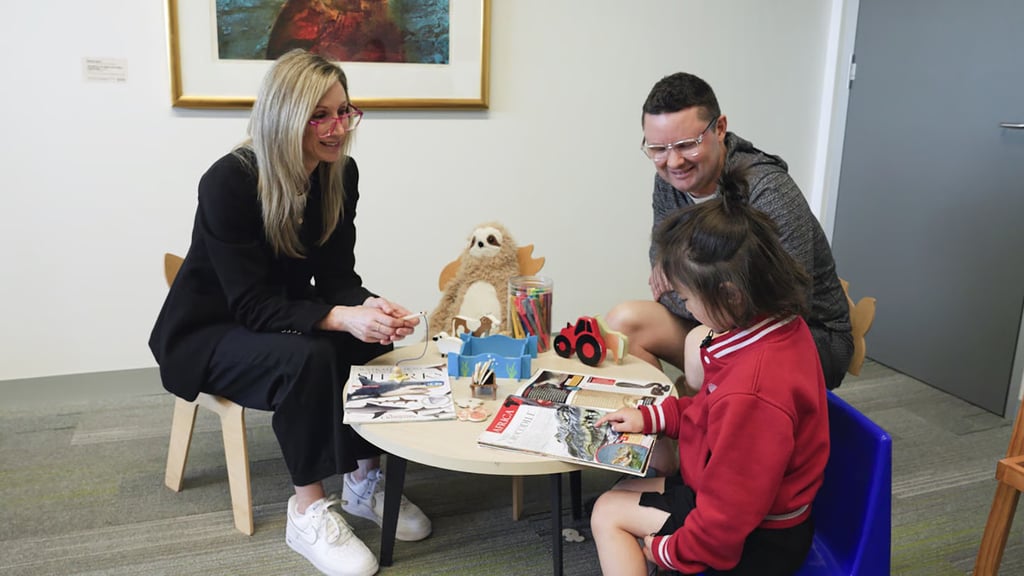
Australia leads the world in stuttering research, now digital innovation is reshaping stuttering care
The Australian Stuttering Research Centre at UTS marks 30 years of world-leading research.
News
Electronic nose puts police detection dogs to the test
UTS researchers are using scent-sensing technology to help validate human-remains detection dog training.
News
Working from home for over-55s
The law provides a right to make a properly grounded request to work from home, a right to genuine consideration and, where necessary, access to an independent...
News
Australia leads the world in stuttering research, now digital innovation is reshaping stuttering care
The Australian Stuttering Research Centre at UTS marks 30 years of world-leading research.