

- Posted on 21 Sep 2015
- 5-minute read
Blockchain allows the organisation of complex transaction systems, without the need for a central clearing house. The information on who owns what is contained in a “virtual ledger”) replicated on the computers of all the network participants, while complex algorithms ensure the information is secure and synchronised so that all the copies of the ledger are perfectly in line.
Commonwealth Bank is not alone in this effort to control how this technology will change the industry. Visa and Nasdaq have partnered in a San Francisco based venture that is exploring whether shares in private companies can be traded using distributed ledger technology.
Since Italian merchant families started offering letters of credit to kings and lords moving to and from the Middle East on the Crusades, the financial system has thrived on providing safe ways to transfer property across space and time. So it’s easy to see how major financial players may feel about a technology that does away with the need for large trusted institutions, replacing them with robust peer-to-peer networks.
This effort to have a “foot-in-the-door” in the development of a disruptive technology is only the last instance of a process we have seen at play many times and that has led to the emergence of what today we call “fintech”.
From innovation to competition
The process starts with major financial players seizing new technology with the hope of delivering traditional services more efficiently. The transformation is no mean feat: new standards have to be agreed upon, approval has to be secured from conservative regulators, and trust has to be gained from sceptical clients. Once all the hurdles have been cleared and the innovation has acquired a mainstream status, the early adopters can finally reap the benefits in the form of higher profit margins. THE END.
Not really. With innovations it’s easy to see where they start but not where they end. The adoption of the new technology has permanently altered the industry: what was before a competitive advantage is today no longer relevant and barriers to entry have changed or crumbled altogether. In putting the technology at the centre of the industry, financial institutions have opened themselves to the competition of outsiders with a better understanding of the technology.
A typical example is what happened in the last 15 years to investment services for retail investors. Once the prerogative of commercial banks and full-service brokers, the process entailed lengthy sessions of face-to-face interaction between the investor and a financial expert. Banks were only too happy to save on personnel costs by offering smaller (and less profitable) clients the possibility to interact with online expert systems.
Today, at the top of the list of the 50 best Fintech innovators compiled by KPMG Australia is Wealthfront, the world’s largest automated investment service with over US$2.6 billion in client assets. So-called “robo advisers” are expected to manage US$2 trillion by 2020.
This projected growth is not surprising: traditional banks had two major competitive advantages in this area: physical access to clients and financial expertise. They themselves made physical access irrelevant with the push of online banking services, and they also trained clients to accept life-changing financial advice via a computer screen. Once the key competitive tools are a good website and a smart investment algorithm, it’s difficult to see how traditional players can hold their ground in front of newcomers born and bred to develop good websites and smart algorithms.
More than just keeping up
To be clear, I am not arguing here that banks have dug their own grave. Technological change would have come with or without them. Clients would have eventually realised that if algorithms can guess which books we want to read or which movies we want to watch maybe they can also choose which investment products are good for us.
What I am arguing is that to successfully ride a disruptive technological wave it is not sufficient to embrace new technology. What is necessary is to create, around the technology, a new defensible competitive advantage to replace the one that is being made obsolete.
The biggest hurdle to the adoption of the blockchain is the lack of confidence in peer-to-peer distributed systems. We make jokes about the scandals surrounding Bitcoin and we agree that we wouldn’t want our stock market or credit card network run in the same way. But if Visa, Nasdaq and Commonwealth Bank of Australia adopt the technology and tell us it is all good and safe we will probably believe them. And then, after a bit, we will ask ourselves: why do we need a bank to run the blockchain again?
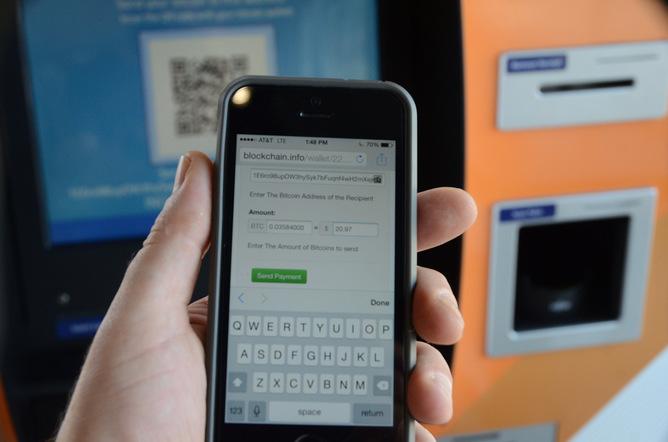
This article first appeared on The Conversation. Photo: Banks and payments companies are also in the race to sell mobile wallets. Credit: BTC Keychain, Flickr.
Byline: Marco Navone, Senior Lecturer in Finance at UTS Business School