• Posted on 13 Feb 2021
  • Updated on 13 Feb 2021
  • 18-minute read

More communities want to make energy work better for them, and use local resources more sustainably.

Local energy projects are building momentum, but many communities lack guidance for answering key questions. Which technologies and partners should they choose? What business models will be financially viable? How can the benefits be equally shared among the community?

The MyTown Microgrid project sought to provide answers. 

Since 2019, the Victorian town of Heyfield has been testing the viability of a microgrid as a local energy solution.

MyTown wasn’t just trialling energy alternatives for Heyfield – the project aimed to develop a model that can be used to help other edge-of-grid towns understand their energy needs and choose the best energy solution for them.

The initiative, a collaboration between the Heyfield Community Resource Centre, Wattwatchers Digital Energy, and the UTS Institute for Sustainable Futures (ISF), developed the knowledge and tools to make it faster, easier, and cheaper for other regional communities to understand the proposition for microgrids for their towns. Other partners included RMIT University, Federation University, the Latrobe Valley Authority, Ausnet Services, Public Interest Advocacy Centre, and the Community Power Agency. 

What is a microgrid?

A ‘microgrid’ is a group of homes and businesses that generate, use and share electricity. With the ability to be controlled as a single system, microgrids can connect and disconnect from the main electricity grid as required.

Microgrids are used in remote or edge-of-grid areas as a more reliable and cheaper alternative to a connection with the main grid. They have the potential to enhance the integration of renewable energy, draw on local resources, drive deep carbon reductions, and overcome local grid constraints. 

But a microgrid is not suitable for every situation. It sometimes requires significant effort and resources to realise any of the potential benefits. There are many options for communities that want to understand whether a microgrid makes sense for them and determining a viable path can be difficult to navigate.  

The model community – why Heyfield? 

The original concept for MyTown was conceived at an innovation event series called A-Lab, run by the Australian Renewable Energy Agency, in 2017.

The basic idea was to trial a process for how a community or network makes informed choices on partial or full disconnection from the grid.
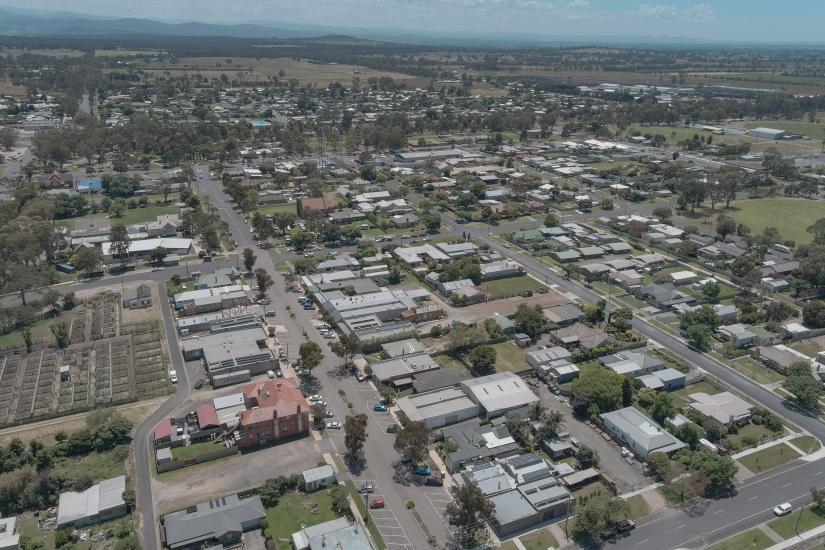
Aerial shot of Heyfield, Victoria

Heyfield is a town of around 2,000 people located in Wellington Shire, Victoria. Heyfield had reported network reliability issues, and the town is on the fringes of the electricity distribution network.

With a long track record in sustainability initiatives and considerable potential for low-cost and local energy, Heyfield was an ideal location to pilot a new approach with a community at the helm.

"This project is part of an exciting trend in our region that is seeing renewable energy transition accelerating..."

– Ian Bye, Wellington Shire Council Mayor

The project received funding under the Australian Government’s Regional and Remote Communities Reliability Fund Microgrids. It also received funding from the Latrobe Valley Authority (LVA) as part of the Gippsland Smart Specialisation Strategy.

Climate change is a number-one priority for Heyfield’s council and the town was identified as a key locality for renewable energy development.

Wellington Shire Council Mayor, Ian Bye said, “This project is part of an exciting trend in our region that is seeing renewable energy transition accelerating within Wellington Shire. With the scale of investment and the demand for more sustainable communities, we couldn’t be happier to discover what a renewable energy future could look like for the town of Heyfield.” 

Community engagement 

The MyTown project was not just about wires and technology; it was about hearts and minds. Community engagement was the cornerstone of this transformation.

A microgrid is a technical option that can have far-reaching implications for all members in a community. Local representation through engagement activities and two-way communication with Heyfield residents and businesses were vital for the project’s success. 

Community workshops, programs with the local schools’, webinars and on-street engagement all captured Heyfield community members’ ideas to understand their own driving motivations and guide the primary direction of the project.

These exercises identified that the community also wanted to maximise complementary social and economic development outcomes to improve the position of Heyfield and the surrounding region in a low-carbon, climate resilient future.

MyTown Microgrid: A community's energy journey
ppeaHU3jzW8

Transcript

[Julie Bryer:] MyTown was originally an idea that I had. I went to the community, to different businesses, and asked them if I could get a grant for solar to put solar on their roof, and they would buy from us, pre the meter. Everyone that I approached said yes, and Scott and Fran helped us along our journey. We did apply for one grant. We weren't successful, and then UTS helped us do a second grant, and this is the MyTown Microgrid. So, it's been a fantastic journey.

[Wendy Farmer:] Across Gippsland, there are lots of different energy programs taking place. There are lots of communities rising up and actually wanting to empower their communities with energy.

[Dr Simon Wright:] Heyfield is different because it's being collectively owned and driven from the grassroots, and that makes a massive, massive difference. It's also ambitious. It's aiming to deliver an entire solution from generation to distribution, and it's a solution at multiple levels: households, small businesses, and also industry.

[Ed Langham:] We've been helping to support the Heyfield community to develop a business plan throughout this process—really trying to translate the technical analysis into what that means for getting their hands dirty and actually delivering projects. So, setting up an entity or an institution to actually take the activities forward, understanding what kind of scale of investments and community participation might be required, and the kind of activities they'll need to undertake, and key partnerships to be made to make the project work. So, it's different in terms of its ambition, its complexity, but most importantly because a large part of the community is engaged and there is a community vision and real ambition there.

[Tim McCoy:] The most important part about any community energy project is collecting data, and you're going to need a lot of it. It might be from the electricity network, from people's smart meters, or even from the consumers themselves. We've installed 100 Wattwatchers energy monitoring devices just like this in people's homes and businesses, so we can capture this data directly.

[Jess Cox:] I do have a Wattwatchers monitor. I think I was actually the first person to get one, and it's been really interesting to watch the graphs and see how my power is being used during the day. That data is available to the community at the displays we've installed at the post office, the community resource centre, and one of the schools. The research team can actually access the same data through the Wattwatchers cloud and our APIs.

[Velleda Bradford:] The MyTown Microgrid is a really good program that helps the school and our students understand more of the benefits of the solar panels, and also with the link with the community of Heyfield. What we're hoping is to really use the graphs and MyTown grid program and educate our students so they are aware of energy efficiency.

[Teacher:] Now can you tell me, do you know how the solar panels work?

[Student 1:] So, the sunlight comes down and generates electricity to power the laptops, phones, fridges and microwaves.

[Teacher:] What happens to the electricity we don't use?

[Student 2:] It gets shared around the town for other people to use.

[Student 3:] It goes to the grid.

[Teacher:] It goes to the grid, and other people can use that electricity.

[Jess Cox:] It's fantastic to be able to see the curves and the graphs showing how much we generate, how much we use, and as well how much we share with the rest of the community. Energy data alone is not enough, so we had all the participants complete a survey about the type of their house, how they use their major appliances like heating and cooling, so that we had a complete picture of how they're using their energy, and we bring this together for all of the community devices.

Using my Wattwatchers app, I can optimise the use of my solar system by seeing what I'm consuming, seeing what I'm putting back into the grid. So, for example, if I can see that it's producing a lot of solar, I turn the dishwasher on or I put a load of washing on. But if it's not producing enough to cover that, then I'll just hang on and wait for the middle of the day to turn those things on.

It's really important to actually involve all of the different sectors throughout the engagement process—from the residents to small businesses to larger businesses like the mill—because without any one of those, you really don't have a full picture of what's happening within the town, and you can really only tap a portion of the opportunities if you don't engage with them.

[Vince Hurley:] ASH being such a large user of electricity, it means that we've got to be considered in how we use our electricity and how the microgrid may feed in, or in fact how our own electricity generation feeds out and into the Heyfield microgrid. It's very important that we are part of that equation, particularly because of our size, our energy needs, and our potential to generate large amounts of electricity in times when solar is not operating.

[Rosemary Dunworth:] On a community level, I'd like to see the creation of our own retail group which would be able to generate our own electricity, and we would be able to buy back the electricity.

[Peter Berryman:] If Heyfield just went down with an autonomous retail setup, I think that would be sufficient. Then at least you get value from spending the dollars, putting the solar on the roof, and then giving the opportunity for the locals on that same retail setup to buy their power at a cheaper rate. This would be good, especially for people who can't afford to put solar panels or batteries or things like that in their homes. The whole community would actually benefit from the generation and use of our own electricity.

Solar would work for us with solar batteries, because what we need is a constant supply of electricity. We can't afford for power to fluctuate in its supply to us. So, in order to put a solar capacity in to help us with our generation, we also need to put in a large battery store. At the moment, that doesn't stack up for us.

I think the most important things for a community to consider with a business plan are, at first, their capability and what are the skills and resources that exist within the local community, and how can they mobilise those in the given business model that you choose. Perhaps the most important thing of a community energy solution is that all of the value stays in the local community, the money stays in the local community, and it gets recycled into local businesses and spent locally. So value is really important for the community. Also, in terms of building community resilience and engagement, it's wonderful. There are so many flow-on benefits, but if it's driven from the ground up by the community, owned by the community, and the value retained in the community, then it's absolutely perfect.

The other element that we've been taking them through really carefully is their appetite for risk, because there are certain things that communities can and can't do, or do want to do and don't want to expose themselves to. So it's really understanding that balance between capability and risk of what kind of roles they can undertake to be able to achieve the community goals.

[Emma Birchall:] For Heyfield itself, it's really the creation, I hope, of an ongoing community energy group who can actually take the findings of the feasibility study forward and actually begin lobbying for additional funding to actually make some of their goals a reality.

[Dr Scott Dwyer:] Heyfield's journey is going to be very similar, I think, to a lot of other communities. So, while they're at the very beginning, it makes it a lot more difficult because they're looking for other communities to say, well, who can we learn from? Who is out there who has been through the same experience? And there's not that many. Heyfield are, again, right at the bleeding edge. So, really, the next communities that come along will be looking for our project to make it easier, quicker, faster for them to understand what makes sense for them and how to make energy work better for their towns.

So, one of the big outcomes of this project is an online decision support tool that we'll be making publicly available, so other communities can actually get a kickstart on their own project. It's going to have really important information about different types of energy sources and how you might structure community energy projects, as well as distil all the important lessons and learning that we've had here in Heyfield. Everything that we have learned to date encapsulated in a really user-friendly online tool for other communities.

There's a lot of data that you need to get for a project like this, and it's important to know up front for those new communities what data they will need and some of the data that they might not necessarily need, and how they can go about getting that. Ultimately, a tool like this is going to help other communities accelerate their projects a lot faster.

Over 85% of the people in this town would actually want to see Heyfield be 100% renewable, and I think we have very much the foundations to actually make that change and to ensure that everybody benefits from renewable energy in the future.

Heyfield one step further to building its energy future 

Approximately 100 energy monitoring devices were installed in 70 homes, 15 businesses, and 2 schools.

ISF Research Director Dr Scott Dwyer said, “We discovered that a microgrid didn’t offer enough benefit for the town – but we also discovered some other options that look much more promising.”

Several other local energy options emerged as potentially more feasible for the Heyfield community while remaining well-aligned with their aspirations. 

A town-scale smart energy upgrade and electrification program was identified as a more promising solution for the Heyfield community to focus on for the future. Community-scale batteries that can increase the amount of new solar in the community was another viable pathway.

"Now Heyfield knows exactly where it needs to focus its efforts, while it has already built the capacity and knowledge it needs for the next step in the journey towards a better and fairer energy future"

– Dr Scott Dwyer, ISF

Focusing on building community retailer partnerships and a closer working relationship with the local timber business were all identified as promising options for Heyfield’s energy future.

“Now Heyfield knows exactly where it needs to focus its efforts, while it has already built the capacity and knowledge it needs for the next step in the journey towards a better and fairer energy future”, explains Dr Dwyer.

Leveraging the knowledge gained, the project has given birth to two invaluable online resources. 

The first is the ADEPT platform, a centralised system that aggregates the energy data collected. The second, the MyTown Energy app, is an intuitive online app designed to help other communities in navigating the process of selecting the most suitable energy options for their unique circumstances.

Community representatives have also established MyTown Energy Heyfield as an ongoing community energy group. With over a dozen community members having been involved in the project over the three years, they will now focus on taking the prioritised local energy options towards implementation.

Heyfield has also recently been awarded funding through the Victorian Government’s Neighbourhood Battery Initiative (NBI).

This will build on the feasibility work conducted during the MyTown Microgrid study and ISF will again collaborate as the project’s academic partner over the next year. 

Realising energy goals 

The MyTown Microgrid project has revolutionised Heyfield’s energy landscape.  

While a microgrid proved to be the wrong fit for the town, the MyTown process has helped bring the community closer to reaching their energy goals and unlocked new opportunities for other local energy solutions.

Pioneering sustainable energy solutions, the project also serves as a great blueprint for powering other edge-of-grid towns Australia-wide. It has developed the knowledge and tools to make it faster, easier and cheaper for other regional communities to understand local energy propositions for their towns.

The project is a testament to the power of innovation, community engagement, and a commitment to building a greener future.

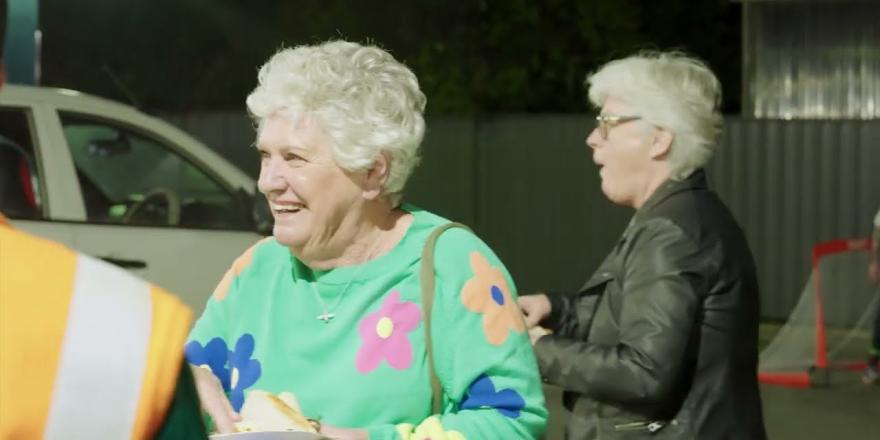
MyTown Microgrid: A community celebration
mijBL2UBe_4

Transcript

This evening is about saying thank you to the people of Heyfield for their participation in the project, for providing access to their homes, businesses and schools, and their energy data. What a wonderful way to end a three-year project dedicated to renewable energy transition throughout the vibrant community of Heyfield.

We're celebrating the end of a feasibility project for Heyfield. However, it's by no means the end of the energy transition journey for Heyfield and for so many other communities. We discovered that the benefits of a microgrid for a town like Heyfield weren't big enough, and there was not enough benefit for everybody. We discovered that there were other options that were more promising, that could deliver cost-effective, locally produced energy with benefits for more people in the town.

I guess we sort of have a bit of an idea of where we'd like to go now for the future with Heyfield, hopefully. And I think we certainly have an idea of what possibly will work and what won't work. The legacy of this project goes on. You can see the decision support tool work down the back there, and that will be spread to other communities.

So the four main outcomes from the project, following the feasibility, we've been able to understand this is where we want to focus. So firstly, a smart energy upgrade and electrification programme for the town. Secondly, the CRG will be looking to take forward community-scale batteries. Thirdly, looking at a community energy retailer partnership. And lastly, a closer working relationship with ASH to support their investigations into wood waste and bioenergy.

It's got the community together. The community is very sustainable. And if it can get up and running and the next phase comes, Heyfield shines the light everywhere. I think it's a great thing for Heyfield because it can bring the communities together in a way, since they're all working together to save power.

The whole study has been a major learning curve for many of us. But I think that one of the most important learnings was social, in that we learned as a group of diverse people with a multitude of differing skills, who lived all over the country, and indeed all over the planet, we could come together and find solutions for our projects in a really amicable and collegiate manner.

And that it would be possible to replicate this study and way of working in many small towns across the country. If you have a vision, keep on persisting, because it can pay off. And it's a very rewarding thing to try and do for your community.

[Visuals throughout include community members at an event, solar panels on rooftops, schoolchildren interacting with energy displays, and local businesses participating.]

Scott Dwyer

Scott Dwyer

Research Director

DVC (Research)

Jay Rutovitz

Jay Rutovitz

Research Director

DVC (Research)

Ed Langham

Ed Langham

Research Director

DVC (Research)

Soheil Mohseni

Soheil Mohseni

Industry Fellow

DVC (Research)

Project leads

  • Wattwatchers Digital Energy
  • Heyfield Community Resource Centre

SDGs  

Icon for SDG 11 Sustainable cities and communities

This project is working towards UN Sustainable Development Goal 11. 

Read about ISF's SDG work

Explore Energy

Energy; Institute for Sustainable Futures

Research Centre

Years

  • 2020-2023

Location

  • Heyfield, Victoria

Funded by

  • Australian Government’s Regional and Remote Communities Reliability Fund (RRCRF) ­­– Microgrid Program (Round 1)
  • Victorian Government’s Latrobe Valley Authority (LVA)

Partners

  • Public Interest Advocacy Centre Ltd. (PIAC)
  • Federation University Australia, AusNet Services
  • RMIT University, Latrobe Valley Authority (LVA)
  • Community Power Agency (CPA)


Share