

- Posted on 26 Jun 2024
- Updated on 26 Jun 2024
- 3-minute read
Investigating promising early stage use cases for the strategic integration of EVs within fleets, precincts, and regional business contexts.
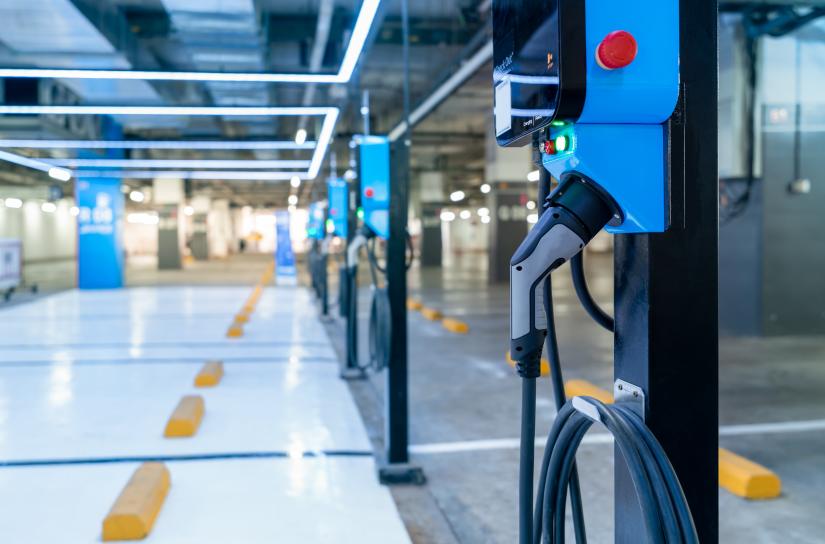
The growing adoption of electric vehicles (EVs) will create many opportunities and challenges across the energy and transport sectors. It calls for new research and greater industry collaboration to enhance outcomes and inform efforts across Australia and around the world.
At the beginning of 2022, the Australian Strategic EV Integration (SEVI) project received $3.4m in funding from the RACE for 2030 CRC. The funding would bring a transdisciplinary team together to investigate the strategic integration of EVs and energy storage through a series of partner-led demonstration projects across fleets, precincts, and holiday parks. The demonstration projects will run until the end of 2025 simultaneously in three states: New South Wales, South Australia, and Western Australia.
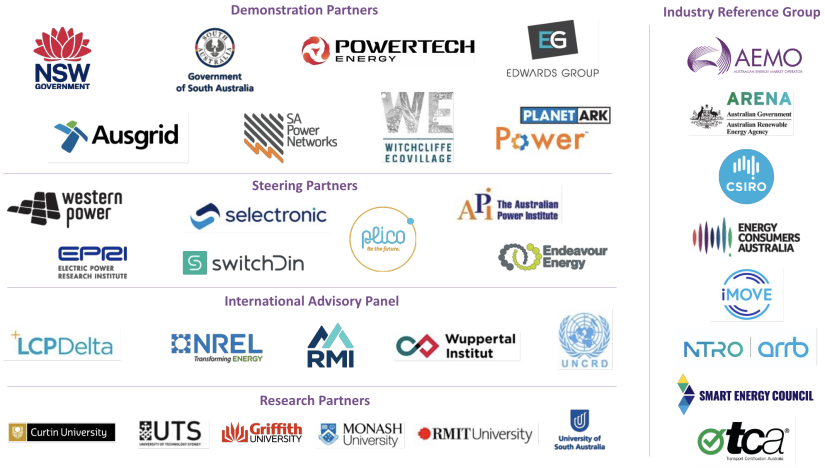
Led by the UTS Institute for Sustainable Futures (ISF) and the Curtin University Sustainability Policy Institute (CUSP), the research team of experts is drawn from six universities across four states. 28 partners from industry and government are involved in the project, representing both national and international leaders in their sectors.
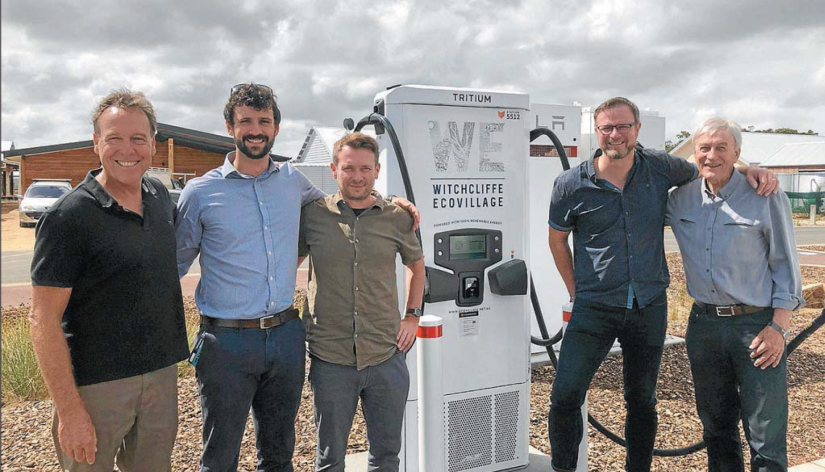
The SEVI team launch the EV charging station at Witchcliffe Ecovillage in WA. [l-r] Mike Hulme, Ben James, Scott Dwyer, Dr Charlie Hargroves, and Distinguished Professor of Sustainability at Curtin University, Peter Newman AO. Photo supplied.
Project impact
As part of its research program, SEVI is exploring how EVs interact with the grid, embedded networks, microgrids, and buildings that involve a range of energy storage options. It will also:
- provide policy and regulatory recommendations
- analyse the business models and value propositions
- undertake energy system modelling
- assess the network impacts.
Results from this project will build understanding and confidence in the benefits of EVs among consumers, industry, and policymakers. How well EVs are integrated within different contexts and across its different jurisdictions will have long-lasting implications for Australia. To maximise the opportunities, strategic cooperation between government, industry, and research sectors will be necessary on the road to decarbonise transport through electrification.
MEDIA
Connecting EVs across Australia’s energy grids – Energy Magazine, August 2023
Australia’s adoption of electric vehicles has been maddeningly slow, but we’re well placed to catch up fast – The Conversation, April 2023
ISF is driving Australia’s EV future – ISF news, April 2023
The race to integrate electric vehicles is charging ahead – RACE for 2030, March 2023
Researchers






Partners
SDGs
This project is working towards UN Sustainable Development Goals 7, 9 and 11.
Energy; Institute for Sustainable Futures
Research Centre
Years
- 2022-2024
Location
- Australia
Client
- CRC RACE for 2023
| Sustainability |