


How UTS alumnus Rathana Chea is working on global change.
UTS graduate Rathana Chea works across strategy, systems change and social impact.
Today he leads organisations operating internationally, advises philanthropists and investors, and mentors other leaders navigating complex global challenges.
His work focuses on what he calls “values-based change making” across issues such as climate, human rights and responsible business.
“The focus of all my work across all the entities I manage is values-based change making,” he says.
“My partners, clients and team members know that all change is connected.”
A typical day involves working across multiple time zones with boards, teams and clients. Alongside leading organisations, he also supports other CEOs and contributes to several advisory boards.
Many of these conversations focus on how organisations respond to complex challenges.
“In the external world you cannot be working on climate change without working on human rights,” he says. “In the same way inside organisations you cannot work on new sector strategies without working on your people and talent strategy. Everything is connected through systems.”
While the scope of the work is global, in recent years much of it now happens from his home office where he balances leadership responsibilities with caring for his elderly parents.

“You do not need to have your entire life mapped at 18 or 21. What matters is paying attention to what energises you.”
Rathana Chea
Studying Communications and Law at UTS
When Rathana first arrived at university, his ambitions looked very different.
“I began at university convinced I would either become a documentary filmmaker or a human rights lawyer,” he says.
“Film school appealed to my desire to tell stories about the world. Law appealed to my desire to fix it.”
To explore both interests, he enrolled in a double degree in Communications and Law at UTS.
During his studies he discovered a strong interest in social and political systems. He moved away from media production and focused more deeply on the social sciences.
“Eventually I dropped Media Arts and Production specialisation and gravitated toward Social Inquiry, now called Social and Political Sciences.”
Social and Political Sciences at UTS explores how institutions, power and social structures shape societies.
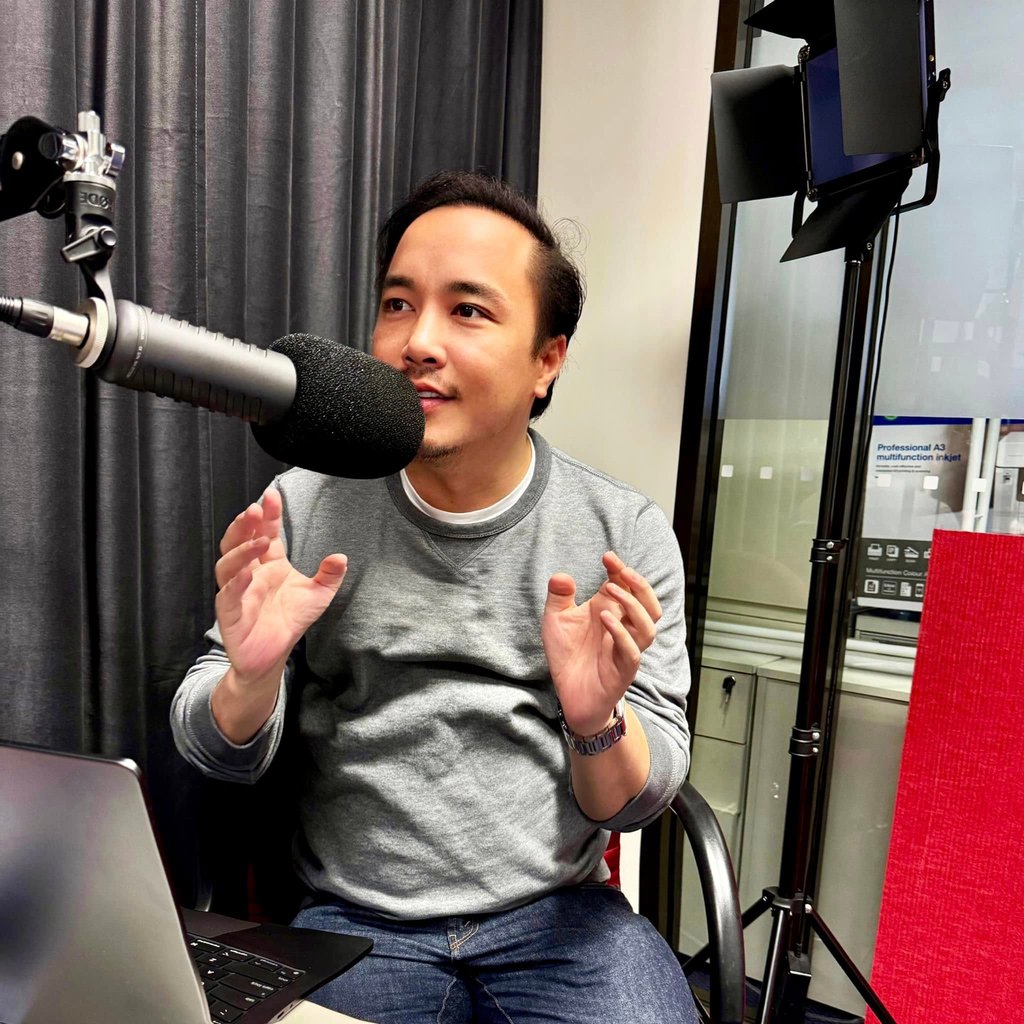
Why Rathana Chea chose UTS
Rathana says the university’s practical approach to learning stood out from the beginning.
“I’m a practical person. That’s what drew me to UTS. Its culture of being practical is unapologetically applied to everything.”
While some friends at other universities focused primarily on theory, he found UTS constantly brought ideas back to real-world application.
“My UTS lecturers and tutors consistently asked a different question: how does this work in practice? How does it apply to industry, to business, to government, to civil society?”
“That bias toward no nonsense application of knowledge has shaped my entire career after university.”
Studying in the middle of Sydney
Campus life also played an important role in his experience.
Rathana was active in the student association and student union, regularly participating in discussions about policy, politics and social issues.
The university’s location in the centre of Sydney added another dimension to learning.
“UTS was embedded in the city,” he says. “There was no buffer. You stepped out of class and into the spectacle.”
For him, this made studying social and political systems feel immediate and real.
“Society wasn’t a case study. It was right there, crossing at the lights, running late, spilling coffee, rewriting the rules in real time.”
I’m a practical person. That’s what drew me to UTS.
Career impact: environmental protection, human rights and global policy
Since graduating, Rathana has worked on a range of international initiatives aimed at shifting policy and industry practices.
These efforts have contributed to outcomes including forest protection policies, restrictions on harmful pesticides, changes to global supply chains and international environmental agreements.
“Of all I have achieved in my career, the honest answer to what am I most proud of, is the moments where something shifted that was not supposed to shift,” he says.
Those moments rarely start with certainty.
“They begin with a small group of exhausted humans in a room, staring at a whiteboard, asking whether we are being naïve.”
You can learn more about Rathana's work on his website.
He also writes about global issues, including this recent and deeply personal piece in The Guardian.
Advice for students considering UTS
For prospective students trying to decide what to study, Rathana encourages curiosity and flexibility.
“You are not choosing a life. You are choosing a direction,” he says.
University, he explains, is a place to explore interests and develop the skills needed to engage with the world.
He also encourages students to seek out real-world experience alongside their studies.
“Put yourself in environments that expose you to reality. Volunteer. Work part-time. Sit in rooms where you are not the smartest person.”
And perhaps most importantly, do not rush certainty.
“You do not need to have your entire life mapped at 18 or 21,” he says. “What matters is paying attention to what energises you.”

Han’s vision: turning passion into a career at 10 News First
Han Nguyen's path from UTS to 10 News First is a testament to embracing opportunities.

What can you do with a media arts degree? 7 careers in film, television and screen production
Wondering what you can do with a media arts degree? Explore seven careers across film, television, digital content and screen production, from directing to...
Why study screen production at a postgraduate level?
Already have a screen media degree or industry experience? Discover how postgraduate screen production study at UTS can help you specialise, build your...

What can you do with an animation degree?
Wondering what you can do with an animation degree? Explore six animation careers, from character designer and storyboard artist to animation producer.
Han’s vision: turning passion into a career at 10 News First
Han Nguyen's path from UTS to 10 News First is a testament to embracing opportunities.
What can you do with a media arts degree? 7 careers in film, television and screen production
Wondering what you can do with a media arts degree? Explore seven careers across film, television, digital content and screen production, from directing to...
Why study screen production at a postgraduate level?
Already have a screen media degree or industry experience? Discover how postgraduate screen production study at UTS can help you specialise, build your...
What can you do with an animation degree?
Wondering what you can do with an animation degree? Explore six animation careers, from character designer and storyboard artist to animation producer.