


Oliver Whitehouse has been awarded the inaugural University of Technology Sydney (UTS) Netflix Best Director prize for his short film ANATOMIES.COM, recognised at the Faculty of Design and Society’s Creative Production Showcase and Awards Night.
The annual event highlights the strongest work from graduating Media Arts and Production students.
Sponsored by Netflix Australia and New Zealand, the local arm of the global streaming entertainment service, the award recognises emerging directing talent and connects student filmmakers with industry.
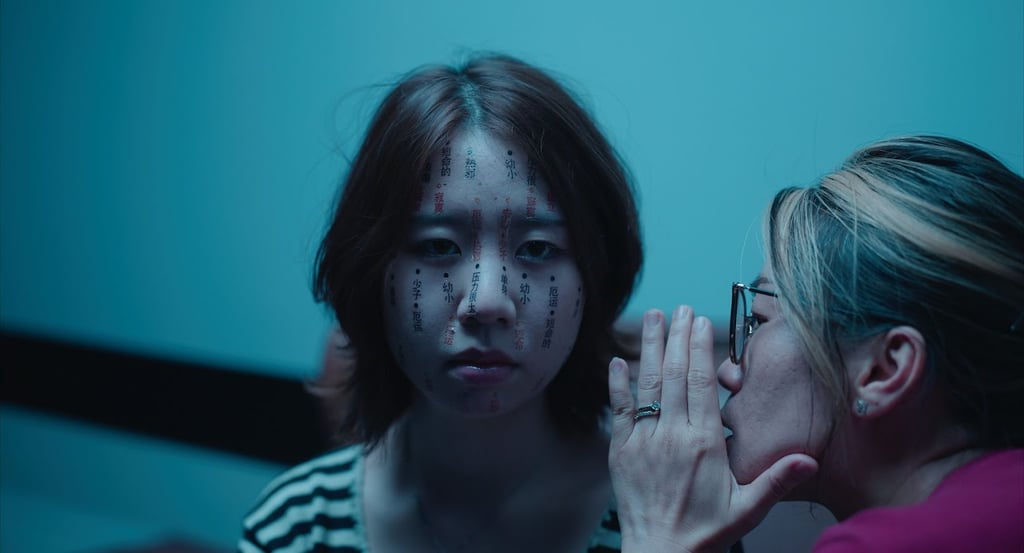
Exploring identity in a post-digital world
ANATOMIES.COM began with a question that shaped the entire project.
“What remains from a person's identity in a post-digital age, where the boundaries between physical and online reality have become increasingly blurred?”
The film opens with the line: “His username was k05, but I never knew his real name”. Delivered as a ghostly voiceover, it sets the tone for a story that follows two isolated individuals who find connection through an online identity-altering platform.
For Oliver, the film reflects a broader sense of disconnection.
“We’ve become disillusioned or dissociated ‘ghosts’ of ourselves in a post-internet world, a space where every interaction is mediated through chatrooms, media, digital signs, and signals.”
From experimentation to final film
The film’s distinctive aesthetic draws directly from Oliver’s studies, now offered through the Bachelor of Creative Production in Media Arts.
“My audiovisual installation Altérer, created whilst studying the Experimental Media subject, explored similar ideas,” he says. “Much of my conceptual research into Baudrillard’s theories, Mark Fisher and glitch art ended up informing the story and aesthetic approach.”
Techniques he experimented with during his degree, including datamoshing and analogue glitch effects, became central to the film’s visual language.
Subjects such as Creating Documentary also shaped how he approached storytelling.
“It taught me a lot regarding how to use voiceover to shape implicit connections between images and storylines.”
The craft of directing and editing
Oliver both directed and edited the film, describing editing as a deeply personal process.
“I heard someone once say editing is ‘the heartbeat of a film’, which to me is true.”
For him, editing is where the film is discovered. “It feels a bit like attempting to tame a wild animal or solving a puzzle that doesn’t quite fit together.”
While he was closely involved in every stage, collaboration remained essential. He worked alongside assistant editor Caitlin Mesina and producers Siena Bordignon, Mervyn Chiu and Andreas Karadjis.
“Pressing the export button was not just a relief but also a wonderful feeling in itself,” he says.
A pathway shaped at UTS
Oliver graduated from the Bachelor of Media Arts and Production in November last year, with Writing and Publishing as his second major.
He chose UTS for its focus on practical filmmaking.
“For film, UTS seemed to me one of the only realistic options which provided firsthand experience creating films rather than being limited to studying them,” he says. “When I visited UTS I was also impressed by the facilities and equipment.”
His interest in film started early.
“My grandfather introduced me to arthouse films at an early age since he did not believe in accommodating children's tastes, and since then I have been enamoured with the medium.”
At school, he gravitated towards creative writing and visual arts, seeing film as a way to combine both.
Building skills and connections
Reflecting on his time at UTS, Oliver points to both the creative and practical impact of the course.
“Studying at UTS has been hugely influential for me. I’ve found friends who are like-minded in many ways, learned how to operate industry level equipment, and emerged with a strong portfolio of various creative works that have led to many paths in my career.”
Alongside his studies, he gained industry experience as a production assistant at Odd Assembly and as a production intern at Electriclime Films through UTS. These roles helped him better understand professional workflows and expectations.
He now works as a freelance video director and photographer, while also working part time at UTS in the MediaLab equipment store.
Industry recognition
Associate Professor Alex Munt, who teaches directing at UTS, says; “Screen directing is a complex and challenging pursuit for our students. Oliver showed his skills in directing performance and directing the camera in ANATOMIES.COM. This short film will fare well on the film festival circuit, in Australia and internationally”.
Professor Rachel Landers, Head of Media Arts and Production, Animation, and Music and Sound Design, adds; “Industry prizes like the UTS Netflix Best Director award are evidence of the excellent storytelling skills of our students and play a significant role in connecting our courses and students with industry”.
Oliver has also received UTS Best Experimental Director for the same film, while his earlier project MYTH received the Tarkovski grant and Best Experimental Film at the Sydney World Film Festival.
For film, UTS seemed to me one of the only realistic options which provided firsthand experience creating films rather than being limited to studying them.
Looking ahead
Oliver plans to use the Netflix prize to continue making work.
“I have already used some of the prize to buy myself a camera and some equipment, in an effort to motivate myself to continue creating.”
The remaining funds will go towards a new project for an exhibition at Machine Hall, exploring generational decay through a series of vignettes.
He hopes to keep building a career as a freelance director, particularly in music videos, and eventually work internationally.
“My long-term goal is to shoot a film in China,” he says.
“Many of my favourite directors, such as Bi-Gan, Edward Yang and Kiyoshi Kurosawa are also from Asian countries and I believe there are many amazing things happening there. It would be a dream to both travel and work in foreign places.”
Advice for future students
For those considering studying film, Oliver encourages stepping outside familiar territory.
“Whether this was staying out too late to watch a movie, sending a cold email to a production company, or attending an event where I knew no one else, I never regretted pushing past the barrier of discomfort.”
It is this willingness to experiment, take risks and keep creating that continues to shape his work beyond graduation.
For students deciding where to study; “the facilities at UTS are industry standard, the subjects are interesting, and most importantly the teaching is down to earth”.
Han’s vision: turning passion into a career at 10 News First
Han Nguyen's path from UTS to 10 News First is a testament to embracing opportunities.

What can you do with a media arts degree? 7 careers in film, television and screen production
Wondering what you can do with a media arts degree? Explore seven careers across film, television, digital content and screen production, from directing to...
Why study screen production at a postgraduate level?
Already have a screen media degree or industry experience? Discover how postgraduate screen production study at UTS can help you specialise, build your...

What can you do with an animation degree?
Wondering what you can do with an animation degree? Explore six animation careers, from character designer and storyboard artist to animation producer.
Han’s vision: turning passion into a career at 10 News First
Han Nguyen's path from UTS to 10 News First is a testament to embracing opportunities.
What can you do with a media arts degree? 7 careers in film, television and screen production
Wondering what you can do with a media arts degree? Explore seven careers across film, television, digital content and screen production, from directing to...
Why study screen production at a postgraduate level?
Already have a screen media degree or industry experience? Discover how postgraduate screen production study at UTS can help you specialise, build your...
What can you do with an animation degree?
Wondering what you can do with an animation degree? Explore six animation careers, from character designer and storyboard artist to animation producer.