
A literature review may form an assignment by itself, in which case the aim is to summarise the key research relating to your topic. Alternatively, it may form part of a larger paper, such as a thesis or a research report, in which case the aim is to explain why more research needs to be done on your chosen topic.
Process of a literature review
click on each process for more information
Structure of a literature review
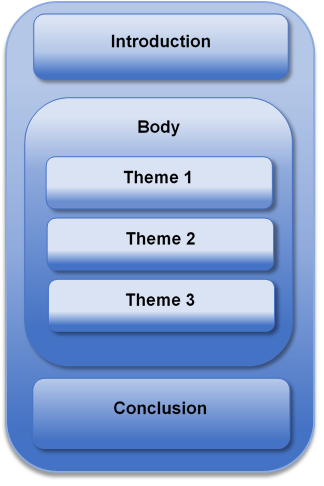
Introduction
The introduction is usually one paragraph in a short literature review, or series of paragraphs in a longer review, outlining:
- the content being covered,
- the structure (or how the review is organised), and
- the scope of what will be covered.
Body
- Literature reviews are usually organised so that each paragraph or section covers one theme or sub-topic.
- Each section ends with a brief summary which relates this theme to the main focus of the research area.
Conclusion
The conclusion summarises the main themes that were identified when reviewing the literature.
Click on each component for more information and some examples
Literature review as an individual assignment
If the purpose of your literature review is to summarise the existing literature on a topic, you will be expected to:
- summarise the most important (or most recent) literature on your specified topic
- discuss any common themes that emerge in the literature, such as similar types of research that have been conducted, similar findings from the research, or similar interpretations of the findings
- discuss any differences in the research findings or interpretation of evidence from the literature
- evaluate the strengths and weaknesses of the literature that you’re reviewing. Examples of things you might look for include:
- Does the author make any assumptions that weaken their claims?
- Are the author’s claims supported by adequate evidence?
- Was the research conducted in a way that is valid and credible?
- Is there anything missing from their discussion of the topic?
Literature review as part of a thesis or research report
If your literature review is part of a thesis or research report, as well as doing everything listed above, you will also need to:
- discuss ‘gaps’ in the current literature, which means finding important areas of research that have not yet been adequately covered, or for which further evidence is still required
- explain the significance of your research
- show how your work builds on previous research
- show how your work can be differentiated from previous research (i.e. what makes your research different from previous studies that have been done on this topic?)
Verb tense in literature Reviews
Always consider the verb tense when presenting a review of previously published work. There are three main verb tenses used in literature reviews. Please click on each occasion to check which verb tense is appropriate.