


- Posted on 7 Aug 2026
- 7 min read
Coral reefs around the world are under increasing threat. Climate change is driving mass bleaching events, and at current rates, less than 1% of the world’s reefs may remain by 2100.
For communities like those on Groote Eylandt, this is more than an environmental issue.
A crisis beneath the surface
Coral reefs are under growing pressure worldwide. Rising ocean temperatures, pollution and extreme weather events are accelerating their decline.
The fourth mass coral bleaching event (2023–2025) impacted more than 84 per cent of the world’s reefs. At the current rate of warming, scientists predict that less than one per cent could remain by 2100.
This is not just an environmental crisis. It is a human one. Around one billion people rely on reefs for food, income and cultural connection. Yet those most affected often have the least capacity to influence decisions about their protection, which is what led Genevieve Wilkinson and Emma Camp to propose a human rights-based approach to coral reef protection.
On Groote Eylandt, this tension is deeply felt. The island has a unique marine environment and strong cultural connections to Sea Country. At the same time, economic activity such as mining creates a complex balance between environmental care and livelihood.
A human rights approach to environmental protection
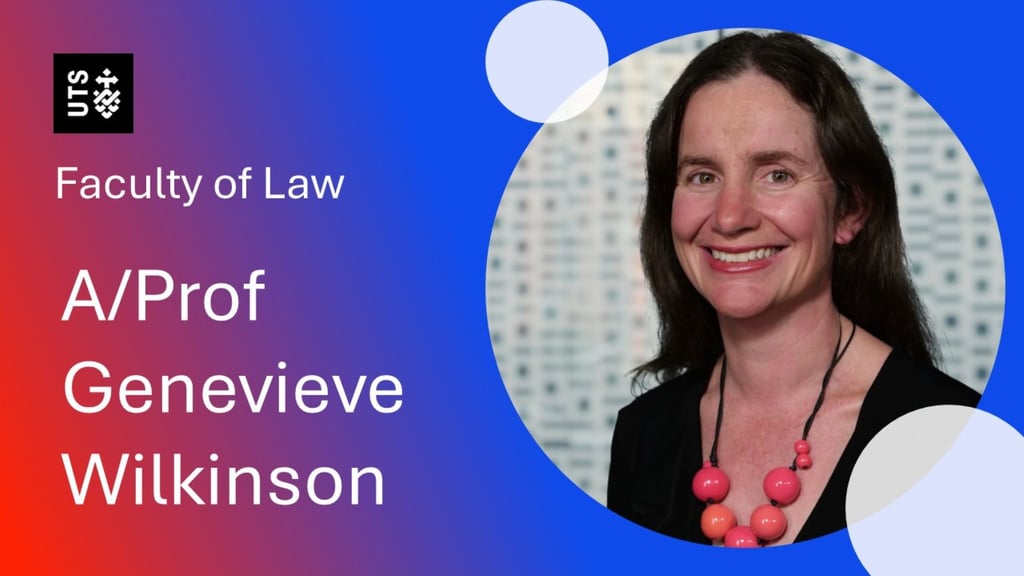
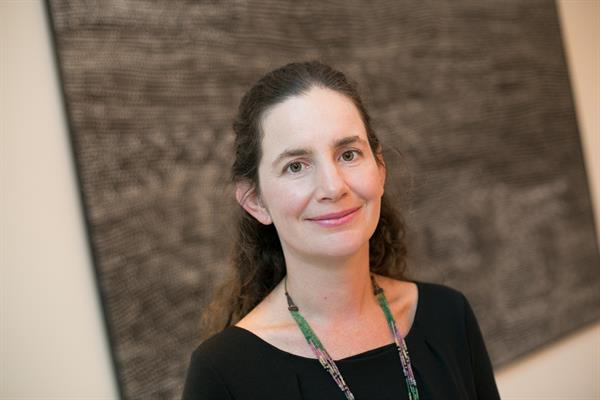
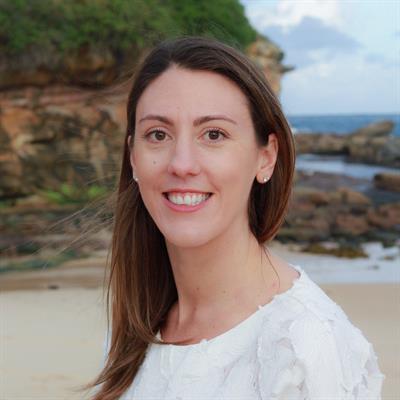
Led by Associate Professor Genevieve Wilkinson from UTS Law and Associate Professor Emma Camp from the Climate Change Cluster, with integral support from UTS researchers Dr Hadley England and Dane Wattle, the project explored how a human rights approach to coral reef protection could support local communities.
At its centre is the human right to a clean, healthy and sustainable environment (CHASE).
“Human rights can offer a shared language,” says Dr Wilkinson. “They help connect the critical impact of environmental change to people’s everyday lives and to accountability.”
Supported by a UTS Social Impact Grant, the interdisciplinary team worked in partnership with the Anindilyakwa Land and Sea Rangers, who protect and manage the island’s natural environment, bringing together expertise in law, coral science and community practice.
Learning On Country
In 2025, the team traveled to Groote Eylandt to work directly with the rangers, teachers and students. These conversations shaped the project from the ground up.
Rather than leading with theory, the team focused on listening and co-design. What emerged was clear: young people needed practical, engaging ways to explore reef protection and environmental rights.
Making reef systems real
At Alyangula Area School and Umbakumba School, students took part in hands-on learning sessions with one activity having an immediate impact.
In a simple classroom simulation showing the collapse of a coral reef ecosystem, students watched what happened when components of a reef ecosystem were removed. When one component was removed, the entire system began to fail.
“The kids loved this game,” says Annabelle Doheny a ranger with the Anindilyakwa Land and Sea Rangers during the project. “It sparked real conversation about how quickly things can change when the environment is out of balance.”
For many students, the lesson felt close to home and their lived experience of Sea Country.
A digital tool for long-term learning
To carry this learning forward, the team developed a simple, age-appropriate website explaining CHASE. Designed for different age groups, the website includes clear explanations, visuals and examples relevant to local environments.
“It was important that the resource felt practical and easy to use,” says Dr Wilkinson. “We wanted students to see how human rights relate to their everyday lives and understand how they can be used to make life better.”
But learning didn’t stop there.
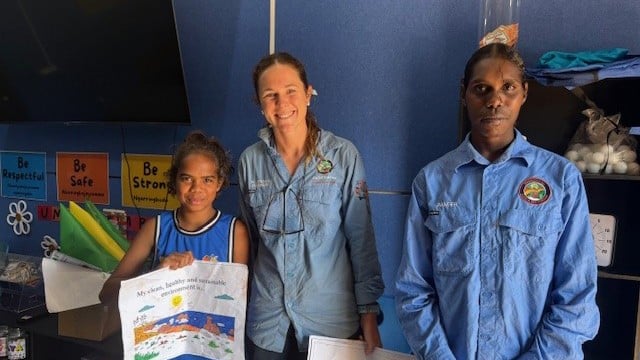
Students were invited to respond creatively, through artwork, writing, and storytelling. Thirty-two students, aged five to 14, took part and the results were striking.
“We were blown away,” says Doheny. “The depth of understanding and connection to Country really came through.”
The competition gave students a platform to express their ideas and to see that their perspectives matter.
Seeing the future in action
An unexpected highlight came through technology.
Delivered in partnership with Groote Aqua Aboriginal Corporation, students took part in an underwater drone demonstration, exploring how reef health can be monitored in real time.
The session helped bridge the gap between learning and real-world applications
Building awareness that lasts
The project led to greater awareness of coral reef protection and environmental rights among students and rangers.
But its impact reaches further.
By connecting human rights with lived experience, the project helps strengthen participation and understanding within the community.
“Awareness is a first step towards empowerment,” says Dr Wilkinson. “It creates the foundation for people to engage with decisions that affect their environment and their future.”
Grounded in a strong partnership with the Rangers, the work reflects local priorities and knowledge, not just research outcomes.
Looking ahead
While grounded in Groote Eylandt, the approach has wider potential. The website and learning model could support other communities facing similar challenges.
At its core, the project shows how global issues like coral reef loss can be made real, local and actionable.
And it shows the importance of starting early, by giving young people the tools to understand, question and care for the environments they are part of.
More information:
With thanks to:
UTS partner/s and collaborators
Associate Professor Emma Camp, Dr Hadley England and Dane Wattle
The grant application
Project leads
Associate Professor, Faculty of Law
Associate Professor, Faculty of Science
This project was supported by a 2025 UTS Social Impact Grant.
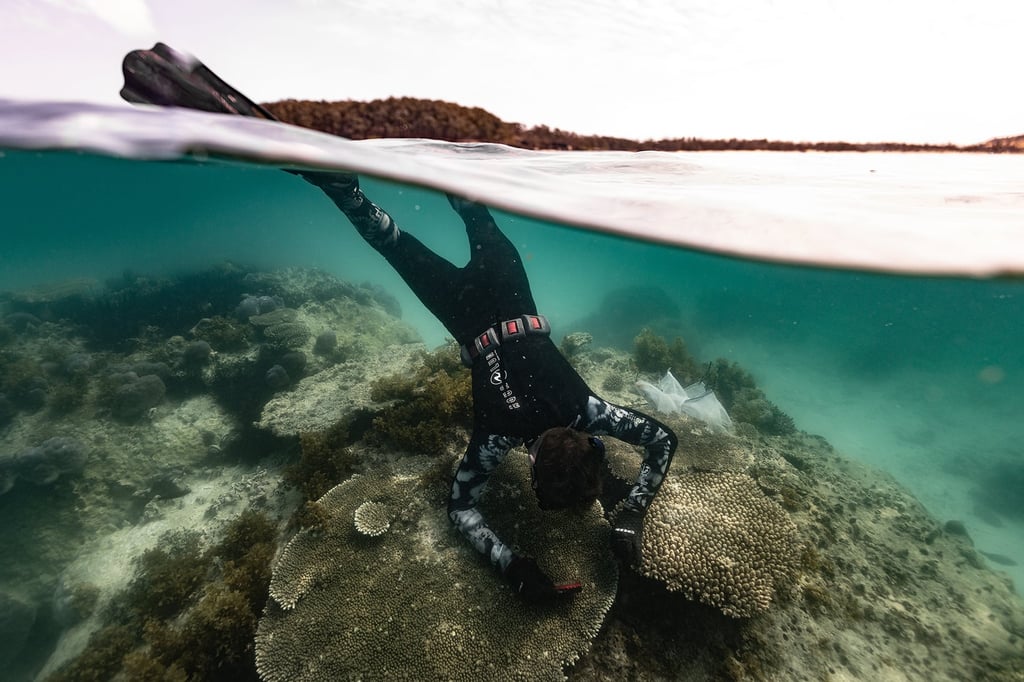
Rangers and scientists map vulnerable reefs in the Groote Archipelago
A two-year collaboration between Anindilyakwa Land and Sea Rangers and UTS scientists has delivered the first comprehensive scientific baseline for the corals...

Climate Adaptation: employment and productivity outcomes from investments in climate resilience
Evaluating the employment impacts of the $133 billion Climate Safety Plan.
Coral Nurture Program gives reefs a fighting chance
It all started with a boat.
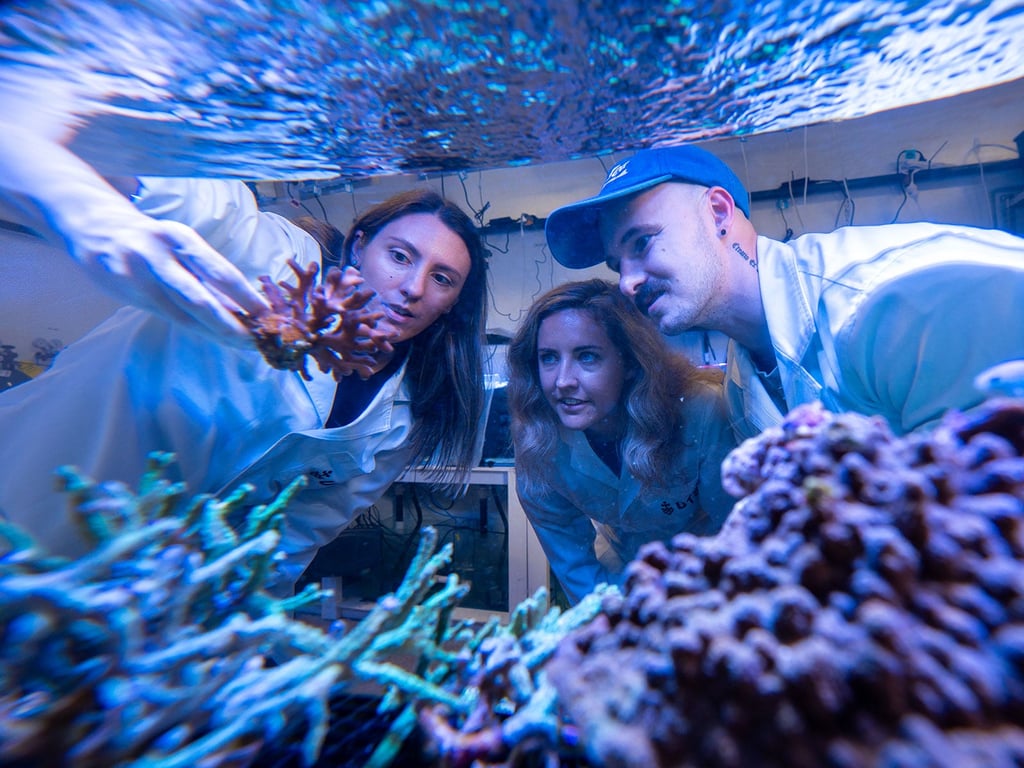
Safeguarding the future of coral reefs
With support from the Rolex Perpetual Planet initiative, Associate Professor Emma Camp is pioneering science-led approaches to reef restoration and resilience...
Rangers and scientists map vulnerable reefs in the Groote Archipelago
A two-year collaboration between Anindilyakwa Land and Sea Rangers and UTS scientists has delivered the first comprehensive scientific baseline for the corals...
Climate Adaptation: employment and productivity outcomes from investments in climate resilience
Evaluating the employment impacts of the $133 billion Climate Safety Plan.
Coral Nurture Program gives reefs a fighting chance
It all started with a boat.
Safeguarding the future of coral reefs
With support from the Rolex Perpetual Planet initiative, Associate Professor Emma Camp is pioneering science-led approaches to reef restoration and resilience...