


- Posted on 7 Oct 2025
- 8 minutes read
Australian-first testing technology and surveillance research is helping reduce the harm associated with injecting drug use.
Accidental drug overdoses took the lives of 1,768 Australians in 2023, more than were lost on our roads. Almost three-quarters of these deaths can be traced back to opioids and stimulants including methamphetamine.
With dangerous new synthetic opioids gaining a foothold, public health and law enforcement agencies are battling to reduce the harms associated with drug use.
Scientists at the UTS Centre for Forensic Science have joined the cause by using innovative testing technology to detect traces of drugs in used syringes.
Working closely with partners at the Australian Federal Police, NSW Ministry of Health and Uniting Medically Supervised Injecting Centre (MSIC), the team has embarked on an ambitious research program to save lives in the community.
“Forensic science is the study of traces and can help improve our understanding of complex societal problems such as the drugs people are injecting,” said Associate Professor Marie Mc Nerney (Morelato), who led the research.
“Different data sources can help us understand this complexity. Each provides us with a different perspective on illicit drug use.”
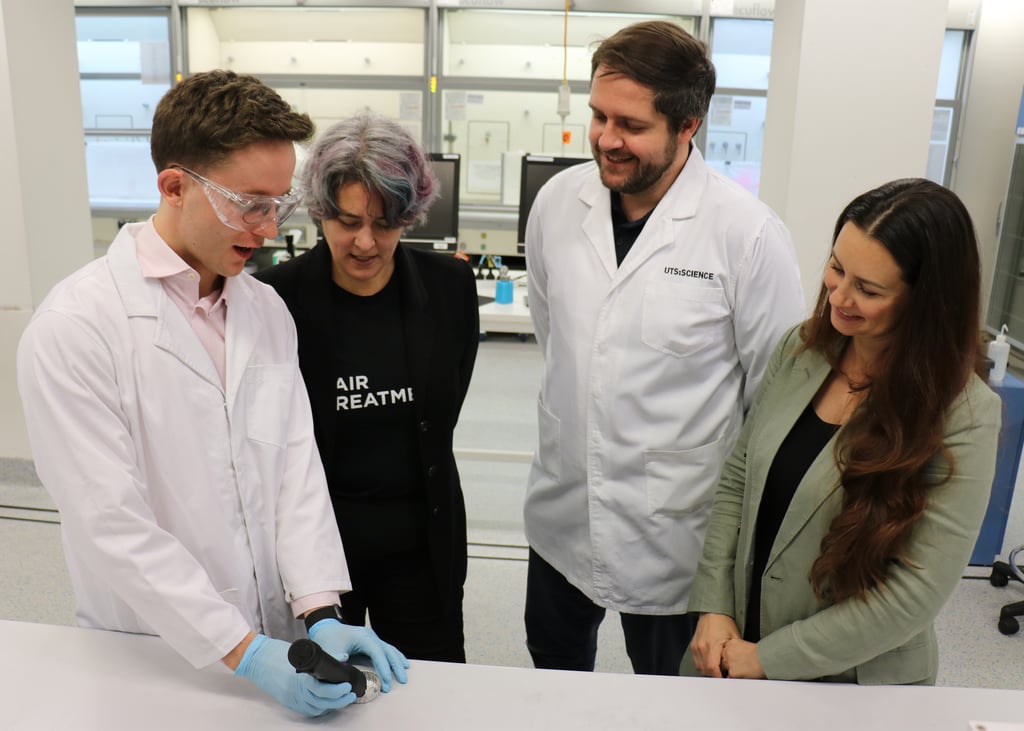
Rapid drug testing in the hand
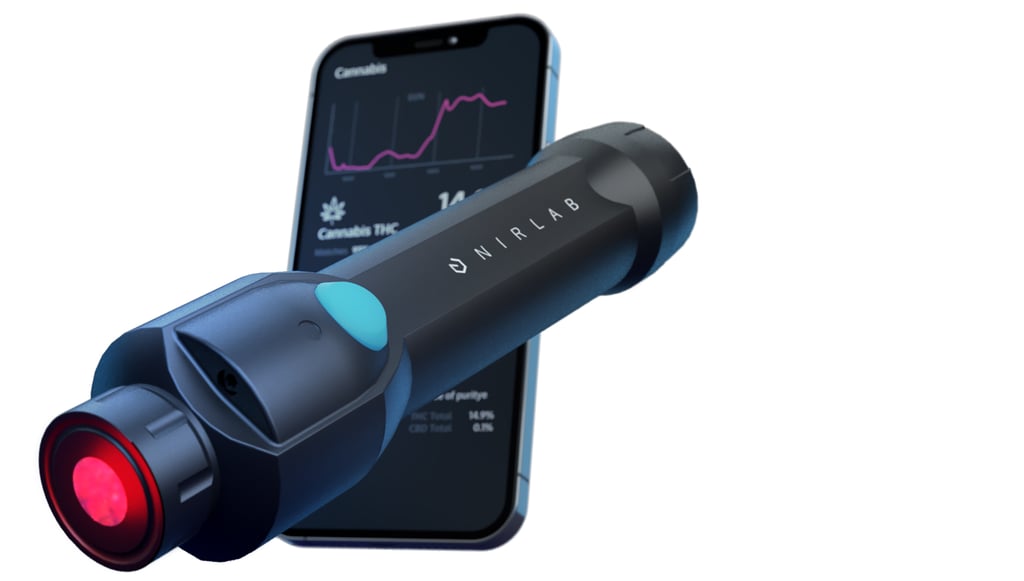
The handheld MicroNIR with NIRLAB platform defies its convoluted name. It’s a compact device that looks like a small black torch linked to an app on a mobile phone or tablet.
This cutting-edge testing tool uses near infrared spectroscopy to analyse any drug sample within five seconds, with more than 90 per cent accuracy for methamphetamine, cocaine and heroin.
Developed in Switzerland, the first MicroNIR unit was brought to Australia in 2019 by Marie Mc Nerney, with support from the Chief Scientist at the Australian Federal Police and the University of Lausanne, Switzerland.
That’s when a wide-ranging research project to adapt the MicroNIR to detect the drugs available on the Australian market began.
“The types of drugs that are consumed in Australia are different to those consumed in Switzerland. Methamphetamine, for example, is rarely consumed over there,” Marie Mc Nerney said.
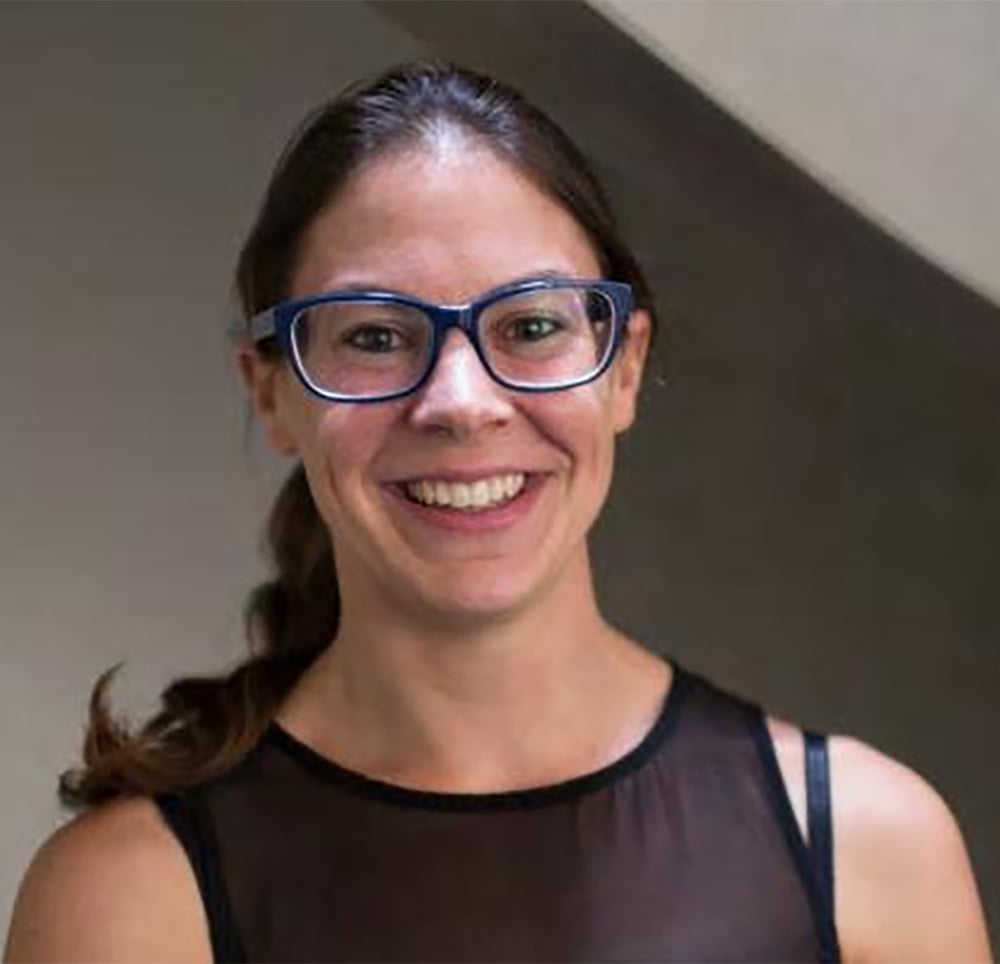
The MicroNIR uses machine learning to identify unknown specimens, but we simply didn’t have enough data to build the models on the chemical composition of illicit drugs in Australia
Associate Professor Marie Mc Nerney
UTS Centre for Forensic Science
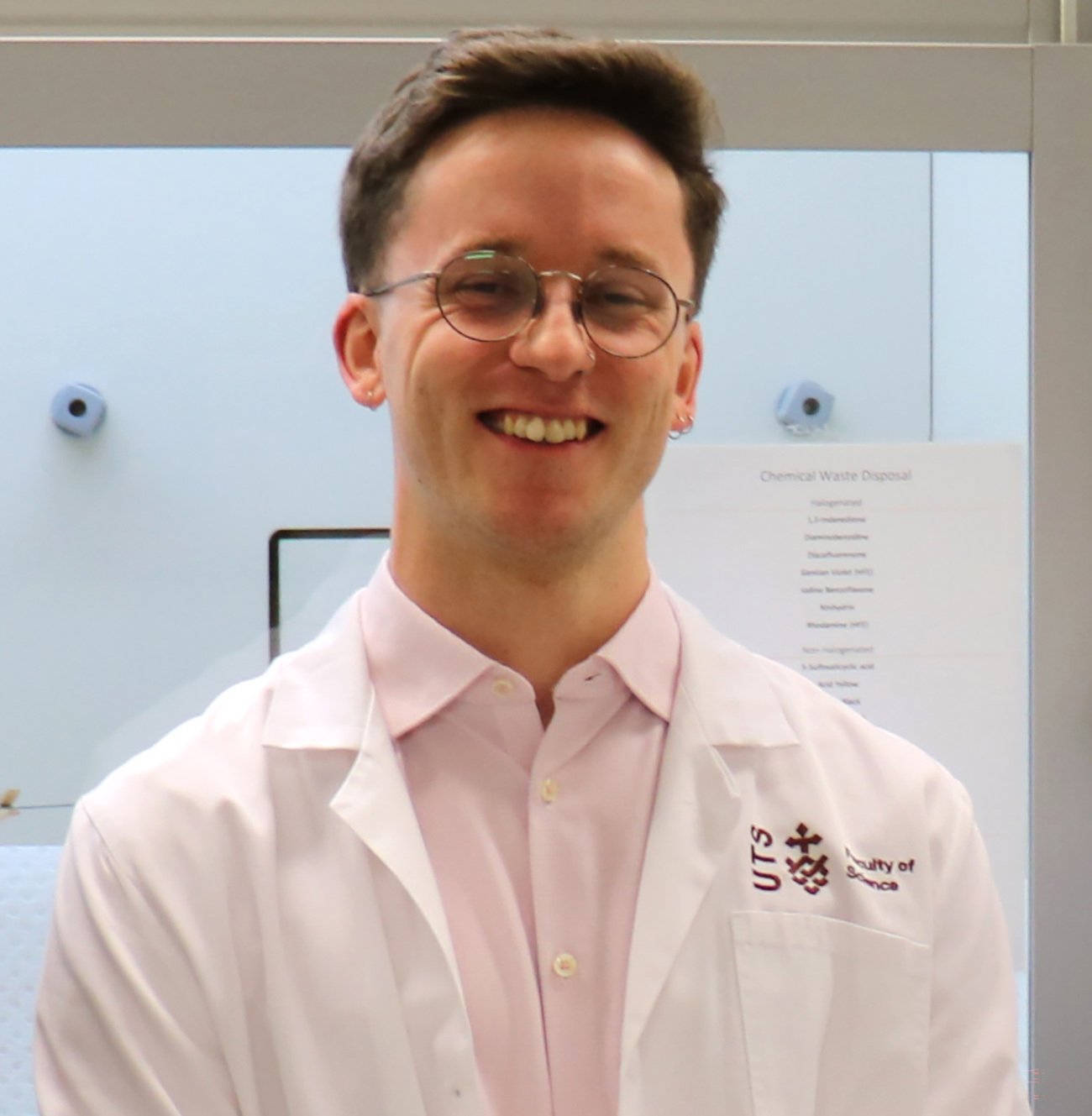
At this point, Harry Fursman, a PhD candidate in forensic science, joined the team. He saw the value of testing technology working alongside the collection of used syringes to better understand the Australian illicit drug market.
“By analysing the drugs in a lot of used syringes across a wide geographical area, we could work up a comprehensive picture of the drugs being injected,” Harry Fursman said.
“At the same time as optimising the MicroNIR for rapid drug detection, we were mapping and better understanding the patterns of drug use across the Sydney from a strategic point of view.”
Detecting traces of killer drugs
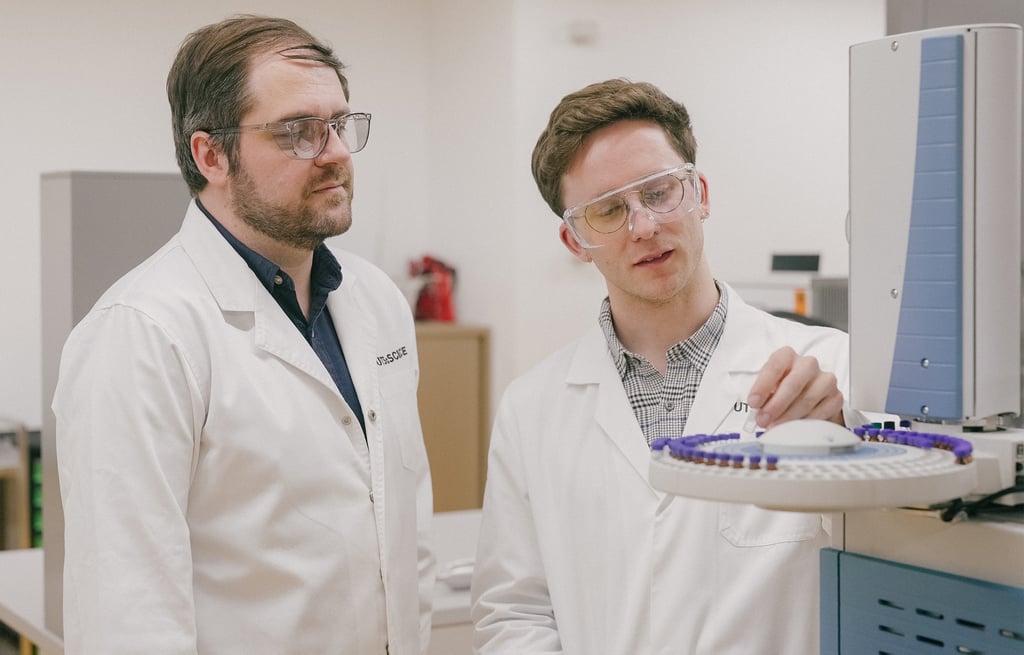
Through a detailed testing program, the team analysed the drugs found in more than 2,000 syringe samples collected over a six-year period across six locations in Sydney.
The largest study of its kind that had been conducted in Australia at the time, the analysis followed the traces to detect a number of patterns in the drugs being injected across the city.
“People tend to use either heroin or methamphetamine, and which one is more common varies depending on availability and price,” he said.
“Different populations would inject different drugs in different locations. In most suburbs, methamphetamine was more commonly used. For example, in some areas, there was contamination of fentanyl in heroin syringes for samples taken during 2023.”
Fentanyl is a drug of particular concern to public health and law enforcement agencies. It is 50 times stronger than heroin and the source of a significant number of overdoses in countries like the United States but have never really taken off in Australia.
Meanwhile, the surveillance program caught the eye of public health officials at NSW Ministry of Health.
In early 2024, through their relationship with the NSW Users and AIDS Association (NUAA), they became aware of a spike in the number of people who use opioids being hospitalised for opioid overdoses in an area of Sydney.
Jared Brown, who was Manager within the Centre for Alcohol and Other Drugs at NSW Ministry of Health at the time, was working on tracking the source of the overdoses.
“We were aware of the work being done at UTS and so we called in Marie, Harry and the team to help us investigate based on the contents of used syringes in the area,” he said.
“Within two weeks, we had detected a particularly nasty type of synthetic opioid in the residue from discarded syringes. Protonitazene is a substance 200 times the potency of morphine.”
Moving quickly, NSW Minstry of Health confirmed the result with NSW Health Pathology and issued a state-wide health alert around nitazenes in the area, in partnership with the NUAA.
No further overdoses associated with nitazenes were reported in the region in the period after the alert was issued.
Enabling informed decisions to reduce harm
Having optimised MicroNIR for use in Australia, the next stage in the project involves using the technology to help people who use drugs make informed decisions around their drug use under a harm reduction lens within a drug checking trial.
“Traditional drug and forensic testing can take a while to get results. By the time you get them, you’ve missed your chance for intervention,” Harry Fursman said.
“This technology shows results in seconds and can be used practically anywhere. It can be used to give a healthcare worker the chance to inform an individual about what they’re going to inject and have a conversation about how they go about it.”
Building on a partnership with Uniting MSIC, a pilot study will explore making potentially life-saving interventions at MSIC in Sydney’s King’s Cross.
As part of the trial, clients using the MSIC will have their drugs analysed on-the-spot using the MicroNIR as well as using a more traditional drug testing technique for comparison.
That information will then be given to a healthcare or harm reduction worker who can explain the results to the client and counsel them on their next steps, particularly if the results of the tests are unexpected.
“This has been an amazing collaboration between law enforcement, public health and academic researchers,” said Marie Mc Nerney.
“Getting everyone working together is how we get the best healthcare outcomes and also how we’re most disruptive to the illicit drug supply. We all want the most effective strategies that are most relevant and get the best for the community.”
“This is the future of forensic science. We’re following traces and gathering information to find solutions to some of the biggest societal challenges we face.”
Research team

Visiting Scholar, Faculty of Science
PhD candidate, UTS Centre for Forensic Science
Associate Dean (Teaching And Learning), Faculty of Science
Jared Brown
Formerly NSW Ministry of Health
Marianne Jauncey
Uniting Sydney Medically Supervised Injecting Centre
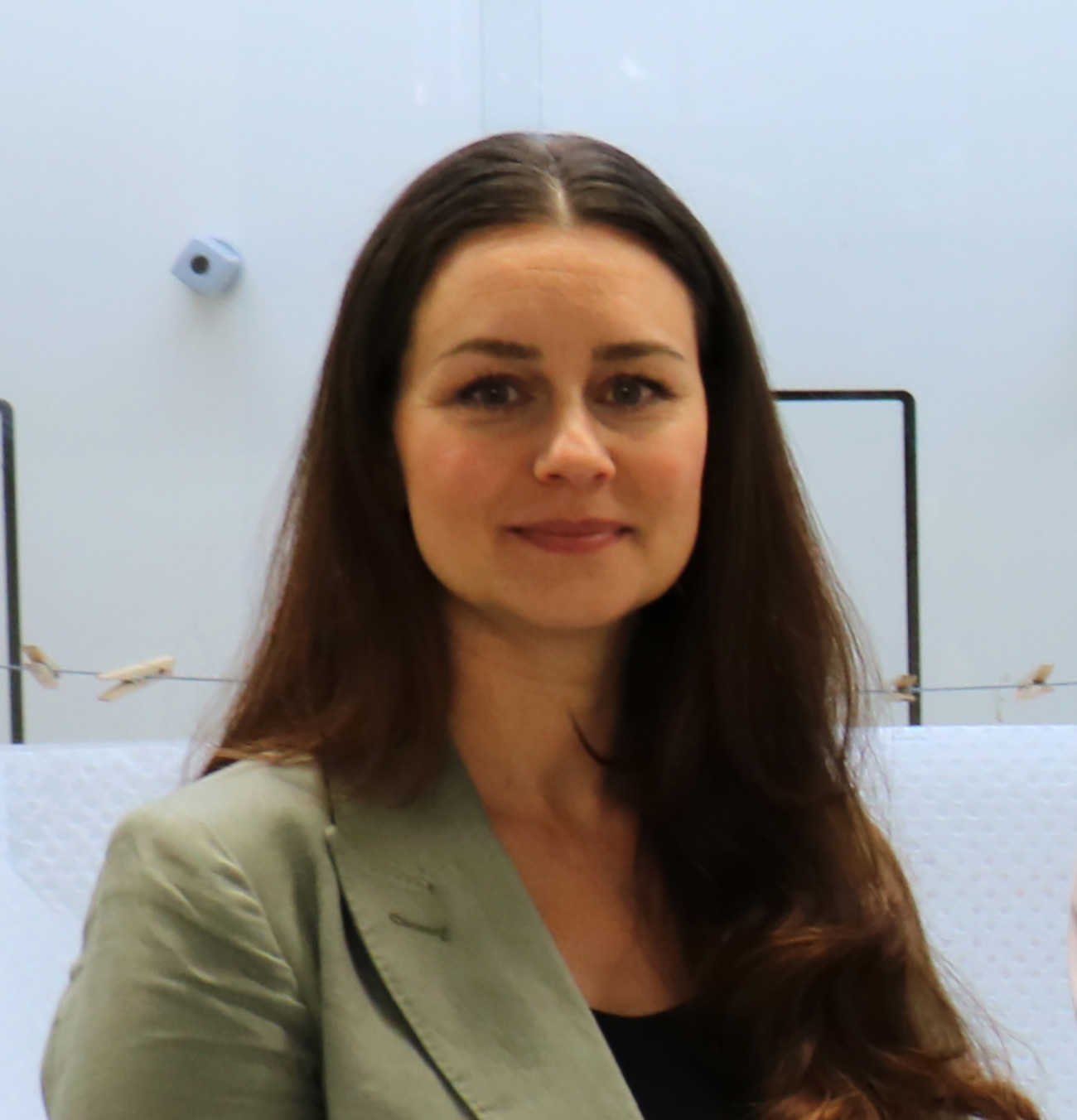
Natasha Stojanovska
Australian Federal Police
PARTNER ORGANISATIONS
The following organisations partnered with UTS on the research:
University of Lausanne, Switzerland
Uniting Medically Supervised Injecting Centre
Australian Federal Police
NSW Ministry of Health
NSW Users and Aids Association
Kirketon Road Centre
NSW Health Pathology Forensic and Analytical Science Service
National Measurement Institute
THANK YOU
This research could not have happened without the contribution and expertise of the people who use drugs who participated in the studies.
About forensic science
The UTS Centre for Forensic Science has solutions around crime reduction, crime solving and national security.
Story
Life after death
Researchers at a one-of-a-kind facility are on the hunt for answers to what happens to our bodies after we die. Their findings will not only bring closure to...

Story
The next generation of drug tests
Designer drugs are constantly evolving. The ability to quickly and accurately detect them must follow suit.
Webpage
Taking smarter, faster vaccines from lab to production
UTS is creating a pipeline of homegrown next-generation vaccines for Australia.
Webpage
From pint to pasture: brewing climate-friendly beer
UTS and Australian craft brewery Young Henrys are turning waste from beer making into climate-friendly livestock feed.
Story
Life after death
Researchers at a one-of-a-kind facility are on the hunt for answers to what happens to our bodies after we die. Their findings will not only bring closure to...
Story
The next generation of drug tests
Designer drugs are constantly evolving. The ability to quickly and accurately detect them must follow suit.
Webpage
Taking smarter, faster vaccines from lab to production
UTS is creating a pipeline of homegrown next-generation vaccines for Australia.
Webpage
From pint to pasture: brewing climate-friendly beer
UTS and Australian craft brewery Young Henrys are turning waste from beer making into climate-friendly livestock feed.