


- Posted on 8 Jul 2025
- 3-minute read
Noor El-Gewely is a woman on a mission to make 3D printing more sustainable, and find new uses for the by-products from paper-making.
Over the course of her career in architecture, Noor became interested in materials and how to make things better. It’s a passion that she’s exploring to the full by making her research journey with a PhD.
“The best place to take an idea and really push it is in academic research, where you don't have the constraint of a client's budget or having to make it feasible right away,” she says.
Her idea is to take one of the oldest and most sustainable materials, wood, and explore how to shape cutting-edge technologies with it in the emerging field of additive manufacturing.
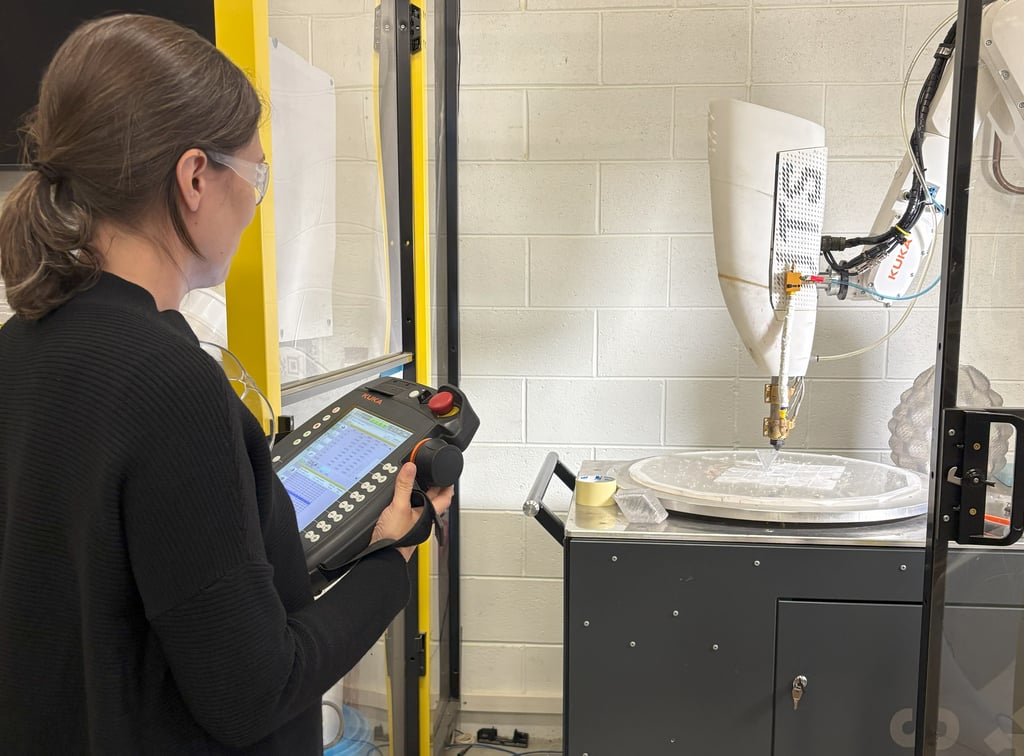
Commonly using plastics, additive manufacturing uses 3D printing to rapidly create customised products one layer at a time.
Noor thinks one of the natural glues contained in in wood can also be used in the process.
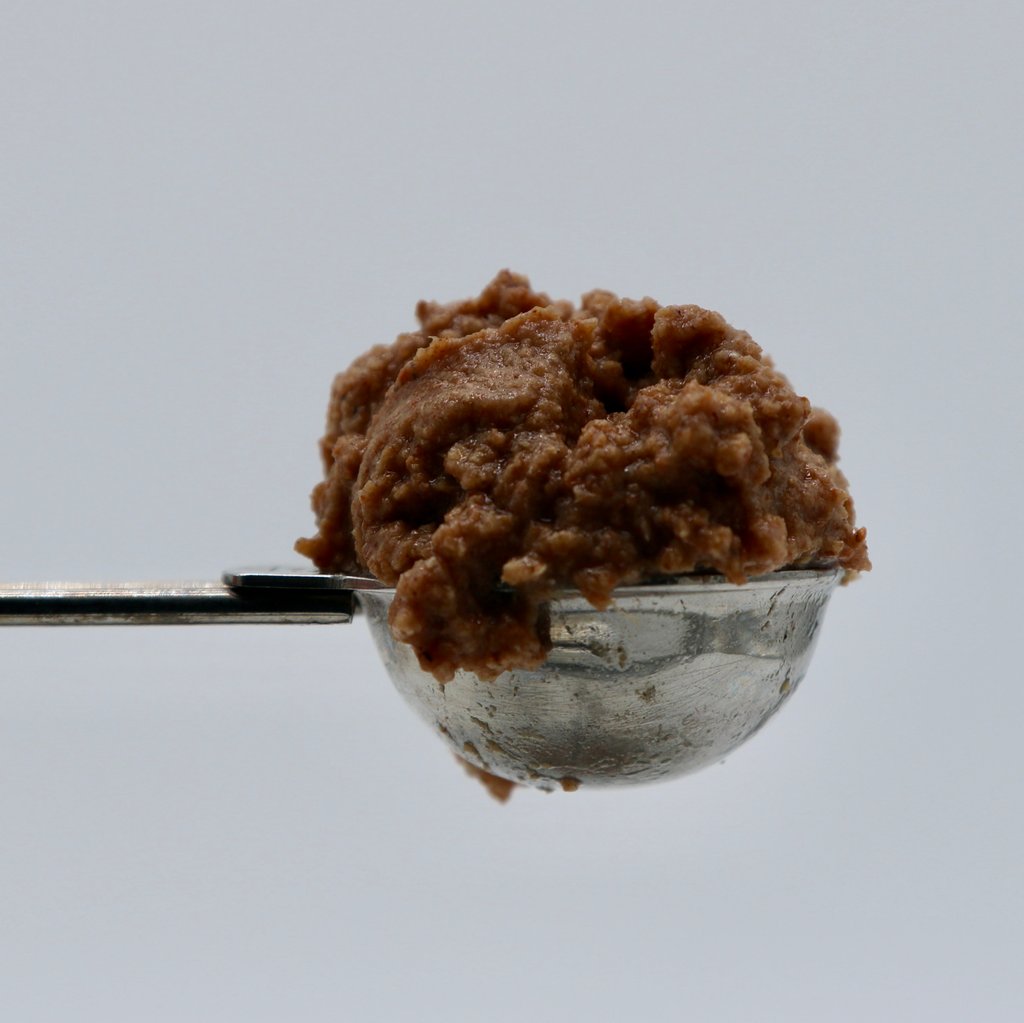
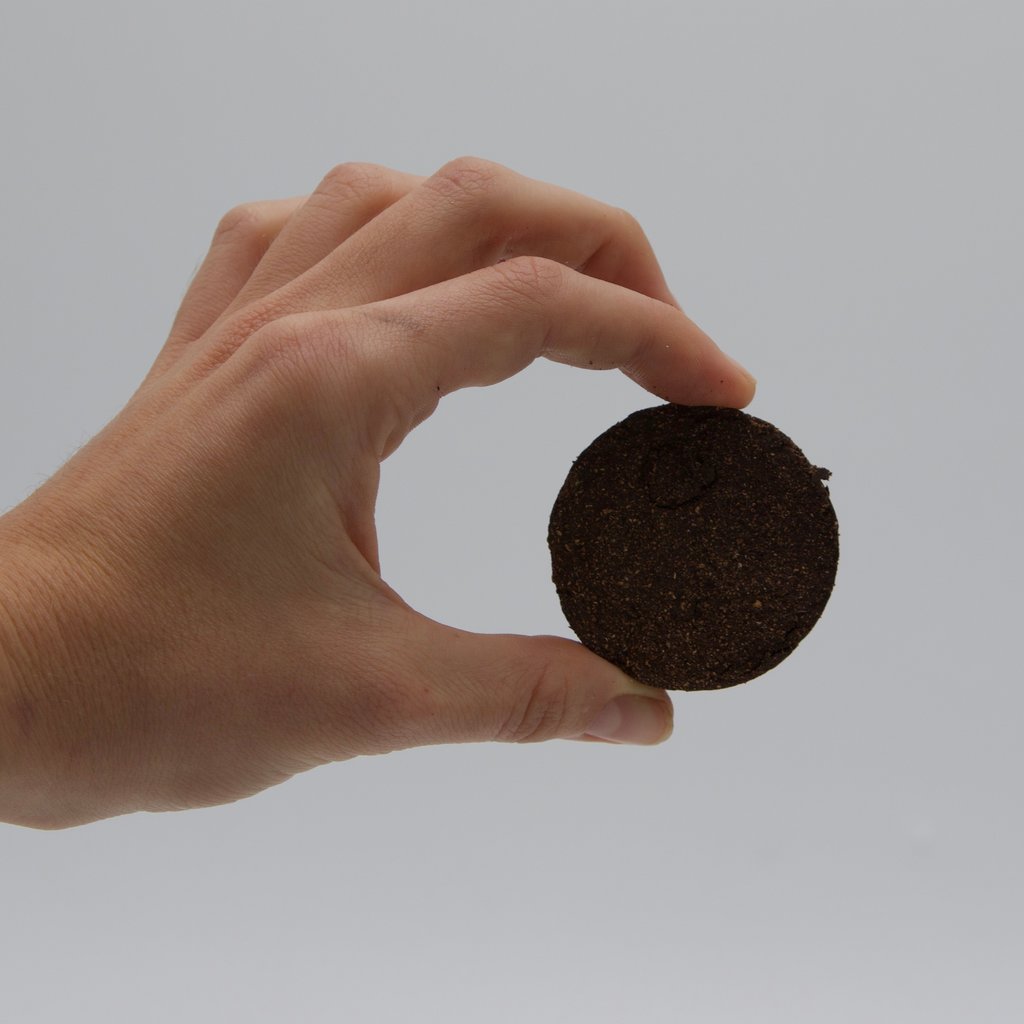
"With my PhD, I’m exploring how to use lignin and other cellulose-based materials in design and fabrication applications – as an alternative to plastic or resin in 3D printing," Noor says.
“By the end of it, I’d like to build a physical prototype like a piece of furniture or object at scale, as well as writing a thesis exploring the ideas and process behind it."
With my PhD, I’m exploring how to use lignin and other cellulose-based materials in design and fabrication applications – as an alternative to plastic or resin in 3D printing.
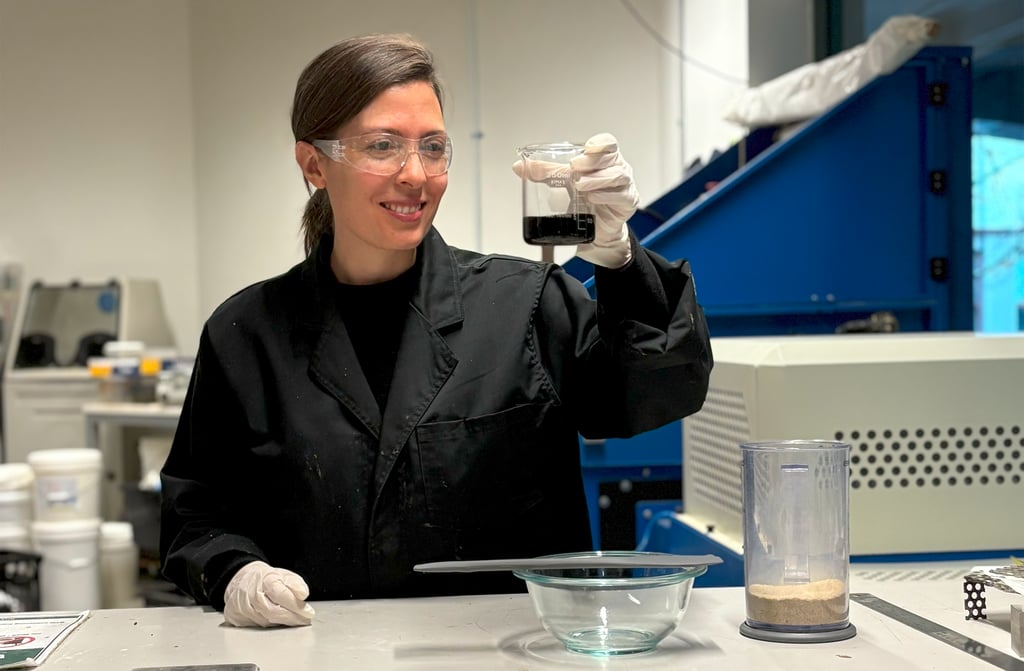
Lignin is one of the natural components of wood, a biopolymer that gives trees and other plants their structural strength. It’s commonly extracted from wood pulp in the papermaking process and treated as waste.
“Usually paper is made to be white and bright. Lignin is dark brown so to get that white colour, it’s extracted from the pulp by a chemical process. This then creates a residue call black liquor which if often burned at paper mills for energy,” Noor explains.
“Globally, between 50 and 70 million tonnes of black liquor is burned for energy production each year. Technically this is considered renewable energy since it’s from plant-based matter but it’s burning carbon so it’s not entirely clean.”
Currently, lignin is also used in cosmetics, green chemicals and building materials. Additive manufacturing has the potential to be another important use for the by-product, with obvious environmental benefits.
Noor’s expertise was built up when she did her Master’s degree at the Institute of Advanced Architecture in Barcelona, Spain, where she helped form the BioBabes design collective that focussed on working with biological-based materials.
From there, she was drawn to the research being conducted in the UTS Material Ecologies Design Lab and her now supervisors Associate Professors Kate Scardifield and Dave Pigram.
Six months in, Noor is laying the groundwork for her research by surveying the field for her literature review and sourcing lignin to use in her 3D printing experiments.
“Australia is one of the top 10 most forested countries in the world, so it makes sense to do my PhD here," she says.
"It’s great to be able to help contribute to building a more sustainable timber and additive manufacturing process through my research.”
PhD researcher

Noor El-Gewely
PhD Candidate
Explore

Webpage
Partnerships ease children’s pain in the classroom
As a clinical physiotherapist at the Queensland Children’s Hospital, Dr Rebecca Fechner works as part of a team who help the one-in-five children who...
Webpage
Growth trajectory: Data solutions for livestock farmers
Ayush Kanwal and Islam Rezk share a background in computer science, an interest in data and artificial intelligence, and a passion for applying technology...
Story
A new wave of hope for Sydney seahorse
An innovative breeding program is giving endangered seahorse species a fighting chance.

Story
Future-proofing our cities
How a nature-based approach to urban planning could combat climate change impacts.
Webpage
Partnerships ease children’s pain in the classroom
As a clinical physiotherapist at the Queensland Children’s Hospital, Dr Rebecca Fechner works as part of a team who help the one-in-five children who...
Webpage
Growth trajectory: Data solutions for livestock farmers
Ayush Kanwal and Islam Rezk share a background in computer science, an interest in data and artificial intelligence, and a passion for applying technology...
Story
A new wave of hope for Sydney seahorse
An innovative breeding program is giving endangered seahorse species a fighting chance.
Story
Future-proofing our cities
How a nature-based approach to urban planning could combat climate change impacts.