


- Posted on 30 Jul 2026
- 5 min read
This project investigates refugee suicides in Indonesia to inform the development of community suicide prevention tools and evidence-based policy recommendations.
Responding to a crisis too often left unseen
For years, refugees in Indonesia have been asking a difficult question: how many people in their community have died by suicide?
No official database records these deaths. Many go undocumented. For the people left behind, the loss is deeply personal. For communities living with prolonged uncertainty, it is also a growing source of fear.
That question became the starting point for a UTS Social Impact Grant project led by Dr Lucy Fiske from the UTS School of Communication and Social Sciences. Rather than arriving with a pre-determined research agenda, the team responded to a direct request from refugee communities themselves.
"We were asked by refugees to undertake this research," says Fiske. "Many people felt these deaths had been ignored for too long. They wanted someone to listen, document what was happening and help identify ways to prevent future tragedies."
Working alongside partners from Cisarua Learning, Murdoch University, Adelaide University, the University of Gadjah Mada and Jesuit Refugee Services Indonesia (JRS), the project is exploring the causes and impacts of refugee suicide in Indonesia and identifying practical ways to reduce risk.
Listening to communities most affected
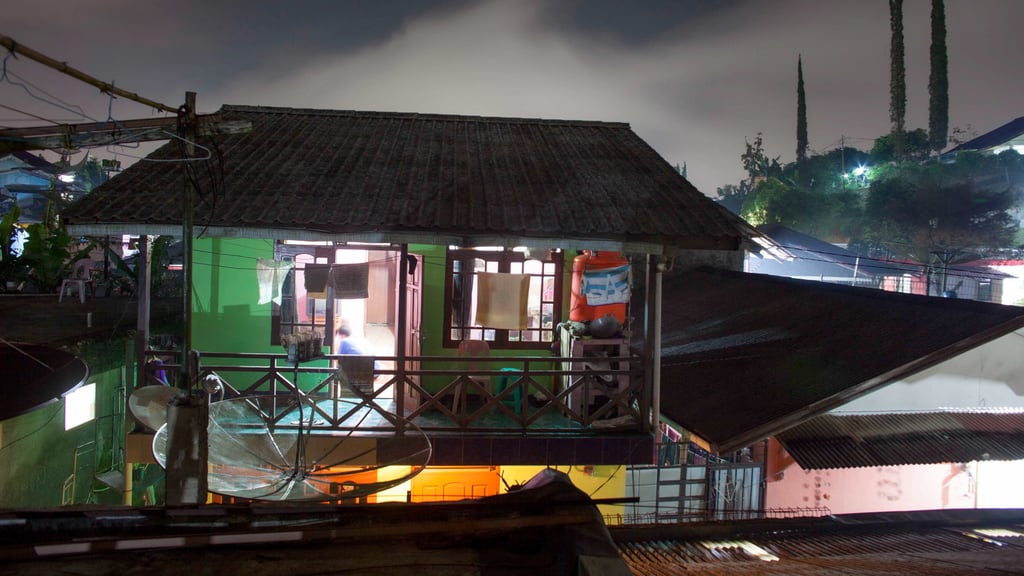
Indonesia hosts around 12,000 refugees from Afghanistan, Myanmar, Somalia and other nations who are unable to return home but often face years of uncertainty while waiting for resettlement outcomes. Many experience financial hardship, social isolation and limited opportunities to rebuild their lives.
To better understand the scale and nature of the problem, the research team conducted 19 interviews with refugees who had witnessed a suicide or its aftermath, as well as five interviews with Indonesian government officials responsible for refugee housing and policy.
What emerged was a picture of profound distress, but also extraordinary community resilience.
The research found that many refugees described suicide as a constant concern within their communities. Participants spoke of living with the feeling that anyone could be at risk.
"We discovered that the general level of suicidality among the refugee community is much higher than we expected," says Fiske. "Many participants told us, 'it could be me, it could be any one of us'. That finding reinforced just how urgently this issue needs attention."
Yet alongside these stories, refugees also described remarkable acts of care.
In one example shared, residents of a refugee accommodation centre became worried about a community member experiencing suicidal thoughts. Together, they organised a roster, so someone was always checking on him until the immediate crisis passed.
"The level of mutual support refugees show one another is extraordinary," says Fiske. "People are often carrying significant emotional burdens themselves, yet they continue looking after each other."

Research designed with care
Given the sensitive nature of the project, participant wellbeing was central to every stage of the research.
The team established a partnership with Jesuit Refugee Services Indonesia to ensure interviews were conducted safely and ethically. Refugee participants received support before and after interviews, while researchers and JRS staff completed specialised training in suicide prevention and trauma-informed interviewing.
This approach proved critical.
While most participants did not require ongoing support, the screening process helped identify individuals who were themselves experiencing significant distress. In one case, JRS was able to provide counselling and accommodation support to a refugee participant who was homeless and suicidal.
For Fiske, this partnership became one of the project's most important outcomes.
"Research should never leave people worse off than when they arrive," she says. "Working with JRS gave us a way to ensure participants had access to support if they needed it."
Turning evidence into action
While the project is still ongoing, clear findings are already emerging.
The research has identified patterns that may help communities recognise elevated suicide risks earlier. It has also highlighted practical opportunities for policy reform, from prevention measures through to responses following a death.
Some potential solutions are surprisingly straightforward.
For example, researchers found that neither security staff nor refugees in some accommodation settings had access to basic first aid training. Several incidents described during interviews suggested that immediate first aid knowledge may have saved lives.
Where to next?
The next stage of the project will focus on developing practical suicide prevention resources for refugee communities and evidence-based policy recommendations for governments and organisations working with displaced populations.
Importantly, refugees will continue to help shape those solutions.
Refugee advisors have been involved throughout the project, contributing to research design, participant recruitment, fieldwork planning and analysis.
"We are not simply researching refugee communities," says Fiske. "Refugees have been partners in this work from the beginning. Their knowledge, leadership and commitment have made the project possible."
Building momentum for long-term change
Although the project's final outputs are still in development, the research is already having an impact.
Participants have expressed appreciation that someone is finally paying attention to an issue they believe has been overlooked. One refugee participant, who has since moved to Canada, told the team he had spent years documenting suicide deaths because he felt determined that refugee lives should matter and be remembered.
The research has also strengthened partnerships across Australia and Indonesia and helped bring the issue of refugee suicide to the attention of policymakers and service providers.
Most significantly, the initial UTS Social Impact Grant has enabled the team to secure additional funding, including a $149,000 international grant that will support expanded fieldwork across multiple locations in Indonesia between 2026 and 2028.
For Fiske, this demonstrates the value of investing in community-driven research.
"The Social Impact Grant allowed us to begin work on an issue that matters deeply to refugee communities," she says. "It gave us the foundation we needed to build partnerships, gather evidence and secure larger funding that will help turn research into action."
With thanks to:
UTS project contributors and partners
Anthea Vogl (UTS, Law)
External partners:
Mary Anne Kenny (Murdoch), Realisa Masardi (Uni Gadjah Mada), Nicholas Procter (Adelaide University), Muzafar Ali (Cisarua Learning).
The problem
Associate Professor, Faculty of Design and Society
Associate Professor, Faculty of Law
This project was supported by a 2025 UTS Social Impact Grant.
News
Refugees as community builders: Lessons from Refugee Camp in My Neighbourhood
As we celebrate Refugee Week, it is worth reflecting not only on the journeys that bring people to Australia, but also on the ongoing contributions they make...
News
Refugees as community builders: Lessons from Refugee Camp in My Neighbourhood
As we celebrate Refugee Week, it is worth reflecting not only on the journeys that bring people to Australia, but also on the ongoing contributions they make...
News
Refugees in Australia are miles behind in health and wellbeing
Refugees in Australia are miles behind in health and wellbeing outcomes. Here’s why
Webpage
Designing the future of refuge accommodation
In Australia, one in six women experience physical or sexual violence at the hands of a current or former partner, often repeatedly.In the face of such...