


- Posted on 31 Jul 2025
- 6-minute read
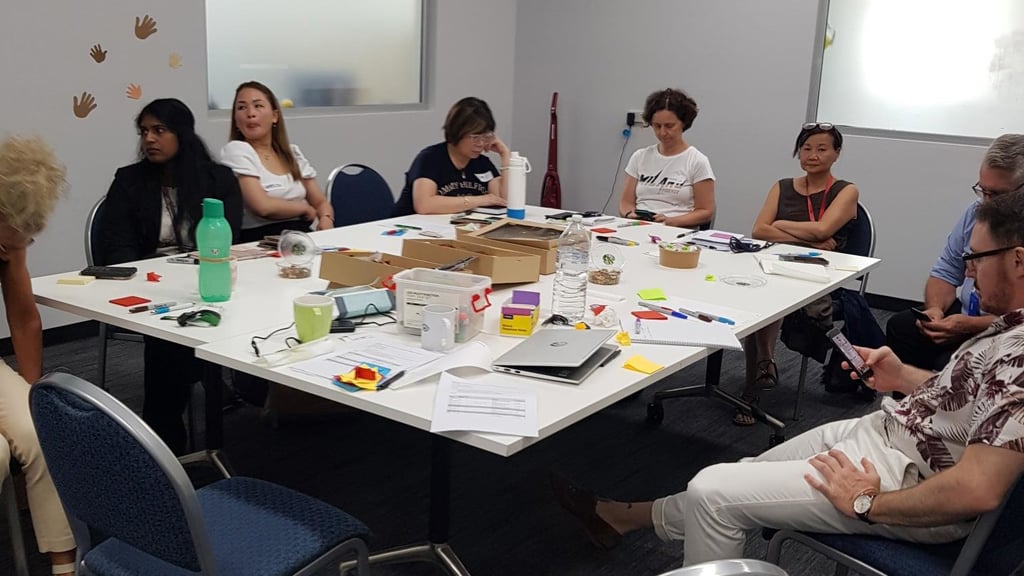
In a quiet room in Western Sydney, a group of carers, nurses, and service managers gathered around a table. They weren’t there to talk about rosters or routines. They were there to talk about death.
It’s a topic many of us avoid. But for people living with cognitive disabilities in Supported Independent Living (SIL), avoiding the topic can mean missing out on the chance to die with dignity, in a place they call home, surrounded by people who know and care for them.
Dr Lindsay Asquith, a researcher from the Faculty of Design and Society at UTS, wanted to change that.
'If we want to die well, we need to begin from a place of honesty and reflection,' says Dr Asquith. 'Dying well is as important as living well.'
The challenge of care at the end of life
People with intellectual and developmental disabilities are living longer than ever before. But as they age, many face barriers to receiving appropriate end–of–life care. In group homes, support workers often lack the training or authority to administer pain relief. Families may be excluded or not want to be involved in decision–making. And residents themselves are rarely asked what they want.
'There’s a history of paternalism in the disability sector. People are often assessed as unable to make choices, especially around death. That’s not just unfair – it’s harmful,' says Dr Asquith.
The result? Many residents are transferred to unfamiliar nursing homes in their final days, separated from the people and places they’ve known for years.
One support worker shared the story of a woman who had lived in her group home for 4 decades. When her health declined, she was moved to a hospice because staff weren’t trained to administer the medication she needed.
'Her family fought for her to stay,' the worker said. 'We all did. But we just didn’t have the nursing staff available.'
There’s a history of paternalism in the disability sector. People are often assessed as unable to make choices, especially around death. That’s not just unfair – it’s harmful.
Dr Asquith partnered with Northcott Innovation – a subsidiary of one of Australia’s largest disability service providers – to co–design a new model of care.
The goal was simple but ambitious: to create a strategy for end–of–life care across Northcott’s 100 Supported Independent Living homes in NSW, one that prioritised the will and preferences of residents, and gave carers and families the tools to support them.
The process was deeply collaborative. Over several months, Dr Asquith and her team conducted:
- two co–design workshops with nurses, managers, and support workers
- a focus group with nurse leaders
- nine interviews with staff and one family member
- regular meetings with Northcott Innovation to refine the model.
'We made sure to test our assumptions,' says Dr Asquith. 'We listened carefully, checked our interpretations, and revised the model based on feedback. Everyone had a voice.'
Despite the sensitivity of the topic, participants were eager to share their experiences. For many, it was the first time they’d been asked.
'It’s going to help my fellow support workers,' said one interviewee. 'It’s going to help everybody who comes in touch with the customers – and the customers themselves.'
What the model delivers
The final model outlines clear strategies for 3 stages of end–of–life care: preparation, the final weeks, and after death. It includes:
- training for support workers in pain management and communication
- joint training with palliative care professionals
- advance care planning tools
- accessible information for families
- resources for grief and bereavement support.
It also proposes an innovative idea: training disability support workers to administer subcutaneous injections – a common method of delivering pain relief – so residents can remain in their homes during their final days.
'Palliative care nurses already teach family members to do this,' says Dr Asquith. 'Why not train support workers too?'
The hidden side of care
One of the most powerful findings from the project was the depth of commitment shown by support workers.
'Their desire to be there at the very end, even outside of working hours, was truly remarkable,' says Dr Asquith. 'They often put the needs of residents before their own. This is the hidden side of care that should be acknowledged.'
The model also considers the impact of death on other residents in the home – a topic rarely addressed in formal care plans. Strategies for minimising trauma and supporting grief are built into the design.
Looking ahead: normalising the conversation
Dr Asquith is now exploring ways to extend the work. She has been awarded a UTS Access and Inclusion Grant to develop communication tools that support end–of–life conversations. She’s also in talks with the Cemeteries and Crematoria Association of NSW about future collaborations.
One idea gaining traction is the creation of a 'Death Café' – a space where carers, families, and staff can gather informally to share stories and support each other.
'A café is a place for organic conversation,' says Dr Asquith. 'It could help take the stigma out of talking about death.'
A model for dignity, a blueprint for change
The model has been presented to the Northcott Board and is expected to be trialled in selected homes. While systemic change takes time, the project has already sparked important conversations and laid the groundwork for better care.
'Transformational change in this sector starts with understanding,' says Dr Asquith. 'Understanding what people want, what carers need, and how organisations can realign their goals to support both.'
In the end, it’s about dignity. About making sure that people with cognitive disabilities are not just cared for – but listened to, respected, and supported to live and die on their own terms.
The problem
People with intellectual and developmental disabilities often face barriers to receiving appropriate end–of–life care. In Supported Independent Living (SIL) homes, limited training and authority among support workers can prevent residents from dying in familiar surroundings, with their wishes respected.
The response
Dr Lindsay Asquith led a co–design project with Northcott Innovation to develop a new model of care for end–of–life in SIL homes. The model prioritises the will and preferences of residents and equips carers and families with tools to support them.
What helped accomplish this?
A deeply collaborative approach meant Dr Asquith worked with nurses, support workers and managers of SIL homes. They were eager to share their experiences – for many, it was the first time they’d been asked. Partnering with Northcott Innovation helped refine the model and ensure it was grounded in lived experience.
What has changed as a result?
The model has been presented to the Northcott Board and is expected to be trialled. It includes practical recommendations for training, planning, and grief support. It has sparked new conversations, strengthened partnerships, and laid the foundation for systemic change in how end–of–life care is approached in the disability sector.
Project lead/s
Senior Lecturer, Faculty of Design and Society
This project was supported by a 2024 UTS Social Impact Grant.
Building a research legacy inside elite sport
Since 2017, the University of Technology Sydney (UTS) and the Oklahoma City Thunder, of the NBA, have worked together to better understand what drives...
Supporting reef protection for Anindilyakwa Rangers using a digital human rights-based tool
Coral reefs are under growing pressure worldwide. Rising ocean temperatures, pollution and extreme weather events are accelerating their decline.

Promoting equity for neurodiverse students and staff at UTS
Neurodiverse staff and students face systemic barriers in career progression, workload management and workplace inclusion.

Refugee suicide prevention in Indonesia
Refugee communities in Indonesia raised concerns about suicide deaths that were going undocumented and unrecorded
Building a research legacy inside elite sport
Since 2017, the University of Technology Sydney (UTS) and the Oklahoma City Thunder, of the NBA, have worked together to better understand what drives...
Supporting reef protection for Anindilyakwa Rangers using a digital human rights-based tool
Coral reefs are under growing pressure worldwide. Rising ocean temperatures, pollution and extreme weather events are accelerating their decline.
Promoting equity for neurodiverse students and staff at UTS
Neurodiverse staff and students face systemic barriers in career progression, workload management and workplace inclusion.
Refugee suicide prevention in Indonesia
Refugee communities in Indonesia raised concerns about suicide deaths that were going undocumented and unrecorded