

- Posted on 3 May 2021
- Updated on 3 May 2021
- 3-minute read
A detailed analysis of the role of landfills in Australia in relation to other waste mitigation approaches.
RESEARCH OUTPUTS
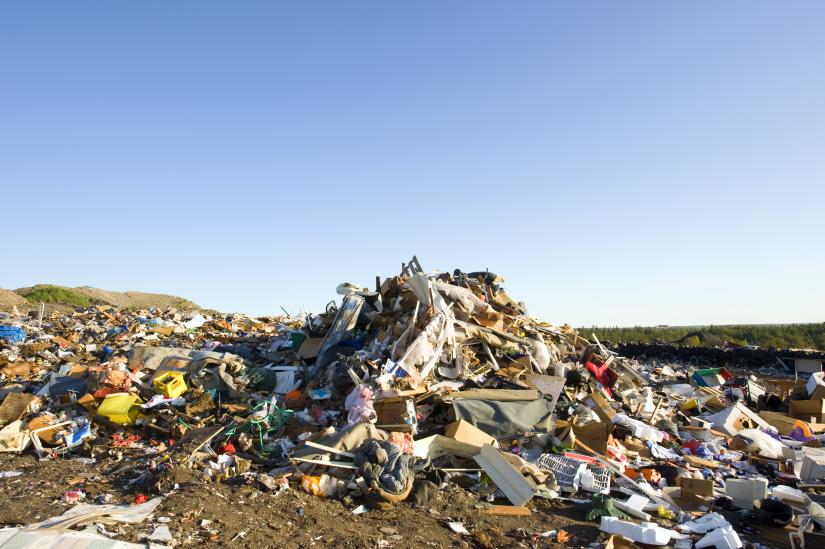
The aim of this research was to undertake a detailed analysis of the role of landfills in Australia in relation to other waste mitigation approaches. The research used issues identification, a situation analysis, a review of existing literature, policy mapping and participatory stakeholder engagement methods. Strategic analysis of these outcomes yielded a suite of potential policy options, which were peer reviewed in a policy forum. This research seeks to provide support for improved decision making at the levels of government which have jurisdiction over waste. ISF took a purposefully broad perspective on managing waste and resources, in line with international best practice; that is, the system boundary includes the whole production and consumption value chain, rather than just post-consumption waste. The project also delivered potential policy options related to decision making processes themselves.
Historically in Australia, disposal to landfill has been the dominant means for managing waste, however today there are a large range of measures in use that can be classified as disposal, recovery, reuse or avoidance measures. This project took a purposefully broad perspective on managing waste and resources, in line with international best practice. That is, the system boundary includes the whole production and consumption value chain, rather than just post-consumption waste.
This research was funded by CRC CARE – a collaborative research and development body providing cutting-edge technologies and knowledge in assessing, preventing and remediating contamination of soil, water and air.
The aim was to undertake a detailed analysis of the role of landfills in Australia in relation to other waste mitigation approaches. The research used issues identification, a situation analysis, a review of existing literature, policy mapping and participatory stakeholder engagement methods. Strategic analysis of these outcomes yielded a suite of potential policy options, which were peer reviewed in a policy forum.
ISF took a purposefully broad perspective on managing waste and resources, in line with international best practice. That is, the system boundary includes the whole production and consumption value chain, rather than just post-consumption waste.
- provide support for improved decision making at the levels of government which have jurisdiction over waste
- deliver potential policy options related to decision making processes themselves. Intervention points can occur at all stages of the production and consumption chain
- take a futures perspective (i.e. by asking how do we want to manage resources in, say 30 years?), while acknowledging the achievements and failures of the past and challenges associated with the current context (such as sunk costs associated with existing landfill infrastructure)
- consider the current and future roles and responsibilities of all stakeholders.
Local government is a key stakeholder and policy actor in the area of waste management, and the final paper focuses on the implications for local government of a more holistic approach to assessing waste management options.
Integrated Resource Planning for Urban Waste Management (2014) (Report)
Landfill futures: National guideline document (2014) (Report)
Local Government and Landfill Futures (2011) (Report)
Researchers




- Leah Mason
- Jade Herriman
- Dustin Moore
- Sally Asker
Food systems; Institute for Sustainable Futures; Resource stewardship
Research Centre
Years
- 2011-2012
Location
- Adelaide, Australia
Client
- Co-operative Research Centre for Contamination Assessment and Remediation of the Environment [CRC CARE]