

- Posted on 16 Apr 2021
- Updated on 16 Apr 2021
- 2-minute read
Funded by USAID, this project sought to empower communities in Papua New Guinea to lead their adaptation responses to climate change.
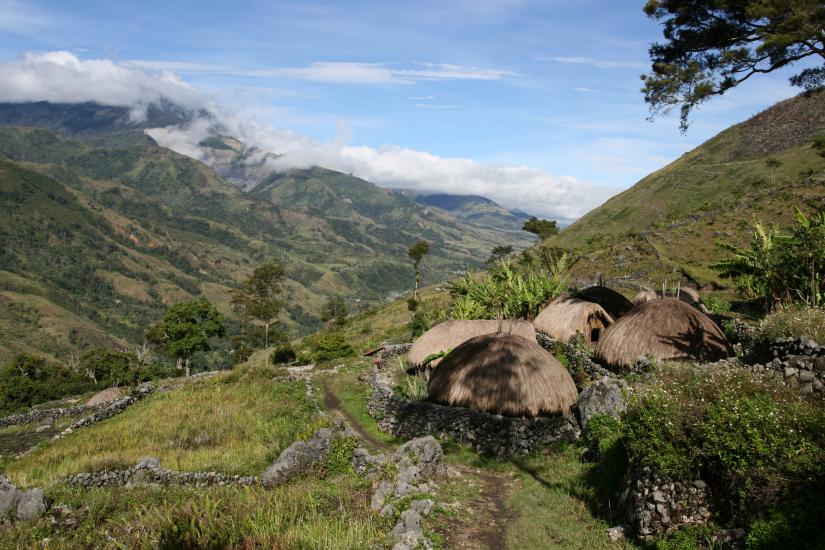
ISF researchers used participatory techniques in facilitated workshops to engage communities in managing ecosystem services and biodiversity conservation to inform the development of community-led adaptive strategies.
Papua New Guinea’s (PNG) mainland consists of 33 million hectares of forests. The third largest intact rainforest in the world, it contains about seven per cent of the world’s species, two-thirds of which are unique to PNG. PNG’s ecosystems face multiple and interdependent threats associated with economic development, population growth and a changing climate.
Academic and policy analysis on environmental change in PNG is extensive, particularly associated with the minerals and energy extraction sector. To counterbalance the negative impacts of this sector on affected communities, much of the focus has been on devising compensation packages and formal regulatory mechanisms to increase ‘landowner’ participation. Less attention has been afforded to the development activities undertaken by communities (e.g. building of new roads, expansion of settlements, and selective logging), which also impact on ecosystem services. PNG’s rural communities are eager for more support to identify existing threats to supplement their own processes for determining trade-offs of development particularly under a changing climate.
RESEARCH OUTPUTS
PNG’s role in facilitating climate change dialogue (2017) (Report)
Community responses to the effects of climate change in PNG (2019) (Report)
Engagement on biodiversity conservation and climate change adaptation in Papua New Guinea: A facilitator’s guide (Guide)
Managing Climate Change Adaptation in the Pacific Region. Climate Change Management, pp 151-169. Springer, Cham
SDGs

This project is working towards UN Sustainable Development Goal 11.
Climate adaptation; Institute for Sustainable Futures
Research Centre
Years
- 2016-2020
Location
- Papua New Guinea
Client
- USAID