

- Posted on 16 Jan 2025
- 6-minute read
Koshiro K / Shutterstock

Wanning Sun, Deputy Director, UTS:ACRI; Professor of Media and Communication, Faculty of Arts and Social Sciences, UTS
This article appeared in Crikey on January 16 2025.
TikTok, the world’s fifth most popular social media platform, is running out of time. Its fate in the US will be determined on January 19, when the US Supreme Court will decide whether to accept the argument from TikTok’s legal team that the proposed ban of the platform constitutes an infringement of the First Amendment and should therefore be thrown out.
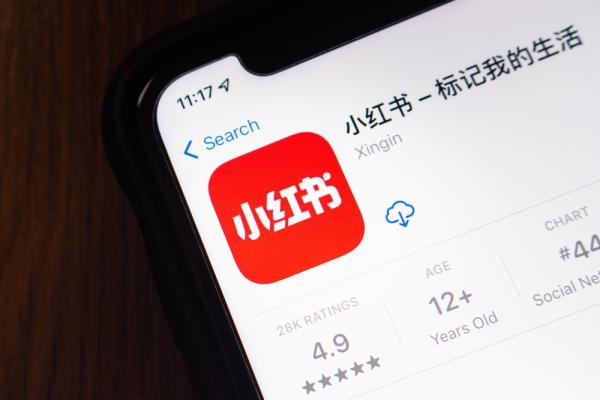
In the meantime, anticipating TikTok’s likely loss in this legal battle, thousands of TikTok users are signing up with the Chinese platform Xiaohongshu (known in English as Little Red Book or RedNote; hereafter ‘Red’). Some TikTok influencers are also moving their channels to Red, taking with them thousands of followers they have accumulated on TikTok.
The move by users who call themselves ‘TikTok refugees’ has made RedNote the most downloaded app on Apple’s US App Store, as of Monday. It’s hard to estimate the exact number of migrating users, but some estimate that it’s likely only a small fraction of TikTok’s 170 million American users.
Red is currently the most popular social media platform in China and within the Chinese diaspora. Widely seen as China’s solution to Instagram, Red started as a shopping channel providing consumer guidance on fashion, food and travel. As with its slightly older rival WeChat, Red is subject to strict censorship and government control.
Over the past couple of days, WeChat and Red have been abuzz with excitement, with screenshots of many ‘first encounter’ moments: American TikTok users discovering that Red’s Chinese users are ‘welcoming’ and ‘friendly’; Red users connecting with Americans and, with the help of some still sub-optimal third-party translation tools, making new ‘friends’ on the other side of the world. The sense of anticipation of a brand-new world awaiting users on both sides is palpable.
Will China continue to welcome TikTok refugees with open arms? And is China’s great firewall going to collapse under the weight of enthusiastic foreign arrivals? Hu Xijin, former editor of the most nationalistic Chinese newspaper the Global Times, thinks this is an opportune moment for China to expand its global outreach. The massive migration from TikTok to Red has also been reported favourably in China’s state media.
Let’s look at the opportunities for Red and the Chinese state, apart from the obvious economic ones: Red would benefit greatly from a significant increase in foreign traffic, which would only grow if the proposed TikTok ban goes ahead.
The influx of TikTok refugees brings with it two crucial attractions. First, the arrival of ordinary American people brings a previously unavailable target audience over which China can seek to exert its soft power. China’s ‘Going Global’ strategy of exporting state media content to the Western world, which was initiated in the 1990s, has mostly failed to achieve its soft power goals.
This has left the Chinese government scratching its head trying to figure out how to access ordinary members of the public in the West. A US decision to ban TikTok could thus be a blessing in disguise, creating an unprecedented channel for communication and propaganda that the Chinese government could scarcely have dreamed of previously.
Many Western TikTok users have been posting about their experiences of travelling in China, presenting to the world a China that is friendly, more technologically advanced, and safer than the US. This is a side of China seldom seen in mainstream US media outlets. What better means of presenting a picture of an attractive China than through the mouths of enthusiastic American TikTok influencers themselves?
Second, and equally important, many American TikTok users who have opened an account on Red are angry about the proposed TikTok ban. One TikTok influencer knows how to endear herself to potential new Chinese followers. Her first video post on Red is a study in how to make friends and gain influence. If you mute the sound and simply look at what she’s doing, you’ll think she’s merely performing a three-minute make-up routine. But unmute the video and you’ll hear her ‘advice’:
‘So I have officially decided that I will be taking my content over to RedNote, and here’s why. I am angry… I am angry that our Congress refuses to do anything on climate change while California burns, and then they all engage in the conversation of who’s to blame. I’m angry that our kids get shot in their classrooms while they play thoughts and prayers and refuse to make any progress either on gun controls or on mental health support and reforms. I am angry that they can get together and come to bipartisan agreement on banning a communication platform, but they can’t get together and come up with any sort of bipartisan agreement on what we should be doing with our border. I am angry at the paternalistic attitude of acting as if they are going to protect us from Chinese Communist interference, when we know our own government is running all sorts of observations on China — and American citizens — that they aren’t being transparent about…’
Is Red quivering with excitement or trepidation? Despite the enticing prospect of a massive migration of TikTok users, it can’t be undiluted joy and triumph at Red’s headquarters. In the eyes of the Chinese regulators, the opportunities must be as seductive as the risks must be frightening. Either way, it is hard to imagine Red not wanting to turn itself into another TikTok, reproducing an arrangement that allows TikTok to coexist internationally with its domestic Chinese counterpart Douyin.
The arrival of thousands of TikTok refugees is a double-edged sword. The sudden flood of American users on this platform is opening up new, Western target audiences for Chinese propaganda, but those same audiences are unlikely to be as obedient and rule-abiding as their Chinese counterparts. It’s only a matter of time before Western users realise they have hit a censorship wall, and they won’t like it.
Moreover, Westerners — especially those from the US — may happily post material that bashes America while also praising China, inadvertently presenting the ideal patriotic education material to domestic Chinese audiences. The flipside is this is also likely to present attractive and vivid images of a whole new Western world to the Chinese public — a world that so far still manages to be more liberal than China despite the best efforts of some Western politicians; a world where people can criticise the government without their posts being routinely taken down, or worse.
It will be fascinating to watch how things unfold in this space in the weeks to come.
Author
Professor Wanning Sun is Deputy Director at UTS:ACRI and a Professor of Media and Communication in the Faculty of Arts and Social Sciences at UTS.