

- Posted on 9 Feb 2024
- 7-minute read
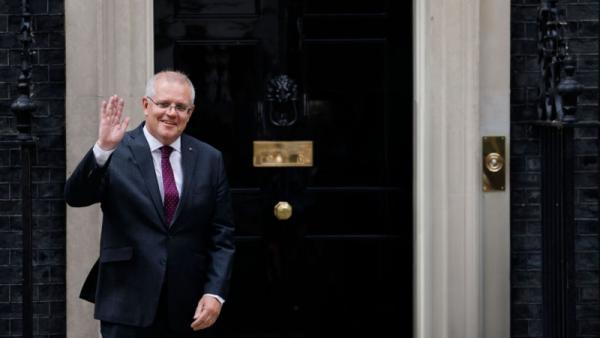
Muhammad Aamir Sumsum / Shutterstock

Wanning Sun, Deputy Director, UTS:ACRI; Professor of Media and Communication, Faculty of Arts and Social Sciences, UTS
Note: This article appeared in Crikey on February 9 2024.
Following the announcement of Scott Morrison’s decision to quit politics, Sydney Today, Australia’s most popular Chinese-language digital media outlet, conducted an informal poll gauging readers’ responses to Morrison and his contribution to Australian politics.
Just 15 percent of respondents said they liked Morrison. The main reasons they gave were either because they thought he had worked in Australia’s national interest, or because he was a strong proponent of Australian values, or — perhaps surprisingly — because he was behind the AUKUS military alliance with the US and UK.
Around 75 percent of respondents said they disliked him for a variety of reasons: because he had worsened Australia–China relations; because he had gone on a holiday during the bushfire season; because he had handled sex scandals in his government badly; or for no specific reason. Around 10 percent said they had ‘no feeling about him’ one way or another.
In other words, the majority of survey respondents were glad to see the back of him.
This level of dislike for Morrison among Chinese Australians should come as no surprise, given that the roughest patch in relations between Australia and China happened during the Coalition’s reign.
While Tony Abbott may be remembered for praising Xi Jinping and signing a new free trade agreement with China in 2014, the temperature started to cool when Malcolm Turnbull listened to his security advisers and introduced espionage and foreign interference legislation, which was primarily and pointedly aimed at China. His now-infamous remark, that ‘the Australian people stand up and assert their sovereignty in our nation’, referencing Mao’s proclamation on the founding of the People’s Republic of China, caused ‘maximum offence’ to the Chinese government, according to Kevin Rudd.
But it was in Morrison’s era that the bilateral relationship went seriously south. Morrison clearly saw taking a hostile position vis-à-vis China as a way to shore up his electoral prospects.
A good example of this was the storm in a teacup surrounding Morrison’s WeChat account. Two days before Australia Day in 2022, the Australian media and conservative politicians breathlessly claimed that Morrison’s WeChat subscription account had been ‘brazenly taken over, renamed, and basically hijacked’ in a ‘‘blatant’ act of political censorship. In response, WeChat’s parent company Tencent responded that the then prime minister and his office had never directly controlled the account, because his account was registered and operated by a mainland Chinese individual using his own (not the prime minister’s) personal Weixin account. In other words, the real issue was technical, not political.
The kerfuffle led Chinese nationalist media outlet Global Times to publish a piece calling the story fake news that had been engineered by Australia’s leader and anti-PRC media outlets, in the lead-up to the Australian federal election. The title of the story sums up the paper’s stance: ‘Mr Prime Minister, by all means tell lies to get votes, but leave China out of it.’
Another instance of Morrison attempting to score points in domestic politics by playing the China card was when he called deputy Labor leader Richard Marles a ‘Manchurian candidate‘. Although he subsequently withdrew the slur, Morrison drew criticism from spy chief Mike Burgess, who accused Morrison of unhelpfully weaponising national security.
The remark also led China’s English-language national paper China Daily to publish an analysis saying that Chinese Australians are rightly worried that, unless the rhetoric ends, they could become victims of racist attacks.
During the COVID-19 pandemic, research showed there was an exponentially higher rate of anti-Chinese and anti-Asian racist incidents in the country. If the bilateral relationship had already become frosty, Morrison’s call for an inquiry into the origin of the virus sent the diplomatic relationship into a deep freeze. The Financial Review’s international editor James Curran, while not questioning the validity of the call for an inquiry, challenged ‘its timing, as well as the febrile domestic context into which it was pitched’.
Again, China’s Global Times saw this as ‘an all-out crusade against China and Chinese culture, led by Australia, which has worked hard in the past to become a comprehensive strategic partner of China’. Sure enough, it was following Morrison’s call for an inquiry that trade repercussions began, one after another. Australians in the business of exporting beef, barley, lobster and wine, who suffered from China’s ‘economic coercion’, had a lot to thank Morrison for.
Realising that his ‘gung ho’ rhetoric might turn off Chinese voters, Morrison and his campaign team next went on a few charm offensives in the months leading up to the 2022 election. With Gladys Liu in tow, he went to Chinese supermarkets, crouched down to speak nicely to Chinese children, and even tried his hand at making dumplings. But to most people in this community, it was too little, too late, too insincere. As a writer of an article in a digital Chinese-language media outlet said, ‘Although Morrison praised the Chinese community for their contribution to the country, his few visits to the community did nothing to win back the hearts of the people there’.
In fact, the optics got a little awkward when Morrison greeted a shop owner with ‘Ni Hao’ (Mandarin for ‘Hello’), only to be told by the recipient of his greeting that she was Korean, not Chinese.
The outcome of all this anti-China rhetoric was catastrophic for the Liberals electorally in 2022. For the first time, many Liberal voters switched to Labor and, to a lesser extent, independents, and some key marginal seats with big concentrations of Chinese and other Asians went to Labor. Post-election number-crunching revealed that in 15 seats with large numbers of Chinese-Australian voters, the swing against the Liberals was 6.6 percent, in contrast to 3.7 percent in other seats.
Now that Morrison is gone, will Opposition Leader Peter Dutton have better luck winning some votes back? It may be too early to tell, but some who were swinging voters last time may come back to the Liberals.
There are a few reasons supporting this prediction. First, while Labor has adopted a much calmer diplomatic rhetoric and strategy with China, many in the Chinese-Australian community have realised that Labor’s national security agenda is not very different from the opposition’s. Second, Labor’s commitment to AUKUS appears to have been a huge disappointment to many. Third, while Dutton has continued to use China to score political points, so far he hasn’t lost as many brownie points as his predecessor with the Chinese community. And finally, given the high cost of living and financial strains experienced by many voters, some previous Liberal voters who ‘defected’ to Labor in 2022 may shift back to the Liberals at the next election, believing them – rightly or wrongly – to be the better economic managers.
With Morrison’s departure, the ghost of his reign might start to fade from voters’ memories. The Liberals may well see this as a golden opportunity to begin wooing alienated Chinese-Australian voters back into the fold — most pressingly, by rebuilding the party’s damaged, and damaging, policies on China.
Author
Professor Wanning Sun is Deputy Director at UTS:ACRI and a Professor of Media and Communication in the Faculty of Arts and Social Sciences at UTS.