

The construction industry has been criticised as one of the major greenhouse gas emitters and a relatively unregulated sector in the management of carbon emissions. As climate change concerns continue to grow, a major cut in carbon emissions from construction operations is becoming a top priority if construction firms are to meet increasingly stringent emission controls.
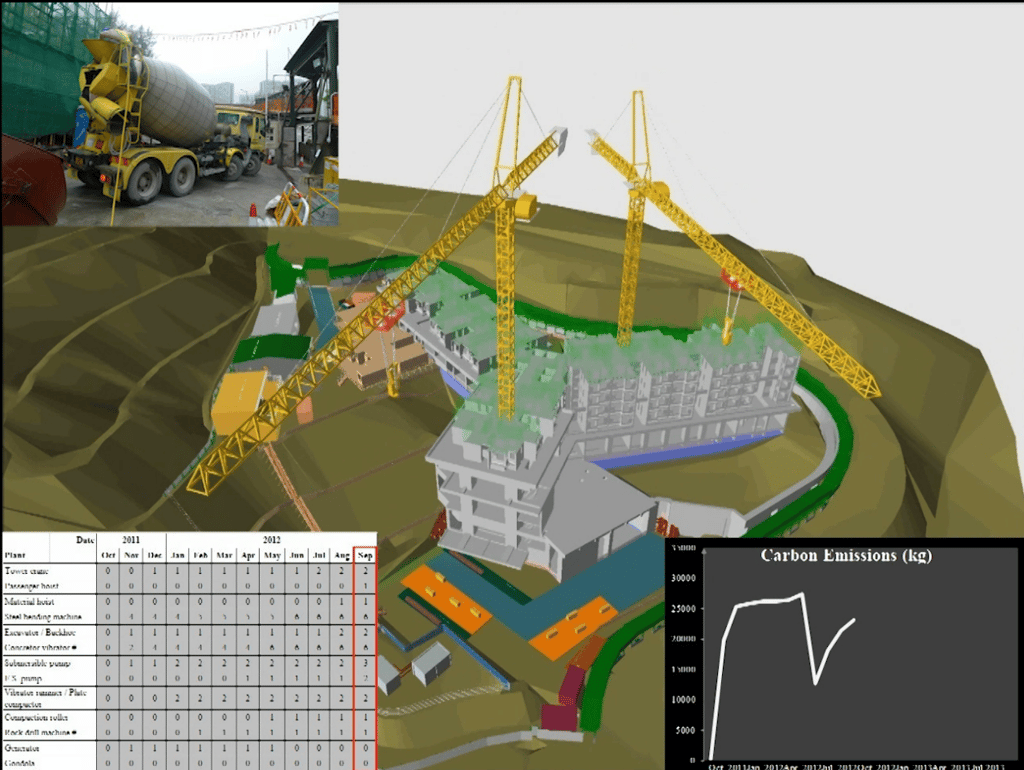
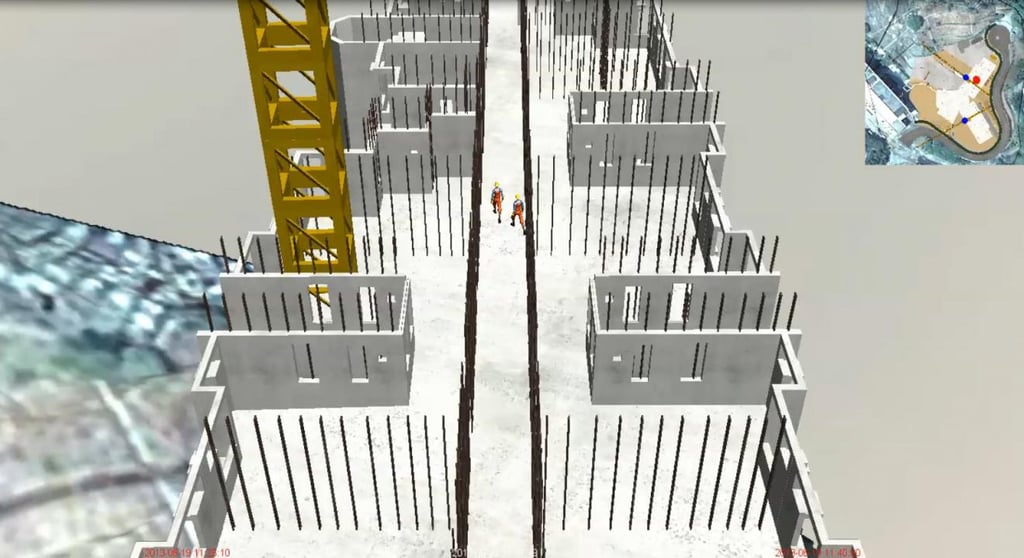
This study describes prototype architecture for implementing a carbon emission prediction and a simulation tool for construction projects using virtual prototyping technologies. The estimated emissions of the construction operations for each activity are calculated, tabulated and plotted to visually demonstrate the emission rates side by side with the integrated 4D models of the construction project. The presented 5D BIM model allows project teams to visualise the predicted emissions at different times in the construction processes, analyse the emission peaks, and allow the project team to take proactive measures against potential emissions.
A real-life public housing construction project in Hong Kong is adopted to demonstrate the application of the emission prediction visualisation tool. By simulating likely carbon emissions during project planning phases in advance of actual construction activities, the tool has the potential to encourage exploration of possible strategies to minimise carbon emissions in the construction sector.
Acknowledgements
Hong Kong Polytechnic University
Webpage
Industry Transformation
The Construction Industry Transformation research stream aims to drive innovative changes in construction practices and project management. Our research...

Webpage
Dealing with Digital Disruption in the Built Environment
The Dealing with Digital Disruption research stream seeks to lead the transformation of the built environment through the power of digital innovations,...

Webpage
Resilient Futures
Resilient and sustainable urban environments embed much more than the triple bottom line and anticipating, adapting and responding to environmental shocks and...
Webpage
Social and Economic Development in Property and Construction
The Social and Economic Development in Property and Construction Research Stream specialises in research spanning the construction, infrastructure, real...
Webpage
Industry Transformation
The Construction Industry Transformation research stream aims to drive innovative changes in construction practices and project management. Our research...
Webpage
Dealing with Digital Disruption in the Built Environment
The Dealing with Digital Disruption research stream seeks to lead the transformation of the built environment through the power of digital innovations,...
Webpage
Resilient Futures
Resilient and sustainable urban environments embed much more than the triple bottom line and anticipating, adapting and responding to environmental shocks and...
Webpage
Social and Economic Development in Property and Construction
The Social and Economic Development in Property and Construction Research Stream specialises in research spanning the construction, infrastructure, real...