

- Posted on 10 Oct 2022
- 15-minute read
This year’s Nova Employment ‘Focus on Ability’ Short Film Festival will feature a short film by UTS Communications alum Jessica Trueman who completed a Bachelor of Communications in Media Arts and Production in 2020. The short film entitled ‘A Bold Choice’ has been selected as a finalist in the open entrant category.

Disability provides life experience non-disabled people don’t have. Consider this your absolute strength.
In the short film A Bold Choice we meet Alice - played by neurodivergent actress and filmmaker Jessica Trueman - who is preparing for a self-tape audition with her close friend and confidante Carla - played by Laura Elizabeth Wallace - who coaches Alice in performance.
Carla reminds Alice 'to make a bold choice' which results in Alice collapsing. This prompts an awkward situation where Carla believes Alice has had a medical episode until Alice assures Carla that she is ok, and apologises for taking ‘things too literally’ as a result of being neurodivergent.
Autism and ADHD are examples of conditions that are categorised as 'neurodivergent', in which mental and neurological function differs from what is considered 'typical' or 'normal'.
The Nova Employment ‘Focus on Ability’ Short Film Festival, has been running for 14 years and asks entrants to ‘produce films of 5 minutes or less that focus on the individual or groups' ability, or a trait about them that is not merely defined by their disability’.

As Jessica explains, the Focus on Ability festival is a "pivotal initiative that reminds wider society that disabled people are more than just their condition or the label they have. It gives a platform for people with disability to be represented behind and in front of the camera, in stories specifically about disability."
The pandemic was a catalyst and driver for Jessica taking a leap of faith beyond her acting abilities to tackle the challenges of being writer, producer and director on A Bold Choice drawing on skills gained through her Media Arts Production degree.
Initially apprehensive, Jessica was encouraged by a mentor and coach to use a script she had written that aligned with the themes of ‘Focus on Ability’, resulting in A Bold Choice. She hopes that audiences absorb some specific elements in her film.
There are a few key messages I've got in A Bold Choice that I'm aiming to convey. One is how verbal language is processed to Autistic people and what this looks like. Additionally, I want to show how complex social idioms can be interpreted to many lengths. I also wish to show how alienating the process of auditioning or any kind of "job interview" can be.
A Bold Choice satirically pokes fun at the entertainment industry idioms used and shows how confusing and hard it can be to navigate industry expectations that are heavily placed on you.
Jessica’s advice to anyone in the neurodivergent or wider (dis)ability community who are thinking of a career in the entertainment industry is to;
"Always speak up if you need help or accessibility requirements. This ensures equity with you and others. I'd also remember that your disability is a major difference between you and others and gives you life experience that others outside the community don't have. Where possible, this is your absolute strength, even if you don't think or feel this is the case. I'd also say that the discourse is starting to change around disability, and this is the time to contribute to doing so."
With disability finally being represented on screen in the Heartbreak High reboot, Everything’s Gonna Be Alright and As We See It, Jessica has hope the narrative is changing, even though there's still a long way to go with authentic disability representation in film and TV.
Jessica would like to see more career pathways in the entertainment industry for people identifying as neurodivergent or have other disabilities. For her own career future, she plans to continue to ‘write scripts and bring them to the screen putting herself as a principle character.’
Right now, Jessica's focus is championing her directorial debut with A Bold Choice, showcasing her creativity, passion, purpose and ABILITY.
Read the complete Q & A with Jessica Trueman (B/Communication (Media Arts Production) 2020).


- There are a few key messages I've got in 'A Bold Choice'. One of those is how verbal language is processed to Autistic people and what this looks like. Additionally, I want to show how complex social idioms can be interpreted to many lengths. I also wish to show how alienating the process of auditioning or any kind of "job interview" can be.
- Has it always been a goal to make a short film for entry into the ‘Focus on Ability Film Festival?
Initially no, but once encouraged by a mentor and coach of mine to think about using a script I had written and within the themes of 'Focus on Ability'. So, that inspired me to create these stories. - What challenges and barriers have you faced as a neurodivergent person working in the entertainment industry?
So many! Honestly, there is more than I realise, and I'm learning about them everyday. As an actor especially, I know I perform best outside audition scenarios where you have to "sell yourself" as that for me feels so unnatural. - What was your motivation to take on all four roles for ‘A Bold Choice as actor, director, writer and producer?
As an actor during the very quiet pandemic, my work as an actor and with the skills I obtained through the Media Arts and Production degree at UTS, I knew I had the knowledge and the ability to make my own work with myself behind and in front of the screen. So, when I had the story and the time to make 'A Bold Choice' I decided to make the film. Things move quickly when you take a leap of faith. - Can you talk about the ‘Nova Employment ‘Focus on Ability’ Short Film Festival’ and its importance and purpose for people with (dis)ability.
The Nova Employment Focus on Ability Short Film Festival focuses on films that are 5 minutes or less, make by or about disabled people (or people with disability, whichever you prefer), with a theme that must focus on the individual or group's ability, or a trait about them that is not merely defined by their disability. It's a pivotal event and initiative that reminds wider society that disabled people (or people with disability) are more than just their condition or the "label" they have.
I believe that the biggest purpose that the Nova Employment Focus on Ability Film Festival has is actually using disabled (or people with disability) a platform to be represented behind and in front of the camera, in stories specifically about disability. - What advice would you like to share with those in the neurodivergent or wider (dis)ability community who are thinking of a career in the entertainment industry.
My advice would be to always speak up if you need help or accessibility requirements. This ensures equity with you and others. I'd also remember that your disability is a major difference between you and others and gives you life experience that others outside the community don't have. Where possible, this is your absolute strength, even if you don't think or feel this is the case. I'd also say that the discourse is starting to change around disability, and this is the time to contribute to doing so. - What pathways and opportunities would you like to see opening up for people with Autism, ADHD and (dis)ability as a whole?
I see more awareness of having disabled people (or people with disability) within disabled stories, thus leading to more authentic, nuanced portrayal of disability and disabled people (or people with disability) in Film, TV and Theatre. The industry, in various ways, such as initiatives to increase disabled people (or people with a disability) in various sectors of the media. - Have you seen or experienced greater acceptance of those with Autism, ADHD and (dis)ability as a whole as an actor, producer, writer and director?
I have started to see that shift in the past three years or so, with awareness and visibility being brought to the forefront. Prior to this, disability representation in Film and TV seemed rare and - In your opinion do you feel people with Autism, ADHD and disability are being depicted in the media and the entertainment industry in a more realistic and respectful manner?
Prior to the 'Heartbreak High' reboot, 'Everything's Gonna Be Alright' and 'As We See It', disability representation, especially authentic Autistic representation, has been extremely rare to see, and the most of the time, it's the polar opposite of "realistic" and "respectful". Honestly, there is a long way to go in authentic disability representation in Film and TV, although I have hope the narrative is changing, due to the aforementioned titles using actually disabled people in major roles on and off screen. - What drew you to a career in the entertainment industry?
When I was young, I attended my first acting class and fell in love. I also loved animations, musicals and movies. Seeing the different mediums of Film and TV there were, with some of the same faces, made me want to pursue a career in entertainment, as I feel it's living the lives of many within my singular life; if that makes sense :) - Where would you like to see yourself within the industry in the future?
I see myself as a principal character on Film and TV in Australia and overseas, in places such as the US and the UK. I also have many plans to write my own scripts and bring them to the screen, many with myself as a principal character- much like 'A Bold Choice' but on a larger scale. - Is there anything else you would like to share with readers here?
All these questions are great so I thank you for sending them in such detail and relevance to the themes of the film. It is quite heartening to see :)
I also feel the film has this satirical element to it, in the sense that it's poking fun at the acting/entertainment industry idioms used and shows how confusing and hard it can be as an actor to navigate all those industry expectations that you feel are heavily placed on you.
From A Bold Choice Media Kit
A Bold Choice - A film by Jessica Trueman
An aspiring actress takes her audition a step too far.
Filmmaker Statement
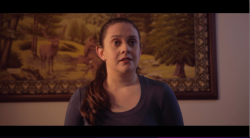
A Bold Choice, Jessica Trueman - Media Kit
A Bold Choice is about needing to break out of the routine my Autistic brain so desperately clings too, to find creative growth as an Actor. I find this to be true of the auditioning process, which I often find stifling, due to the many technical rules this process has, alongside the expectations of the entertainment industry that are put onto young actors like me, as well as the expectations that come from well-meaning teachers, mentors, fellow actors, and myself. This film aims to remind us that our habits and routines aren’t set in stone as Neurodivergent people but as anchors of how to go beyond the “default” and stagnant expression that feels set in stone around us, and how we uniquely connect with others when we put ourselves out there with an alternative expression than what is considered “normal” or “predictable”.
Byline: Steven Yates