


- Posted on 19 Feb 2025
- UTS Rapido case study
- 6 minute read
UTS Rapido's performance testing helps transform the disability experience
A collaboration between UTS Rapido and Australian start-up PolySpine is transforming the lives of people with moderate to severe physical disability, opening the door to beach trips, aeroplane flights, canoeing excursions and more.
For people with conditions like cerebral palsy, quadriplegia, muscular dystrophy and motor neuron disease, recreational activities can be a challenging proposition. Sitting on the floor, in an airline seat or even at the dinner table is often impossible without adequate head and torso support.
So, when Australian company PolySpine emerged on the start-up scene in 2020, the disability community took notice. Its product, PolySpine, is a lightweight exoskeleton that offers a unique opportunity for people with moderate to severe physical disabilities to experience more of the world outside their wheelchairs.
PolySpine is comprised of an injection-moulded ‘spine’ constructed using the highest quality materials and a durable cover made from medical-grade custom fabrics that are Bio-C tested. It also includes a chest harness and lap belt.
The device is used in conjunction with a series of seating and recreational attachments that provide physical support, allowing users to participate in activities, like paddle boarding, bike riding or using a beach wheelchair, that would otherwise be out of reach.
The PolySpine team knew they were onto a winning idea. All they had to do now was get their device to market. With a little help from our applied R&D innovation hub, UTS Rapido, that’s what they did.
Establishing the partnership
The supply of medical devices in Australia is regulated by the Therapeutic Goods Administration (TGA). Medical devices must be included on the Australian Register of Therapeutic Goods (ARTG), a public database of therapeutic goods, before they can be supplied in Australia.
For the PolySpine team, led by father and son creators Clint and Riley Saban, inclusion on the ARTG was the final hurdle before they could start manufacturing the PolySpine exoskeleton. Through an Innovation Connections Grant, the team was matched with UTS Rapido, an applied R&D innovation hub providing engineering and technology expertise.

"The Rapido team have great knowledge of validation testing. We identified what we needed in terms of tests to validate our product and they identified a whole host of other things that needed to be tested as well."
Jasmine Sayour
Managing Director, PolySpine
A rigorous testing process
Working with a prototype of the exoskeleton, the Rapido mechatronics team mapped out a plan for PolySpine’s Conformity Assessment which is a series of activities that demonstrate compliance with the TGA’s essential safety and performance principles. The team leveraged the specialised labs and equipment available at UTS.
The first step was to come up with a list of tests that would deliver the evidence they needed.
- The team settled on a rigorous testing process to measure the strength, durability and safety of both the injected-moulded material that forms the device’s spine and the chest harness and lap belt that secures it to the user.
- They conducted drop tests and fatigue and fracture toughness tests, the bulk of which were conducted using the university’s Shimadzu AGX50 Universal Testing Machine.
- They also conducted material tests, including toxicity, flammability and reactions to hot/cold exposure, and device lifespan tests, which examined the product’s shelf life and biodegradability potential, among other things.
- The testing process revealed a series of minor design changes that would further strengthen the device, including upgrading the materials used for the chest harness and lap belt.

"We develop bespoke R&D solutions for businesses on the path to research commercialisation, delivering everything from validation testing through to mechanical, mechatronic and software engineering support that transforms business outcomes."
Hervé Harvard
Founding Executive Director, UTS Rapido | Head, Research Translation and Impact, UTS
Leading the way to evidence-based design improvements
The PolySpine team made the design upgrades and then submitted the prototype for a second round of tests, which it passed with flying colours. PolySpine was added to the ARTG in September 2021 and released to the public early the following year.
The process of designing, developing and bringing PolySpine to market has resulted in the creation of two new jobs. Today, PolySpine is listed on the NDIS where it’s already creating a more inclusive world. It’s currently under consideration by the Food and Drug Administration in the USA.
Explore
Client: PolySpine
Industry: Medical Devices
Funding: Grant contribution
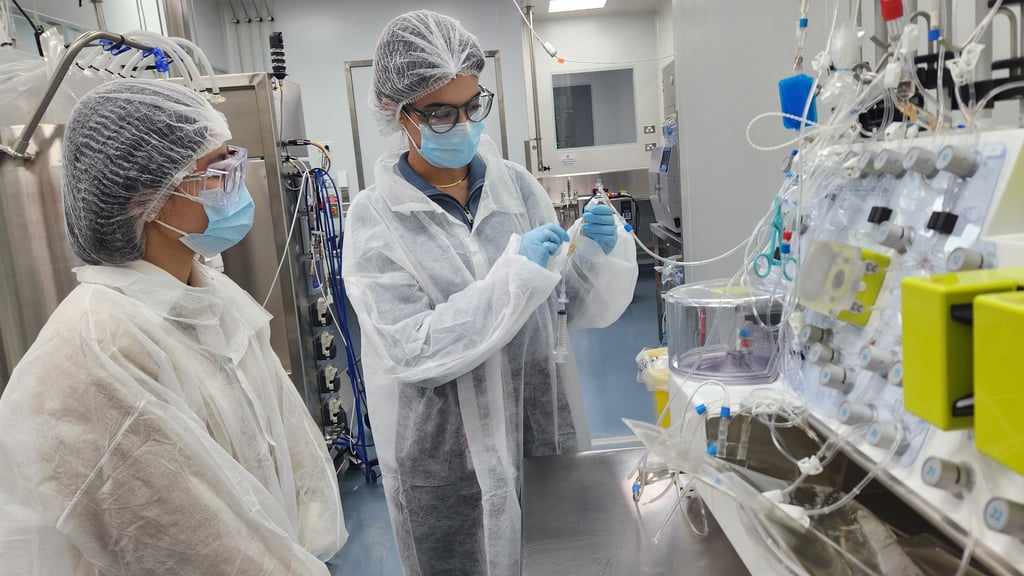
Biotech start-up takes leap to regenerate Alzheimer’s damage
Australian biotechnology start-up Skin2Neuron found the perfect scientific and manufacturing partner to help their breakthrough cell-based treatment take root.
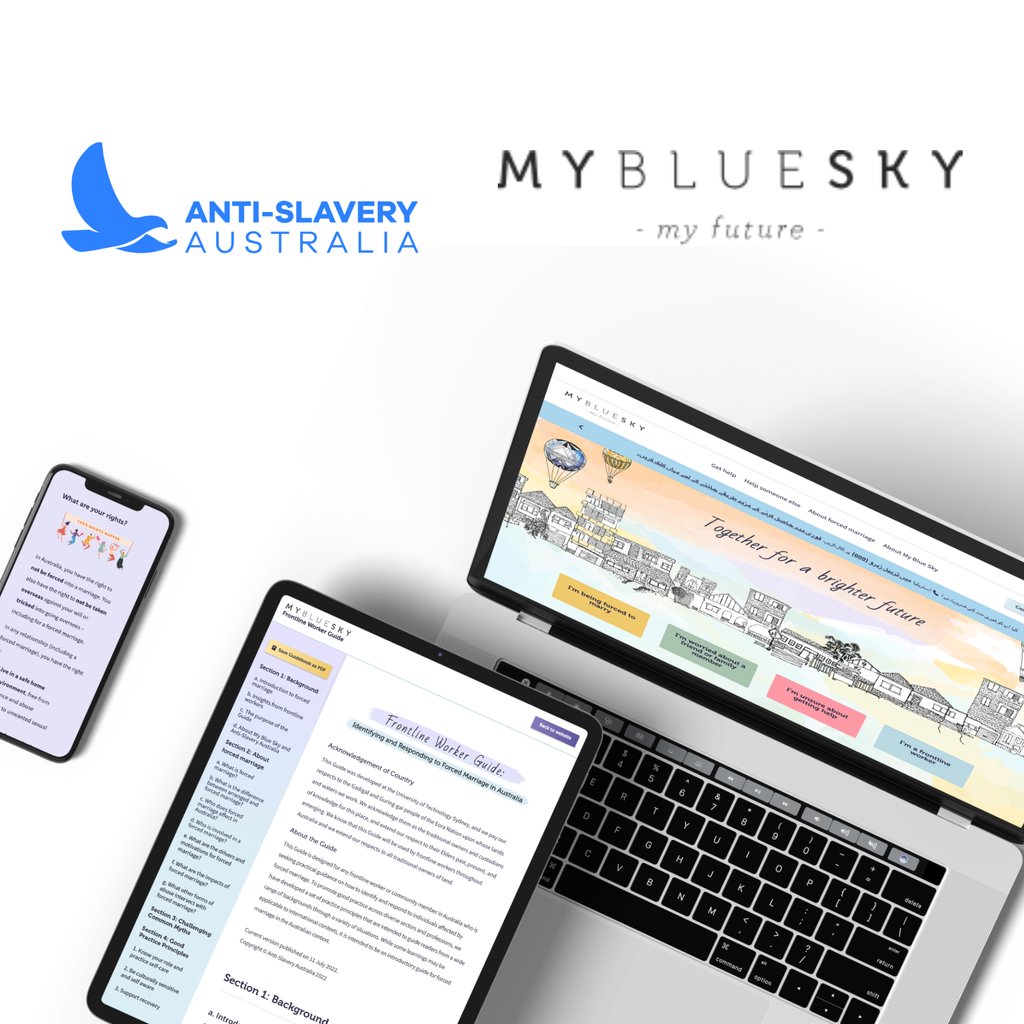
My Blue Sky
Anti-Slavery Australia, a specialist legal and research centre within the UTS Faculty of Law, has run My Blue Sky, Australia's national forced marriage support...

Mineral Technologies
Mineral Technologies partnered with UTS Rapido to overcome production challenges in manufacturing gravity spiral separators. Using advanced 3D printing, they...

Quokka Quantum
UTS Rapido software and mechatronics teams assisted UTS academics Christopher Ferrie and Simon Devitt on the early prototype that paved the way to the first...
Biotech start-up takes leap to regenerate Alzheimer’s damage
Australian biotechnology start-up Skin2Neuron found the perfect scientific and manufacturing partner to help their breakthrough cell-based treatment take root.
My Blue Sky
Anti-Slavery Australia, a specialist legal and research centre within the UTS Faculty of Law, has run My Blue Sky, Australia's national forced marriage support...
Mineral Technologies
Mineral Technologies partnered with UTS Rapido to overcome production challenges in manufacturing gravity spiral separators. Using advanced 3D printing, they...
Quokka Quantum
UTS Rapido software and mechatronics teams assisted UTS academics Christopher Ferrie and Simon Devitt on the early prototype that paved the way to the first...
Find out more about UTS Rapido
UTS Rapido: an applied R&D innovation hub that partners with industry, government and academia. Email rapido@uts.edu.au