


Research Team
-
Dr Mihajla Gavin, Professor Kathy Walsh
Sustainable Development Goals
-
4. Quality Education
-
10. Reduced Inequalities
- Posted on 6 May 2026
Research in Management Learning explores how empathy can be used as a pedagogical tool to teach social responsibility in management education.
The challenge
Despite a growing focus on responsible management education in business schools, many educators still rely on approaches to teaching and learning that prioritise cognitive understanding of social problems over emotional engagement. Students typically learn about social problems through cases, lectures and simulations that keep real-life human experience at a distance. The result is that while graduates often can analyse social issues effectively and develop their critical thinking skills, a lack of affective empathy in teaching and learning means students struggle to deeply connect to social problems and therefore to act on them.
The approach
Researchers examined how empathy can be deliberately cultivated through pedagogical design by embedding lived experience of social disadvantage into a social impact hackathon. Business students collaborated to develop business ideas for marginalised communities, alongside workshops and mentoring. A facilitated panel which included people with lived experience of homelessness sharing their stories was ethically designed through partnership with a social enterprise, with careful preparation, support and structured reflection to ensure respectful and meaningful engagement. The study found that students' engagement with the lived experience panel formed a pivotal learning moment.
Outcome and impact
Engagement with lived experience prompted a profound shift in students' understanding of social responsibility, moving beyond cognitive empathy to affective connection. The researchers termed this novel pedagogical approach "Lived Experience Values-Based Experiential Learning (LEVEL)". The study showed that when students are confronted with the human consequences of social disadvantage through lived experience, something shifts both cognitively and emotionally. Social problems became immediate and real, challenging assumptions and reshaping how students approached solution design. Rather than producing narrow entrepreneurial outcomes, the experience strengthened students' sense of agency and increased their confidence and ability to act. Responsibility becomes personal. Learning becomes relational. Problems are understood from a human-centred lens. Action becomes possible.
Collaborate with us
Find out about research collaboration with the UTS Business School.
Research Outputs
Journal Articles
- Gavin, M. & Walsh, K. (2026). Teaching social responsibility through empathy: Integrating lived experiences of the socially disadvantaged in management education. Management Learning. https://doi.org/10.1177/13505076261437402
Media
- Walsh, K. & Gavin, M. (2026, 1 May). You can’t teach ‘affective’ empathy from a case study. Times Higher Education. https://www.timeshighereducation.com/campus/you-cant-teach-affective-empathy-case-study
Researchers
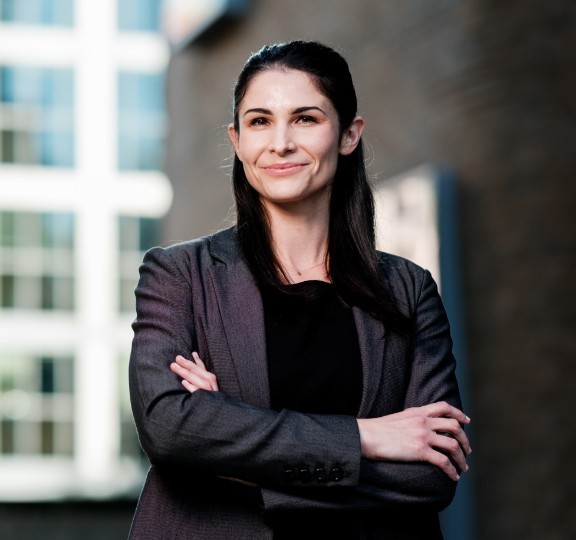
Senior Lecturer, Business School
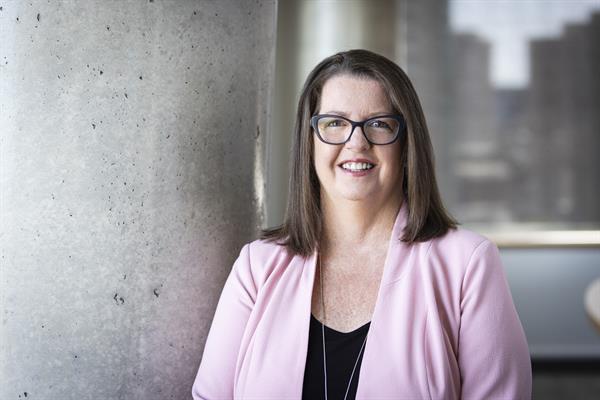
Professor, Business School

Webpage
Shedding light on the traces of illicit drugs
Australian-first testing technology and surveillance research is helping reduce the harm associated with injecting drug use.

Webpage
AI partnership yields bumper harvest
Artificial intelligence is giving fruit and vegetable growers more accurate predictions on the best time to harvest

Webpage
When Taking a Stand Pays Off: How Brand Activism Impacts Consumer Loyalty
Does brand activism result in customer loyalty and influence sales? This research investigates the relationship between brand values, consumer attitudes, and...

Webpage
Solving the stalemate
Australia's bargaining system for essential workers - denied the right to strike yet lacking timely arbitration - is broken. UTS research proposes a novel...
Webpage
Shedding light on the traces of illicit drugs
Australian-first testing technology and surveillance research is helping reduce the harm associated with injecting drug use.
Webpage
AI partnership yields bumper harvest
Artificial intelligence is giving fruit and vegetable growers more accurate predictions on the best time to harvest
Webpage
When Taking a Stand Pays Off: How Brand Activism Impacts Consumer Loyalty
Does brand activism result in customer loyalty and influence sales? This research investigates the relationship between brand values, consumer attitudes, and...
Webpage
Solving the stalemate
Australia's bargaining system for essential workers - denied the right to strike yet lacking timely arbitration - is broken. UTS research proposes a novel...