


Welcome to Law Health Justice
We are a faculty research centre in the Faculty of Law, committed to advancing interdisciplinary research and policy at the intersections of law, health, and justice. Our work contributes to legal and policy frameworks that promote health equity, protect human rights, and ensure justice in healthcare settings.
We bring together scholars, practitioners, and community advocates across a variety of projects, to develop transformative legal research for our communities. Our work spans a wide array of topics, including bioethics, mental health law, reproductive rights, disability and elder law, and the ethical and legal dimensions of emerging health technologies. Through collaborative research, public engagement, and partnerships across disciplines, we aim to make a meaningful impact on the lives of individuals and communities – especially our most vulnerable.
We invite you to explore our research themes, publications, and upcoming events. Please reach out to us for further information and opportunities to collaborate.
Convenors:
Aileen Kennedy: aileen.kennedy@uts.edu.au
Linda Steele: linda.steele@uts.edu.au
Research themes
Use the buttons to expand or collapse the section.
-
Advances abortion care and assisted reproductive technologies have expanded the options available to individuals and couples navigate reproduction. Law | Health | Justice researchers are at the forefront of reproductive regulation, with work that focus on both domestic and international regulation of abortion care and the experiences of Australians who travel to access assisted reproductive services. This research aims to inform responsive and equitable regulatory frameworks that address the evolving needs of those seeking to manage reproductive choice.
Researchers
Recent Work
Regulating Relations
This research project, led by Distinguished Professors Isabel Karpin and Jenni Millbank, explores the experiences of Australians seeking fertility treatments, along with insights from industry regulators, fertility clinics, and facilitators, to shape a more equitable and adaptable legal framework. By documenting the journeys of reproductive travel and the pathways of reproductive materials, such as sperm, eggs, and embryos, used by Australians, the study seeks to develop legal and ethical models that reflect the real-world needs of fertility treatment users and their families. Funded by an Australian Research Council Discovery Project grant (2015–2018), this project aims to foster laws that accommodate diverse family formation pathways with flexibility and fairness.
-
Our work on patient safety and the quality of health care is driven by our shared commitment to responsive regulation - that is to laws, ethics, social policies and practices that reflect the needs and experiences of the populations they are intended to serve.
Researchers
Recent Work
Regulation of Health Practitioners
At its simplest, an effective complaint management system requires that the individual raising the complaint must be able to complain to an appropriate entity and be treated with respect, and for the wider health care system such complaints must be effectively utilised as a valuable source of information about how and where mistakes have occurred so as to improve weaknesses in health services.
Building upon previous work on the ombudsman institution, this research led by Distinguished Professor Jenni Millbank. investigates the extent to which this model of individual complainant and systemic improvement of health care complaints is reflected in practice, by mapping current regulatory mechanisms and evaluating impact upon stakeholders and end-users of health services.
-
The Equity, Human Rights, and Health theme at UTS Law | Health | Justice addresses critical social and legal issues at the intersection of health and human rights, promoting equitable, person-centred care across diverse communities. Projects under this theme explore complex areas such as care models for individuals with innate variations of sex characteristics, human rights adaptation to climate-related health impacts, and the intergenerational health effects of social inequality. Additional research investigates gendered violence, menstrual discrimination, and support for unpaid carers, aiming to inform legal frameworks that address systemic harm and enhance social and economic rights. Through cross-disciplinary collaboration, the theme seeks to create legal and policy pathways that respond to the needs of vulnerable populations, advancing a more just and inclusive approach to health and human rights.
Researchers
Recent Work
Models of Care for People with Innate Variations of Sex Characteristics
This research, collaboratively led by Dr Aileen Kennedy, Dr Morgan Carpenter, and Bonnie Hart, seeks to develop co-designed, person-centred models of care that improve the physical and mental health and wellbeing of people with innate variations of sex characteristics and their families. The research, in partnership with University of Sydney, Intersex Human Rights Australia, Canberra Health Services, Australian National University, University of Southern Queensland, University of Queensland, UNSW, La Trobe University, University of Western Australia, Telethon Kids Institute, University of Canberra, Intersex Peer Support Australia and A Gender Agenda, will draw on the knowledge and insight of those with lived experience to transform models of care from narrow biomedical to practical multidisciplinary approaches that centre psychosocial support. For more information see 'Models of Care for People with Intersex Variations'.
Inheriting Inequality
Emerging epigenetic research reveals that social inequalities—rooted in gender, socio-economic, and racial disparities—can lead to inheritable biological harm. Trauma from sources such as child abuse, domestic violence, slavery, and poverty can alter gene expression, resulting in persistent health impacts like low birth weight, cardiovascular issues, and cognitive deficits, which can be passed to subsequent generations. This research led by Distinguished Professor Isabel Karpin calls for a legal framework that recognises and addresses these intergenerational harms, aiming to mitigate the health effects of inequality and provide vulnerable groups with pathways out of inherited disadvantage. For more information see: bioinequalities.com.
Human Rights-informed Adaptation in Response to Climate Change related Inequalities
This research, led by Prof Beth Goldblatt in collaboration with Dr Cristy Clark of the University of Canberra, seeks to understand the complex inequalities, including severe health impacts, resulting from climate change on a range of populations based on race, gender, class, disability, age, etc. Drawing on grounded research with NSW communities facing flooding, increasing temperatures and inadequate water supply, this research will inform legal responses using human rights and discrimination law to ensure equitable adaptation.
Gendered Harm and Violence
This project Led by Prof Beth Goldblatt and Dr Jane Wangmann looks at the links between poverty, lack of services and gendered violence and how rights-based responses to material inequality can prevent and respond to violence.
Past Projects
Menstruation and Discrimination
This project led by Prof Beth Goldblatt and Dr Linda Steele looks at discrimination relating to menstruation as it affects women and girls, including particular challenges for people with disabilities.
Unpaid Carers and the Social Reproduction of Harm
This project, led by Prof Beth Goldblatt in collaboration with politics scholar, Prof Shirin Rai of the University of Warwick, looks at the inadequacy of legal frameworks to provide for harms faced by unpaid carers of people who are ill or injured. It suggests new ways of understanding and compensating harm at national and international levels. Professor Goldblatt continues to work in this important area.
-
The Disability and the Law theme at Law | Health | Justice advances inclusive legal frameworks for people with disabilities. Key projects include redressing violence and neglect against people with dementia in aged care, expanding understandings of abuse against women and girls with disabilities for the Disability Royal Commission, and analysing the legal regulation of behavioural disabilities to promote social inclusion. Each project is guided by human rights principles and partnerships with advocacy groups, building a foundation for reforms that support dignity, equality, and empowerment. This research informs evidence-based policies to protect and promote justice for people with disabilities in Australia.
Reseachers
Recent Work
The Legal Regulation of Behaviour as a Disability
Led by Dr Karen O'Connell and Distinguished Professor Isabel Karpin, this research aims to develop a comprehensive analysis of the legal issues raised by the expansion of the category of behavioural disability. The research is funded by an Australia Research Council Discovery Grant (DP150102935): “The Legal Regulation of Behaviour as a Disability”. It will ensure that laws which seek to regulate people with challenging behaviour maximise social and economic participation by taking full account of the goals of equality and social inclusion.
Truth Justice Repair
Dr Linda Steele is currently leading a program of research 'Truth Justice Repair', exploring approaches to reckoning with, redressing and repairing the impacts of violence, institutionalisation and segregation of disabled people. Dr Steele is particularly interested in truth-telling, reparations, sites of conscience, and reparative pedagogy.
Reparative Urban Planning and Heritage
Dr Linda Steele collaborates with Dr. Phillippa Carnemolla from the UTS Faculty of Design and Society on research concerning former disability institutions. Their work includes partnerships with the Council for Intellectual Disability, People with Disability Australia, and Emeritus Professor Leanne Dowse of UNSW to understand the perspectives of individuals with intellectual disabilities on public education and remembrance of such institutions. They have supported the Council for Intellectual Disability’s advocacy against the proposed tourist rezoning of Peat Island in New South Wales, a site that operated as a state-run disability institution for 99 years. Additionally, Drs. Steele and Carnemolla are collaborating with Speak Out Advocacy and Willow Court Heritage Site Inc. to develop a disability-inclusive heritage approach for the former Willow Court institution in New Norfolk, Tasmania.
Past Projects
Women with Disability and the Disability Royal Commission
Led by Dr Linda Steele, this project aims to expand understanding of the violence, abuse, neglect, and exploitation faced by women and girls with disabilities, contributing to the findings of the Royal Commission into Violence, Abuse, Neglect, and Exploitation. Funded by Women with Disabilities Australia, the research will inform law and policy to prevent and redress violence, with a focus on sexual and reproductive abuse. It also seeks to challenge the prevailing notion that such violence is justified or necessary, promoting a framework of dignity and rights for women and girls with disabilities.
-
Australia's population is ageing and more people are living longer with complex, chronic illnesses, including dementia and other conditions that affect cognitive abilities.
The Law | Health | Justice Research Centre's work in this area investigates the legal needs and rights of older people, with a focus on health, justice and inclusion in society. We scrutinise the impacts of laws and practices on the autonomy, dignity and right to self-determination of older people and our research advances evidence-based law reforms to respond to problems in an ageing society.
Researchers
Recent Work
Evaluation of Online ‘Dementia-Capable’ Training for Legal Professionals
This project led by Prof Nola Ries is a pilot evaluation of two online, dementia-focused training courses for legal practitioners: (1) Understanding Dementia: Facts & Foundations; and (2) Planning Ahead: Focus on Advance Care Planning.
The project is significant in delivering and evaluating innovative online training for legal professionals. The findings will reveal new insights on professionals’ confidence, knowledge, skills and attitudes.
The research is supported with funding from the Australian Community of Practice on Research on Dementia (ACcORD), an NHMRC-funded initiative.
Criminal Risk Behaviours and Dementia
Led by Prof Nola Ries and Dr Fiona Kumfor (FRONTIER Dementia Research Clinic, University of Sydney), this project investigates the experiences of people with dementia—particularly younger onset dementia—whose behaviour changes may bring them into contact with police and the criminal justice system, an area with limited research in Australia. The study gathers insights from key stakeholders, including police, legal service providers, affected individuals, and their carers. Findings will provide valuable perspectives on dementia-related criminal risk behaviours and include recommendations for improving practices and policies. Supported by funding from the UTS Faculty of Law, this research seeks to enhance understanding and inform better responses within the justice system.
Advance Planning for Research Participation: Consumer Views and Stakeholder Recommendations
Led by Prof Nola Ries, this project explores advance planning for research, encouraging individuals aged 55+ to consider, discuss, and document preferences for participation in research during future periods of incapacity, potentially through an advance research directive. The study aims to gather views on a directive form and guidance booklet, developing stakeholder recommendations to support advance planning. Outcomes will include a directive template and implementation recommendations from consumer and stakeholder representatives in dementia, ageing, health research, policy, advocacy, and aged care services. The project is funded by a Strategic Research Grant from the Australian Association of Gerontology Research Trust.
Past Projects
Redressing Violence, Abuse and Neglect of People Living with Dementia in Residential Aged Care
This project, led by Dr Linda Steele, develops principles and a framework to guide law and policy on redress for violence, abuse, and neglect of people with dementia in aged care. It examines perspectives of those affected, including people with dementia, care partners, and advocates, considers international human rights on reparations, and analyses experiences from other Australian redress schemes. Funded by the Dementia Centre for Research Collaboration, with partners like Dementia Alliance International, the project aims to build an evidence base to inform policies that address violence and neglect in dementia care. For more information visit: dementiajustice.org.
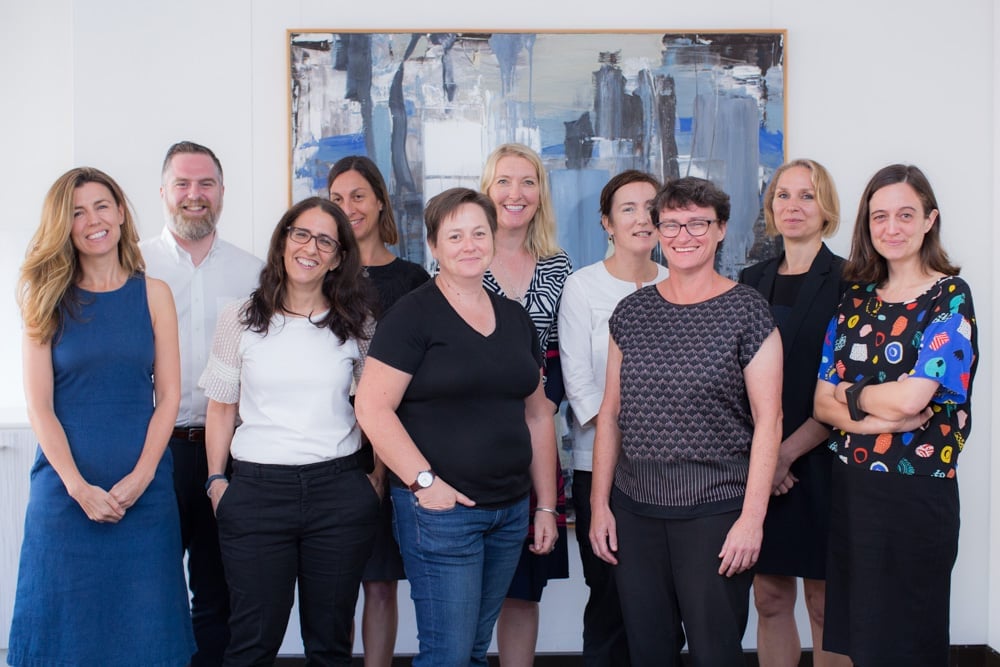
Meet the team
We are experienced researchers, committed to collaborative research that engages across disciplines. We build strong partnerships with professions, government, industry and community organisations.