


Streamlining and Integrating Incident Data for Improved Accuracy and Consistency
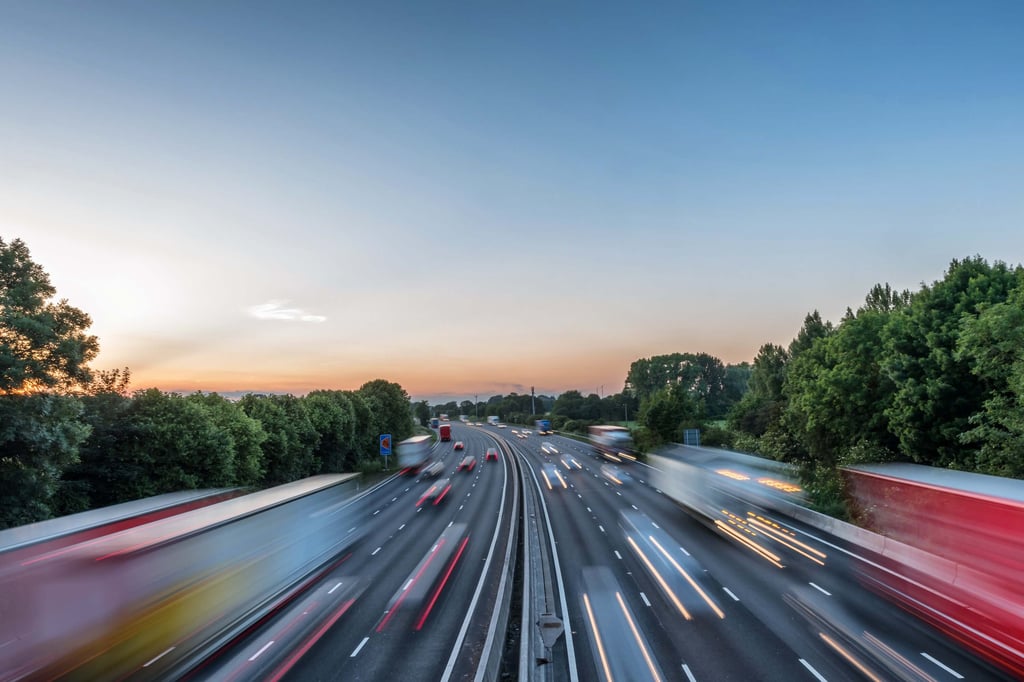
Making road incident information more reliable
Research Lead: Distinguished Professor Jie Lu
AAII Research Lab: Decision Systems and e-Service Intelligence (DeSI) Lab
Collaborators: Transport for NSW (TfNSW), iMOVE CRC
This project develops an AI framework to automatically detect duplicate and related road incident records and standardise inconsistent classifications across multiple data sources, establishing a unified, high-quality incident dataset that strengthens transport management, analysis and decision-making.
Context-Aware Long-Term Prediction of Incident Hotspots
Helping transport agencies plan ahead
Research Lead: Distinguished Professor Jie Lu
AAII Research Lab: Decision Systems and e-Service Intelligence (DeSI) Lab
Collaborators: Transport for NSW (TfNSW), iMOVE CRC
This project develops an AI system that predicts monthly and weekly road incident hotspots across NSW by combining historical incident data with contextual factors such as weather and major events. These predictions highlight key risk drivers, providing actionable insights to support proactive resource allocation and operational planning.
Watch a video on the latest outcomes of the project.
Sharkspotter: the world's first drone-enabled automatic shark detection system
Innovating the future of surf patrol
Research Lead: Professor Michael Blumenstein, Associate Professor Nabin Sharma
AAII Research Lab: Intelligent Drone Lab (iDL)
Collaborators: The Ripper Group
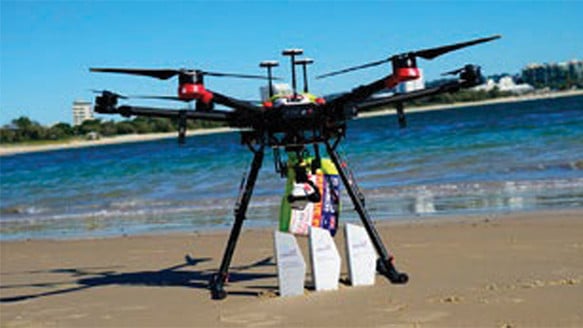
Sharks, rips and other factors present real challenges to keeping swimmers safe in our oceans. A pioneering collaboration between UTS researchers and The Ripper Group is fusing artificial intelligence and drone technologies to herald a new wave in surf lifesaving. SharkSpotter leverages advanced machine learning techniques known as ‘deep learning’ to detect sharks and other potential threats in real time.
The UTS-developed software turns aerial drones into powerful and highly accurate shark detectors, analysing streaming video from the drone to detect valid objects instantly. It then categorises them into one of 16 categories such as shark, whale, dolphin, ray, various watercraft and boat types, surfer and swimmer. When a shark is detected, SharkSpotter provides a visual indication on the computer screen and an audible alert to the operator. The operator verifies the alert, triggering system text messages to surf lifesaving crews on the ground and enabling them to act quickly.
It’s not just swimmers who benefit: safer beaches are a boon for coastal tourism and regional economies. The ground-breaking technology also demonstrates more effective ways to detect moving objects in a complex, dynamic marine environment, with significant potential to protect our unique marine life.
Intelligent Train-Carriage Load Analysis and Prediction
Predicting crowd levels on trains
Research Leads: Distinguished Professor Jie Lu, Dr Anjin Liu
AAII Research Lab: Decision Systems and e-Service Intelligence (DeSI) Lab
Collaborators: Sydney Trains
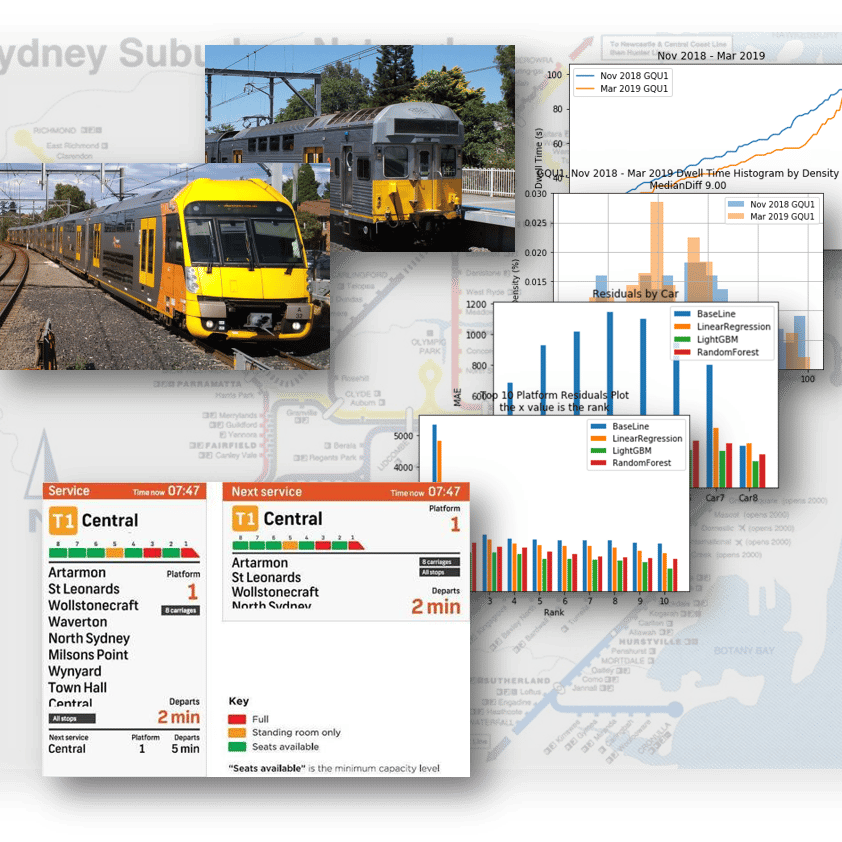
To better spread the customer across the train’s carriages and manage platform crowding, carriage load information is provided on both SPI screens and to the third-party apps feed for the Waratah fleet. The passenger load information to SPI Screens via the On-Board Handler (OBH) displays the train load from the weight captured as the doors closed at the last station.
The intent of this work is to utilize historical and real time Waratah carriage load data to build predictive capability which can provide expected passenger load across the train journey based on time of day. This work also looks for options to provide passenger loads across other sets which don’t have real time carriage load reporting capabilities.