

- Posted on 19 Mar 2025
- 5-minute read
Inner city communities in Ultimo, Pyrmont, Glebe and Haymarket have identified isolation and loneliness as a common issue and designed a roadmap for change.
What makes a community feel like home? Is it the spaces where we gather, the connections we form, or the sense of safety and belonging?
In a world where people are feeling increasingly lonely and disconnected, how do we bring back the magic that comes with belonging to a local community?
A new report from researchers at the UTS Centre for Social Justice & Inclusion (CSJI) – in collaboration with local community – Where we belong: Creating inclusive and accessible communities, has gathered personal stories to identify the things that support community connection and belonging, and major barriers for people living in the inner-city suburbs surrounding UTS.
Through interviews and workshops focused on what makes spaces inclusive and accessible, communities from Ultimo, Pyrmont, Glebe and Haymarket talked about the importance of:
- free and low-cost activities and events that are developed and led by local communities
- information about what's happening in the local community disseminated across multiple platforms and in different languages
- shared spaces that people from diverse backgrounds can enjoy.
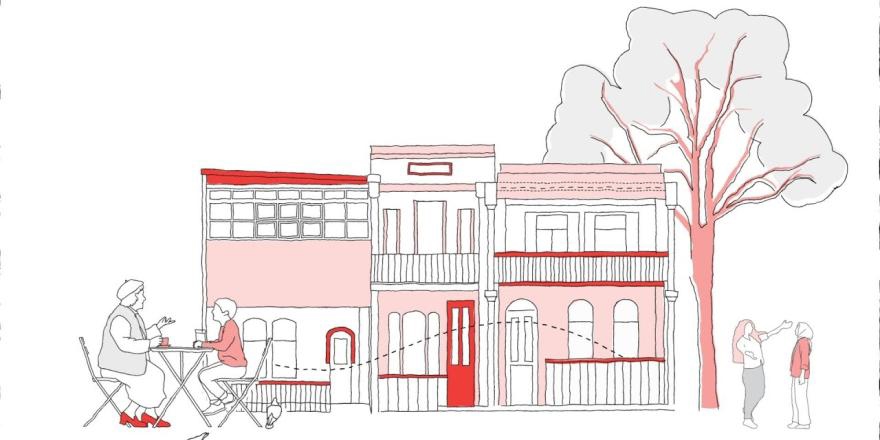
For many residents, costs inhibit their ability to participate in community events and use community facilities, with one noting that, ‘charging fees for booking ping-pong or badminton tables contradicts the community [centre]’s purpose, which is to serve the public’.
After identifying the barriers that stand in the way of community connection, the researchers worked with the local residents to create a roadmap for building an inclusive and accessible community.
Key recommendations include:
- increased investment in free and low-cost community spaces and events
- funding for place-based organisations
- funding to support safe and livable housing
- embedding mental health and wellbeing support into community initiatives.
‘Inclusive and accessible spaces help people feel safe and connected,’ said Amber Loomis, research lead, and Senior Social Impact Practitioner at UTS CSJI.
‘Places like parks, community centres and well-designed streets encourage interaction, reduce loneliness and strengthen social bonds. They also help make everyday activities like catching up with friends or attending events more inclusive, ensuring no one is left out due to physical barriers or financial constraints.
‘These spaces are so incredibly important to the wellbeing of our communities. They support both mental and physical health by encouraging movement, rest and social engagement, but they also promote the local economy by making businesses, services and events more accessible.
I think many of us often take these spaces for granted, not realising how valuable they are until they’re gone. Investing in accessible and welcoming spaces is not just about infrastructure – it’s about building communities where everyone can contribute, connect and thrive. – Amber Loomis
What’s next?
Following the release of this report, the CSJI team will continue to work with communities in Ultimo, Pyrmont, Glebe and Haymarket to advocate for and implement the findings. At a local level, this has already started to translate into community projects. In Glebe, residents noted that it was not just access to services and spaces that they valued, but it was important that information about the places that they lived was communicated effectively.
Responding to this, residents conceived Glebe Connections a local newspaper and communications hub housed at Glebe Youth Services and supported by UTS students. Launched in 2024 with its third issue currently in print, the newspaper serves as a platform for community voice, services and businesses. Issues are available for free at Glebe Youth Services and other local businesses.
More broadly, the findings are being used to inform local developers, building managers and community organisations to advocate for community need.
Read the Where we belong: Creating inclusive and accessible communities report
This work builds from CSJI’s ongoing partnerships with local community and is part of wider work focused on addressing community priorities in the suburbs surrounding UTS. Inclusive and accessible spaces were named as a priority area by community to increase sense of belonging in a thriving community. Read more about this work here.