

• Posted on 9 Mar 2025
  • 45-minute read

Leading the charge for equality on and off the field.

The Matildas are more than just a soccer team – they are pioneers who have elevated women’s sport to never-before-seen heights in Australia. 
2-pEvlPX2hc

Descriptive transcript

Thank you so much.

I'd now like to invite Professor Karen O'Connell, Dr Leila Khanjaninejad and Jane Fernandez to the stage for our panel discussion. As they come up, I'll start introducing them. Hold your applause.

Dr Leila Khanjaninejad is a Lecturer in Creative Intelligence and Innovation in the UTS Transdisciplinary School. Her research focuses on gender equity and inclusion in male-dominated sectors. Welcome, Leila.

Jane Fernandez is one of Australia's leading sports administrators and is currently the Executive General Manager Operations for Rugby World Cup Australia. Jane recently led the successful bid to host the FIFA Women's World Cup in 2023 as Chief Operating Officer. She was instrumental in its success and is also a UTS Business School alumna. Welcome, Jane.

Professor Karen O'Connell works at the UTS Law Faculty and has over 20 years' experience working on gender equality and sex discrimination issues in human rights practice and academia. Welcome, Karen.

There will be an opportunity during the panel discussion to ask questions of today's speakers. We're facilitating a Q&A through Slido, which means you can submit your questions whether you're here in person or online. Go to the link in the slides, which we're also posting for all of you joining us virtually. You can upvote questions that others have asked, and please try to keep the questions relevant to the topics we're discussing today.

Thank you so much everyone for joining this conversation. Lydia, thank you so much for that, it was incredibly inspiring. I want to start by offering our panellists a moment to talk about their work and how it relates to today's theme. Karen, we might start with you.

Karen O'Connell: Sure, thanks Amy. My work is in human rights and discrimination law, and I think when people hear that they often imagine someone going into court, with all the law books, making arguments passionately in a court, which is really important. I do something a bit different, and that is I use research to try and make the best equality laws we can. So I do have a focus on gender equality and sex discrimination, and that is very relevant to sport because there are so many issues that come up in sport that are about equality and discrimination. It's also really important to me now that those laws are used for gender equality for everyone, because in the past we've had gender equality laws that have worked more for privileged women than other women. So intersectionality is a big part of my work too.

Jane Fernandez: Yeah, I've worked in sport and major sports events since the Sydney 2000 Olympic Games—showing my age there, I know! I've always had this really strong belief in the power of sport to drive social change. We can see that through Olympic Games and social programs that come out of that, but focusing on football, when we started bidding to host the FIFA Women's World Cup, we always knew we had this amazing opportunity and sports bring people together. There's this beautiful term I heard the other day called "collective effervescence" and I just think it captures it so well. We come together, we celebrate, but we also learn, and that's why I love doing what I do.

Leila Khanjaninejad: Yes, I'm passionate about gender equity and inclusion and creating a safer space for everyone. My work is mostly focused on how we can really explore and break down barriers for specifically women in sport because it's a very strong platform for bringing positive change, considering the very sport-driven culture we have here in Australia. As I said, my work is focused on exploring and breaking down barriers in women's sport and bringing lasting positive change for creating an inclusive and equitable environment.

Thank you so much. I'm going to ask you, Jane. I reflected in my opening remarks about that period in 2023 and Lydia, you touched on what a transformative moment that was. I mean, you were a mastermind of that whole endeavour. Were you surprised by that nationwide hype and the Matildas effect? And what do you think contributed to that tournament's success?

Jane Fernandez: When we started bidding, we always believed the FIFA Women's World Cup would be something amazing and special. The journey started in 2017 and at that point in time, the biggest crowd the Matildas had had was about 17,000 people attend a match. As part of our bidding process, we commissioned a social and economic impact report—one of the big four did it—and they came back to us and said, "You'll probably get about 600,000 people attend the FIFA Women's World Cup." We were like, "No, you're wrong, mate." You rattled off the stats in your intro—we had two million people attend the FIFA Women's World Cup. Did we think it would get to that level? I think back in 2017, we hoped, we believed, but the proof wasn't yet there. There had never been, and this was the problem with the report, the data wasn't there. But we had a strong belief.

During the bid, we created the Get Onside campaign. Close to a million people signed up because they wanted the World Cup to be here. We spent a lot of time building the brand of the Matildas. We did great storytelling and we created this authentic connection to the team. By the time we won the rights to host, we had this amazing platform we'd already created to take that further. For the tournament, we created an amazing culture brand—this intersection between sport, music, culture—which meant everyone felt welcome and everyone felt that they had this connection to the Matildas. But we also ran this amazing multicultural program.

I don't know if any of you were in the stands at any of the Colombian matches, but they were absolutely phenomenal. We had one game, it was a Tuesday lunchtime. When we were doing the match schedule, we thought, "How are we going to sell this crowd out?" It was like every Colombian took the day off work. It was like a public holiday for them. It was amazing. And this was the energy that carried through the whole tournament. I mean, kicking it off with a sold-out Matildas v Ireland was a perfect way to start, with 73,000 people at Stadium Australia.

So I think it was just this—I think it was the perfect time, because we had talked about bidding for 2019, which was held in France, but I think it was a gift that we actually waited, because I think people were ready and people wanted it and they wanted to find an opportunity to come together to celebrate. And we provided them with that. We also ensured another really key ingredient was making sure the ticket prices were really available and accessible. We wanted to make sure families could come together and really have this amazing experience, and thankfully we achieved that.

Audience member: I was lucky enough to go to a game and I have been to a couple of other sporting matches in my time, but I've never felt such a part of a friendly, inclusive crowd. And it was such a wonderful mix of men, women and children that created this really lovely atmosphere. Whereas I think for some women, going to watch other games, it can be a bit uneasy. And I just think you did a great job in cultivating that.

Jane Fernandez: Yeah, it was interesting hearing your story, because we had this group we called The Convincibles and they were proud Australians. You know, they love to celebrate. They might never have been to a football match—sport, so-so—but we convinced you. It worked.

Absolutely. Can I just ask you a little bit more about that experience, Lydia? I mean, were you surprised by the hype during that time?

Lydia Williams: I think seeing how other World Cups had been run and since being a part of 2007—now I'm showing my age—it's always been such an amazing experience and living in Europe and seeing how that's just embedded in their culture. It was like, I think what Jane reiterated, we hoped and we believed, but we had no idea that it would even reach the heights that it had. The fact that in 2015, we had one Australian reporter come over and report and we're like, "Okay, this is really cool. This is awesome." They flew all the way over to Canada. Now it's like the hype is, yeah, real.

Leila, I'm going to bring you into the conversation. You recently did research into women's surfing in Australia. Can you talk to us about that work and also share the most effective strategies from your perspective for promoting women's participation and inclusion in male-dominated sports? Surfing really is a male-dominated sport still, right?

Leila Khanjaninejad: Yes, definitely it is. It's fantastic to see what happened to the Matildas—they came a very, very long way—and for surfing, we still have a very long way to go. We've been seeing so much significant advancement in the past few years. We have equal prize money at the global stage with World Surfing League 2018. It took a little bit of time for Australia to catch up—2021 we had similar equal prize money at the Australian level, and last year we've heard New South Wales announcing that equal prize money at the state level.

We've been witnessing so much investment in talent, so many great initiatives happening, strategies for engaging at the community level and engaging at the grassroots level, which are all fantastic things that are happening. Like we have the Ocean Queen Classic, we have the She Electrics, we have $1 million federal funds now investing in the new waves of female boardriders, which are very sustainable strategies to use for lasting progression in women's sports, specifically in surfing.

Despite all of these, surfing, as you said, is very much male-dominated and it's a very multi-generational activity as well. So there is still a lot of structural and cultural barriers that are going on and we really need to have more investment going on in the next decades, maybe, to see a little bit more of equality for women surfers.

I can give you some examples of the cultural barriers there because, for example, the objectification of women's bodies is something that is extremely common. It's common in women's sport, but it's very common in surfing. There is a historical unequal distribution of resources. For example, at club level, we're still having women surfers that have to set up on sand, while their male counterparts have specific, proper locations with parking spots. These are just very, very tiny examples that we are still seeing these days, and it's not an example from the '90s or 20 years ago—it's happening now.

At the structural level, we have under-representation of women surfers. There are the competition, the level of competition, the comparison between men—we have 22 compared to 10 women at the competition level at the surfing league. There are so many structural and cultural barriers still impeding women in surfing to get to the point that we can claim that we are very close to gender equity, and we really need to continue all of these things that are happening. What happened with the Matildas, all of the advocacy that is still going on with great surfers like Tyler Wright and others that are doing it in surfing.

We are very hopeful that we're going to get there because all of this is going to continue, and the very first important steps have been taken by having those equal prize money in place and all of those initiatives at the top level.

Karen, a huge part of gender equity is improving systems and practices which are embedded in law, and we've got female athlete superstars who are household names and who have changed the face of sport, but there's lots and lots of other female athletes out there. Can you share some of the discriminatory hurdles that women athletes have had to overcome to get to where we are now and possibly still overcoming, it sounds like?

Karen O'Connell: Yes, it's definitely an ongoing process and there are so many stories. We've talked a bit today about the joy of seeing the Matildas perform, the joy of seeing sport. I think a lot of the reasons we might watch sport—to see persistence and grit and strength and determination and ultimately glory—are all also there in that aspect of the story that Lydia also raised, that fighting or advocating for equality.

There are just so many stories over the last 25 years that I think sit underneath all of our sport and glory stories that we don't really know, where people have successfully fought or fought and lost but in a valiant way to try to get equal rights. And in that time, that's included—for example, it used to be illegal for women to box in New South Wales. We had a case where a woman fought for the right to box. She did not win at that point but it was a valiant fight. We had a blanket ban for netballers to compete while they were pregnant. That was a case that was fought and won.

There have just been so many of those cases where women have had to fight in a range of ways. Often, it's a stereotype about what women can and can't do. In the boxing case, it was the idea that the public did not want to see women attacking each other, that that was just not an appropriate thing for women to do. Often, women's reproductive role is used against them, as if someone can't play sport if they can also make babies. There's been fights for access to clubs, to fields, to times on golf courses. There's been fights for, as Lydia raised, for a sport to be valued, for there to be equal prize money, for there to be equal pay.

Across all of the ways that women have fought in other parts of life for equality, those fights against stereotypes, for access and against structural barriers to do their work, and then also for their work to be valued. We've seen that across so many sports and across many years. I do think actually there are such great stories there. I wish that people knew them because I think it would be so much harder for people to stand up and be critical or denigrate women's sport if they knew these heroic stories that have happened off the field as well as on them.

Do you have a perspective on the next big frontier from a legal perspective in this space?

Karen O'Connell: I have a lot of hope for sport in Australia. I think it's a space where so much of our national identity, but also our gendered identities, gets played out. To me, we are at the absolute tip of the iceberg. We have started to see really great gains, but I think to really include women and all women into some of our ideas about what our national sporting identity is would just be really exciting. I'd love to see some of those sports, but also national concepts of mateship, of a fair go, of an equal playing field, of supporting the underdog. I would love to see those come to true fruition because they are ideas that are embedded in the Australian nation, but also in the Australian sporting identity that have never really had full effect.

I just think there is so far to go and it's hard to pinpoint one of those issues because we're still fighting stereotypes, we're still trying to get equal access, and we're still trying to truly value women's sport. You can pick any area. There's so much for anyone to do as an athlete, as someone who works in sport, or as someone who is in the crowd. There is so much that can be done in every one of those areas.

Jane, do you want to follow up on that? You're now working very closely on the Rugby World Cup, which has obviously a men's and women's component to it. Have you got some reflections on women's rugby?

Jane Fernandez: Yeah, when I was talking before around 2017 was almost the starting point. I feel like that's where we are in relation to women's rugby—not so much the sevens. The sevens girls have a strong brand, they won gold in Rio at the Olympic Games, they're doing amazing things on the world stage in the sevens competition. But I would say the fifteens format, we now have this great opportunity, which is what World Cups provide, especially on home soil, to start storytelling. Let's start creating the brand or building on what's already started. And RA are doing an amazing job in banging the drum on this, in partnership with World Rugby, ensuring that we are able to tell these stories by funding social media creators in camps when they have them. So it's a step-up approach.

But I do believe we will get there. And I believe in 2029 it is going to be another tournament that takes us all by surprise. Because I think the momentum behind these tournaments is there. It really started with the women's cricket just before COVID. MCG almost sold out. And then that really started this momentum behind women's sporting events, I believe. Sadly, COVID put a little bit of a dent in it. But it was great to see it come back for us. And I think it's only going to be greater.

We've also got the Women's Asian Cup next year for football. So, you know, investment is coming into these tournaments. Governments are investing because they see the benefit. But also sponsors and partners also want to get on board as well.

One of the things I reflected on during the World Cup was you'd come across blokes who'd say things like, "Yeah, yeah, they play better than I thought. The women's game's really improved." I mean, is that true that it's really improved in football and rugby? Or is actually that bullshit and it's just because we're watching it now and taking it seriously?

Lydia Williams: I think there's more education around it. I think, you know, having eyes and having the opportunity now, you can watch the Matildas girls play overseas in their club teams. And people obviously, you know, I think football always has, like, a Liverpool or Manchester United fan somewhere. So then they judge that from their knowledge of the men's game and look at the women's game. They're like, "Oh, they actually don't... yeah, they don't dive around as much. They're pretty tough. They just keep running." So then it's kind of... then they get in this cycle of then judging the men's and women's game. But whilst there might be criticism, there's also more eyes on it, just for people either wanting to criticise or really liking it.

So either way, there has been more investment and more eyes on football. But I do think it has improved also from the opportunity women have had. Now they're getting the same facilities as the men, the same medical treatments, the sports science. So it has improved because of what they've been given. So it's like, imagine if you keep giving them more. It's almost like women want to go out there and be like, "Just let me prove you wrong. Just let me do it. Give me that." And if, like, I'm like, the word that comes to mind is just like, how good was it when your parents did something and you just said, "I told you so." And I'm just like, that's what sport needs to get to. Give me that, and then we can be, "I told you so," either way. But if you don't give me that, you have no right to ever tell me that that's the end line.

Jane Fernandez: I agree. I think the product's definitely improved because it's exactly what Lyd said. There's more investment. The services are much better. But also professionalism. More match minutes are being played. The more you're playing, the better the product, the more the investment, the more broadcast want it, because it's this beautiful ecosystem that just keeps feeding itself. But there was a report that was drafted in the lead up to the FIFA Women's World Cup around this playing gap. And it was comparing how many match minutes the Matildas played compared to European first-class competition. And the whole purpose of that was to demonstrate if we don't get greater funding so the girls can play top quality and have more match minutes, then we're not going to be competitive in 2023, which led to an investment in high performance funding from the government. So it all feeds itself. And the product is definitely improved because of all of those things.

Lydia, we were talking before about your post-playing career and you're the Player Relations Executive at Professional Footballers Australia and a Commissioner at the Australian Sports Commission. Awesome. But can you tell us a bit about that and how you see your advocacy role? Because during your presentation, I think you were very humble about your role in the equal pay fight. But by all accounts, you were a real leader of that effort and it was a very brave thing that you and the other players did. Now you're going to play an advocacy role essentially in the boardroom. Talk to us about that.

Lydia Williams: Yeah, I think it was a collective effort with the strike. But I think it is one of those moments where you know it's the right thing but nobody's willing to take that step forward. And I think just from my childhood, my parents always made sure that they were there and being the one to help. And it just fed that, "Okay, fine, I'll front media and I'll make sure that everyone's on the same page and everything." So that was during the 2015 strike. And that's kind of led to we're now working at the Players Association and obviously working really closely now with the Matildas, is trying to help them understand that things that they need and want, it never comes so quickly but it has to be something collective that is a belief that this is going to change the trajectory of what we're currently fighting for.

So it's working closely with the girls in managing their expectations and stress and what they need to make sure that the Asian Cup next year is the best it can be, that the whirlwind of Matildas hype keeps continuing and drives more participation in football. But then taking a step back from that and now working at the ASC, it's really helped me cast a wide lens on Australian sport and Australian female sports people. A lot of the commission work is not only looking at elite sports and ultimately gold medals and trophies, but going back to the curriculum and making sure that kids at school have an opportunity to be active. Which now it's actually been detailed in, I think, an Ed report two years ago that the curriculum recommends 120 minutes a week at school and only 25 minutes are being actually done. So there's a real, I guess, problem and epidemic like from young kids actually not having that activity level from the ground up. So that obviously affects then elite sports, how many people are playing, how expensive fees are to join a sport.

So now it's actually been really exciting for me to have these conversations with different sporting organisations and clubs and learning about individual sports, like what Jess Fox needed to win two gold medals. And that's something that has to be invested into these people long-term to keep producing this. We want to be at the Olympic level in the top three medal tally winners every Olympics that comes along. And that only happens by more participation in sport, more higher resources being thrown into women's sport.

So yeah, it's been really interesting having both sides—still working in and being a part of elite sport and a sport that I really love, but now having a wider cast of saying, Australia-wide, where are the real niche points that need to have investment put into?

It's really interesting, isn't it? Just reflecting on the collective efforts of the Matildas that were part of this team. And then you mentioned Jess Fox, which is, she's in a much—she's in an individual race, she's not part of a team. And Leila, similarly with surfing, right? You're an individual. Do you want to comment on that? I mean, is the way forward for those women, that collective banding together, are they doing that? Or is it more difficult because they're not in a team structure and environment?

Leila Khanjaninejad: A bit of both, but I agree completely that that collective effort is needed, the ongoing investment, because we really need to change the narratives in women's sport, the misperception about women. And in surfing, similarly, we have women saying that they really need to prove themselves all the time on and off the water. So that collective effort is extremely important to change the narrative. The power of visibility, giving the platform for women's sport to be seen. We really need to normalise women's sport at the grassroots level, but at the same time, really need to invest to gradually and slowly change and tackle all of the barriers, like the sponsorship, for example, having guidance for them, or the unequal allocation of resources, or all of other things, or under-representation of women. We really need to have that collective effort for normalising women's sport and changing the narratives, and at the same time, working at the policy level and a structural level to really break down all of those barriers that they are facing.

For women in surfing, it's extremely hard at the moment, because even though that we have those policies in place, like equal prize money, at the grassroots level, doesn't seem to be that alignment, and there is a little bit of resistance. And being an individual athlete and not having that sponsorship, etc., because for teamwork, you might be able to get that salary, etc., but the salary for surfers comes from the sponsorship and not getting that sponsorship and paying more attention to their bodies rather than their skills, or the pose that they can make in their bikini rather than their skills, really put them in a vicious loop that takes them much longer to get to the professional state of being professional athletes. So, yeah, it is harder.

Karen, there is no doubt a time when investment into women's sport was probably considered a DEI initiative. Maybe in some spaces it still is. We're obviously seeing, for me anyway, quite an alarming attack on DEI initiatives, primarily, obviously, coming out of the US, but that is spilling into major global corporates and other countries. Can you comment on that in relation to women's sport? I mean, should we be worried?

Karen O'Connell: I think that's up to us. I mean, even using that term DEI for diversity, equity and inclusion hides what it is we're actually talking about here. I mean, those words—do people actually want a monoculture instead of diversity? Do they actually want unfairness? Do they want an exclusionary culture that people are not given access to? So I think that to just follow the kind of knee-jerk critique of diversity and inclusion programs, as is starting to happen in the US, is a mistake, and particularly for women's sport, where so much of this plays out.

I do feel hopeful about that, though, because I referenced before some of those deeper Australian values that we speak about, even if they haven't been fully realised, and I don't really believe that Australians want a sporting life that is unequal and exclusionary. So I think there is so much potential there for us to stop and just go, we don't have to follow global trends on this. You know, we can actually have our own Australian sporting values and hold on to those ones and develop those ones and make them distinctively Australian so that if America does something else or some other country does something else, we don't have to follow like sheep and we can build that more positive culture ourselves.

It doesn't mean that I don't think we can improve things. So one of the pushbacks in my field of equality law is often because people seem to feel quite easily that things have gone too far. You often hear that. So you make tiny bits of progress and then people are like, "Women are getting everything and men aren't and men are missing out and everyone's too woke." And I think that one of the reasons that happens is because people see that coming from elites. You know, they see it kind of being imposed on them from people who, you know, seem not part of their world. And the one thing about sport is it's of the people, for the people. And so it's such an amazing arena to actually have, you know, bring everyone along, listen to how, you know, Australians want their sport to look and make it like that rather than having researchers sit on podiums.

I'll leave it there...

We still—we love researchers on podiums.

I'm just going to some of the questions from the audience. And there's some really fantastic questions. So thank you. And please keep them coming.

The most popular is: How can we create safe welcoming spaces for women and girls in bigger bodies? Fatphobia is rife in Australian sporting culture and size diversity is often overlooked when it comes to intersectional inclusion.

Leila, you mentioned that in relation to surfing. Do you want to pick that one up?

Leila Khanjaninejad: Doing more research and having more evidence. So we really need that, that we really, in terms of the intersectionality and how when it comes to sport, different things intersect, like the race, you know, even the shape of the body and everything, we really need to investigate a little bit more and to have evidence. And then that evidence can help us to shape and change the narratives. But definitely intersectionality is extremely important concept that it's growing. It's getting more attention and hopefully we will be able to invest a bit more on that area as well. Well, when it comes to women's sport, lots of things need to happen. So yeah, and that is certainly one of them.

Jane, do you want to comment on that one in terms of representation? Because we are through a whole range of sports, but maybe particularly rugby, we're being exposed to a fantastic array of different powerful shapes and sizes.

Jane Fernandez: Yeah, I was just reflecting. So coming from football, where pretty much everyone is the same shape and size—some are taller than others—and then coming into rugby, and one of the key things about rugby is there's a position for everyone in the team. We need all different shapes and sizes. And we can see that, especially in the 15s game. There are a lot of females playing the game that are different shapes and sizes, but it's really actually important to have that. You know, you want your forwards to be bigger. You know, your backs might be a little bit leaner. But so it does provide this opportunity, a sport for all, where everyone's welcome because we need all. So I think that's a really positive aspect of the sport.

Have another question here in a similar vein from Anusha: How do we ensure racial equality and representation is included in the conversation about breaking down gender barriers, like addressing stereotypes of the surfer chick only being a white Australian? Who wants to have a go at that one? Do you want to start, Leila?

Leila Khanjaninejad: I mean, it's true, right? That's the image that springs to mind when it comes to surfing in this country. And you talked about surfing being multi-generational. I assume you mean that if your parents—maybe your dad was a surfer, this is what I experience. I live near a beach, ish, and the girls and boys that are surfing, often it's because the family surfs and usually it's still the dad. Yes, exactly. And also localism and territorialism is one of the main issues at the grassroot level and the structural level that we have in surfing. And when it comes to localism, the intersectionality is extremely important. Race is extremely important because if you're not local, you're not welcome. And if you are not local, but if you are from a different background, it adds another layer of not being welcome. If you're from a different race, if you are even male, but have a different colour or even accent. So there are different layers into that. I don't want to get into the details of that. But it's very important and that is one of the main things that my colleague and I are doing this research, that we really would love to invest on that and focus on that and do more research. Because of that, localism is a big issue and it takes lots of effort and time to change that narrative there.

Lydia, do you think that's less of an issue at the grassroots level in soccer? Certainly when I watch my kids play, it feels like a game with lots of diversity. But do you have some thoughts on that?

Lydia Williams: I think it's due to the men's game having so much eyes on it. You look at Liverpool and there's so many different races, you look at Real Ma

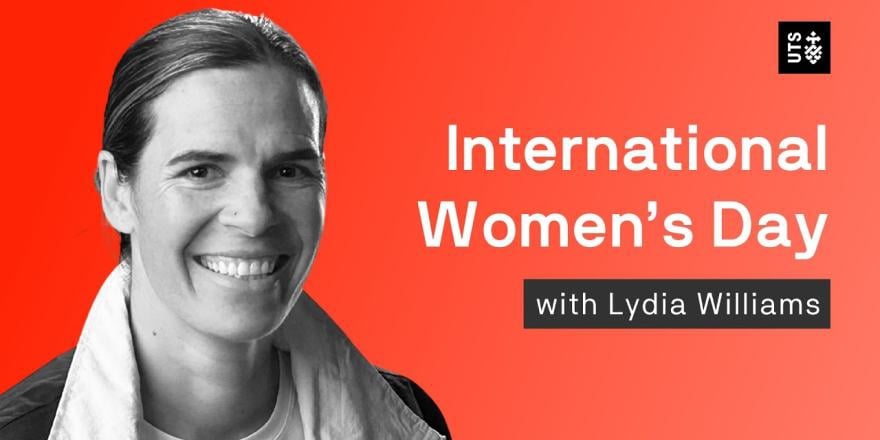
To mark International Women’s Day 2025, Lydia Williams, the first Aboriginal goalkeeper for the Matildas football team and 2x Olympian, shared her trailblazing journey in advocating for women in sport.

Lydia’s keynote was grounded in the concept of legacy, that is, the profound impact you leave behind.

She reflected on her childhood growing up in Kalgoorlie and the impact that her parents had on her sense of self and how she views the world. It was during this time that she learnt how to accept people no matter where they’re at, how to fight for what is right, and ultimately, the feeling you get from helping others.

Lydia then went on to describe the profound impact that football has had on her life, initially in helping her navigate the grief of losing her father to Cancer as a teenager, through to the Matilda’s successes, their historic fight for pay equity, and the proud legacy the team has left on sport in Australia.

“I’m just one Matilda, or retired Matilda now, that has an amazing story but each and every single one has a story of pursuit, of excellence and of drive and belief, and you put that all in a team and they kind of become a little unstoppable.”

Following this address, Lydia was joined by Dr Leila Khanjaninejad, Professor Karen O’Connell, Jane Fernandez and Amy Persson (moderator) to discuss dismantling barriers in sports and the impact that it can have in uniting people and progressing equality. You can view this panel discussion in the video below.

If you are interested in hearing about future events, please contact events.socialjustice@uts.edu.au.

Lydia Williams

Lydia Williams

Professor Karen OConnell

Professor Karen OConnell

Jane Fernandez

Jane Fernandez

Dr Leila Khanjaninejad

Dr Leila Khanjaninejad

Speakers

Lydia Williams is the first Aboriginal goalkeeper for Australia’s Matildas and a 2x Olympian. With 138 caps for Australia, she is a renowned Australian athlete. She has played international football at the highest level for the Western New York Flash, PSG, Arsenal, and Brighton and Hove Albion Women. She is currently playing for Melbourne Victory for the A-League Women's team. Twice named PFA Women’s Footballer of the Year, she has also been inducted into the Aboriginal and Islander Sports Hall of Fame. 

Dr Leila Khanjaninejad is a Lecturer in Creative Intelligence and Innovation in the UTS Transdisciplinary School. Her research focuses on gender equity and inclusion in male-dominated sectors, with a particular emphasis on the implications of organisational policies. Leila’s expertise lies in development studies and social sustainability. Over the past decade, she has conducted various research projects including the development of gender-responsive programs and studies on women in leadership and sports. 

Professor Karen O’Connell from UTS Law, has over twenty years’ experience working on gender equality and sex discrimination issues in human rights practice and academia. Her research and law reform work focus on changing the way we think about, and regulate, sexual harassment and discrimination. She advises public and private organisations on workplace equality, and has won numerous awards, including the NSW Women Lawyers Association’s ‘Legal Academic of the Year’ in 2021. 

Jane Fernandez is one of Australia’s leading Sports Administrators and is currently the Executive General Manager, Operations, Rugby World Cup Australia. Jane recently led the successful Bid to host the FIFA Women’s World Cup 2023 as Chief Operating Officer (Australia) and was instrumental in its success as the most transformative edition of the tournament ever. Jane is passionate about the power of major sports events to drive social change and is determined promote gender equality in women's sports and elevate Australia's presence on the global sporting stage. 

Amy Persson (moderator) is the interim Pro Vice-Chancellor (Social Justice and Inclusion) at UTS. Amy is a public policy specialist who has worked across the private, public and not for profit sectors and was Head of Government Affairs and External Engagement at UTS. Previously, she held Senior Executive roles in the NSW Department of Premier and Cabinet and also ran the Behavioural Insights Unit and Office of Social Impact. 

Share