


- Posted on 21 Oct 2026
The Australian Stuttering Research Centre at UTS marks 30 years of world-leading research.
Key takeaways
- Stuttering affects approximately 1-2 percent of the global population, equivalent to around 160 million people worldwide.
- The ASRC pioneered the Lidcombe Program for children, a treatment considered the gold-standard stuttering therapy used by speech pathologists across the world.
- The centre is now developing free evidence-based interactive online programs. More than 2,000 people have accessed the first, iGlebe, for social anxiety.
Hearing a child’s first words and watching speech and vocabulary evolve is one of the distinct joys of early parenthood. But for up to 12 per cent of children, a sudden and alarming shift occurs before the age of four.
Familiar chatter gives way to repeated syllables like "I… I… I… I… want…" or prolonged silences and signs of sustained effort in getting words out. This can be deeply alarming for parents, and in many cases, the onset is so sudden and severe that parents fear a medical crisis.
It can also contribute to significant anxiety for both children and adults.
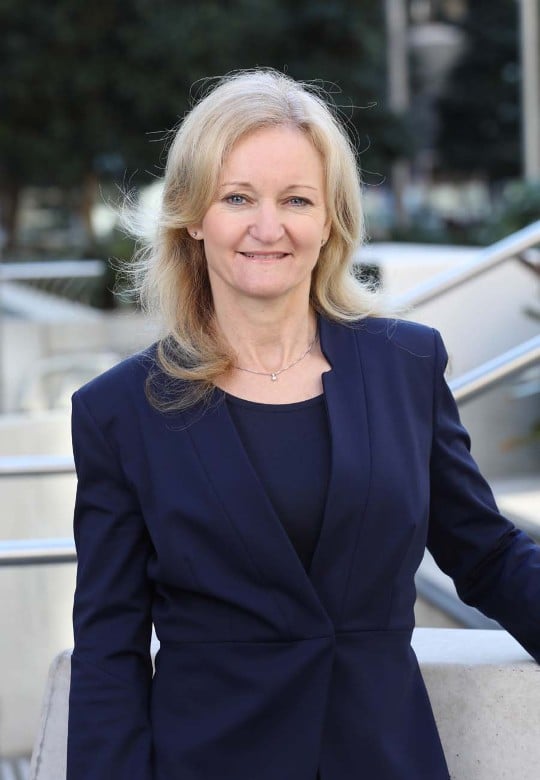
“Anxiety does not cause stuttering; however, stuttering can make people anxious,” said Professor Robyn Lowe, from the Australian Stuttering Research Centre (ASRC) at the University of Technology Sydney (UTS).
“And anxiety can make stuttering worse, which can then make the anxiety worse … so this can become a really negative cycle of events.”
While stuttering usually emerges in early childhood, its impacts can last a lifetime.
Stuttering affects approximately 1-2 percent of the global population, equivalent to around 160 million people worldwide. Up to 60 percent of adults who stutter will develop social anxiety disorder. Together stuttering and anxiety can adversely impact education, employment and relationships.
The importance of early intervention
Because onset typically occurs as children begin putting sentences together, early intervention is critical, with research showing treatment before the age of six years results in the best chance of long-term recovery.
This is a reality that John Childs-Eddy knows all too well. His son, Sunny, developed a noticeable stutter at five years old, leaving him feeling helpless as a parent.
“We had a limited time window to make an impact on his stuttering. I felt a strong urgency to work with speech pathologists who really understood stuttering in children,” said Mr Childs-Eddy.
From gold-standard to world-first digital care
For 30 years, Australia has been at the forefront of global stuttering research and treatment, driven by the leading work of the ASRC.
The centre established its international reputation by pioneering the Lidcombe Program for children, a treatment that has revolutionised paediatric speech pathology care and is now recognised as the gold-standard stuttering therapy used by speech pathologists across the world.
Building on this legacy, ASRC researchers are now turning their focus to tackling geographic and financial barriers, developing online treatment programs for stuttering that can be accessed anywhere.
“Despite the crucial need for treatment, access to services can be severely limited, with waitlists for speech pathology in Australia at times exceeding 12 months, particularly in rural and remote communities,” said Professor Lowe.
“We know that timely and affordable access to treatment can significantly impact communication and quality of life.”
To address stuttering-related anxiety and mental health challenges, researchers at the ASRC, led by Professor Ross Menzies, developed iGlebe, a free, online treatment for social anxiety.
Research has shown that iGlebe, the first online program of its kind to go through clinical trials, delivers similar outcomes to treatment with a clinical psychologist face-to-face – providing accessible and cost-free mental health support, while saving the healthcare system millions of dollars.
More than 2,000 people have accessed iGlebe, with the program now reaching people in over 70 countries.
We know that timely and affordable access to treatment can significantly impact communication and quality of life.
Next steps
Professor Mark Onslow, ASRC Foundation Director is proud of the Centre’s legacy.
“For 30 years, the ASRC has built a global reputation for combining research, clinical practice and real-world impact,” Professor Onslow said.
“We’ve developed evidence-based treatments used by clinicians around the world and been a leader in translating research into practical support for children, adults and families.”
Now, the ASRC team is working to test and deliver evidence-based, online versions of the Lidcombe Program (for children) and Camperdown Program (for adults).
“Our vision is to use digital technologies and AI to make free online treatments for stuttering accessible to people across the world, no matter where they live,” said Professor Onslow.
For children like Sunny, timely treatment at the ASRC made all the difference.
“When we started treatment, Sunny had noticeable stuttering in his speech.
“We took those last few steps to having no detectable stuttering at all. That’s what we achieved,” said Mr Childs-Eddy.
FEATURED RESEARCHERS
Professor, Faculty of Health
Professor, Faculty of Health
News by topic

News
Feral – and threatened? Endangered camels, banteng and hog deer have found an unexpected refuge in Australia
Wild dromedary herds no longer roam the Sahara, while wild banteng are vanishingly rare in Southeast Asia. Should we protect their feral populations in...

News
New report calls for federal reform to address harmful worker surveillance
The Australian Government must urgently address the threat to workers from new forms of AI-powered surveillance, according to a report released today by the...

News
UTS response to NSO report
A statement from The University of Technology Sydney in response to findings of the National Student Ombudsman.

News
Independent review into March protest and event
A message from Vice-Chancellor Professor Andrew Parfitt.
News
Feral – and threatened? Endangered camels, banteng and hog deer have found an unexpected refuge in Australia
Wild dromedary herds no longer roam the Sahara, while wild banteng are vanishingly rare in Southeast Asia. Should we protect their feral populations in...
News
New report calls for federal reform to address harmful worker surveillance
The Australian Government must urgently address the threat to workers from new forms of AI-powered surveillance, according to a report released today by the...
News
UTS response to NSO report
A statement from The University of Technology Sydney in response to findings of the National Student Ombudsman.
News
Independent review into March protest and event
A message from Vice-Chancellor Professor Andrew Parfitt.